DD
MM
YYYY

PAGES

DD
MM
YYYY

spot_img

PAGES

Home Blog Page 6672

FUOYE: Is Nigeria Anti-Protest?

0

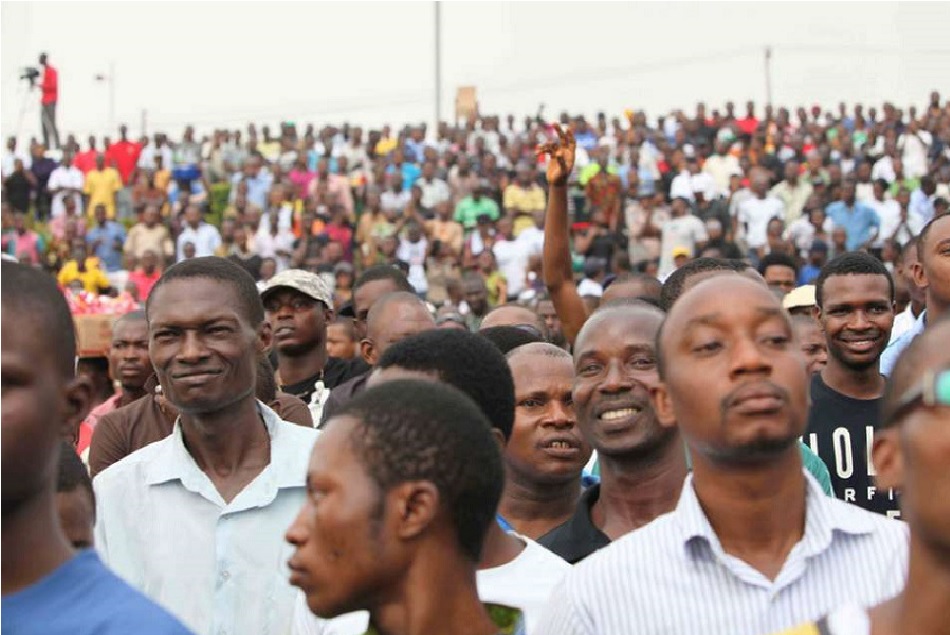
When the news that about 5 students of Federal University Oye Ekiti (FUOYE) were shot dead by the police during a peaceful protest, most Nigerians were not surprised. The students were protesting about the epileptic power supply in the Oye Ekiti community. The report said the First Lady of Ekiti State was passing by from a function she attended and the students saw it as an opportunity to invite her into the issue of protest. One thing led to another and without warning, her security aides went trigger happy.

But that’s about the sixth killing of protesters by the police in the year. A situation that has been seen as a norm. Dissenting voices believe that the Ekiti State Government and the Nigerian Police inability to make any statement about the ugly incident is an evidence that protests in Nigeria have become a high risk adventure.

On Tuesday, members of the Shiite group claimed that 3 of their members were fatally shot by the police as they embarked on another peaceful protest in Kaduna State. That was a sequel to what happened back in July in Abuja, where over 13 people were killed during a protest by the Shiites over the prolonged detention of their leader El-zakzaky.

It’s about 21 deaths in two months for the crime of protesting. And there is concern that the number will add on in another given time.

Over a year ago, Amnesty International reported that over 150 members of the Indigenous People of Biafra (IPOB) were massacred in cold blood by Nigerian security forces. A trend that has set a bloody footprints in Nigerian sands. But there are always excuses justifying the free flow of protesters blood.

In 2015, when about 400 Shiite members were killed in Kaduna by the Nigerian Army, the justification was that they blocked the way for the Chief of Army Staff. President Buhari, in addressing the issue said that the Shiites deserved what they got for provoking the Army, by tapping the chest of an army general, the Chief of Army Staff for that matter.

In Oye-Ekiti, the news that was aired after the killings was that the First Lady only ordered her security details to disperse the protesting students, she didn’t order the killing. And however they did that was none of her business. After all, she was on her way home before the students tried to involve her in their protest.

In many cases of such killings, the victims have always been blamed, and whoever happened to be part of the protest will face the full wrath of the police. Even the remains of the victims will be seized by the police.

El-zakzaky and his wife were arrested and locked up after the killing of his 400 loyalists, who included his own children. And he has been incarcerated ever since then.

The survivors of the Federal University students of Oye-Ekiti’s mayhem were not spared either: the police went after them, locking up as much as their cell can contain. They have provoked the police to their own harm and will face further consequences.

While the Ekiti State Government is yet to utter a word on the matter, the school authorities have proscribed the student union and asked the students to go home. The act of proscription seems to have become a cliché stemming from Federal Government’s approach to IPOB’s protests. The government has proscribed them as a terrorist organization and banned them from holding peaceful protests. Shiites were also proscribed by the Government, and it appears that schools are learning to do the same.

In Nigeria, it’s illegal to hold protests without police permission. A situation human rights activists are concerned it would eventually deteriorate to totalitarianism. Segun Awosanya, the convener of #EndSars didn’t hide his disappointment over the Ekiti saga. He said:

“You know your country is ruined when the wife of a sitting governor’s convoy murdered 4 human beings (students/future of Nigeria) and all she could do was to pay press to play victim without uttering a single condemnation towards the use of force against unarmed peaceful protesters.

“The victims of the murderous convoy have parents who are currently grieving and the unelected and presumed mother, who claimed to be on an empowerment program is justifying the murders by the slimy attempt to save her face by playing victim.”

Amnesty International and Human Right Watch (HRW), had echoed the “victimhood” sentiment in their reports on Government’s use of brute force to clamp down on peaceful protesters. “There is always a reason to justify the killings.”

The report also noted that the only protests allowed by the police are government sponsored protests. The alibi to deny permission has always been that it will disrupts public peace. And if you dare to protest, it’s at your own risk.

Socio-Economic Rights and Accountability Project (SERAP), three days ago, reminded the governments that it is against the constitution to kill or lock people up for using their freedom of expression. They cited among others, the case of Sowore, the convener of #RevolutionNow who was locked up for organizing a protest, as an example of government’s determination to muzzle dissenting voices.

Civil right groups also noted that government’s oppressive approach to peaceful protests is the reason Nigerians find it difficult to hit the streets whenever there is such a need. The cost of life in Nigeria depends on who is asking, and protests seem to be an easy way to die.

DHL Africa eShop Is Now A Threat To Leading Ecommerce Players

0

For all the challenges Konga, Jumia and amalgam of ecommerce companies are having in Africa, the sector remains a promise.  Yes, anyone that gets it right will see financial glory. The trajectory to that mountaintop has been frustrating, from the days of Kalahari to Mocality, and now the modern age of Jumia. Yes, despite the bumps, the prize is evident: a $75 billion opportunity just five years away. That is why the battle will continue.

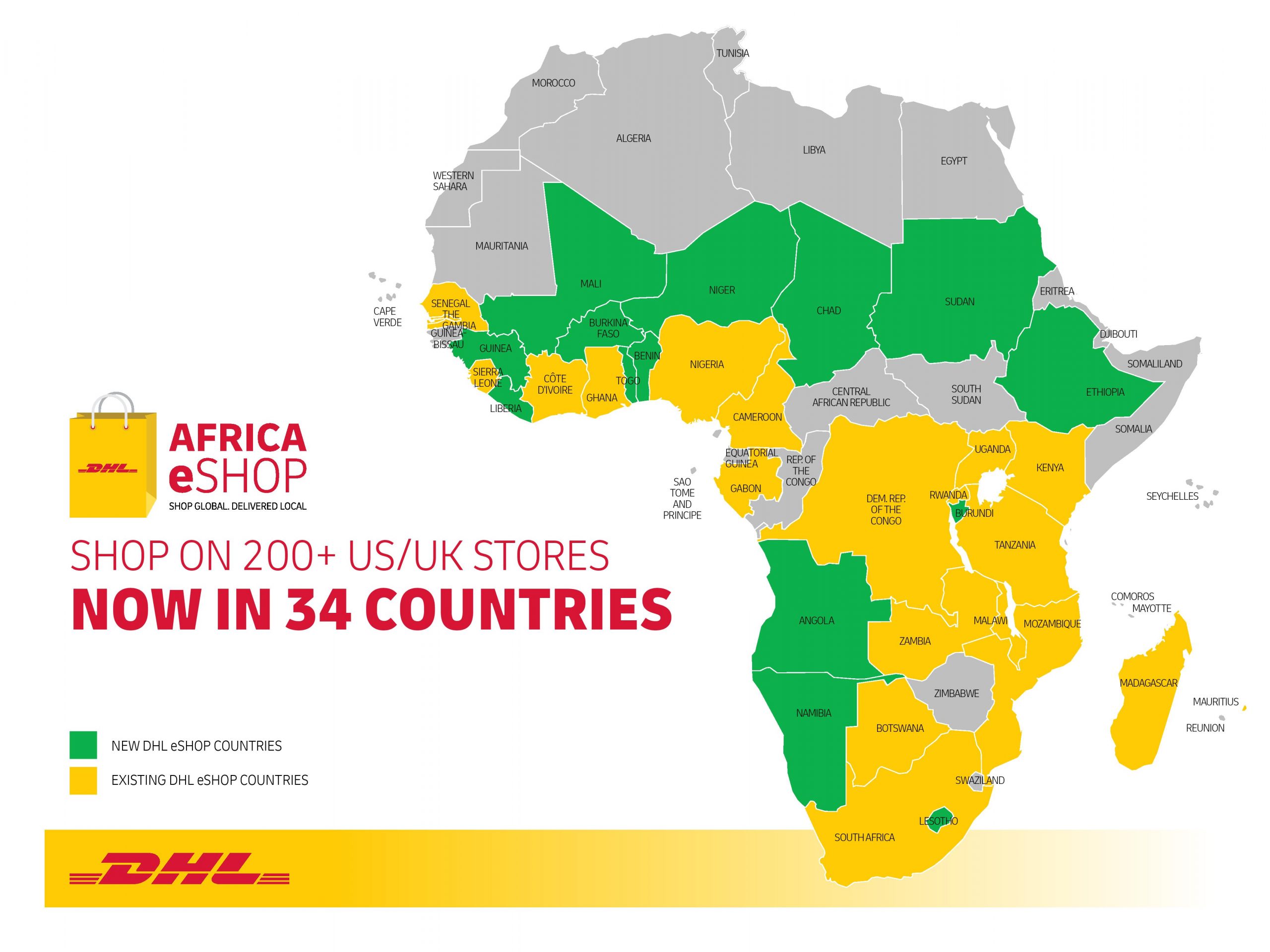
But as you examine the competition, one of the best ecommerce companies in Africa which remains largely unknown is DHL Africa eShop. It has zero risks and will make guaranteed profits on all sales. It has none of the marginal cost problems the typical marketplace ecommerce companies have. That is why in less than six months, it is operating in 34 countries. 

More so, it focuses on those customers that are buying things from outside the continent. That is really where you want to be: you go where the money is. Those customers are open to pay DHL fees to help them deliver trusted items to their homes and offices.

As you plan to get into this game, understand one thing: if DHL eShop is offering that service, the incentive to shop in your local marketplace might have been disintermediated because the potential customers can buy from American Kohl’s, Macy’s, etc and have all delivered by DHL. If this business does not have the name “DHL”, it ought to be seen as the best ecommerce startup in Africa today. Of course, without the DHL tag, it would not have expanded as fast as it has done.

DHL has called the the business outcome a “rapid success”; I believe that pronunciation. It is simply taxing shoppers for no single risk. You pay for the items, it picks the items and delivers to you for a mark-up. It has no inventory. It does no cash-on-delivery. Simply, this is the real deal even though its market segment may be small. But that is where the money is. On pure play revenue, it may make sense to focus on the top 10% than the bottom 90% on ecommerce in Africa.

DHL is playing at the sweetest spots, and the results are amazing: “user uptake on the DHL Africa eShop app has been remarkable over the last five months, not only from the number of downloads, but just as importantly, from an order perspective”

The DHL Africa eShop app offers African consumers unprecedented access to international retailers on an easy-to-use platform, with great convenience and speed. It also enables many global brands to connect with a captive African market. The DHL Africa eShop enables African customers to shop directly from over 200 US- and UK-based online retailers, with purchases delivered to their door, by DHL Express. This solution was developed in partnership with Link Commerce – a division of Mall for Africa.

He adds that while Africa’s ecommerce market is still lagging behind the rest of the globe in terms of annual turnover, it may well make significant strides to catching up in the near future. “A report by Statista reveals that e-commerce in Africa was valued at $16.5 billion in 2017. McKinsey adds to this calculation by predicting that this value could potentially reach $75 billion by 2025.”

Read full press as DHL unveils the 34 countries

Platform introduced to an additional 14 countries across Sub Saharan Africa; Growth of online retail driving DHL Africa eShop’s rapid success

Since its initial introduction in April of this year, the DHL Africa eShop  app has seen its user base grow rapidly, and within the first three months of operation, it had already been rolled out to 20 countries across Sub-Saharan Africa (SSA). DHL Express  announced this week that the innovative mobile and desktop platform is now available in 14 additional countries across the region. This increases the platform’s reach to 34 countries across SSA.

Hennie Heymans, CEO of DHL Express Sub Saharan Africa, says that user uptake on the DHL Africa eShop app has been remarkable over the last five months, not only from the number of downloads, but just as importantly, from an order perspective. This is why we’re excited to launch DHL Africa eShop in Angola, Benin, Burkina Faso, Burundi, Chad, Ethiopia, Guinea, Lesotho, Liberia, Mali, Namibia, Niger, Sudan, and Togo.

“DHL adopted a phased approach for the rollout of the platform on the continent, with the initial launch implemented in 11 countries to test the market’s reaction. Within the first seven weeks, the response from the consumer market was so impressive, that the second phase was initiated – which added 9 more countries to the list. Now we are once again able to build on that momentum, with the biggest single rollout phase so far.”

The DHL Africa eShop app offers African consumers unprecedented access to international retailers on an easy-to-use platform, with great convenience and speed. It also enables many global brands to connect with a captive African market. The DHL Africa eShop enables African customers to shop directly from over 200 US- and UK-based online retailers, with purchases delivered to their door, by DHL Express. This solution was developed in partnership with Link Commerce – a division of Mall for Africa.

He adds that while Africa’s ecommerce market is still lagging behind the rest of the globe in terms of annual turnover, it may well make significant strides to catching up in the near future. “A report by Statista reveals that e-commerce in Africa was valued at $16.5 billion in 2017. McKinsey adds to this calculation by predicting that this value could potentially reach $75 billion by 2025.”

As the global leader in express logistics, DHL is well positioned to connect African consumers with these exciting global brands. “We are committed to driving e-commerce growth on the continent for etailers as they work to expose their brands to international markets and also for consumers, who want easy access to global brands,” concludes Heymans.

DHL is celebrating the launch of the new countries with a promotion of $20 flat rate shipping for up to 5 items from over 100 US/UK selected sites to all DHL Africa eShop countries. The promotion is limited to Clothing and Accessory items only, and buyers need to use coupon code CELEBRATE when completing their order.

LinkedIn Summary

I can say that one of the best ecommerce companies in Africa today is DHL Africa eShop. It is harvesting the best ecommerce shoppers and serving them at practically zero risks. That is why it has expanded into 34 countries within six months. Of course, it has DHL on its name. But do not be confused – this firm is one of the reasons ecommerce marketplaces are struggling. 

If you can buy from top American brands, and a trusted brand can bring it home, from America, you may not bother to check local sites. They call it disintermediation. DHL is celebrating this “rapid success” as it marches for that $75 billion prize in African ecommerce by 2025.

IoT is the Ultimate 5G Use Case for Africa

0

At the recent ITU Telecom World 2019, in Budapest, Hungary, the Executive Vice Chair of the Nigerian Communications Commission (NCC), Prof Umar Danbatta, mentioned that African countries will quickly subscribe to the enhanced mobile broadband, out of the three 5G use cases.

A quick summary, ITU describes 5G in terms of three use cases:

  • Enhanced mobile broadband (emBB),
  • Ultra-reliable and low latency 
  • Internet of Things type communications.

It is anticipated that emBB use case will cover applications such as ubiquitous and high speed connectivity for consumers, support augmented reality (AR) and virtual reality (VR) devices, gaming consoles, immersive experience, fixed wireless access etc. In Africa, it would take time for some of these technologies to mature due to the high cost of 5G phones, AR and VR devices, immersive TV, gaming consoles etc. Besides, consumers are not necessarily willing to pay more for faster speed as they are yet to reap the full benefits of 4G networks.

For the emBB use case, GSMA believes that fixed wireless access will be the biggest 5G use case, citing the low household fixed broadband penetration as 2% across Africa. This is debatable, given the low disposable income of households across Africa. However, this is very true for enterprises looking for alternative connectivity options, as cited by GSMA.

The ultra-reliable and low latency use case will cover applications such as connected and autonomous cars, remote or robotic surgery etc. These applications will also take a long time to come to fruition in Africa, as road infrastructures are not there yet to allow for the use of such cars. These cars also need to be tested on highways in Africa, as Lagos roads are very different from New York or London Roads. Road regulations and policies etc. also need to be adapted before autonomous cars can be deployed. How would these cars function, when given instructions from LATSMA, traffic wardens, police officers etc., manning our roads? How many hospitals in Africa are currently ready to use remote/robotic surgery to deliver health care services? Furthermore, the 1ms delay, anticipated for this use case, is yet from being realized.

The last use case, the Internet of Things (IoT) application, looks at the use of machine type communications, for digitizing and automating industrial processes across sectors such as oil and gas, mining, agriculture, homes, energy, transportation, logistics, health care, education, real estate etc. Besides, IoT devices could be deployed using the existing communication networks.

IoT, for me, is the use case which presents the fastest route to market in Africa. It presents a unique market opportunity for telcos looking to maximize their dwindling revenues, depending on how well they position themselves within the value chain. As connectivity accounts for less than 5% of the accruable revenue from the IoT value chain; telcos may need to establish strong partnerships or merge and acquire new companies, outside their traditional business of connectivity, in order to compete favourably within this space.

GSMA, in their Sub Saharan Africa (SSA) outlook report , suggested that IoT connections within Africa, will approximately triple by 2025. It predicts that there will be 332 million IoT connections within the region by 2025. From my estimate and using the data from the World Bank and IMF, IoT would lead to an industry worth $14.61 billion, approximately 0.83% of Sub Saharan Africa’s current GDP.

Despite this market value, the IoT industry in Africa is in a nascent state (except for South Africa). This is because of the enormous challenges and barriers in existence, hindering the rate of adoption of these devices, within the continent. I am therefore of the opinion that African countries should adopt policies and regulations which would help address the existing challenges, so that their economies can significantly benefit from the $14.61 billion industry.

A Holistic Approach to Job Creation for Nigerian Youth

0

Nigerian Youths unemployment has been widely publicized and discussed.  It is no longer news, and does not really need publicity. The impact is seen every day on our streets, social media, homes and all around us: there is one cousin, one sister, one brother, one friend or a friend’s child who you know is in need of a job. You get the calls, get CVs sent to you, but for the most part, you appear helpless as well. Anyone been there?  On social media platforms, such as LinkedIn, the deluge of unemployed youths, who have learnt to voice out and call for help for jobs is alarming. You walk on the streets and see young and agile youths careless about ego and go ‘please help me with transport’, ‘please help me with something to eat’. The human instinct is to be judgmental – call them names and wonder why they ‘cannot go and look for job’.  Sadly, that is what they get most of the time.

As a nation, we have an ever increasing population and a mass of that are our agile and energetic youths.  The stage we have reached in our youth unemployment rate is alarming; it has reached a scary high. Therefore, it cannot be business as usual for all stakeholders (individuals, parents, family, private and government) in addressing the issue of job creation for our youths.  Concerted and deliberate efforts and plan need to be in place. A plan devoid of tribal, ethnic, religious and political sentiments is the only plan that will work and take us out of the impending greater harm of youth unemployment.

Therefore job creation should be and is everyone’s responsibility.  There is something each of us can do to support job creation. If you are already doing something, the urgency calls for more. My thoughts on job creation:

Consider Child’s Personality: Parents and guardians have a role to play in ensuring that their children have a chance at employment upon graduation. Therefore, parents need to begin to assess the personality traits of their children and wards as they take them through the process of choosing a course of study. Our private and government owned primary and secondary schools, may also want to adapt career assessment programs to help guide children and young adults in the process.  

This very important decision (course of study) plays out while these young adults are in higher schools and when they face the labour market. When they take courses ‘for the sake of parental approval’ or lack of proper guidance, some of them come out as much a liability to their families and marketplace as they were prior to a higher education.

Deliberately  Support for made-in-Nigerian Products:  As a people, we have grown to become import-dependent to the state of self-doubt.  If it is not imported, it is not good enough.   

Yes, we are not in a state where we can do without a large percentage of import (and I do not have anything against importation). But we have to begin to deliberately support locally made products.  Our Local, State or Federal government executive (political or appointed) need deliberately support made in Nigeria Products. Here are some considerations:

  • Revive the orientation and support for made in Nigeria products; these businesses are our first hand job creators;
  • Have a policy where all government parastatals, agencies or institutions including our executive, legislative and executive arms are supplied with made in Nigeria products as first option.  All their consumables from toilet tissue to furniture and Softwares would be supplied by Nigerian manufacturers;
  • Give incentive to multinationals who have the policy, implement it, procure and use locally made products and consumables for their operations;
  • Provide incentives and awards for our young innovators and manufacturers, project them as role models to young adults;
  • Support small and medium scale manufacturers with local and international market access for their products.

Government should not be the sole driver of the economy:  Most businesses thrive on government patronage; and as soon as that business is out of sync with a new government in power; that business, all the jobs and livelihood created within that sphere suffers or become non-existence. An enabling environment that supports the establishment, success and growth of private sector businesses will enhance job creation.

Where are the industries?:  We have a huge population of over 200 million but lack enough local industries to cater for their basic needs: water, clothing, food, housing, household consumables and more. Most of these basic goods are largely imported and few local businesses take insignificant amount of the market share. To create jobs, we have to have a fair percentage of local industries, small and medium scale manufacturers that are thriving, growing and scaling. There is need to create an enabling environment for industries operate and be able to serve our huge population and growing consumer taste.

Encourage Private Sector Short-term Internship Scheme: Soon after the one year mandatory Nigerian Youth Service Corps (NYSC) program, most graduates are back to the labour market and the NYSC work experience of some, do not bring so much value to employers.  An interaction with a few NYSC graduates – who are usually sent to teach in rural schools, would show near zero skills that would bring value employers.

Encourage, reach an alliance, or provide incentives with sector businesses that offer internship at a token allowance for NYSC graduates.  An internship for 2 graduates every 3 months, per organisation, per annum by say 5,000 private businesses will reach and impact about 30,000  youths annually across major cities in Nigeria. This keeps a majority of youths engaged at a time.

Create a Healthy Competition for Job Creation:  Let each State Governor create a healthy Job Creation Competition among its Local Government Area or Council.  Give an incentive of say, additional 5% allocation bonus to a local government that comes up with initiatives that creates jobs and economically empower youths within its community.  To be successful, such competition should be devoid of any form of religious or political sentiments; it should be guided by data and external evaluation.

Research and Development:  How strong do we think we are on Research and Development at different levels of government – local, state and federal?  What type of value do we place on our academic researchers, our professors and their attempted inventions? Anybody got the answer? How do we plan for growth without adequate and accurate data?  How do we plan for growth when the data will not be put to use. Can we make deliberate efforts to begin to turn the tables?

I recommend an active Research and Development Desk for all constituencies – communities, local government and ministries (at State and Federal levels).  These Desks should engage our fresh and numerically inclined graduates and put them to work. Stimulate their minds and engage them in nothing but research, data collection and analysis which can be used to further serve and address social issues from health, to infrastructure, to population, crime and commerce.

Encourage Research and development across all strata of our institutions. Provide incentives for researchers and provide funding.  Give Researchers awards and recognition and help them to promote their inventions locally and internationally; and help them with good regulations to protect their inventions and intellectual property.

Make Commerce Possible in other States and Regions:  Can we have more Airports, Sea Ports and Road Networks in more parts of the Country?  This enhances movement of goods and services, boosts commerce, reduces urban congestion and migration and ultimately creates job and grows the economy.  Who gains – a Nigeria that could boast of improved GDP!  

Review the Curriculum of our Schools: Review the Curriculum of our Schools at all levels to fit the realities of our fast-paced modern world. The world is changing, but our Schools curriculum unchanging.   Such a review should address core subjects and also include special courses that would align and equip fresh graduates with skills that prepare them for the demands of the labour market.   

Re-Design the Courses Offered in Universities: What is the purpose of being in the university in the first place? To acquire knowledge that enables an individual become fit for employment, either as an employee or an entrepreneur and add value to the society.  Everyone needs the skills required to play in the marketplace. But most of our Courses do not prepare students to fit into our current or future labour market demands. What is our plan for giving a child admission to study Linguistic and Russian Language? Is our environment or labour demand ready or have need for such skill? Do we have a program that enables such skill to be ‘exported’? 

Why do we offer courses such as Animal Husbandry with near zero animal farms nationwide?  It is time to look inwards, redesign some courses being offered, keep some courses in the ‘archive’ or create a program to ensure that students that are ‘required’ to undergo such studies have a ready labour market that will absorb them.

Invest in our Educational System:  How much of our budget goes to education?  Is it possible to have a deliberate budget increment for education for the next 20 years? As far as our educational system is concerned, we get what we give. We need a shift.

Be serious about Development:  When it comes to development, let’s learn to keep off tribal, religious and political sentiments, and truly begin to deliberately invest and focus on development.  Put in place the right infrastructure that creates an enabling environment for human life development, wealth creation and economic boost. Countries such as Singapore and China have seen be seen to be deliberate about national development; those deliberate efforts of past decades is what the world see today, their citizens being the top beneficiaries.

Use Data Analytics for Governance:  We have capable IT companies that can support each local, state and federal government ministries and agencies, including the three arms of government (Executive, Legislative and Judiciary) to better manage governance. Does the average hospital in a State know the number of adults visiting the hospital for a simple thing as malaria within say one month, to enable better preparation for the drug, the personnel and even utilities (water, toiletries, electricity etc) that will be required? Data should be the life of our governance and administration in today’s Nigeria.

Our Value System: Our young adults are guided by our value system.  We cannot attach value to certain things, and expect the opposite from our youths.  What gets the most accolades from us as a society? Merit driven performance or something that brings less value to human lives.  Our definition of success is no longer our intellectual capacity and merit-driven performance. What society presents, is what our youths emulate and pursue in adult life.  A re-orientation of the good old values of hard work, legally earned wealth, success as a process and not get quick rich syndrome, may be the place to start from at home and in all religious and secular settings.

Conclusion: Our greatest and God-given assets are our youths. They have the energy, the talents and young minds. Every parent looks forward to having a child that could ensure family continuity; that is equipped and capable to support them at old age.  As a nation, do have these in our youths?  

None of the above can be achieved in one year or two-term political administration.  But how about a 20 year Plan for Job Creation for Nigerian Youths? We have the people, the talents and the resources, let’s harness them.

The Need To Harmonise All Bank Accounts Into A Single Debit Card In Nigeria

0

The introduction of the Automated Teller Machine (ATM) with the accompanying ATM Cards into the Nigerian banking industry has boosted service delivery by the banks and also brought about ease of access to customers’ account(s) domiciled in the different banks. Cash debits, deposits, transfers and Person to Person (P2P) lending are now transacted within a very short time unlike before.

The first ever ATM to be introduced into Nigerian banking industry was “Cash Point 24” by the now defunct Societe Generale Bank of Nigeria in 1990. This was later followed by “First Cash” introduced by the First Bank of Nigeria Limited in 1991. Today, there are over 12,000 (Twelve thousand ATMs in all bank branches across Nigeria. The boost that the introduction of the ATM has given to banking services is been unprecedented. With just the punch of a button, very important transactions are completed. This has also moved to the use of Point of Sale (POS) machines by business owners to enable ease of payment by their customers.

Added to that, the mobile/internet banking platforms also came in vogue. Transactions running into millions can be completed from the comfort of one’s home. The combined effect of these innovative banking services is that customers would not need to stand on long queues just to withdraw, deposit, transfer fund, buy airtime, subscribe for DSTV and other services or even request to know their account balance. Nigerians can still recall how hectic it used to be when the ATMs and other innovative banking service channels were not deployed by the banks. But the case is different today.

INTRODUCTION OF BANK VERIFICATION NUMBERS

This widespread acceptance of these FinTech services did not go without the activities of fraudsters using through these channels. However, to put these fraud activities on check, the Central Bank of Nigeria (CBN) on February 14, 2014 launched the Bank Verification Number (BVN) which a biometric capturing the vital data of all bank account users, as part of its overall strategy of ensuring effectiveness of the Know Your Customer (KYC) principles and the promotion of a safe, reliable and efficient payment system.

The BVN is a unique identification (ID) number which is issued to every bank customer upon enrolment and it is linked to every account the customer maintains in all banks in Nigeria. The bank customer’s information is stored in the Central Database which the Nigeria Inter-Bank Settlement System (NIBSS) is in charge of, thus enabling ease of identification of each bank customer.

According to the CBN Regulatory Framework for Bank Verification Number Operations and Watch-List, for the Nigerian Financial System, 2017 the key stakeholders in the operations of the BVN are the CBN, NIBSS, Deposit Money Banks (DMBs), Other Financial Institutions (OFIs) and Bank Customers. The overall consequence of this is that transactions initiated by a bank customer can be monitored from the Central Database and with that, acts amounting fraud on an account can easily be detected and escalated, and confirmed acts of fraud on a bank account would be flagged and placed on the Watch-List. The NIBSS maintains also an online Watch-List portal and provides an Application Programming Interface (API) to enable all banking institutions in Nigeria to integrate their systems to the BVN database for online validation of the Watch-List. The CBN, NIBSS, DMBs, and OFIs all have access to the BVN Central Database and the Watch-List.

A bank customer’s name on the BVN Central Database is the same in all accounts which the customer has in all other banks in Nigeria. The BVN operational process and procedure takes the form of: Enrolment ? Identification ? Verification and ? linking the customer’s unique ID to all related bank accounts in Nigeria. The customer’s unique ID generated after enrolment is used to link all his/her bank accounts, irrespective of which bank it is domiciled.

HARMONISATION OF ALL ACCOUNTS INTO A SINGLE ATM CARD

Flowing from the above, the questions which now beg for answers are:

  1. Given the structure that has been put in place by the CBN in conjunction with all other stakeholders in the banking industry, what stops the CBN from ensuring that all bank customers’ accounts with different banks are integrated into a single ATM (debit) Card?
  1. Why would I have to have 4 to 5 ATM Cards all because I maintain 4 to 5 bank accounts with different banks in Nigeria? Or even different bank accounts domiciled in the same bank?

I do not think this is an impossible thing to be done, since the system in place can make that possible. If an individual’s BVN ID can be linked to all his/her bank accounts with different banks and in the same name, I do not see the reason why such individual should be having several ATM Cards when a single ATM Card can solve that problem. This is the desired change that FinTech is introducing into the banking service which should be embraced by the banks. Harmonising all the bank accounts into a single ATM Card also has the added advantage of enabling better tracking of transactions that go on in the banks from the Central Database.

Technology is fast changing service delivery in all sectors in the world, including the banking industry and the Nigeria banking industry should not be drawing back at point in time.

I call on the Central Bank of Nigeria, as the regulatory body in the banking sector, to consider enabling the harmonisation of all bank accounts into a single ATM Card. This would not change the role of the issuers, because bank customers still preference for Visa Card or Master Card. Whichever card the individual wants, the card issuers’ services would still be needed.