DD
MM
YYYY

PAGES

DD
MM
YYYY

spot_img

PAGES

Home Blog Page 6673

Every Company Needs A Jurgen Klopp

0

Your company needs a Jurgen Klopp!

A Liverpool team without a Jurgen Klopp would have been a club with a bunch of average players, but the Klopp-Esque has got everyone buzzing around the world. Liverpool now looks like a team that can compete for major trophies.

Of course, they are the current European champion. They were runner-up in the domestic league and they have played two champions league final in space of two years. That’s a staggering stats.

Jurgen Klopp has been the mastermind behind this success. After inheriting a young team full of potential from Brendan Rodgers, he shaped and made them a team to beat.

Did you see what he did against Newcastle United last Saturday?

Liverpool was trailing Newcastle United by one goal, and the whole Anfield was quiet. Klopp stood up and jeered the fans. They responded by cheering the players and the whole Anfield was lighted. Five to eight minutes after, Liverpool leveled back. They took the lead in a few minutes later and won the match as well.

The scenario is a clear example of how electrifying Klopp factor could light up the whole arena. Klopp is not just a football coach, he’s a man manager. His relationship with the squad, fans and the staff of the club says a lot about his management style.

So I conclude, your company needs a Jurgen Klopp.

Here’s why you need a Klopp-Esque factor:

  • Transforms your resources into a profitable material. Phil Coutinho is an example of this. Liverpool made profits on him after buying him for £13 million.
  • Resuscitate your worker’s career. Roberto Firminho was lost under Rodgers. He (Rodgers) had no idea how best to utilize him, but Jurgen has made him a superstar.
  • Mend broken relationships in your team. Klopp has brought unity and peace amongst the players and staff. Sadio Mane and Mo Salah spat was enough to break down a team, but how he’s handled it says a lot.
  • Makes everyone dreams. Liverpool fans and players now believe they can win any trophy, thanks to the Klopp-Esque mentality in them. Imagine if your company has a manager like that, you stand a chance of having a team of ”yes, we can achieve it.”
  • Identification of talent and successful negotiations as well. Klopp personality makes every player wants to play for him. He won the Van Dijk transfer battle against Manchester City because Dijk made it clear that he wants to play under him. You also need a good recruiter that can spot talent and negotiate successfully.

Indeed, everything is possible and achievable with Jurgen Klopp.

Six Sigma and MVQ

2

I provided this feedback on a LinkedIn comment on the six sigma post.

The Comment:

…Six Sigma has evolved over the years from manufacturing to different domains. It is adequately applied in software development projects.

Six Sigma is not about literal perfection but more about meeting customers’ specifications. In the digital world, customer specification is difficult to appraise hence market feedback is vital to value creation. Rushing an MVP to the market does not always mean customer adoption, hence tweaks are necessary to meet what the customer wants.

The nature of developing conventional digital products may require speed, but speed without adequately satisfying the customer (Six Sigma) is a market failure.

Case1: Browser adoption: Firefox vs. Chrome
Case2: Social Network: Hi5 vs, Facebook
Case3: Chatting platform: BB Messenger vs. Whatsapp
Case4: Search Engine: Yahoo vs. Google

My Response:

If you tell me that in manufacturing that you need to have products solidly perfected to avoid recall, I will agree that six sigma is critical. But in digital systems, the users are part of the products and that means “perfection” and rigorous statistical modeling to remove defects are not immensely catalytic.

Amazon launched Alexa knowing that it will use customers to improve Alexa. Under six sigma, that construct is not evident. Yet, you must still have to meet MVQ (minimum viable quality) but that can be attained without six sigma in digital solutions. If you got to Amazon, Facebook, Google and the top leading digital companies, six sigma is not a core philosophy.

You can satisfy customers on quality without applying six sigma as a digital platform. It is called MVQ. All the products you cited did not fail because of perfection miss, rather lack of innovation. It turns out that using six sigma, you will likely fail in digital systems. Today, it is innovation over perfection. Facebook which you cited is an enemy of six sigma with its mantra of “Move fast and break things.” You simply made my point.

You wrote “but speed without adequately satisfying the customer (Six Sigma) is a market failure.”. It is key to understand that the #1 factor on satisfying customers is SPEED.  If you miss that, then, everything fails.

Facebook has won with its “Move fast and break things.” That means, it pursues speed and digital innovation over “perfection”. For putting FB in your list, I do agree that you made my point. The key is MOVE fast, learn and update.

You cannot do that in manufacturing but in digital platforms that is the mantra. That speed of innovation is the reason you have satisfied customers. Who cares if Firefox is doing in 3 months what Chrome did last week even though it may do it better?

Six Sigma and MVQ

Quality is important but you should not blindly pursue the six sigma near absolute-perfection without a consideration of product cost. You must understand your product MVQ (minimum viable quality). China as a nation has mastered that construct. Visit a low-end store, you will see a toy car for $10; take another trip to a high-end store, you can also get a toy car for $500. If you check, they might have been made by the same company in China. But $500 will price many parents out for toys for their kids, while the $10 ones do the job even for six hours before they break. But the kids have received and used toys – they do not care!

A product Minimum Viable Quality (MVQ) is that version of a new product which allows a team to sell the maximum amount of products to customers with the least effort and at the best optimized price even when delivering value. That is where you need to build as you launch your product, and even at product maturity, do not deviate from it.

Facebook has the mantra of “Move fast and break things” because the cost of breaking things is marginal. Yes, fixing broken things in digital ecosystem is one update away. With that, Facebook launches faster, while meeting the MVQ (but not necessarily going for the rigorous quality that six sigma demands). If speed of innovation is an important factor in domains where the customers are parts of the products (they use your usage history to improve the products), working to be wholly near-perfect on launch is not a winning strategy.

Between six sigma and MVQ, go for MVQ if you are working on digital platforms. If your competitor launches today with MVQ, and in the spirit of using six sigma you launch a month later, you would be in trouble because in digital platforms, the competitor has acquired data that by month end will anchor a product that will beat whatever you have coming.

Simply, if you are working on digital platforms, MVQ on launch is more important than pursuing six sigma legendary near-absolute perfection. In digital, users are part of the products; the insights are more than any rigorous statistical modeling. Quality unbounded by cost is an illusion!

The Fading of Six Sigma

How The Human Situation Shapes Technology

0

Technology is almost as old as man himself. From the very beginning, man has been looking for ways to improve his quality of life. We may call it primitive technology, but it advanced to a more complex state from the creation of tools made of wood and later of iron to the structural and architectural wonders of the ancient Egyptians and Aztecs.

It goes without saying that Technology is for man and man is not for technology. So, human needs and desires are responsible for the increasing advancement of technology in our day. Many problems of the human situation are being solved by enterprising young men and women.

Facebook, for instance, arose out of the desire to save and share pictures as precious moments in time. Storing hard copies of pictures has its challenges. Moisture, dust and pests could ruin those pictures and result in a loss of decades-old memories. For instance, I lost pictures of my childhood to mold and just thinking about it gives me pain. I wish I had been able to store them in the cloud. Sadly, that technology was not available at the time.

Another example is Zenvus by Fasmicro Group. After noticing the problem of low agricultural yield, the team invented a way to monitor, and predict yield so as to increase the predictability of commercial farming, and make it easier to make a profit.

Yet another example involves the way search engine optimization has evolved. SEO used to be about putting as many keywords as reasonably possible in any online content so that the bots can pick it up. But now it is more about creating content that is meant for easy human consumption and that adds to the body of knowledge available online. This is where engaging storytelling wins. Brands that will dominate the online space and grow will be ones that take this into consideration and consult experts to do this for them.

What is your current situation? Chances are it is already shaping a technological solution.

Nigeria’s FRSC Needs To Improve

1

I love it when the government officials carry out their duties diligently and faithfully. If I break the rule, deal with me. But sometimes I think they need to be taught empathy and emotional intelligence. Most of these government officials lack these things. To make it worse, they are so corrupt.

I wrote about corruption in the country in my previous article, which is something I am going to talk about today after witnessing another corrupt practice from an FRSC official with the official number – 18411 in Ibadan.

I was driving down to church on Sunday, 15th of September, when I was stopped by the FRSC officials along Bodija-UI road, Ibadan. I was charged for a traffic offence which I admitted because the person sitting beside me wasn’t using the seat belt. I asked for the next step, he demanded 2000 naira from me, or else I will be taken to their office where I’ll be booked 8000 naira for my offence.

I tried to explain and even told him that I admitted my wrong. After all, he could see that I was using the seat belt. He wasn’t interested in my plea and his crew never helped the matter.

”Book him!” That was what one of them said.

They were three standing by the roadside and stopping almost every vehicle passing by. They find fault in almost everyone they stopped and demanded a certain sum of money to release them or they’ll be taken to their station where they will get booked.

Although I paid him a sum of 2000 naira, I had no choice at the moment. If I refused to pay, I will be taken to the station, and my car would be seized. Since banks don’t work on Sunday, it means I can’t pay till Monday.

He pocketed the money and gave me my documents.

However, I looked at his chest and picked his official number. The last five digits of his official number are 18411. I couldn’t see his name clearly but I’m very sure of his official number and also he works in Ibadan.

I wish the government would look into this and deal with him and his team.

It makes no sense when government officials intimidate citizens and also cheat on the government. The money should have been credited into the government accounts but they took it. We have many more scenarios like that from these FRSC officials.

Shame on them!!!

What Happened to the Algorithms?

2

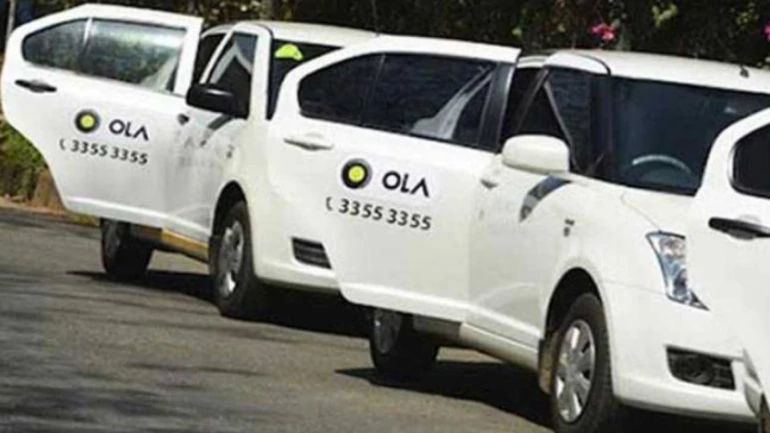
This is from an intro to a report on Ola, a ride-hailing giant in India. This is the key line: “Ola Electric wants to put one million electric vehicles on the roads by 2021”. That is scary – if Uber matches it, you may end up having a dislocation in drivers-passengers ratio across cities.

Ola is today among a handful of India’s multi-billion dollar unicorns. And it’s worthy of your attention: The young company is locked in a cutthroat battle with US ride-hailing giant Uber, and recently Ola has taken the war abroad to Australia, New Zealand, and the UK as well.

  • India’s ride-hailing market is worth over $10 billion. Ola and Uber are neck-and-neck when it comes to saturating cities with cabs, but it’s still anyone’s game. Are they India’s only two options?

  • Ola Electric wants to put one million electric vehicles on the roads by 2021.

  • Driving is the sixth-most common job in India.

  • The average order value on Ola’s food-delivery service, Foodpanda, fell from over Rs300 ($4.22) to under Rs120 ($1.69) during 2018, and market share and reach plummeted, too. Ola is revamping the business.

  • Like Uber and other American unicorns, Ola has been posting massive losses for years now. (Source: Quartz)

I am beginning to think that ride-hailing may not be helping cities in reducing the number of cars on the road! Yes. the redundancy rates of these empty cars which are always on the move looking for passengers need to be examined. I have no empirical data to support my perspectives but like what Toyota wants to do with Didi in China, these ride hailing platforms could be dumping grounds for car companies looking to hit earnings projections.

We were promised that algorithms will make available cars to work optimally for all. Now, platforms are ordering millions of cars! Does it mean that the algorithms have failed or that platforms have stimulated new demand, necessitating the need of new cars?

In Nigeria, especially Lagos, we do not have a car issue [platforms are not buying cars]. Rather, we have a motorbike concern [platforms buy motorbikes]. Lagos state government must ensure there is optimality. Ideally, a fairytale world where Gokada, ORide and Max use one app, reducing inefficiencies on assets would have been amazing. Of course, business does not work that way! Yet, more motorbikes should not be the core gameplan in these entities – they need to come together for a better framework where assets can be shared in some ways.