DD
MM
YYYY

PAGES

DD
MM
YYYY

spot_img

PAGES

Home Blog Page 6674

21 Century Marketing That Works

0

The world has come a long way. From mass media like radio, TV and OOH (billboard) advertising, which are very much like talking to a crowd of people all at once, to more personalized forms of marketing like email marketing.

Email marketing uses automation software to deliver personalised messages to different target audiences. It relies on expert copywriting to reach its readers and is crafted to speak to the pain points of old, new, and prospective customers. To be effective, your emails must be read, and they must make readers take the desired action. Companies who have taken advantage of this medium have had great success. Plus, it is a very cheap way to do some selling. But you need to make sure that you target the right audience so that your emails are not seen as spam. Another new school marketing tactic is influencer marketing.

Influencer marketing is another way to gain a massive brand following and easily market your product or service. Influencers in the digital space have millions of followers who adore them and are generally ready to go where their idol goes and do what their idol does. Any company selling a product that aligns with what the influencer stands for can easily get loads of buyers via influencer marketing. Another new marketing tactic is content marketing.

Content marketing is yet another way to get the attention of your audience and get your products into the lives of ready consumers. All it requires is a good story that is relevant to your target market and a subtle insertion of your marketing message in the body of the content. Of course, content marketing is not just about words and pictures, videos are also a part of content marketing. In fact, all the points I will discuss in this article stand on the foundation of content.

Don’t they say content is king?

Video content is a great way to share engaging pieces with your audience. People enjoy watching creative, short, entertaining videos and are likely to share them with their network online or talk about them. The more connected they feel with your video story, the more likely they are to engage with it. But you must not forget to make it in such a way that the first three seconds of it gives them a reason to keep watching.

What other new school marketing tactics have you found helpful?

Why Nollywood Should Celebrate Prof. Françoise “Ijeoma” Ugochukwu

3

Setting the Scene

Yes, you might find it a bit hard to come across the name on Google Scholar, at least not in the manner I have laid it out, but then again, that’s probably a good reason why you should read this tribute to a deserving individual irrespective of her dual baggage of foreignness and womanhood going by the African cultural construals.

I would save the details to the very end… don’t worry, you’d be glad I saved the best for last!

Let me kick this story off with its main trigger. I just received an alert from Academia.edu the online portal for academic papers published and shared freely outside the framework of “Open Access” as we in academia tend to describe it – albeit made possible through some sort of subvention that most individuals and organisations alike would be more than happy to circumvent (don’t quote me).

That article was entitled “Nollywood, Nigeria’s umbilical cord.” Yes, there are analogies and a bit of humour, both of which underlie the power of the Nigerian movie industry as a connector to Nigerians at home and in the diaspora.

Today, a significant 10% of the Nigerian diaspora live in the United Kingdom – probably the largest Nigerian community in Europe. Research carried out between January and March 2011 confirms the slow cultural erosion already reported by earlier studies and affecting Igbo and Yoruba resettled communities, with Nigerian languages on the decline. It also reveals the premium placed on communication among Nigerians, with 73.5% talking frequently to fellow Nigerians and watching Nigerian video films, massively preferred to foreign films.

Interestingly, the article seems to zero in on two of the three ethnic groups in the South (notable East & West) as follows:

This paper seeks to evaluate the impact of Nigerian video-films among resettled communities in the UK and find the reasons behind the success of these films among Nigerians, focusing on Igbo and Yoruba speakers.

Related to these geographic spaces is the identity issue and diasporic connections inferred in the title.

It investigates the potential importance of language in viewers’ motivations and practices, the role played by the cultural message of the films in identity-reinforcement within the Nigerian community, and the impact of these video-films on the revival of cultural practices among diasporic communities. It shows that these films, acting like an umbilical cord feeding ‘abroad members’ with pictures and sounds from the home country, have empowered diasporic Nigerians to cope with their situation, reclaim their culture and keep in touch with their ancestral land. 

Highlights

For the purpose of this study, we will adopt Safran’s definition of Diaspora (1991: 83-84), based on a six point-list describing this group – notably disperse; collective in memory; alienated/ insulated; craving to return; homeland restoration; and ethnocommunal consciousnesss:

“(1) they, or their ancestors, have been dispersed from a specific original ‘centre’ to two or more ‘peripheral’, or foreign, regions; (2) they retain a collective memory, vision, or myth about their original homeland – its physical location, history, and achievements; (3) they believe they are not – and perhaps cannot be – fully accepted by their host society and therefore feel partly alienated and insulated from it; (4) they regard their ancestral homeland as their true, ideal home and as the place to which they or their descendants would (or should) eventually return – when conditions are appropriate; (5) they believe that they should, collectively, be committed to the maintenance or restoration of their original homeland and its safety and prosperity; and (6) they continue to relate, personally or vicariously, to that homeland in one way or another, and their ethnocommunal consciousness and solidarity are importantly defined by the existence of such a relationship.”

 The article (and many others related to it agree) highlight implications for Nigerians in Diaspora Organisation (NIDO) worldwide, which is currently structured into eight regions including NIDOA for USA and NIDOE for Europe, and recognised by the Nigerian government as the umbrella organisation for all Nigerians around the world and as a vanguard of Nigeria in the international community performing the following ambassadorial functions:

Promote Nigeria’s image abroad, encourage patriotism, networking and cooperation among Nigerians abroad, and assist in promoting Nigeria as an investment destination in Africa.  

Introducing Professor Ugochukwu

Professor Françoise Ugochukwu (Igbo name: Ijeoma), habilitée à diriger des recherches, is a Chartered linguist & an Africanist with special interest in Nollywood, Nigerian and intercultural Studies. A retired Professor from the University of Nigeria, currently affiliated to the Open University (UK), Dept of Development Policy & Practice as a Research Fellow, she is also a Senior Research Fellow, IFRA (Ibadan). She lectured in Higher Education in Nigeria, France and the UK, 1972-2014. She is now a full-time researcher and PhD examiner. She also serves as an expert on the Paris-based ‘Neverforgetbiafra’ endowment fund. She is the author of the first Igbo-French dictionary (a Franco-Nigerian joint venture), of several books and more than a hundred book chapters and articles in English and in French in reputable journals worldwide; she also translated the first Igbo novel, Omenuko, into French.  Her pioneering work in the field and longstanding contribution to the strengthening of cultural and educational ties between France and Nigeria awarded her the national distinction of Chevalier des Palmes Académiques in 1994.


Read More:


Ugochukwu, F. (2011). Nollywood, Nigerians’ umbilical cord. African Renaissance, 8(2), 59-75.

Madichie, N. O., Ajakaiye, B. O., & Ratten, V. (2019). The Impact of New Media (Digital) and Globalisation on Nollywood. In Digital Entrepreneurship in Sub-Saharan Africa (pp. 89-121). Palgrave Macmillan, Cham. https://link.springer.com/chapter/10.1007/978-3-030-04924-9_5

WeWork and Nigeria’s Stock Exchange Latency Lever

3

The Nigerian Stock Exchange is unique for many things. But one surprises me: news hardly move prices of equities in the short-run. It is like investors do not follow the news.  The day an energy company got a big hammer from the Securities and Exchange Commission, I watched to see the impact on the equity. At the end of the day, nothing significant happened. 

A bank CEO was locked up by EFCC over a weekend, the bank equity traded on the Monday largely unchanged. A bank declares record profit, and the next day, nothing significant happens on its valuation. Sure, over time, the trajectory becomes noticeable. 

I have coined a phrase to explain this observation – latency lever; Nigeria has one of the longest in the world. Latency lever is a period between a significant news on a company, and when a visible associated impact (i.e. the lever is pulled) is seen on its traded equity.  In U.S, it is near instantaneous; in Nigeria, give it at least a week!

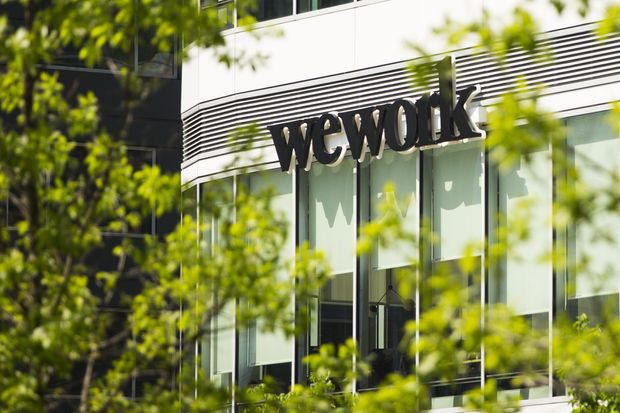
This brings me to We Company, the parent of WeWork, a quasi-technology real estate company that operates mainly in U.S. We Company last raised private capital at a valuation of $47 billion. It wanted to go public and had filed paperwork with road shows planned. But it has many governance issues, triggering scenarios that its public valuation could fall below $20 billion. So the road show is cancelled and the IPO is postponed, the Wall Street Journal notes..

WeWork’s parent postponed its initial public offering after investors questioned how much the company is worth and raised concerns about its corporate governance.

The shared-workspace company—which had planned to begin a roadshow to market the shares as early as Monday ahead of a trading debut next week—shelved the offering until at least next month, people familiar with the matter said.

This company has not even gone public but the impacts of news are evident. Its main backer, Japanese SoftBank Group,  is even facing pushback as it works to raise a new fund from its partners.

The biggest backers of SoftBank Group Corp.’s gargantuan Vision Fund are reconsidering how much to commit to its next investment vehicle as an oversized bet on flexible workspace provider WeWork sours.

Saudi Arabia’s Public Investment Fund, which contributed $45 billion to the $100 billion Vision Fund, is now only planning to reinvest profits from that vehicle into its successor, according to people familiar with the talks. Abu Dhabi’s Mubadala Investment Co., which invested $15 billion, is considering paring its future commitment to below $10 billion, the people said, asking not to be identified in disclosing internal deliberations.

Contrast that with when a bank CEO is locked up by EFCC, a financial crime fighter, and the bank market cap unchanged at the end of the next trading day, you will appreciate the uniqueness of public investors in Nigeria. Yes, that lack of visible action cannot be explained by rules designed to avoid drastic fall on market valuation of companies. Of course, wait for a few weeks, those investors will begin to run. I am not sure if it is due to the structure of the exchange since it has become computerised to a large extent. I just think the investors are unique in how they process information, and take actions on Buy, Sell and Hold.

Employees Are The Problem of Employees

0
Oil workers

I met a friend who told me about his company.

He asked his supervisor for three days break. He was travelling to Abuja to write a professional exam.

He was granted permission on one condition – the three days off will be deducted from his monthly salary.

So shocking!

Like seriously, do we still have companies that do that?

If a company won’t support the career growth and development of employees, then why is it necessary to work in such a company?

To worsen the matter, he told me – ”If I don’t resume after three days, I will lose the whole of my salary for September.”

That’s so ridiculous. Considering the journey would take him, 5 – 8 hours.

Break it down – he’s writing the exam on Thursday. So he travels for 5 – 8 hours on Wednesday, meaning he will spend the whole day on the road. He writes the exam on Thursday evening and travels back on Friday for another 5 – 8 hours. He’s expected to resume back to work on Saturday.

I have no idea why a supervisor would treat a fellow employee that way. Sometimes, the problem is not the CEO or business owner, I realized that employees are actually the problem of employees in the company.

How?

Unhealthy competition and eyeservice are rampant in some work environments. Employees trying to compete with other employees in order to receive favour from management or to appear like an angel before them.

When unhealthy competitions start to exist in the company, then every employee starts playing games against each other. This causes disunity amongst them and makes it easier for the management to manipulate them.

In the end, employees are always at the losing side because management will replace everyone seen as incapable or unproductive. Or the company closes down, and both employees and employers lose out, making everyone a job seeker again.

Nothing compares to teamwork. Indeed, it makes the dream work.

The first thing every management should strive to have in the company is teamwork. But if management only favours those who work well, that could breed jealousy and envy in the work environment.

Over the course of time, it may end up killing everyone’s morale and productivity. One thing is for sure – ”every worker is important to the company.”

Nigerian Government Sets Up Committee for AMCON’s Debt Recovery

0

The Federal Government of Nigeria, through the office of the vice president, has set up an Inter-Agency task force on the 5 trillion naira Asset Management Corporation of Nigeria (AMCON)’s debt recovery. The office of the vice president announced on Tuesday.

This is coming a day after the Economic Management Team (EMT), headed by the vice president prof. Yomi Osinbajo was dissolved and the new Economic Advisory Council (EAC), was inaugurated.

It appears the vice president is taking a new role in the place of EMT, and it is on AMCON debt recovery. With the challenges that the government has encountered in its bid to recover from debtors the sum of 5 trillion naira, it’s obvious that the method used didn’t work, therefore, the idea of an Inter-Agency Committee was welcomed.

The Committee was tasked to turn the table around in what has been a difficult process that has seen debtors incessantly default in their payment obligations.

According to the statement issued by the office of the vice president: about 67% of the outstanding 5 trillion naira AMCON debt is said to be owed by just 20 individuals or entities.

The vice president charged the Committee to live up to its responsibilities, one of them, developing a workable timeline.

“One of the terms of reference is for the Committee to prepare a report, giving us a sense of what the timeline would be.” He said.

Under the chairmanship of the Chairman of the Independent Corrupt Practices and other related offences Commission (ICPC), prof. Bolaji Owasanoye, the Committee was charged to consider every lawful means in their quest for the debt recovery. Even if it means taking enforcement measures.

“I congratulate you on the very onerous task that has been set, to render this service. I know that, given the kind of individuals here, you will definitely turn this whole narrative around. So I wish you all very well.” The vice president encouraged.

Members of the Committee who are made up of the heads and representatives of financial agencies such as the AMCON, EFCC, NFIU, ICPC, CBN, NDIC and Federal Ministry of Justice, are expected to review the status of all debts in respect to AMCON, consider the practicality of recovery, work out a recovery strategy with specific timelines for completion.