DD
MM
YYYY

PAGES

DD
MM
YYYY

spot_img

PAGES

Home Blog Page 6758

The Mission of Moyosola Iwashokun, Industrial Chemistry Graduate Turned Shoemaker

0

They say life will not give you everything you want but everything you want in life has been given.

Unemployment is no longer a new topic. In fact, it is a global topic. It’s the song on everyone’s lips. 

These days, finding a job is down to connection or fortune. It’s no longer like it was back then in the 90s when graduates get jobs immediately after graduation. 

Every year, institutions produced thousands of graduates with no employment opportunities to absorb them. This has led to a major problem in Africa and the world at large. 

How do we tackle unemployment in Africa?

The only effective way unemployment can be tackled is through entrepreneurship. Everyone must embark on entrepreneurship. Graduates should have the mindset of creating jobs and not looking for jobs. That is the only way we can reduce the rate of unemployment drastically.

Moyosola Iwashokun, an ‘Industrial Chemistry’ graduate shared her own taste of unemployment and what led her into full-time entrepreneurship in a very short interview with me.

 Can we get to know?

”My name is Moyosola Iwashokun. I am a graduate of the University of Ilorin where I studied Industrial Chemistry (2012-2016).

 Where are you from?

”I grew up in the slums of Lagos, Nigeria, so I can basically say, I’m from Lagos.”

 How did you develop an interest in shoemaking?

”As a lady with the hijab, I have a love for nice fitting footwear. I would always look at my feet to see if they are well fitted in my shoes. Then I discovered that I actually have an interest in anything that has got to do with shoes.

Can you share a bit more about your shoemaking business?

”The shoemaking story began when I was in University. Although it wasn’t quite easy because I went to a school (University of Ilorin) which was quite fast in running her academic calendar, so balancing my studies and shoe learning training wasn’t rosy but it was definitely worth the stress.”

 Did you ever job hunt after graduation?

”Of course, I did. In 2018, when I had finished serving my country, I tried so hard to secure a job so I could practice my discipline ’Industrial Chemistry’. I wasn’t successful in my job hunt but I was able to think differently. I thought of combining my discipline with shoemaking business since I saw synergy between the two. Although I never got the job I wanted but I was able to land a teaching job.”

 How were you able to cope with your business and the teaching job?

”I was drenched, I had to pull out to face my craft, that is, shoemaking business.” 

What can you say about the business?

”Shoemaking is enthralling to me and making every feet count is my goal.” 

How can we find you whenever we need your shoe?

”My company name is Gbayi_Signaturez.

My phone contact: 08165334993

My IG handle: @gbayi_signaturez”

 Feel free to connect with Moyosola.

The Challenge of Nigeria’s National Identification Database (NIDB)

0
National ID Card, Nigeria

The use of National Identification card in Nigeria is suddenly becoming a National issue. On Monday August 5, the Director of the National Identity Management Commission (NIMC), in Ekiti state, Mr. Gbenga Ifayefunmi revealed that it has become compulsory for Nigerians who wish to obtain international passport and driver’s license to have National Identity card.

This new development is as a result of new executive order signed by president Muhammed Buhari, compelling the use of National IDs for government related businesses. Every Nigerian has thus, been urged to enroll through NIMC centers and enjoy the unique advantage that its social security number offers – it ranges from education to healthcare to every government related engagement.  The new change in policy means that individual data can be updated and changes can be made on issued cards.

The Director General of NIMC, Mr. Aliyu Aziz, explained that the National Identity card can only be issued to Nigerians registered into the national identity system and legal residents who have attained the age of 16 years and above, but the National Identification Number (NIN) is assignable to Nigerians alone. This move by the FG is in a bid to enroll Nigerians into the National Identity Database (NIDB), which is recently established to register the legitimacy and authenticity of the citizenry. So far, it has been a welcome development though it’s coming later than it should and there are challenges.

According to the International Committee of the Red Cross (ICRC), an estimated 2 million people have been forced by armed conflicts to flee their homes. Many of them are internally displaced while others sought refuge in neighboring countries. This figure is a destabilizing factor in FG’s bid to develop a national identity database owing to the fact that some regions in Nigeria, mainly in the North don’t have the stability for such data collection.

The majority of this Internally Displaced Persons (IDPs) are scattered across neighboring countries like Chad and Niger Republic who have common culture with Northern Nigeria -Talk of names and language and style of grooming. This means, the people in this geo-zone can move freely and integrate without hindrances, and that’s a challenge.

In April 2018, president Muhammed Buhari stated that the insecurity in the Northeast is worsening because of the Libyan impact. He claimed that following the uprising that usurped the former military dictator, Muammar Gadhafi, his armed militia scattered across Africa, and thus have infiltrated the Northeast region and it has resulted in the escalation of criminal activities. Buhari’s statement only confirmed the challenge: if people from Libya, bright in color and easily distinguished among other Africans, could easily infiltrate Nigeria, owing to our porous borders, what about those whose have dark skin? And the Fulanis that spread across the West African region?

It would only take a Hausa or Fulani name and a Local Government Area (LGA) to justify it. And that will be all, you are a Nigerian whose record could be found in the National Identification Database. Although Aziz said that identification and data collection will be done through the help of traditional rulers and village chiefs, the loopholes are so wide to be covered.

Free movement and integration can justify any story of origin that natives cannot relate with. For instance, if someone who came from Niger republic claim to be an indigene of a village in Sokoto state, and he lives in Kano, it will be difficult to refute such a claim. The number of Nigeriens who live in Lagos is high, and you could hardly see anyone of them admitting that he is not a Nigerian. There is always a Northern state to lay claim on, and excusably so because they know the nooks and crannies.

Nevertheless, the recent change in the policy of NIMC that includes the registration of infants and those below the age of 16, will yield productive and protective result in the future –developing the ever needed national identity database. However, the exercise is likely going to gift undue citizenship to many foreigners as a result of integration loopholes.

Improving Organizational Productivity

0

Trying to beat the early morning city traffic to work, you wake up hours earlier in order to get yourself prepared for the days work. You get yourself dressed up probably after having a few bites from breakfast. Eventually, after overcoming the hurdles along the way, you make it to your workplace just on time. 

You probably look at your timepiece, and it’s just a few minutes before  8.00 am. Then you have a sigh of relief as you gradually walk down to your work space. Scenes like this are common to millions around the country and globe.

Punctuality is desired in almost any well structured organizations. It says a lot about the organization and also a lot about the individuals. The punctual are always considered serious and organized as against the late comers who many may feel are carefree and lazy. 

In the process of enforcing punctuality, many organizations have made the basis of their appraisal to include early coming, leading to a system where the emphasis shifts from efficiency and results to time clocking. Once the time has been clocked, any other thing that happens is secondary. This kind of system is seen in many government-owned or run institutions. Workers strive to come early, and nothing else like work matters.

In 2014, the Real Madrid midfielder Toni Kroos had this to say about what it feels like to play in both Real Madrid and Bayern Munich.

“The mentality here at Madrid is different than at Bayern,” Kroos was quoted as saying by Sport Bild.

“When training started at 10:30 at Bayern, everybody would be ready to go at 10:30. Things are a bit different here. I got used to it pretty quickly, though. Everything is a bit more relaxed and loose.”

And considering what has happened in Real Madrid where things are loose and relaxed, in this period, is remarkable in stark contrast with what has happened in Bayern Munich, in the same period. Real Madrid won three Champion League titles consecutively and four in the last six years. They remain the only team in modern  Champions league history to achieve such a feat. Is it mere coincidence? How come a team that apparently doesn’t take punctuality so seriously become the most successful team in the history of European football?

Results Matter

Organizations built around results are more successful in the long run under certain conditions. This does not imply that a result oriented organization should not or cannot be time conscious. Rather more time consciousness should be  encouraged because more work hours in a productive setting should lead to increased productivity.

Many private business owners and entrepreneurs work with a more flexible time schedule, and tend to put in more in the end than most places where signing in is the most important daily event.

In other words,  punctuality should not be the end, but only a means to an end. Organizations should be both time conscious and result oriented as leaving one out of the question will lead to inefficiency. 

Overtime

Who should work overtime and why?  Ideally, people should get paid twice the usual rate for every additional hour added overtime. In well structured organizations, this is usually the case. But then, it is difficult to say who overtime actually benefits or whether it is worth the while. Considering the fact that the increment in additional income is only marginal, people thinking of working overtime should think critically about it  since there are health implications.

According to an extract from a 2018  HealthDay article :

“…Researchers said they found that working 61 to 70 hours a week increased the risk of coronary heart disease by 42 percent, and working 71 to 80 hours increased it by 63 percent. Heart disease is the leading cause of death worldwide, with more than half a million deaths each year in the United States alone, according to the U.S. Centers for Disease Control and Prevention”

Another reason to consider if working overtime is worth it is the fact that only one who has a stake in a company should put in the most sacrifice. Yes, there are situations where necessity demands that it is inevitable. Like in emergency situations, it is understandable then.

Moreover, one considering working overtime as a means of earning more should also find out if such additional input wouldn’t benefit him more if he invested the same time in a personal productive economic venture or even in pursuing a hobby. 

Overtime isn’t always associated with increased productivity. Working more hours may actually lead to decreased efficiency. Consider that in Germany, the largest economy in Europe, the average worker there only spends 35.6 hours a week on the job. That is lower than the 40-hour week or 48-hour week common in so many other places.

Take for instance, In 1926, industrialist Henry Ford  transited from the usual 48-hour week to a 40-hour week, and surprisingly discovered that his workers were actually more productive in the new schedule than when they were working a 48-hour week. Funny how that is true.

In summary this article has aimed at highlighting the effects of punctuality and overtime on work efficiency. I hope the perspectives have helped.

The FIRS Absolute Mandate on Nigeria’s Ecommerce VAT

2

Great comments on VAT (value added tax) collection in the Nigerian ecommerce. The comments on Tekedia and LinkedIn positing that government should neither require ecommerce firms to collect VAT nor use banks to extract the VAT are well noted.

We agree on one thing: the offline markets (open market sellers, neighborhood stores, traffic boys, etc) will benefit if ecommerce VAT collection takes off at scale since VAT will make products sold online to become artificially more expensive when compared to offline channel, by 5%.

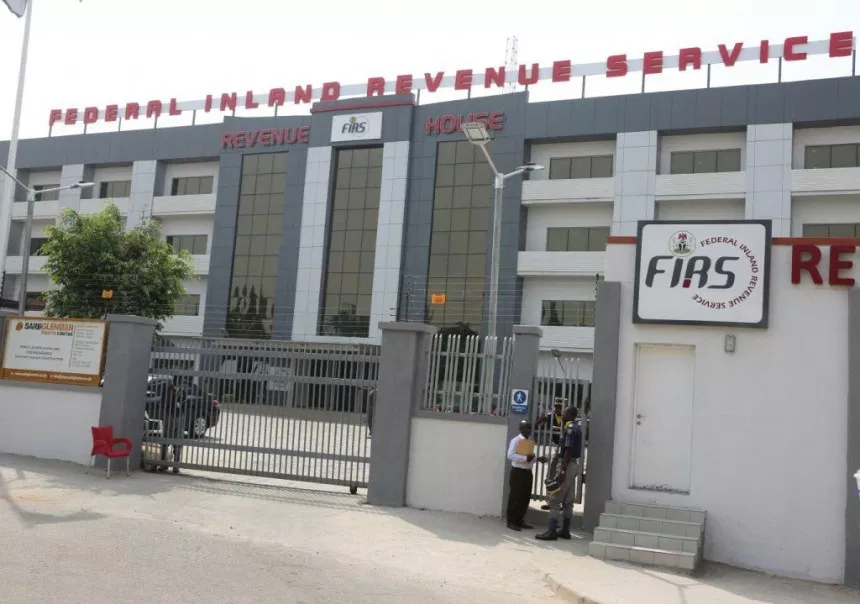
Yet, VAT collection is the LAW of the land. Unless that law is changed, FIRS (Federal Inland Revenue Service), the tax agency, has to use any legal mechanism to collect it. That it is easier to get it from ecommerce firms compared with (offline) open markets across Nigeria does not make the strategy wrong. 

If the government does not want to collect VAT on ecommerce, the National Assembly should update the rule book. This should not be debatable. Anyone saying we should leave ecommerce firms from VAT obligation is saying Nigeria should abstain from enforcing its laws even when it has a low-hanging fruit at hand.

America changed the rule book to waive the burden of sales tax collection for ecommerce firms like Amazon. Nigeria has not done so, and that means you should not expect the tax agency to do otherwise. That is my point – if FIRS cannot collect VAT it can easily collect, it simply means it is failing Nigeria on executing its mandate.

This expected strategy of possibly using banks to collect 5% VAT is not a problem FIRS has created. If you do not like it, tell  your House of Representative or Senator to waive VAT on online sales. FIRS is simply doing its work in a domain it can easily do so. It has no legal basis to say “because we want the online commerce to grow, FIRS will not go after the ecommerce companies”. That is not a call of FIRS to make: the National Assembly has such as part of its job requirements.

Ecommerce Sector to Shrink As Nigeria Begins Collecting 5% Online VAT Next Year

3 Things to Avoid in Job Interviews

0

When it comes to attending job interviews, looking good is not enough to land you that dream job. Often times, job seekers have blown up their chances of getting a job because of the manner in which they answer interview questions. 

In life, there are things you say that could make or break you. Likewise in job interviews, you could shoot yourself at the leg when answering the interviewer’s questions unaware. With the stiff competition for the vacant role you are applying for, you may not get a second chance. 

A Career Coach, Brad Blanchard; shared 3 things that don’t look good in an interview and how to avoid them. 

  • Avoid saying overly vague answers that don’t answer the question. I know it’s not as easy as it sounds. It could put you in a tight corner by getting caught off guard with things that you can’t or don’t know how to answer. This may make you look like you have no clue of role or question before the interviewer. Instead, take a second to compose your thoughts. While preparing your thoughts, try to come up with something specific and relevant to what the interviewer is asking. Don’t be afraid to ask for clarification. It’s not a crime to ask the interviewer question inasmuch it is in line with what is being asked. An interview session is meant to be interactive. 
  • Don’t play the victim. Don’t complain or act like you have too many troubles in your life. Although it is human to complain about some things, not in an interview session. It is totally unprofessional. The interviewer wants to see a problem solver and not a complainer. Playing a victim might paint you as a negative person.
    They want problem solvers, not problem bringers. When explaining situations, focus on what you did rather than the issues or challenges you face. Don’t complain about your previous employers, the job market, government or anything else, it’s not flattering. You might be sending a message to them. Perhaps, they will see you as someone who will go out and say the same thing about them. Even if you are asked about your relationship with your previous employer, say good things about your previous work and colleagues. Be someone who is going to brighten up the office. 
  • Lack of interest for part of the job. We don’t all like every component of the job, but don’t make it obvious. Every job has its dark side. I read about a Footballer, David Luiz. He said he hates training but he doesn’t have a choice since that’s his chosen profession. Same with Muhammad Ali. Don’t go to interview telling the interviewer you detest a particular aspect of the job. It might be their major challenge or the reason why they are hiring. So telling them you don’t like that part of the job has automatically disqualified you as the right choice for the role. Instead, act like you would be happy to do the work unless you are not interested in the job anymore, then walk away. Hiring managers want to see that you wouldn’t be a runaway hire. 

All of these things will help set you up for success by preventing you from appearing like the wrong choice. 

I wish you success in your job search.