DD
MM
YYYY

PAGES

DD
MM
YYYY

spot_img

PAGES

Home Blog Page 6791

Nigeria’s Law Enforcement Challenge

0

By Samuel Nwite

Almost on weekly basis, there are reports of rape cases in Nigeria. Some of the reports are beyond the scope of sexual passion, they are in fact, cases of mental illness displayed through sexual actions. When the case of Khloe, a 4 years old girl who was raped by a man named Idris Ebilimo, resurfaced on the 5th of July. It reminded us of how deep the hole holding this sexual madness has been excavated. To make things worse, the little girl’s father was tenaciously defending her Rapist to the point of getting him a Lawyer. His action was too much to bear that Nigerians had to take to the streets to protest the absurdity of the whole situation.

But this is a better story even. The 3 months old who was raped to death by her uncle didn’t get anyone protesting for her. To make things worse, her father was protecting her Rapist uncle. And it could only get sadder, not only because minors are becoming more victims nowadays, but because the police have become more of accomplices in cases of rape than law enforcement. As at 2016, there were only 18 convictions in as many as thousands of rape cases recorded in Nigeria weekly, since 1960. The Women At Risk International Foundation reports that over 10, thousand women are raped or sexually assaulted daily. This means that if unreported cases are considered, we will have a heartbreaking record of over 5 million Nigerian women who experience sexual assault annually. But less than 28 percent of this alarming figure is reported, and there is less than 10 percent conviction from the reported cases. The question on the lips of every sound mind is why? The answer is not far-fetched.

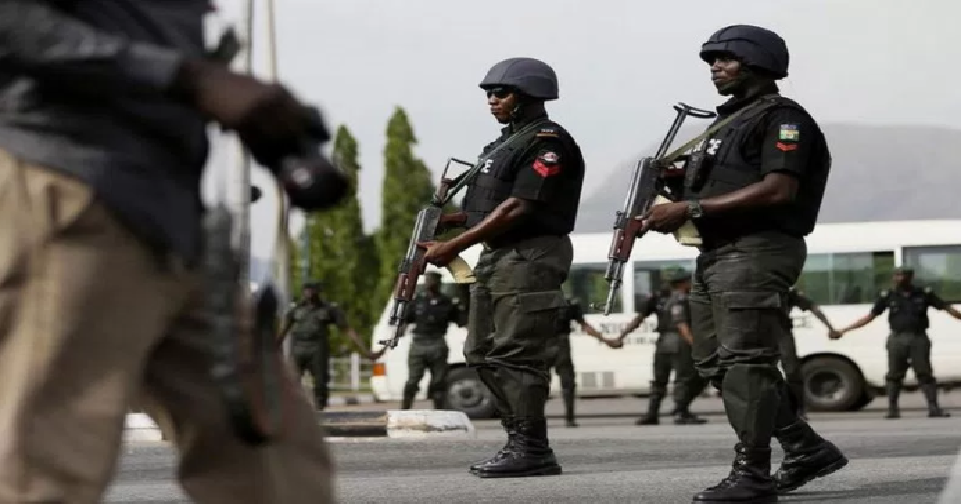
On April 27, over 65 women were arrested in a raid of Night Clubs in Abuja. It was more like a female gender subjugation in the guise of police raid, and it stirred enough anger that led to protests. What the protesters didn’t know was that the worst news was on the way. A few day later, the arrested women claimed that while in custody, they were raped by policemen who converted sachet water nylons to condoms. A few people doubted the claim but it was widely believed to be true based on the reputation that the Nigerian Police has made for itself.  This is the police that should be prosecuting rapists.

In 2011, when the video of a woman being gang-raped by five men in a private off campus hostel close to Abia State University, surfaced online, it drew a national outrage. The effrontery of the rapists to record their amorous barbarism and post it online showed the level of impunity that rape culture is escalating with in Nigeria. Any sane country would have realized the danger ahead, and take drastic action to quench it. Not to everyone’s surprise, the police dismissed the video. The then Assistant Commissioner of Police, ACP J.G Micloth issued a statement saying that there is no evidence to pursue the case, because the video showed that the victim had not resisted. Although the video showed the girl crying; “you people better kill me, you people better kill me.” It wasn’t enough for the police to launch an investigation.

In June, a 40 years old man defiled a 2 years old girl in Delta State. The police ignored the Rapist and arrested the victim’s 12 years old brother. He was beaten with baton and detained for 5 days, he was almost confessing to the crime of raping his own sister before help came for him. The police turned around to demand 10, 000 naira for his bail.

In May, the case of a 24 years old woman who was drugged and gang raped by two men, Don-Chima and his friend Olusegun Razak was added to the ever increasing number of rape victims. She was bold enough to file a rape complaint and had good friends who followed it up. The police effected the arrest of the Rapists, but not quite long after, they did their thing. They turned against the victim’s family, bullying them to withdraw the case. The Rapists’ families are rich, so you know where that’s coming from. They nearly succeeded, if not for public pressure.

On the 28th of June, Photographer, Busola Dakolo, the wife of Singer, Timi Dakolo, granted the most courageous “rape allegation” interview in Nigeria. It was against the Famous pastor of Common Wealth of Zion Assembly (COZA), Biodun Fatoyinbo. It was a one case too many. The series of allegations that followed it was disappointedly loud. But the Pastor is a big fish, the small fishes get off the hook easily muchless a Shark. The Nigerian people know this, they also know what it takes to pull the big fish out of water, and they did exactly so. The Sunday service in COZA that week was held with unwanted guests who came with placards instead of Bibles. And once again, the police intervened on behalf of the alleged Rapist, preventing the protesters, but the voices were too loud to be intimidated. The police would be forced to do their job this time, the number of high profile people who lent their voices in support of Busola will ensure that. That was what everyone thought, and then went home – waiting for news from the police. It’s a criminal case, the pastor must be invited and interrogated by the police.

It was until the 20th of July that police sent the invitation, but not to Pastor Biodun Fatoyinbo, but to the victims. It was more like invasion, they were going to whisk the Dakolos away, but another round of protest followed, Nigerians know well enough who they are dealing with. It wouldn’t take anything for you to hear confessions from the victim, claiming that she made false allegation against her Rapist. Influential voices like the Nigerian First Lady, Mrs. Aisha Buhari, the wife of the former Senate President, Mrs. Toyin Saraki reminded the police that they are interestingly watching. The police issued a statement saying the invitation is a standing procedure and is sequel to the rape investigation. However, the distrust speaks volume, the impunity that the Nigerian rape culture is thriving on stems from the police’s partisanship. And the question many keep asking is why?

No, it’s not patriarchy

The answer many will give to the above question (mostly women) is Patriarchy. And they have a good reason to say so. Nigerian is built on a foundation that subjugates women, especially, sexually. But in the case of rape, it’s a matter of moral bankruptcy that has eaten through every path of morality in the country. Everyone who treads these path is affected, either as a victim or a perpetrator. You can’t name one aspect of human endeavor in Nigeria that is not tainted by moral absurdity – it’s a crisis that knows no gender. And the police, just as in rape cases, built a platform for it all.

The fact that there has been only 18 convictions in the legal history of Nigeria, out of millions of rape cases is an evidence of a bastardized system. The stigmatization and blame that follows the victim is only a pity of the downtrodden. When the interview of Busola Dakolo surfaced online, the former Media Aide to the former, Governor of Ekiti State, Lere Olayinka, described her ordeal as “consented rape.” These two words have presented another question: Do Nigerians understand what consent means? It’s quite unlikely, the kind of questions and comments you hear whenever there is a rape incident prove otherwise. “If she did not enjoy it, why was she moaning”? “Why did you go his house in the first place”? “She is just looking for attention.” “Look at what you are wearing, why would they not rape you”?

If you are man, nobody would want to hear your story in the first place. The case of a man being raped by women is regarded as a favor, and therefore, cannot be entertained in any police station. A man is expected to enjoy being raped, and male children are living through the trauma in cold silence. The after effect may be consequential retribution that will only result in further acceleration of sexual misconduct.

These factors have made it difficult for sexual abuse victims to voice out. Abi Idowu, who was molested by Naval Commodore Olugbenga Fahad Oladipo, (Bidemi) from age 5 to 13, said that it took her 37 years to voice it out because, No one will believe you, the person involved is in position of authority, and you already know, the police will do nothing. That’s if they don’t turn the whole thing against you and accuse you of assassination of character. The emboldeners it begets are available on the streets, offices and anywhere men and women commingle. Bosses feel entitled to the body of their subordinates, and so do public office holders to every woman they are attracted to. All thanks to the paramount sexual abuse impunity.

The only reason why some sexual abuse victims in Nigeria try to talk about it at all is not because they expect justice, but because they want to ease their hearts of the burden. In the US, UK, and so many other countries, the police have devised so many anonymous means to enable victims of rape to file complaints without being threaten by their Rapists. The police don’t only accept such complaints, they investigate and prosecute the perpetrators without them knowing the source of the complaint.

Morality is a prerequisite of human development, and it is the prerogative of every country’s police. Nigeria is not exempt, therefore, the Nigerian police should realize that tomorrow strives or thrives on the events of today.

Work for Companies That Pay for Your Value, Not Your Time

3

By Ajayi Joel

Listen, I would first tell you there is a problem, and it would not be easy for government to fix it.

It is the problem of mass production of students from the university system in Nigeria. The university churns out thousands of graduates yearly.

So, every year, there are several other graduates just like you who studied the same course. Some had higher grade points than you or lesser.

The fact is that you all want to compete for the few jobs available. So, we now have graduates ask this question, “What if I don’t get picked by this company?”

It is not bad to ask. My first point is that you are already at a disadvantage because there are thousands of others. What most companies do then is take advantage of the number and put out ridiculous salary offers just because they know if A doesn’t get the job, Y or Z would jump on it.

When you are in this situation, my first advice is pause, and then reflect; yes, ask yourself , “Am I applying for this job for them to use my time or because of the value I want to offer?”

If you are being paid for your time, you stand a chance to lose your job easily or get underpaid because there are several others on the list who have just time to offer.

The queue is endless. However, on the other side of value, the number is very few.

Sorry to break your heart, a reasonable company would go for value. Before they pick scrambles from those who just have time as what they offer.

They would also offer better reward to someone who has value.

There are many graduates, hence the lesser significance of a first degree, contemporarily, since there are myriads of options available to employers. Simply, the companies would have to increase the qualifications for the jobs because it is the employers’ market.

Now, pay attention. This post is not to give you a guarantee of job security. It would only tell you what not to consider when applying for a job.

When you are applying for that job and or post, it is not about the time you want to spend there, it is about what you want to offer as a value from yourself.

I know people who have value, though jobless, and still have higher chances than those who don’t. So when you try to apply for a job, and the question – “What if I don’t get picked?” – comes up, be quick to evaluate yourself if you are asking that because you really fit into the task needed, or you were just in a hurry to occupy a position.

If it’s because you are fit for the task, then you should also begin to think about what you have that beats those who are also fit for the task by asking yourself again: “What if I don’t get picked by this company?”

The more you evaluate yourself, the higher your chances. It is not a guarantee; it is just a checkmate to increase your consideration for your value level.

Never apply for a job that pays for your time, there are thousands who would grab the opportunity and accept a cheaper offer than you, hence putting your job security at risk.

Apply for a job that pays for your value.

Do you have the value? You must answer that to make progress.

The Entropy of Nature: The Ultimate Material Value Tends Naturally to Zero

0

By Orji Obinna

In layman’s term, one of the implications of the second law of thermodynamics is that physical systems break down with time or that decay is constant or better still that things naturally tend to disorder. This points to the fact that the world around us is finite, and that its ultimate material value tends gradually (naturally) to zero. That’s why rocks are disintegrating, that’s why men and women are growing old, that’s why buildings when left unattended fall into disrepair, that’s why vehicles can’t run perpetually without refueling at regular intervals.

If for instance, an entire city was left alone and undisturbed and isolated from any sort of interference for say 500 years, even in the absence of rain, sun or many other weather elements, decay would still consume it. In other words for continued existence and usefulness in this material universe of ours, we need a constant  external energy source to replenish whatever is lost to the environment. Whatever that external source maybe!

On the other hand, the non material things in the universe have the ability to build up over time even though they can still disintegrate when left unguided and unattended . These are properties that cannot be explained from the evolutionary point of view because they are non-material in nature. (At the very zenith of evolution, it explains our existence only as mere biological machines): patience, kindness, wisdom, empathy – you can go on and on and on.

So if an individual physical body is disintegrating as he ages, and as the clock ticks further and further, he should make conscious effort to build up his non material qualities like wisdom, knowledge, empathy and so on.

This should be the goal, as the material M approaches zero (0), the non-material N should approach infinity (~) . This is the only way to get the better of time dependent decay. So in the end, this accumulated non-material could be transferred or propagated across the breadth of time.

Imagine just for a moment that instead of accumulating knowledge in mathematics (including the discovery of pi), astronomy, geography, and biology, the ancient Greeks focused on preserving their athletic bodies sculpted by war, nutrition and gymnastics which eventually would succumb to entropy. Possibly, there wouldn’t have been the renaissance, Penicillin, steam engine, computers and many other things benefiting us today.

Many of the things we enjoy today are as a result of thousands of years of accumulation of intangibles, purifying humans like gold passed through fire, leading to the emancipation of the human mind, culminating in events like the abolishment of slavery, better human right laws, democracy and the de-legalization of racism.

In the end it wouldn’t be wrong if I quote, “Do not store up for yourselves treasures on earth, where moths and vermin destroy, and where thieves break in and steal. But store up for yourselves treasures in “heaven”, where moths and vermin do not destroy, and where thieves do not break in and steal”.

Success Tab Uses Modern Tools To Promote Learning for Nigerian Students

1

By Nnamdi Odumody

Nelson Mandela, South Africa’s anti-apartheid hero and former President, said that education is the greatest weapon which an individual can use to change the world. Nigeria currently lags behind the rest of her peers in global performance ratings due to poor investment in education which has spiralled to a non-productive economy with the poorest people in the world and an enclave of insecurity.

Oluwakoyejo Oluwatosin believes that every Nigerian child deserves quality basic education at the primary and secondary levels which is the most crucial stage in their development to become successful in life. He saw the friction in the quality of educational content and mode of dissemination by teachers in public schools. That led to the development of Success Tab, an educational tablet with over 100 e-textbooks, 15 years model questions for WAEC examinations, 13 years model questions for JAMB examinations, 10 years model questions for NECO examinations, Instant Chats with Educators trained by top educational institutions like Corona Schools, 50 Educational Games pre-installed, and Social Media timeout for the students.

That timeout was included in order to prevent addiction and make the tools more effective with Parental Control for parents in order to monitor their kids so that they don’t visit, consume harmful content or engage in nefarious activities with their peers as well become victims of cyberbullying.

It has a 16GB internal storage with a 10.01 screen size, 2GB RAM, 5000 MAH Battery, 5.0 Camera, 1200 X 800 Resolution, a protective leather case with screen guard and is available at 60,000 naira only. To scale access for the product by its target market, a flexible payment plan which comes with an initial deposit of 6,000 naira plus logistics fee of 1,500 naira is available. The balance is spread over six months at 11,900 naira monthly.

Success Tab wants to improve learning outcomes for every Nigerian child so that they can become globally competitive in order to participate in the knowledge economy.

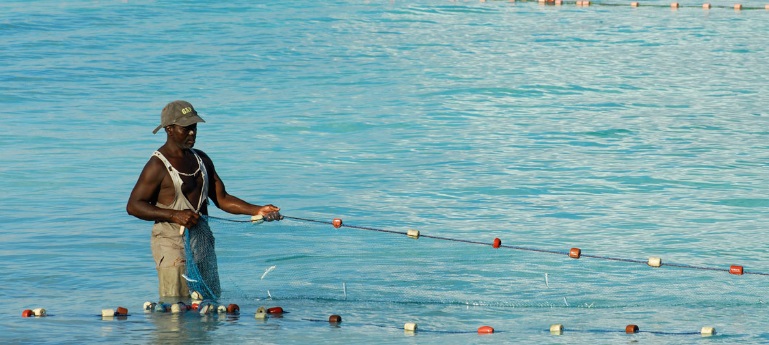
Fishery is Nigeria’s Undervalued Oil

0

By Oko Ebuka

The world is naturally endowed with various kinds of resourceful materials to earn a decent living from, ranging from agricultural products, non-agricultural and aquatic resources. Fish is a vital component in aquaculture that provides millions of people proteins and other forms of economic gains. Some countries pride their economic achievements from the proceeds of fishing alone therefore placing them strategically in the economic map of the maritime business.

According to Wahab G. and Olalekan J. (2018), Nigeria is a maritime nation where 9 out of the 36 states have a coastline in the Atlantic Ocean. The coastal federal states of Nigeria are Ogun, Lagos, Ondo, Edo, Delta, Bayelsa, Rivers, Akwa Ibom, and Cross Rivers States, all found in the southern part of the country. The importance of the fisheries sector to individuals and the economy of many developed and developing countries cannot be overemphasized.

The 2018 report of Food and Agriculture Organizations, FAO, of United Nations, UN, showed that total world fisheries and aquaculture production and utilization in 2016 were 170.9m tonnes. It is also notable that fish provides more than 60.0% of the world’s supply of protein, especially in developing countries. Its importance could be felt directly and indirectly among rural and urban residents in Nigeria.

Fish are an important protein source in the diet of Nigerians. Protein from fish is highly digestible and of high nutritional value and consists of complete arrays of amino acids, vitamins, and minerals. Apart from its high quality, fish is a cheaper source of protein compared to other animal protein sources such as beef, pork, chicken, and goat meats.

Furthermore, according to Nigerian Maritime Administration and Safety Agency, NIMASA, during the African day of seas and oceans themed, “Harnessing Nigeria’s Marine Biodiversity for Accelerated Economic Growth”, said that fish makes vital contributions to the food and nutritional security of over 200 million Africans. Join us as we look into ways of harnessing the marine biodiversity of African Seas and Oceans. Fish contribute 57%, and the other groups 49% of the total and 48 species of bony fishes in Lagos Lagoon alone. There are over 200 species of fish in Nigerian inland waters, 14 species of reptiles, 7 species of mammals, 59 species of amphibians and 72 species of water-associated birds.

In Nigeria, fisheries, particularly an important subsector, contributes about 3.00–5.00% to the agriculture share of the Gross Domestic Product (GDP). Fishery in Nigerian inland waters have not being properly harnessed the same way other natural resources such as crude oil and gold mining. It is practically disheartening and shameful to say that fishing contributed only 5% in Gross Domestic Product, GDP in 2018.

However, the holistic emphasis laid on crude oil and its components by the federal government of Nigeria has relegated this prolific sub-sector in the agricultural sector. Recently, the Nigerian National Assembly passed the bill that will establish the institution of fishery in Nigeria to keep the hopes of proper research in the maritime industry which in a way can boost the morale of the dying sector.

Why is it wasting?

A renowned maritime security expert, Captain Alfred Oluwasegun said that the major reason behind the negligence of the fish business is heavily linked to the security issues in Nigeria’s inland waters which supposed to be protected by seafarers. According to him, “you cannot even fish in these waters because it is not secured.

Its effect on unemployment…

The Captain further linked the adverse effect of poor fishing in Nigeria to the massive unemployed youths roaming about the streets which the fishing industry, if properly managed will create both direct and indirect jobs for the teeming youths across the nations.

He said, “I don’t know why government is not looking in that direction and they think everything is oil. But the reality is if you really want to achieve the blue economy then this water needs to be secured. Nigerian economy will grow even without any stress because we cannot tackle insecurity without tackling unemployment.

“Imagine we have over 500 fishing trawler in the water and the smallest of the fishing water will employ not less than 11 cadets as personnel imagine the number of youths that will be gainfully employed.

“We now import fish in the country now even when our waters doesn’t have fish season, any moment you launch your net you catch fish and we are not fishing in this water because of insecurity.  Imagine we have 500 trawlers in each of the zones; it will give many youth indirect jobs”, he concluded.