DD
MM
YYYY

PAGES

DD
MM
YYYY

spot_img

PAGES

Home Blog Page 6798

Fixing Africa To Fix The World

2

By Ohemu Godwin Pius

To paraphrase Chinua Achebe, there is absolutely nothing wrong with the African character. There is nothing wrong with our land or climate or water or air or anything else. The problem with Africa is squarely and mainly the failure of leadership.

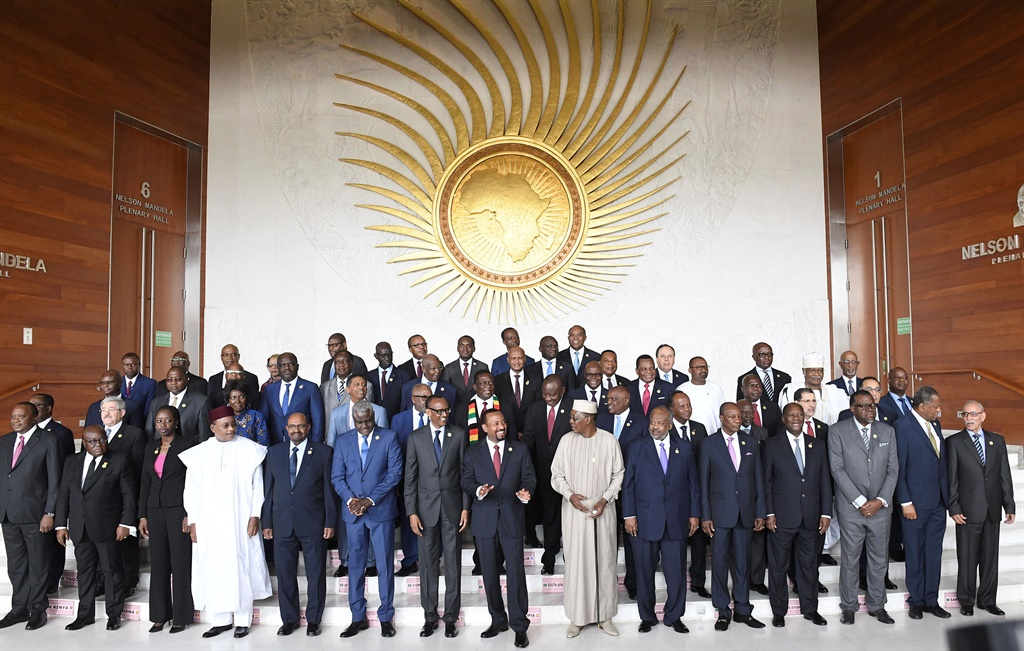
Africa is young, fertile and impregnated with lots of economic potentials. With 54 countries and more than 1 billion people, expanding labour force, a robust economy, extensive oil and gas reserves, a largely unexploited petroleum downstream sector, opportunities in strategic sectors as agriculture, telecommunications, pharmaceuticals, energy and mining, Africa is a bright spot on the economic horizon of the 21st century. She is the hopeful continent, but amidst riches and abundance, Africa has been held back by the lethal cocktail of failed leadership and corruption.

Judging from the current state of the nations, one cannot but agree with Elder Adedeji that what African countries have lacked during most of their history, as independent states are leaders who are unifiers, chiefs in the true sense, who bind wounds, hold everything and everyone together, mobilize and motivate their people, pursue a policy of inclusion rather than exclusion and are seen by one and all to be of the highest integrity and beyond suspicion.

Everything starts and ends with leadership. The problem of armed conflicts and insecurity in Africa is as a result of the unwillingness or inability of African leaders to rise to the responsibility, to the challenge of personal example which are the hallmarks of true leadership. It is the lack of visionary, focused, effective and future-concerned leaders who are true democrats!

For decades, Africa has suffered from lack of enlightened leadership and a bad style of political and economic guidance. And if there’s anything that we need so urgently as a continent, it is visionary, future-concerned and committed leaders who are true democrats; leaders who would rise to their responsibilities and lead by example. Africa needs leaders with success mentality—men and women who will through faith and insight conceive a picture of a developed and safe Africa and would wisely employ the continent’s resources to realize this vision. Africa is in dare need of leaders who are trust-worthy; men and women of integrity, taste, track record and love for fellowmen.

As Wangari Maathai once says, “below the thin layer of racial and ethnic chauvinism, religion, and politics, the real reason for many conflicts is the struggle for the access to and control of the limited resources on our planet.” Africa desires, as a matter of utmost importance, leaders who would be accountable and responsible in the management of its natural resources and ensure even distribution of the proceeds therefrom among the various geo-political zones in their countries. Marginalization of one unit or group must never be allowed so as to avoid any feeling of alienation.

It is unbelievable that we sit on wealth as a continent but we are the greatest receiver of aid from Europe and America. The solution to our long standing problems of economic stagnation is not foreign aid. It is going back to the drawing board and fixing our leadership problems.

You cannot curb corruption by fighting corruption. It has so many children, and many people are pregnant with it about to deliver. You cannot address our issues of leadership failure by recycling the same set of leaders over and over again as they move from one political party to the other. Africa needs a new generation of leaders—a generation of servant-hood leaders who would love serving more than being served, empowering more than retaining power, giving authority more than taking authority and producing leaders more than maintaining followers.

A new concept of leaderships is what we need to bring about sustainable development in Africa. And the only way we can do this is when we commit ourselves to youth empowerment and development. Development not just in giving the youths positions in cabinet or government parastatals, but investment to raise a crop of enlightened and godly individuals who are equipped with the requisite knowledge of effective leadership.

We must go back to the home and get it right early with our children. Our young ones must not grow with a poisoned mindset. Through exemplary lifestyle, we must give them a foundation for unity, tolerance, and peaceful coexistence with one another. We must teach them early to respect other people’s culture and beliefs, honour the constitution, obey court decisions and help them understand that despite our differences, what unites us is greater than what divides us.

Children who have learned submission to authority in the home learn submission to the authority of civil government. And civic leaders who have grown up in homes where they have experienced a life of doing good to others will see their function as civil servants who must do good to others. They will not see their work as a position of power. They will see it as an opportunity to serve their communities and nations as humble civic servants. In our homes we mould good characters. With good characters we shape our society. With our society we build strong nations. And with 54 strong nations, we build vibrant and prosperous continent.

The development of Africa is critical for the development of the world. If Africa gets it right on leadership, then the world has gotten it right. As the cradle of early civilizations, fixing Africa is a giant leap to fixing the world.

“The fish rots from the head down” has long been the case of Africa. If we can fix our leadership deficiency and get it right from the home, we can enjoy true economic development and Africa would stand tall as the hopeful continent.


The Walmart CEO’s Confession: “let’s copy and paste when we should and when we can”

4

Few years ago, I wrote in the Harvard Business Review, “When you can’t innovate, copy”. The feedback was interesting as many company executives wrote me with confession statements: “I tell my people but they do not listen, I have forwarded your article. And thanks for adding ‘legally’ as I want to stay out of trouble”.

People, if you cannot innovate, copy legally. If you do not, you will not thrive in commerce. Yes, few things are really new in this world. The people that created most of these things died poor. The people that created most of the fundamental things these technologies rely are past gone. We are just combing and recombining at scale.

I recalled when in secondary school, and we were mapping the school football field for an inter-school game. We needed 90 –degree angle at the edges of the field. The problem was there was no available compass or long measuring tape. Then, in the midst of that scarcity, we simply used Pythagoras theorem, knowing we could get right-angles at the edges with simple efforts. Any modern technology doing that may be relying on that same theorem irrespective of the complexity.

For all the zen-followership we give to Apple, in the last 20 years, Apple has not pioneered any hardware category. But it has copied masterfully and won market territories. Apple took down Blackberry on smartphones, Pebble on smart watches, Sony on music players; the list is long. But it added a new level of competition, disrupting along the way.

Walmart CEO agrees, and wants to take it to Amazon:

At the conference, which coincided with Amazon’s Prime Day sale, McMillon admitted he admired the rival company’s focus on “speed innovation customer centricity convenience.”

“We’re not proud, we’re not egotistical. If someone is doing something better than we are, let’s copy and paste when we should and when we can,” he told Brainstorm Tech.

Of course, copying is not that easy. Yes, do not think it is easier than innovating!

CEO of Walmart, Doug McMillon

Refining the Data of Nations – PetroTech Valley in Warri or Eket

2

Everyone knows that making sense of data is critical in our age for business. The real question is “Can you refine your data?” In the Nigeria’s energy sector, we have deep opportunities to use data engineering to redesign the industry, and improve the welfare of the citizens. In the petroleum industry, legions of startups can play critical roles when IoT and data engineering come into equilibrium to improve efficiency and overall productivity.

As I noted in a speech few months ago, the greatest moment in a nation happens when entrepreneurs arise. At least in our petroleum downstream sector, PetroTech is due in Nigeria. Yes, we need startups to combine and recombine technologies to bring efficiency in the industry across nexus of distribution, market data sharing, planning and more. I will be speaking on this area next month, along with industry leaders, during Society of Petroleum Engineers international conference in Lagos.

Along with MD of Chevron Nigeria, leaders from Schlumberger, General Electric, etc, we will have deep conversations on how data will improve the utilization of the factors of production for the good of Nigeria in the energy sector. The banks have given us fintech; can the oil sector give us PetroTech with elements for startups to use to improve the sector, removing complexity and advance our nation. That possibility can happen even for the downstream sector, and Eket or Warri will become the PetroTech Valley.

Personally, I have Zenvus and will add a sensor to track fuel volume in trucks, push the numbers through GSM or satellite to cloud, every 10 mins, until it gets to destination. Fuel diversion solved! I am so excited about the promise of digitization and data transformation of the nation’s energy sector.

Refining data is key: last year, China spent $300 billion importing semiconductor chips, more than it did for importing oil. Chips refine the data of nations.

Era of Traditional Recruitment is Over, Recommendations to Job seekers

9

By Chinedu Junior Ihekwoaba

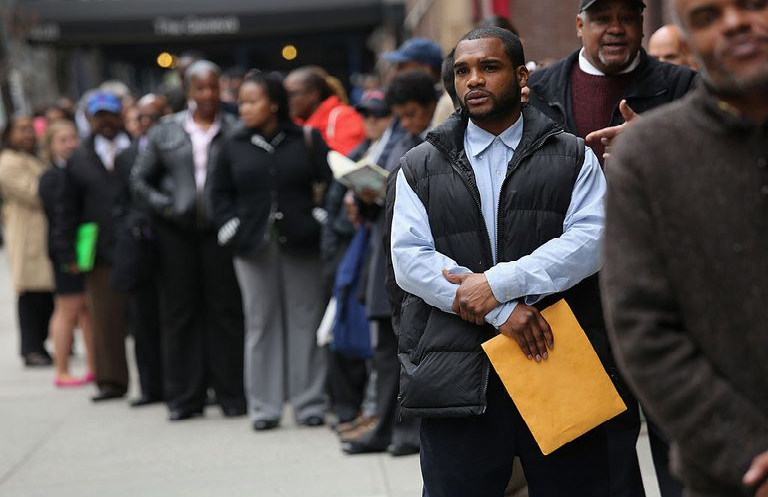
Gone are those days when applicants get jobs by registering through different job portals or submitting numerous application letters. Then, it was an open field for everyone to compete for vacant positions. But today, it doesn’t seem to work anymore.

It reminded me of those days in 2016; I applied for 155 positions through different job portals per week, at an average of 20 applications per day. The success rate was approximately two job invites per month and zeroes feedback after the interview process.

I paused a bit and asked myself some unanswerable questions:

  • Could it be my résumé is not making it  through the system?
  • Didn’t I meet the basic job requirements?
  • Were the companies really hiring?
  • How would my 155 applications not yield a successful result?

I had no clue. Every day, I get spammed by many job-opening emails that say, “we are hiring!”

This made me ask, “who’s sending those emails?”

I spoke with a recruiter I connected with on LinkedIn eight months ago.

She said, “don’t believe some of the job adverts you see on the job portals. Companies post job adverts to fulfill the human labour policy. It’s like a norm. Recruiters actually know who they will hire.”

Her words hurt me.

My interpretation: companies post job adverts to trick governments, perhaps by lying to be contributing to the growth and development of the country through the fake job adverts. But my interpretation was wrong.

Companies are definitely contributing to the growth and development of the country by hiring labour and paying taxes to the government, but the major problem here is that; “Traditional Recruitment is dead.”

Why?

Whenever there’s a job opening, recruiters contact people they know or people their family members and friends refer to them. Hence, the candidates applying for jobs through the link provided on the job portal are wasting their precious time if they don’t fall into those categories.

The whole situation becomes ‘a survival of the fittest’. Meaning a candidate must know someone who knows another person in the organization, or a candidate must have a strong personal relationship with recruiters to be sure of getting a job.

This makes the labour market a tough place for graduates to excel because building a personal relationship takes time.

It’s like falling in love with the opposite gender. You have to take some time to date, and study each other before committing to a relationship.

The main problem in this process is, “how many recruiters do job seekers have to know to get a decent job?”

It defeats the purpose of the hard-earned certificate.

If a qualified person cannot get a job without having to go through office policy, then, it makes no sense applying for job adverts seen online.

What’s the way out?

Every problem must have at least a solution.

Here are a few recommendations I’d give to the job seekers:

  • Build Interpersonal Relationship: Job seekers should spend more time building a personal relationship with humans and spend less time on job portals. With the advent of technology, it has made it easier to connect with amazing people in different fields, from different parts of the world. LinkedIn still remains a great tool for achieving this goal.
  • Attend Networking Events: They should attend more networking events like LinkedIn Local Lagos, LinkedIn Local Abuja and many more networking events. Job seekers should always remember this, people hire people they know and nothing compares to the human touch. Networking events give you the opportunity to meet people, interact with them and keep a fruitful relationship.
  • Work with a Career Coach: Getting a job is a job on its own. Job seekers should work with career coaches who can help them map out a strategy for finding jobs and also, they can help job seekers identify what job aligns with their values and skills. Not every job is good for you. Be intentional about it.
  • Research about the company you’d love to work: This will help you understand what the company’s culture is all about. Get to know a few people who work in the company, ask them what it takes to work there. There are some companies who do not always display their job adverts to the public, they recruit internally. Therefore, knowing someone who works there is a bonus for you during your job search.
  • Get a Referral: These days, recruiters find it easier to hire people through the referral system. Because people find it easier to work with people they know. This is due to the level of trust that exists between them. Don’t just apply for jobs and sit for miracles to happen. Get up and do your homework. Even though you might be qualified on paper, you will still need to work smart.

Although traditional recruitment is dead, but to be candid, most job seekers don’t really know how to position themselves as experts in the labour market. I was once a victim.

A job seeker must learn to position himself as a problem solver and not like someone who needs help. Recruiting has to be a win-win for the parties involved. The first appearance says it all. The easiest way to land jobs these days is to do something that brings you around people.

Do you need help in a job search or improving your sales through social media?

Contact me through my LinkedIn. Good luck in your next career!

LinkedIn Comment on Feed

I respect the writer in his doggedness towards his overcoming of the unemployment challenge in Nigeria, but I disagree with his assertion in the above article.

Traditional recruitment is not dead. People still get jobs via the traditional means.

And it is not becoming less popular, because even other “novel” approaches towards securing employment have been existential even in the days of our fathers. Recruitment based on referrals is not a new recruitment strategy. And at least for multinationals, they still hire a considerable number of persons through the traditional recruitment process because of their international policies on recruitment.

Why getting hired seem rather surreal sometimes is because of the graduate population. For instance, two of my friends made it into the recent AB-INBEV’S Global Graduate Programme for Africa. Only six were hired from Nigeria, from an applicant pool of over 44,000. It was strictly on merit. The other [qualified] candidates were likely to feel like it was all a sham when regret letters popped into their mails, but that’s because the applicant pool makes the demand from employers seem insignificant.

I have more to say, but perhaps I’ll just put it up in an article, too.

Nigerian Customs Service Generates N118m in 14 months

0

By Oko Ebuka

The Comptroller General of Customs, CGC strike force, Zone ‘A’ of Nigerian Customs Service, NCS, has remitted over N118 million to the federation account between May 14, 2018 up till June 30, 2019.

The Zone during this period, made a total of 68 seizures of different kinds of contraband goods with Duty Paid Value, DPV of N118m, this is in tandem with the federal government’s quest to consolidate and create a booming market for the local manufacturers and producers in the country.

The items seized by the zone include; 6,580 50kg bags of rice with DPV of N87.2m, 1,607 cartons of frozen poultry with DPV of N15.4m, 17 bales of second hand clothing with DPV of N1.2m, 2 vehicles with DPV of  N2m and 292, 25 liters kegs of vegetable oil, with DPV of N12.2m.

In a press release statement disclosed by the Co-coordinator, CGC strike force, zone ‘A’, DC Yahaya, U.B, said that the seized items was the intense effort of the custom officers on parole whom were defiant to make sure the smuggling activities are permanently silenced.

According to him, “I commend my highly dedicated officers on field for not being deterred by the various antics and threat from smugglers and economic saboteurs in carrying out their duties to their fatherland.

“For the smugglers, I can only advise them to stay clear off zone ‘A’ and embrace federal government business policy, which they will have us to contend with in failure to do so. We shall continue to engage them in the battle against illicit trade until they turn new leaf.

“I want to use this opportunity to thank our CGC Col Hammed Ali and his management team for their support, as they have continue to give us moral boost as well as working tools which have so far made our job easy.”, he concluded.

In addition to the above mentioned seized items, the unit in confronting the unrepentant smugglers irrespective of their hide out or terrain, the team of eagle-eyed officers led by Chief Superintendent of Customs ( CSC) Esiet while combing the creek along Lagos-Badagry through a reliable information, intercepted and seized five (5) trucks fully loaded with contraband foreign rice (50kg each).

The operation was carried out along Alibaba Street at Iyana-Sash waterside in Agbara-Badagry Axis on June 30, 2019 and the total bags of rice in them after counting is 981, aside 140 that is bad as it drenched.

The registration numbers of the trucks include AGL665XL, AAA534DU, GGE427XU and LXR27XV, while most of the trucks were reconstructed and reinforced to withstand pressure, with the capacity to convey large quantities of smuggled goods and easily access the marshy terrain.

Similarly, the unit made another set of contraband rice seizures involving two (2) mini trucks that conveyed a total of 543 bags of 50kg of the products on the 3rd of July 2019.

However, the total number of seized rice from the seven (7) trucks is 1,524 with N20.1m of Duty Paid Value, DPV.