DD
MM
YYYY

PAGES

DD
MM
YYYY

spot_img

PAGES

Home Blog Page 6814

Seafarers and the Challenges in Nigeria’s Blue Economy

0

By Oko Ebuka

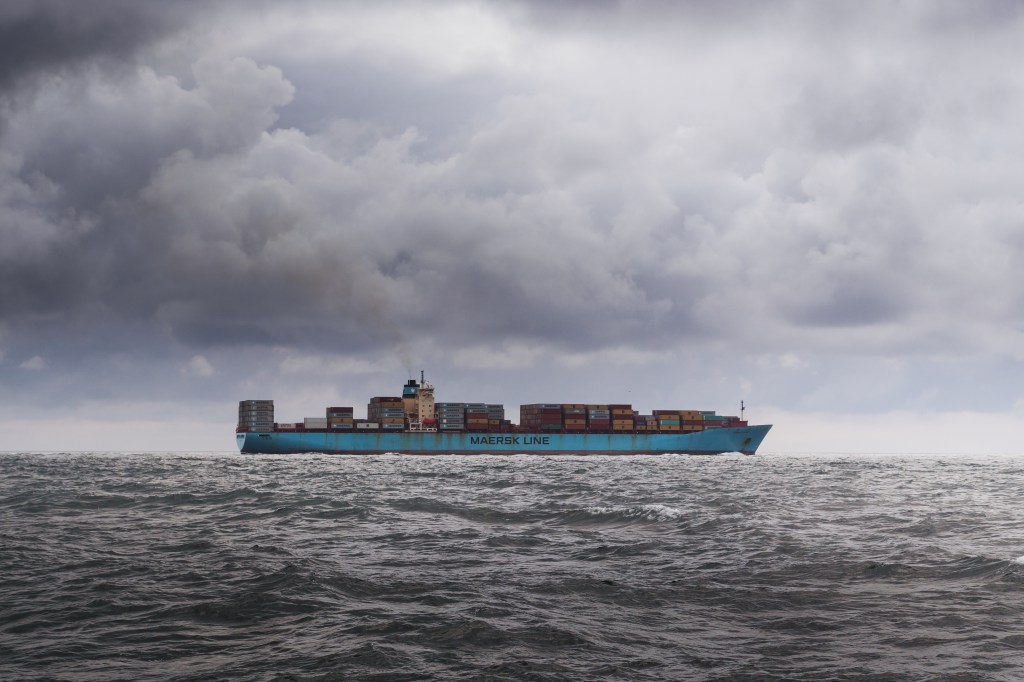
According to a report by Guardian Newspaper, the ports and harbours employ mariners to ensure the safe navigation of ships. Their job is physically demanding, with marine pilots, for instance, required to board moving vessels from small, high-powered launches, often in rough seas. They also have to deal with high-risk cargo, poor maneuverability and communication difficulties.

The report further showed that the global shortage of shipping crew and officers has reached serious proportions, threatening the future of an industry that remains the lifeblood of world trade. According to the latest data from the International Maritime Organization (IMO), there was a supply requirement of 498,000 seafarers in 2008, with an officer shortfall of 34,000 that increased to 83,900 in 2012. (The Guardian, Nov. 19, 2014).

Benefits of blue economy

A statistical data from the 2017 research by Blue Economy Forum showed that the East Asian Seas (EAS) generates almost 3%-28% of the Gross Domestic Products (GDP) of 5 countries in EAS region on income and jobs alone, with 90% trade and transportation shipping. Furthermore, the United States of America produces US$282 billion from the ocean economy with about 3 million people fully employed in the ocean dependent business.

According to the World Bank, the blue economy is the “sustainable use of ocean resources for economic growth, improved livelihoods, and jobs while preserving the health of ocean ecosystem.”
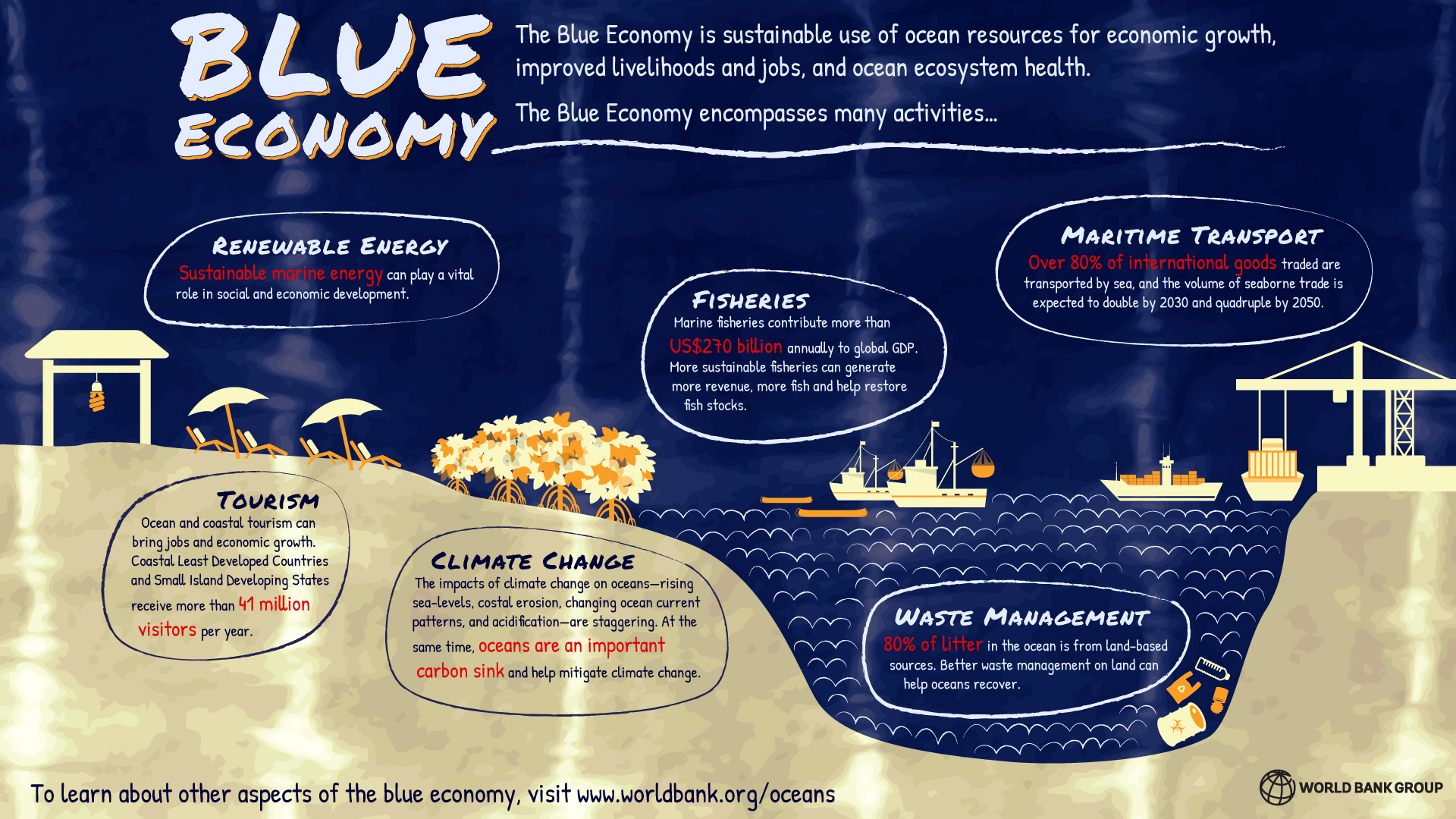
In another survey, it portrays that over 80% of global trade by volume and over 70% by value, is carried by sea and handled by ports worldwide as regard to the shipping and Port Facilities. Globally, 350 million jobs are linked to marine fisheries, with 90% of fishers living in developing countries. In 2012, sea tourism increased by 4% despite the global economic crisis and constituted 9% of Global GDP, 9% of global jobs, and generated US$ 1.3 trillion or 6% of the world’s export earnings.

Its necessity

Seafaring profession is very noble and worthy of bringing economic pride to the national treasury of any nation that values the players. The International Maritime Organization (IMO), in the quest to recognize the consistent efforts of the young men and women in this terrain of vocation, set aside 25th day of June every year to honor them. The world uniquely celebrates them just like other global professional bodies because of the sacrificial tendencies surrounding their activities in making the blue economy a viable one irrespective of the dangers ahead.

The Nigerian lens

Nigeria as a multi ethnic country, exceedingly blessed with bountiful economic opportunities both on land and in sea have proved their worth and commitment towards harnessing the natural elements beneath the deep blue seas. This is why maritime agencies such as Nigerian Maritime Administrative and Safety Agency (NIMASA), Nigerian Ports Authority (NPA), Nigeria Shippers’ Council (NSC), among others, where instituted to man the affairs of the industry in their respective roles and jurisdictions.

The Nigerian seafaring profession is rightly under the responsibilities of NIMASA who takes care of seafarer’s academic welfare from the academic cradle to the graduation height by providing adequate facilities and institutions such as the Maritime Academy of Nigeria (MAN), Oron, Maritime University, and others. The agency also sent the seafarers for further studies in foreign schools in countries like Philippines, Egypt, etc., for various professional certifications.

Irony of situation

However, the gloomy face of the Nigerian seafarers can be widely seen in their ceaseless agitations and bravery shown in the sturdy faces of injustice, corruption, bribery, discrimination and other forms of social vices hovering above them, therefore preventing them from attaining the same professional heights like their foreign counterparts.

The recent agitation by the seafarers during the Seafarers day celebration, heaped so many unanswered questions on the lips of guests and other participants within the halls of the celebration. There placards widely shown everything they are fighting for or against in the hands of NIMASA.

Most things written boldly on the raised placards are those things keeping them far from having access to the sea privileges unlike their foreign counterparts who have everything at their disposal and affordable too.

In a recent paper presentation made by Capt. Akanbi Oluwasegun Enitan themed: “Beyond sea-time: A closer look at other prospects and challenges in seafaring profession”, he listed some gross challenges facing Nigerian seafarers which includes;

  1. Criminalization of seafarers: were they are vulnerable as the job exposes them to various charges and might never have a fair hearing.
  2. Seafarers Health: where maritime administration cares about fitness to work, but doesn’t care about fitness after work; health safety systems unavailable even as  allowances and pensions remain unpaid.
  3. Abandonment: where there salaries and welfare are the least of their priorities.
Conclusion

Albeit, the above listed problems has primarily summarized the hidden scars of the seafaring profession in Nigeria which, if not properly tackled, will generate a vicious situation that can destroy the existing success of harnessing the blue economy in subsequent years to come.

Fixing Nigeria’s Overpopulation Paralysis

8

By John Beecroft

I have been a bit vocal about Nigeria’s overpopulation for a while now, and recently someone challenged me to proffer solutions. That got me thinking and I plan to share some of the ideas so you all can help clean it up, just in the hope that I might be in a position to do something about it someday. But just so we are on the same page, why do we need to do something about Nigeria’s population?

Population and the Nigerian Economy

Indices and events around Nigeria show that things are not going to be okay anytime soon. This was the subject of an article I wrote earlier in the year – 2019, Which Way Nigeria. I however expected the situation to gradually improve over the coming years, but PwC quickly perished that thought this morning through one of their reports – Bringing Dead Capital to Life.

The IMF’s most recent report on Nigeria concluded that Nigeria is set to experience incremental decline to income per capita over the next 8 years, through 2022. This decline is a result of slow GDP growth exceeded by a population growth rate that is not expected to slow in the near future. Population is expected to reach 263 million by 2030. In contrast, GDP is growing at a slower and less consistent rate, averaging 1.4% since 2016.

In simple English, the number of people in Nigeria is growing faster than the money (goods and services) Nigeria is making; so Nigerians would keep getting poorer until at least 2022. For economic well-being to improve, you need economic growth to be more than population growth. That way, everyone has a little more to share every passing year. When the opposite happens, everyone has a bit less year after year. It’s like you are a bachelor earning say N100,000 monthly and living life. Then let’s say 5 years later, your salary has doubled to N200,000. Are you actually better off? Possibly. But what if during that period, you get married, wifey becomes a career mum to two kids and your hungry brother comes to stay with you? Your per capita income goes from N100k monthly (N100,000 divided by 1 person) to N40k monthly (N200,000 divided by 5 people). In this case, your family population growth (500%) has far exceeded your economic growth (100%) and you’re almost in crisis. If you think it sounds like a terrible situation to be in, you are absolutely right!

With population growth rate of 2.6% almost double our GDP growth of 1.4% on average, Nigeria is in exactly the same situation now. We can eliminate corruption and stop paying our beloved hardworking legislators those fat salaries, but it still wouldn’t be enough.

A large population cane be a great blessing, IF:

  1. That population is highly educated
  2. That population is very productive
  3. The economy is expanding faster than the population

Sadly, Nigeria’s population is none of the above. We have then compounded those problems with corruption and runaway population growth.

Perhaps you don’t understand the import of the figures above? Let me draw it for you.

Using the United State of America (US), the holy grail with GDP per capita of about $56k, as our benchmark, the first chart shows what will happen to Nigeria over the next 60 years if we maintain our current direction (case 1) with GDP growth of 1.4% and population growth of 2.6% per annum. There can only be one outcome: Starvation, unrest… In case 2, assuming we continuously grow the economy at 7.5% annually, but keep giving birth like rabbits (at an average of 5.4 children per woman, Nigeria ranks among the top 10 in the world), by 2080 Trump would still be calling Nigeria a ‘shithole’ country. However, if while growing the economy steadily, we manage to slow down our population growth rate similar to the US (case 3), we will get to where the US is today sometime around 2070! As bad as that sounds, this is a best-case scenario for me.

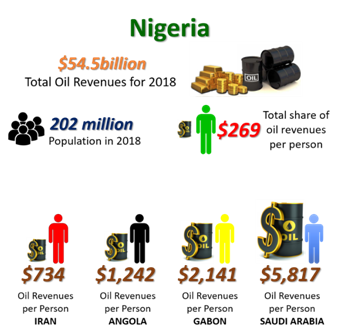
Lots of people delude themselves that Nigeria’s oil proceeds are enough to solve our problems if corruption is eliminated. Sorry, it’s not nearly enough. Yes, we have massive oil reserves, but when compared to the size of our population, it’s too little. According to OPEC, Nigeria earned $54.5b as total revenue from oil in 2018. (Accurate net income figures are too hard to come by.) This was about the same with Iran ($60.2b), far more than Angola ($36.3b) and more than 10 times that of Gabon ($4.2b). However, when you compare the number of mouths the different countries have to feed like the example above, you find that the share available to Nigerians is practically insignificant. Now you understand why Nigeria is considered poor.

But I’m sure we all know the problem. Question is, what can be done about it?

Typically, there are two ways out of such a situation: You can either find a better paying job or business (minimum of N600k monthly to maintain the original lifestyle) or reduce your family population by chasing away your brother and sending the twins to your rich uncle. Let’s explore the options for our dear country.

Option 1 – Growing the Economy

I am not sure we can expand our oil production fast enough, and even if we do, we don’t have enough of it. However, we have massive amounts of gas so we have a chance with that. Only problem is that it requires terrible amounts of capital, so back to square one. Agriculture? We have lots of arable land, but it’s difficult to build a modern economy on the back of labour-intensive agriculture.

The tax drive is really commendable, with the tax paying population having doubled in the past few years, but more needs to be done. Manufacturing has to be drastically improved, importation curbed to manage the trade deficits and oil subsidies eliminated. The size of government needs to be reduced so that funds can be directed towards infrastructure.

But I’m reluctant to talk about this – growing the economy – in this article as my goal is elsewhere. I’ll let smarter people tell us how to go about it.

Option 2 – The Population Solution

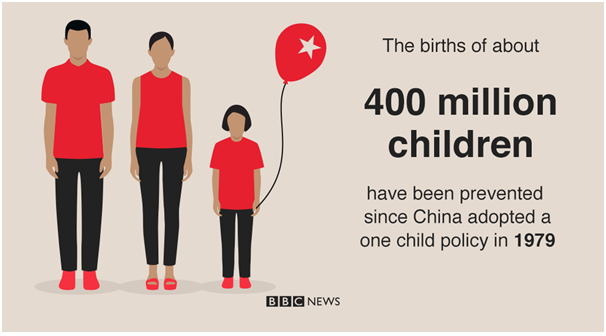
China had a one-child policy, in which having more than one child was discouraged. They made this happen through a combination of permits, fines e.g. deductions of up to 10% of salaries of erring couples, and incentives. These incentives included health care subsidies, housing priority and extra retirement pay according to Matthew Connelly in Fatal Misconception: The Struggle to Control World Population. The child also had preference choosing schools and jobs. Sadly, there were also forced abortions and sterilisations as some provinces tried to meet their quotas. Considering that China prevented about 400 million new babies – two times the size of Nigeria – I say their effort was very successful!


India largely followed the Chinese model for a while, but with more extreme measures – more than 8 million men sterilised within a year. Iran made it mandatory for couples to attend contraceptive courses before giving them marriage licenses.

Interesting thing about the examples above are that they are largely homogeneous cultures, which makes it a bit easier to implement policies. Nigeria on the other hand would be a tough nut to crack; any measure must take into account the religious differences and tribes too numerous to count. Any hint of racial or religious targets would end in disaster. Yet, we need to slow down this runaway population, else we will consume our children’s future.

First of all, we all need to know that fertility rate which is sustainable, that birth rate that would give us just the right population growth we want. We must begin with a massive enlightenment drive especially at the grassroots and rural areas. Couples need to have an idea of the financial costs of adequately bringing up a child and must be made to understand why it is important to give birth to only that number they can properly take care of. While I won’t say they should be arrested, there needs to be an understanding that giving birth to six kids when you earn barely enough to send one to school is unfair to those kids and is a crime against the society that has to bear the ultimate cost!

In the rural areas, people must be consciously made to understand the damaging effects of having too many children including reduced opportunities through inheritance, lower quality of education due to scarce resources, high medical costs etc. The government, and non-governmental organisations, need to invest in passing across this message – through our Youth Corpers, at the marriage registries, on TV & radio, in churches & mosques, anywhere and everywhere.

Next, a national policy needs to be put in place supporting fewer children. This could encompass a number of ‘carrot and stick’ measures.

For instance, rather than free Universal Basic Education (UBE), the policy should only cover 2 or 3 kids per family. The same applies to free meals in schools. Government pays for the first 2 or 3 kids and the parents pay substantially for the remaining children.

For those who maintain the ‘sustainable’ family size, they can get incentives such as credits to spend on fertilizer and farm implements in the rural areas. In the towns and cities, these credits could be used for health insurance, public mass housing, government-sponsored pilgrimages and so on.

The credits can also be used for taxes. For example, if you remain within the sustainable family band, you get 1 or 2 points below the standard tax rate. So perhaps, while Mr X with 6 kids pays 22% of his income as tax, Mr Y with only 3 kids pays 20%.

I could go on and on, but I believe the message is already clear – a conscious effort needs to be made to link the negative consequences of unsustainable population growth directly to people’s pockets. Only then will they ‘hear word’.

In Summary

There is no single panacea to our problems; it must be a combination of measures. Yes, education and infrastructure would go a long way, but as shown in the charts above (case 2), it would still take too long. It is inevitable that growing the economy must be combined with a conscious effort to slow down our population growth.

But while growing the Nigerian economy is largely a Buhari problem, you and I on our own can largely influence the population solution. Have you dropped two or three kids? Then please call it quits, ‘e don do’ – for the sake of those children and the sake of Nigeria. My dream from a little boy had been to have four children of my own – two tough boys and two pretty girls. However, in playing my part towards our population dilemma, I have resolved to limit that number to two – if only I can get wifey to approve.


The Jay Jay Okocha’s Interview [Video]

0

This is Jay Jay Okocha on how he dealt with Racism while he was playing in Germany.


Football and Femininity: A Cause Marketing Musing

0

By Kelechi Kalu

It was the final of FIFA WOMEN WORLD CUP 2031 between Nigeria and Comoros and the time was 49 seconds into the 4-minute extra stoppage time. I was playing in the right wings for the Nigerian women team.  The Centre Referee had just awarded us a corner kick at the right. I swung in the cross hoping to reach Asisat Oshoala but the ball was intercepted with a chest-down by our opponent’s Brandy Kamalu.

And Brandy Kamalu picked up the ball from the edge of Comoros penalty area. She ran past a reckless tackle from our own Tele Kommasial; with a drop of the shoulder, the bamboozled Billy Boardu; wiggled to the right past the onrushing Printo Mediah selling her a dummy in the process; I was sprinting back to stop her and ended up colliding with our goal Keeper Esperienshia Maketina while Kamalu coolly slotted into an empty net. We were doomed!

At that instant, the global spectatorship and Social Media erupted in a thunderous applause for such a beautifully and skillfully executed piece of individual goal. Even we, Kamalu’s victim, stood back to witness the emergence of a brand that just catapulted herself into global consciousness forever.

I woke up abruptly with beads of perspiration on my forehead. The bedspread wet. It was indeed a dream. If it were not, how could my fully-bearded and mustached self be found playing for the Nigeria women football team in 2031? How?

Ahhaaa!!

The Fifa Women World cup has come and gone but the tournament left two strong tastes on my tongue.

This year’s 2019 quadrennial football event held in France and won by USA (I wrote this after the Semi-Finals though I am rooting for the Holland) turned out to generate unprecedented followership and social media engagement than any such women event ever. It used to be that the worlds rarely pay attention when a female football tournament is ongoing. This was an exception!

According to available data, over 764m persons watched at the least a minute of the 2015 version with about 10% increase projected before this 2019 tournament kick-off. Seeing the massive head-turn in the first 3 weeks, FIFA moved to projections to over 1 billion viewership across all platforms.

Fox Sports, BBC sports and Globo TV have all reported massive increase in viewership to the extent that Fox TV 30-second commercial slot that sold below $30,000 in 2015 went for about $140,000. The BBC Sports said its total viewership for the 2019 tournament had already surpassed 22.2 million, well in excess of the 12.4 million record set in 2015 during the Women’s World Cup in Canada. Across different major actor countries, sponsorships are skyrocketing from corporate partners.

https://youtu.be/0XzeUJIJ7Pc

What are the implications of all these for brands?

Social Changes or conflicts are corporate brand communication’s village gong.

This is a call to be watchful of an evolving market-and-non-market place, to act fast on new partnership opportunities or sudden social needs.  It’s essential to pay attention to current events with regards to where your brand can fit in. This, for me, is a case of creating and leveraging a social shared value but in this case, the female athletes started it.

The second and perhaps the most intriguing outfall of the just concluded competition is the uproar generated by some of the tournament’s gladiators who sought to use the occasion to remind the world that ‘you can be all too feminine and play football still.’ Prior to now, the image of a professional female footballer has being that of ‘a boy’ in the body of some girl. Did I say girl?

Consequently, female footballers almost always appeared and behaved as boys. Even if they do not, in reality, that was how the world perceived them.

To add fuel to the fire, their dressing and mannerism perpetuated this to the point that parents are terrified at the thought of their girl-child taking to playing football so they don’t end up losing their feminine features.

Tacking this head-on, players such as Nigeria’s Francesca Ordega, Netherland’s Van de Sanden and Brazilian Marta among others decided to take their lady-thing to the field of play.

From Ordega’s braided colourful hairstyle and facial make-up to Van de Sanden’s hair art and eye-brow-and-lashes and even to Marta’s lips painting. The girls wanted it all on display: colourful hairs, muscles and make-up, atletism and femininity, mascara, eyeliners, and spot concealers.

What followed was consternation.

Every on-the-field regular mistake or loss was blamed on their focus on look.

The more the male-dominated football-enthusiasts cried and threw tantrum, the more these girl gladiators strived to display and defend their femininity at the Gladiatorium.

And this time, their voices drowned the criticism of their adversaries. They proved they’ve got balls under their legs!

Their voice echoed loud and clear – football can be lady-like; football can wear make-up; football can braid fanciful hairstyle; and football can even dare to catwalk. Football absolutely takes nothing away from girls!

They can be all they want to be – classy, graceful, elegant, gorgeous, delicate and if need be, sexy  –  and still play football.

Here then lies the crux of my muse  —  if the girls want their balls with ear-rings, eyelashes, make-ups, braids and all – for goodness sake give it to them.

As a brand communication person, I am sniffing at a mammoth brand entrenching opportunity there. I am imagining that a smart brand can align itself beside this gender and sexuality expression cause to create a massively global communication campaign that drives home this single point – that football is a lady too!

Nudity is not a lady, football is; masculinity is not a lady, football is; ruggedness is not a lady, football is. A girl is not a sex object; she is a beautiful and skillful football artist. Asia, Africa, South America and the world at large need to have this awakening to give reasons to more girls on why they should take up this beautiful game of soccer as a career alternative to aspire to. There is no better time to start this than now.

Francesca Ordega echoed same when she said she wore make-up and braided her to send a message to girls back home that football can perfectly blend with femininity.

Van de Sanden vowed never to play any game without her lipstick. According to her it enhances her performance by upping her confidence.

South Korea’s Cho So-hyun added that she wants to show her beauty to everyone and remind them that she is a woman.

Are corporate organizations listening? Are Cosmetics firms, the not-for-profits, fashion trail blazers, make-up and other non-female related brands paying attentions? They definitely should, I think.

There’s no such thing as luck in marketing — only opportunities spotted and acted upon. To pay attention to the world around you and the experience of users or customers is life in marketing.

If you notice a trends, gaps, and opportunities or even conflict then it is time to get strategic in aligning your brand with a good social cause. Of course, there is also the role of timing but the preparation for a campaign that could culminate in the next FIFA world Cup in 2023 starts with other major female sports events in between.

How about if this specific hunch of mine does not fly with you but your interest has been piqued towards using social cause marketing campaign as platform to launching your brand to global or national consciousness? That is what this piece is about.

Should that be the case with you, don’t you worry! I got you covered with the following suggestions.

  1. Seek out a Relevant Cause(s) to Support, especially one with a lots of social or personal passion behind it
  2. Create a Simple but Memorable Campaign Message with Hashtag.
  3. Give More Than Just Money, Create and Champion a Strong Advertising Campaign.
  4. Use more of Social Media and less Traditional Media but definitely both.
  5. Seek out and partner with a relevant not-for-profit organization, if needful…

Still wondering if this cause marketing thing worth the noise?

Consider the experience of Lush Cosmetics, a UK-based business selling soap, shampoo, and other fragrance products. Lush went for a more risky cause.

The brand had been supporting animal rights causes for years but decided to take it up a notch. The brand started a campaign with store window displays in support of the SpyCops campaign, which wanted to raise awareness around undercover police officers and their actions under their assumed identities.

A risky move for any business, it was seen as an attack on the police by some, with a call for a boycott going out on social media. It didn’t look good until it was revealed the company saw a 14% increase in sales year-on-year for the period of the campaign. Not what people expected.

How did this happen? It came down to who called for the boycott and who Lush’s customers are (unsurprisingly they’re not the same people). Risk can be taken in your cause marketing if you really understand your customer.

Not convinced yet? Consider also that a global study found 91% of consumers said they were likely to switch to a brand that supports a good cause, given similar price and quality. Hmmm!

Furthermore, 92% said they would buy a product with a social or environmental benefit given the opportunity, and 67% said they had done so in the past year.

Ring bell?

Well, that’s something to ponder on!

Eliminating Blame Game in Nigeria’s Power Sector Using Supply and Demand Side Models

3

By Mutiu Iyanda

Is the privatisation the way to ensure sustainable power supply to households and businesses in Nigeria? It is obvious that this question was asked before Nigerian government considered privatisation of its national power agency in 2013, while private investors responded in affirmative, highlighting increased efficiency in electricity generation, transmission and distribution as a key benefit of the government’s action.

After the privatisation, expectation among the consumers is that increased efficiency will lead to stable electricity supply within a short period, but the narrative has been changed as the key actors in the power value chain continue trading blames over the corporate structure, government’s regulatory framework and capital impact on value delivery. There are no doubt people and businesses’ hope of throwing away their generating set has been dashed.  Power supply remains the main constraint of over 75% businesses operating in Nigeria. Despite the privatisation, experts and public analysts have not heaved a sigh of relief on the possible solutions to various problems in the sector.

The position of experts remains that Nigeria needs about $20 billion to revamp the power sector. To the civil society organisations, capital is not the problem of the sector, but the corruption which has been the main reason for having Nigerians and businesses in darkness while paying for the price. Is privatisation not supposed to reduce the corruption if total elimination is not possible? Like other private businesses, companies in the sector are expected to deploy their processes for sustainable value delivery and competitive differentiation, while assets and competencies should be used as drivers of profitability.

Actors and the Game

Instead of using processes and competencies for value delivery, analysis has established that players in the power sector engaged in a strategic blame game between January and June, 2019. From the Power Generating Companies to the Public Analysts, resource issues and value creation blame shots were traded during the period. Within the resource issues, generation, transmission and distribution infrastructure were bought and sold by the actors. Government interference, consumers’ debts, distribution and logistics problems were equally traded. As the actors engaged in the game, attack the accuser, denial, scapegoat, excuse, justification, apology and Victimage were employed as response strategies.

When an actor used attack the accuser, it actually attacked the actor(s) that accused it of wrongdoing towards generation, transmission or distribution instead of addressing the main issue preventing Nigerians and businesses from enjoying stable electricity. Denial, excuse and scapegoat response strategies were the centerpiece of reactions when an actor exonerated itself from the problem identified by another actor. As an alternative to clemency, analysis shows that an actor justified the issue raised by another actor leveraging internal and external information. Apology was used when actors discovered that they were actually wronged for not being proactive about the issues raised, while Victimage was adopted when it was obvious to the actors that wrongdoing that led to the issues did not emanate from them.

Source: Newspapers’ Reports, Infoprations Analysis, 2019

From the mined and analysed stories, infrastructure, distribution, capital and logistics blames were traded mostly during the period. Justification, excuse, scapegoat and Victimage were the dominant response strategies employed by the actors.  Out of 156 blame shots identified in the data, actors such as the Nigerian Society of Engineers, journalists, public analysts, consumers and other professionals traded over 39% of the blame shots. The Power Generating Companies (GENCOs) followed closely with 23.71% of the shots, while the Electricity Distribution Companies (14.74%) and Transmission Company of Nigeria (8.33%) occupied third and fourth positions respectively. In terms of response strategy, GENCOs overtook other actors (Nigerian Society of Engineers, journalists, public analysts, consumers and other professionals=23.66%) with 34.35% of the 131 response strategy actions found. DISCOs and the Federal Government followed by 12.97% and 9.16% of the response strategy actions respectively. While GENCOs preferred justification, excuse and scapegoat strategies, other actors (Nigerian Society of Engineers, journalists, public analysts, consumers and other professionals) prioritised justification and excuse.

Source: Newspapers’ Reports, Infoprations Analysis, 2019

Making Sense of Resources Issues

Consumers and the key actors need to make more sense of the insights generated from the issues that led to the blame game during the period. This is better understood within the Global Competitiveness Index. Since delivering and capturing value in the sector requires inputs from the supply-side and demand-side, strength of investor protection, intensity of local competition, government efficiency, the burden of government regulation, quality of overall infrastructure, quality of electricity and venture capital availability were chosen from the 2018 Index for supply-side. The demand-side had buyer sophistication, quality of demand conditions and degree of customer orientation.

Looking at these indicators, this piece hypothesized a significant variation in supply-side competitiveness indicators as a determinant of the blame shots. From the model, analysis reveals that SSC explained 94.80%, 70.80% and 55% variation in distribution, capital and infrastructure blame shots. The key lesson from the models is that the actors need to address the blame shots with the specific consideration of the indicators within the SSC. Holistic solutions to the blame shots depend on the proper diagnosis of the issues contributing to the country’s poor rankings within the indicators. Failure to address the issues would enhance the issues towards the continuous blame game in the sector in the next four months, analysis suggests.

Source: World Economic Forum, 2018; Newspapers’ Reports, Infoprations Analysis, 2019

Like the blame shots, issues in the supply-side competitiveness need to be resolved before ending excuse, scapegoat, justification and Victimage response strategies being used by the actors. Players need to break defensive attitude and behaviours. Instead, efforts should be on how to solve issues in the sector using collective approach. Government and regulators should have the courage to enforce the enabling laws and rules for the sector.

Source: Newspapers’ Reports, Infoprations Analysis, 2019


Source: World Economic Forum, 2018; Newspapers’ Reports, Infoprations Analysis, 2019