DD
MM
YYYY

PAGES

DD
MM
YYYY

spot_img

PAGES

Home Blog Page 6874

Intense Watch Heavyweights – Why Divers Watches Are the Toughest Sport Watches on Earth 

0

A coolest aspect concerning jumpers watches, is that they are among the hardest watches on earth. These profoundly particular games watches are planned with usefulness first on the watchmaker’s need list. This is on the grounds that as a watch is exposed to more noteworthy profundity, the harder it must be to ensure safe activity in a pressurized situation.

How Divers Watches Are Tested

There is a severe worldwide standard that a genuine jumpers watch must fulfill so as to be a guaranteed plunging watch. Watches must breeze through a progression of tests spread out in ISO 6425, to acquire the privilege to print the words “DIVER’S WATCH” working on this issue. Any watch bearing this checking will have fulfilled the ISO 6425 testing technique that is an uncommon sort of certification that the watch will hold up under submarine conditions.

The primary test in the ISO 6425 technique is a buildup test. The test includes warming a plate to around forty to forty five degrees centigrade, the watch is then set on the plate and left for a time of ten to twenty minutes. Over this period the watch will warmth up to this particular temperature. Onto the watch’s precious stone face, a drop of water at room temperature is set and left for one moment and after that cleared off.

In the event that there is any buildup seen to shape underneath the gem face, at that point the watch comes up short the testing. No further testing is directed starting there on.

Another test in the system necessitates that watches be tried at profundities that are 25% beneath their evaluated profundity in still water conditions. Slight climate varieties can make the thickness of seawater vary from somewhere in the range of two and five percent and it is likewise settled by science that seawater is denser than new water.

Warm stun testing is likewise connected to the jump watch as a feature of the testing technique. The testing includes quick temperature changes. For a time of 60 minutes, the watch is first put in forty degree water, at that point when the time lapses, is quickly moved to five degree water. The watch is left for a further hour before being moved back to the forty degree water again for a last hour.

By a wide margin the longest test in the ISO methodology is to test the watch’s protection from the destructiveness of seawater and includes the plunging watch being submersed in thirty centimeter water for a time of more than two days. This is the reason most jumping watches are fabricated from hardened steel, titanium, plastics or earthenware production as these materials don’t rust.

Utilizing A Diver Watch Under Water

Jumping watches are additionally tried for the down to earth use of utilizing a games watch submerged. It is compulsory that all jumping watches have some system for monitoring the aggregate sum of time since the beginning of the plunge.

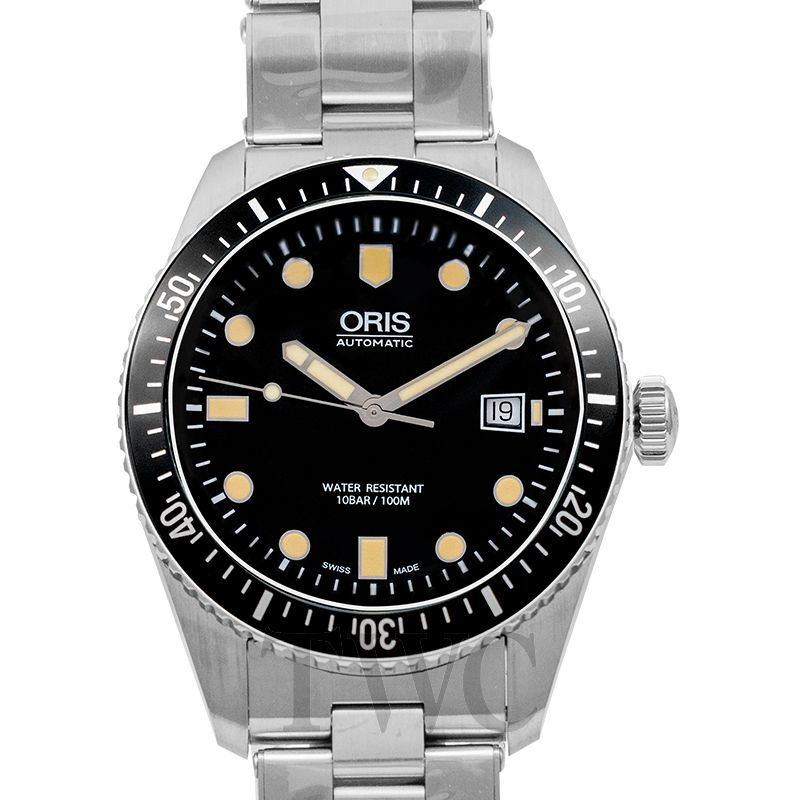
Most simple plunging watches utilize a unidirectional pivoting bezel to track jump length, the bezel must be turned one path and as a feature of the standard is required to have unmistakable markings at five moment interims and a size of an hour. The watch is required to have its 60/0 moment imprint be decipherable at twenty five meters beneath the surface and the perusing of the time intelligible itself. Simple plunging watches accomplish this with luminescent watch hands, while most advanced jumping watches execute this with an illuminated oris divers sixty-five watch screen.

Jumpers watches should likewise demonstrate that they are working, both at 25 meters and in complete murkiness. Simple watches have a running second hand with luminescent tip. At the point when the battery runs out they should introduce an “EOL” (end of life) pointer.

Jumpers watches are among the most thoroughly tried games watches on the planet, which means a decent one will probably last you for a long time and be totally sheltered to use in and around seawater, regardless of whether you are scuba jumper or not.


Nigerian Fintech, Funding and the Capital Market

0

By Chuma Akana

In recent times, the Nigerian FinTech ecosystem has witnessed strong drive and campaign across various frontiers including payments, personal savings, financial services, financial inclusion and mobile lending. This has precipitated the attention on FinTech companies and led to unprecedented growth in the industry in a short period. According to the Nigerian Start Up Funding Report, in 2018, Nigerian technology companies attracted investments of over N42 billion and 73% of this sum was invested in FinTech Companies. Also in 2018, wallet.ng, a Nigerian FinTech company was listed among the Top 100 FinTech companies in the world, in a report published by KPMG and H2 Ventures- the 2018 FinTech 100.

According to the Nigerian Startup Funding Report by Techpoint, Nigerian startups raised $17.6 million in Q1 2019, 8.5% higher than they did in Q1 2018. With the likes of Microsoft setting up digital villages in Nigeria, more Nigerian FinTech startups are leading the drive for financial inclusion in the continent.

Possibly, a large part of the industry growth is directly related to the amount of funding being pumped in by investors in the Nigerian FinTech ecosystem, as it is widely agreed that funding is important for FinTech companies to thrive.

FinTech companies like other companies in Nigeria, can have various sources of funding including debt or equity. With respect to debt, most startups may be permitted by their Articles of Association, to raise capital through debt from banks, financial institutions and the capital market, subject to regulatory requirement.

For a lot of tech companies, funding can be a major challenge at the onset, particularly when the product/concept is novel and innovative. Typically, the founders would raise the initial capital from individuals/family for the first few months or years of the business, before they are able to access external funds through seed funding or series round, to scale their business. This lack of funds or access to credit has resulted in the exit of some promising tech companies in recent years. As mentioned above, equity, debt and mezzanine financing are available funding options for new and growing tech companies, however what we see, is that most FinTech companies raise equity instead of debt, as investments have mainly come from venture capitalists and private equity firms.

These venture capitalist are incentivized to provide these funding, by the provisions of the Venture Capital (Incentives) Act LFN 2004 which provides some tax benefits for the Venture Capital Firms including; accelerated capital allowance for equity investment by a venture company in a venture project for the first 5 years of the investment; reduction of withholding of tax on dividends declared by venture projects to venture companies for the first 5 years from 10% to 5%; export incentives such as export expansion grants if the venture project exports its product; exemption of payment of capital gains tax from gains realized by venture companies for a disposal of equity interest in the venture project; and exemption from companies income tax for a period of 3 years , which may be extended for an additional final period of 2 years.

Most startups would go through a Series A, B and C round, and believe they have gained sufficient funding to grow and scale their business, add new products to their portfolio, and return good profit to investors. Still, there is the option of listing in the capital market and conducting an Initial Public Offering (IPO) to offer shares to the public, and this is not uncommon in international markets. In 2002, Paypal which was founded in 1998, raised the sum of $70.2 billion via IPO, and is presently listed as a Forbes Fortune 500 company. Also Facebook raised $16 billion via Initial Public Offering in 2012, and has become one of the biggest companies in the world. However, raising fund from the capital market seems not to be a popular option for most tech companies, as a result of the perceived difficulties in managing a public company and the stringent reporting requirements.

In recent times, the Nigerian Stock Exchange have indicated that it is planning to reposition the Alternative Securities Market “ASEM” which is the NSE initiative for SMEs as a “Growth Board” that will provide listing opportunities and capital formation for Startups, SMEs and Venture Capital/Seed companies with a keen focus on startups creating value with transformational impact on the market. Basically, the initiative allows the target companies to float shares with a more flexible regulatory system than is applicable to the main board or premium board.

The Growth board has an entry stage which is primarily targeted at startups, tech companies and venture businesses. It is imperative that the company is a public limited company in legal form i.e as prescribed by Section 24 of the Companies and Allied Matters Act. Other requirements include that the company shall have a market capitalization of N50m – N500m and a public float/minimum shareholders of 10% and 25 shareholders respectively. Continuing obligations and reporting include semi-annual and annual company’s statements, while the Nigerian Stock Exchange will provide strong support structures for the company including accounting, audit and legal services at a pre agreed and prepaid rate with the startup.

For these companies, the benefits of listing on the Nigerian Stock Exchange above other funding options include the highly liquid nature of the market, value creation and corporate governance. There is also the issue of optimal price discovery, greater brand profile and visibility for investors, customers and consumers. Through listing, these start ups are also sure of business continuity, recognition in global markets, transparency/credibility and an exit route for private equity and strategic core  investors.

The companies listed on the growth board are supported by the 3 pillars of designated advisers, growth ambassador and NSEs institutional services. While the regulatory and governance pillars are designed to facilitate the growth and institutionalization of these companies, the institutional services relate to the NSE’s initiative via partnership with strategic providers to offer companies access to expert services such as leadership development, succession planning and formalization of business processes. This enhances the company’s capacity to define its business model and integrate it with its structures, systems processes and people. Some proponents also opine that accessing funding through the capital market would give these tech companies an easier capital flow while reducing the cost of funding.

It is believed that this option of capital market should be considered by FinTech companies, as it will boost global recognition, ensure customer confidence and good corporate governance which is the hallmark of stable and successful companies.

Chuma Akana is a FinTech lawyer and writes from Lagos.

DHL is now Jumia’s Main Competitor in Africa

0

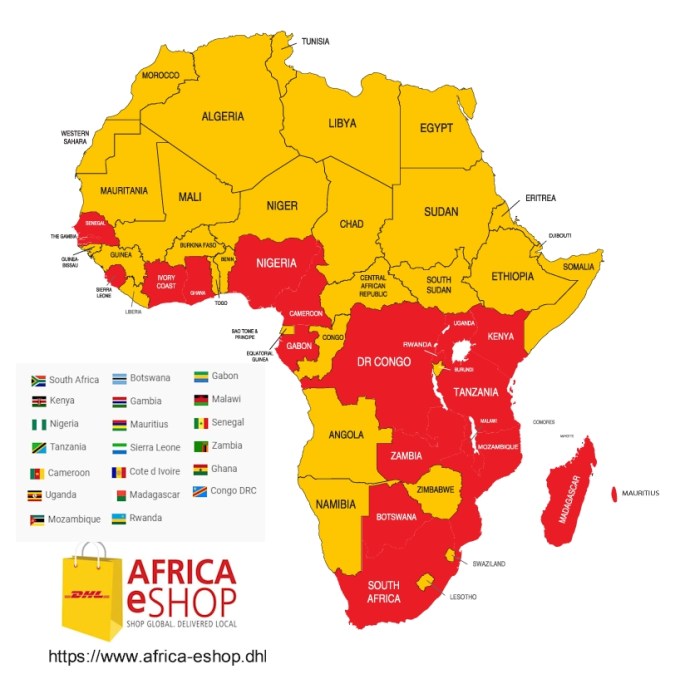
DHL is scaling its eShop in partnership with MallforAfrica. Jumia operates in 14 countries – DHL eShop is in 20 countries. The biggest competitor Jumia has now is DHL. It has brought excess of 200 U.S. and European top brands like Neiman Marcus and Carters online to Africans. If you take DHL’s supply chain advantage through its existing delivery structure built over decades, you can see that its claim that it is “Africa’s Largest Online Shopping Platform” makes sense.

Why? Ecommerce in Africa will be won on logistics as that is where the marginal cost issue required for scaling is domiciled. According to McKinsey & Company consumer spending will hit $2.1 trillion by 2025, with e-commerce accounting for up to 10%, in Africa. Many will put money in this sector but if you do, do not ignore what DHL is doing as it is mopping the best online sellers – typically foreign brands – at scale.

All Together

When you look at the whole elements, ignoring the open market [the one everyone wants to take down], and Facebook and Instagram which are auxiliary competitors, the main competitor to Jumia now is DHL. With DHL’s logistics capability, it has the easiest route to become the Amazon of Africa that can help people buy things on Kenyan e-stores and get them next two days in Lagos. Those e-stores could be DHL eShops and that is why its positioning is strong in the continent’s ecommerce sector.

Amazon’s Exit from Restaurant Delivery Shows Startups Can Win with Upstream Capabilities

0

Companies must develop and accumulate capabilities in order to compete in the marketplace. From Google to Dangote Group, when companies accumulate capabilities, they see themselves operating in the segments of markets with higher value (usually upstream) compared with where many lower-grade competitors usually operate (usually downstream). Dangote Group can deploy massive assets and technical know-how in cement production, making it harder for new entrants and rivals.

Yet, Indomie Noodles won over Dangote Noodles by deepening its capabilities thereby making it impossible for Dangote Group to find opportunities in the noodles business in Nigeria.

I explain how the makers of Indomie noodles used the same strategy Dangote Group had deployed across industrial sectors to defeat Dangote Noodles. The  accumulation of capability which Dangote Group uses to crush competitors did not work because Dufil Prima Foods (makers of Indomie) did the same thing from electricity generation to production, for its noodles business. With their vertically integrated business, there was no left efficiency which Dangote could exploit to improve quality and reduce price. At the end, an established brand won and Dangote Noodles could not dislodge them. Dangote Group later sold its noodle business to Dufil Prima Foods. This shows a practical model anyone that wants to compete against Dangote Group can deploy. Beware: you need to be very solid!

This principle is universal: Amazon is exiting the restaurant delivery business in London and US, as it has failed therein. The pioneering startups are already operating at the upstream with supreme accumulated capabilities. Despite Amazon’s capital, it could not crack the markets – and has to exit. Building moats in your category will ensure you become a category-king and rule for years.

Following November’s closure of Amazon’s restaurant delivery business in London, the company is now shutting down operations in the U.S. The service, which was launched back in fall 2015, was designed to give Prime members another perk — a way to order meals, not just products and groceries — through the e-commerce giant.

But the service has faced much competition, including from local rivals like Grubhub, Uber Eats, DoorDash and Deliveroo (which Amazon invested in) in London, among others. In some cases, they would even discount their services in order to win market share. Amazon, meanwhile, has largely failed to establish itself as a significant player in restaurant delivery in both market share and consumer mindshare. It’s not the first name people think of when they’re looking to order food for lunch or dinner, and the logistics of delivering hot meals in a timely fashion introduces a different set of concerns that go beyond Amazon’s core focus areas.


How To Beat Dangote Group: How Indomie Noodle Did It

The Unilever’s Open Modern Market on Jumia

0

For decades, Nigeria’s open market was the core channel to reach customers for FMCGs players. Across the nation, these markets are in many varieties – 4 days, weekly or 8 days in most rural areas, and daily in cities. Then you have the security guard tents and the traffic stop boys. Supermarkets and megastores like Shoprite are new inventions. Most companies in the broad domain of FMCGs won by mastering how to win on those open markets.

But time is changing. Unilever now has a director for modern trade, and companies like Konga and Jumia are providing new channels to reach customers. Open market will remain with us but we are going to have versions on the web. Jumia has one – and Unilever just signed up. Jumia makes a section of its website dedicated for Unilever. There, it will host its products and brands for customers.

Yes, fast moving consumer goods manufacturer, Unilever, has joined the ranks of multinationals leveraging the huge potential of e-commerce to create more visibility for their brands in Nigeria. Unilever has officially launched its store on Jumia – jumia.com.ng/unilever-store. The online store houses some of the company’s fast-selling brands, such as Close-up Red Hot and Herbal lines, Knorr, Lifebuoy, Lux, Pepsodent, Sunlight, Vaseline, and Shea Moisture.

“We are pleased to partner with Jumia to make our products available to our customers and consumers by leveraging on technology through e-commerce channels. This is in line with our commitment to continuously seek innovative ways to make our products available and accessible to shoppers. Our message to consumers is that we will continue to live up to the commitment of making sustainable living commonplace through our brands and operations. Apart from our relaunched Lifebuoy soap, newly launched Pepsodent sensitive expert range and Shea Moisture, we have exciting new products planned for the year. Our shoppers on Jumia will be duly informed as we launch,” said Iqbal Farrukh, Modern Trade Director, Unilever. (press release)

This strategy is not new – Amazon.com has been doing it, working on strategic partnerships with major brands like Canon, Sony and P&G to maintain noticeable presence in the portal. Bringing the major brands in Nigeria within the ecommerce platforms will remove the risks of customers buying counterfeits and fake products. I expect the model to blossom.  Yet, do not leave the atom-based open market because that is where the trades happen in Nigeria.