The table presents the Top 10 Startup Funding Deals in Africa – 2019* vs. 2018. To qualify, a startup must be:
headquartered in Africa OR
have Africa as its main market OR
is incorporated in Africa
Only private entities – Jumia excluded because it is now a public company. We might have missed some, feel free to list using the comment section below.
In this digital era, it is no more what you know but what people think you know that really brings progress. Get over the shyness, write your first professional article, and see how things will open up. Here, I have listed some suggestions on how to build your professional webinality (web + personality).
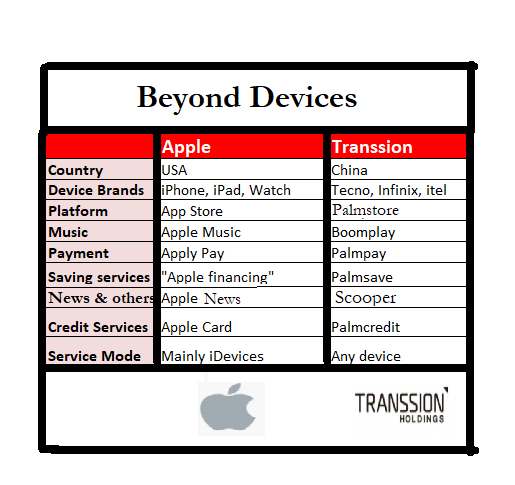
Certainly, it is not evidently fair to put Apple and Transsion Holdings, the makers of Tecno phone brand, on the same table – the capability asymmetry is very huge. Yet, I will like to show this table which depicts how Transsion has been evolving for its potential post-device future. When you count serious fintech companies in Nigeria, you must include Tecno parent company as most of its services are natively integrated in the phones. If the Boomplay does well, Palmpay will follow – and all of them are linked by the very fact that most African users depend on Transsion phones!
Transsion Holdings Co., Ltd. develops and manufactures mobile communication products under the brands, including TECNO, itel, Infinix, and Spice. The company also offers after-sales services under the brand Carlcare, manufactures mobile accessories under the brand Oraimo, and home appliances under the brand Syinix. The company was formerly known as Tecno Telecom Limited. The company was founded in 2006 and is headquartered in Shenzhen, China with additional offices in Shanghai and Beijing, China and Hong Kong. It has operates R&D centers in Shanghai, Shenzhen, and Beijing; China.
Data Sources: Wikipedia, Techcabal, Tecno, Apple, Tekedia
*Scooper is an entertainment platform, different in style from App Store. But that is what Transsion has now.
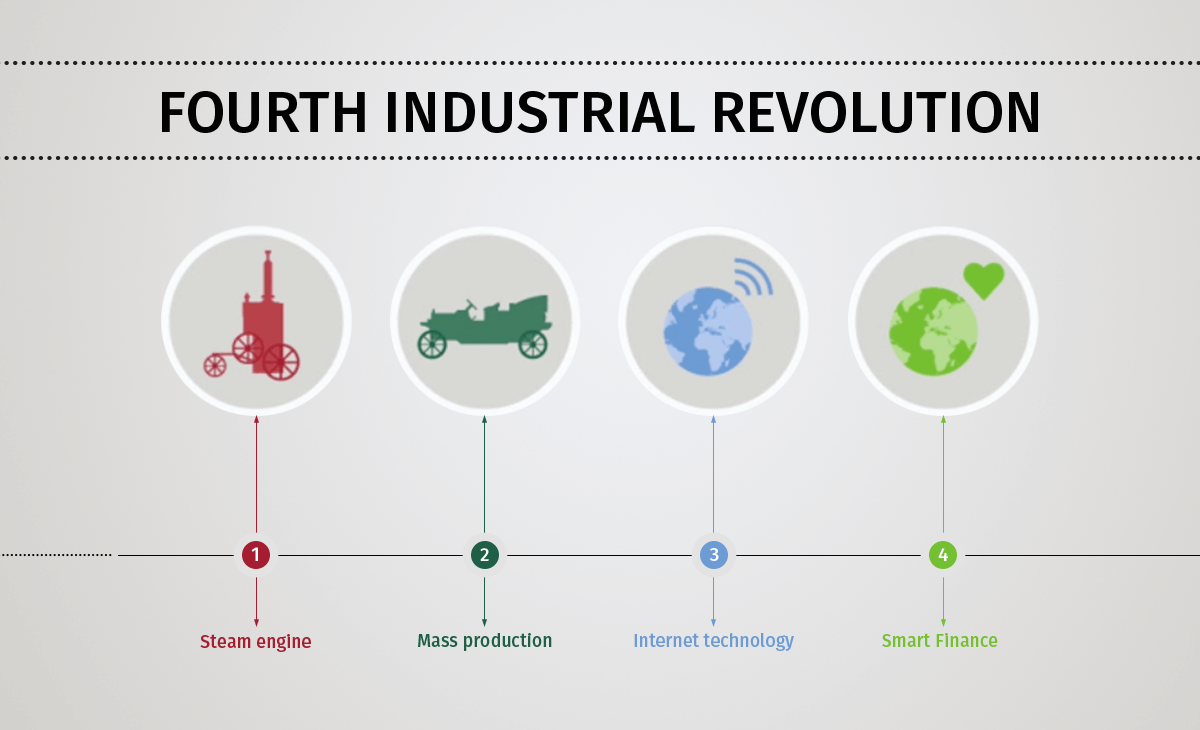
The World Economic Forum recently established six Global Fourth Industrial Revolution councils which will fashion out governance frameworks for emerging technologies. With a focus on artificial intelligence, autonomous mobility, blockchain, drones, internet of things and precision medicine, the global councils are a convergence point for more than 200 leaders from the government, private sector, civil society and academia from around the world.
Global Fourth Industrial Revolution Councils will:
Enable cross-country exchange of policy and regulatory experience, including through case studies;
Identify and take action to address gaps in public policy or corporate governance through multistakeholder cooperation;
Shape a common understanding of “best” or “good” policy practice as a means of enabling better policy coordination within and among countries;
Provide strategic guidance to the Centre for the Fourth Industrial Revolution Network regarding the governance projects and pilots it undertakes.
The Councils members will work together to develop policy guidance and address ‘’governance issues’’ for emerging technologies. According to Richard Samans, Managing Director and Head of Policy and Institutional Impact at the World Economic Forum, companies and governments are not moving fast enough to anticipate social expectations in the Fourth Industrial Revolution, and that this bottom up, societally focused approach can help to build and maintain public trust in the technologies while strengthening evidence, upon which policy decisions are made by governments and companies.
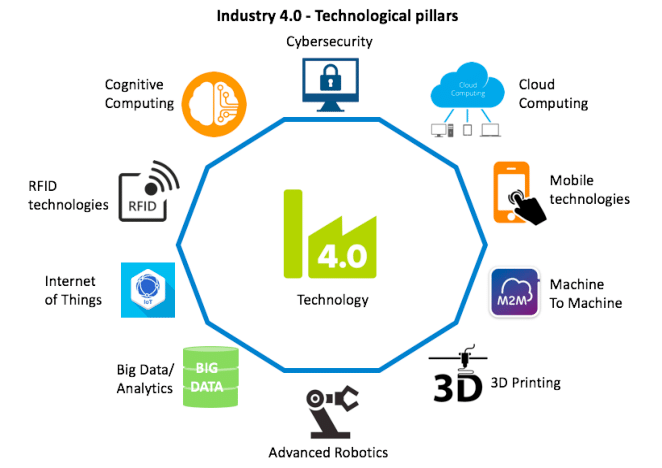
Technologies for industry 4.0 (source: researchgate)
The Global Fourth Industrial Revolution Councils will enable cross country exchange of policy and regulatory experience including through case studies, identify and take action to address gaps in public policy or corporate governance through multi-stakeholder cooperation, shape a common understanding of best or good policy practice as a means of enabling better policy coordination within and among countries, and provide strategic guidance to the Centre For The Fourth Industrial Revolution Network, regarding the governance projects and pilots it undertakes.
The Councils Chairs includes leaders from the Chinese Academy of Medical Sciences, Dana Farber, European Commission, Microsoft, Uber, World Bank, etc.
In a perfect internet market, marginal cost is zero for digital products. In other words, the cost of producing to serve an additional user will be zero. This is possible because distribution cost and transaction cost – two components of marginal cost – will disappear. This has a huge implication on the trajectory of digital firms: because distribution within internet is unbounded and unconstrained [limited gatekeepers], the friction for distribution tends towards zero, opening huge opportunities for new business models.
Under this circumstance, two things happen:
There is limited value in owning digital products if you can stream the same content. The low marginal cost makes streaming more cost-effective over time, especially when you consider more product choices stream triggers for you. Yes, you can stream more contents over just buying and owning rights.
There is limited value in outright purchase of digital products when you can do subscription for the same reason as noted in #1 above.
These factors are the reasons why owning music is no more a smart choice: streaming pays better. Apple iTunes had to go for its era is fading for Apple streaming business to take over. The future belongs to streaming as that cost will keep dropping per value compared with buying and owning music. Simply, if marginal cost drops, users win, and asking them to own the digital product is offering a non-optimal choice to them.
So is owning music becoming a thing of the past?
Streaming made up 75% of the music industry’s revenue last year. It’s so lucrative that music streaming is where one of the fiercest battles against Apple’s alleged monopoly is being waged
LinkedIn Comment on Feed
In this era of abundance, we have overwhelming contents of written works, audio or video on the web, such outright purchase and ownership is no longer a smart choice.
Our day hasn’t been increased to 40 hours, still the same 24 hours, so we barely have time for a repeat on those media contents we own, we simply read, listen or watch, and then move on. We can always go back for references, if such time is available.
Apple had to take down its iTunes, else it would be scoring a sort of own goal, the Apple Music and its subscription business needed a breathing space, having iTunes around is a distraction.
This emerging sharing economy will get to a point where no one would like to own anything again, just use and move on.