DD
MM
YYYY

PAGES

DD
MM
YYYY

spot_img

PAGES

Home Blog Page 6878

Mastering China’s Minimum Viable Quality (MVQ) Strategy

5

What is your Minimum Viable Quality (MVQ)? Yes, you have mastered the Minimum Viable Product (MVP) construct where the strategy is to make the least viable product or service to test a market value hypothesis. But if you visit Shenzhen China, you will quickly realize that the most catalytic thing is really the MVQ. Chinese manufacturers evidently understand that price cannot be uncorrelated with quality.

If you want a toy of $1, you will get it, but it may not last more than a day. But if you also want one for $20, that is available. By having that flexibility or range, they allow a mother to show love to a child even though the product may go bad within a day. The alternative is pricing that mother out of range with the possibility that the child may never have access to a toy.

As you build, be constantly thinking on MVQ. The MVQ is really (partly) the reason why China took over the world. Yes, while Western World would never sell unless it is exceedingly top-grade, China will give you something for the size of your purse. If you do not see that as a market penetration strategy, take another look today.

Read what I have written on Minimum Viable Quality (MVQ).

As I noted in the conversation, there is an illusion on quality. While quality is critical, it is very important that you do not lose focus by trying to build a business where quality has no correlation with cost. I am not sure that the latest Apple Mac Pro that goes for $5,000 is a desktop machine. Apple certainly does not expect that product to be sold to the (desktop) mass market, and specifically to the developing world. The new Mac Pro is a great machine with capabilities that exceed performance of some server systems. Yet, anyone that imports it to Lagos to resell will struggle. Sure, it has a great quality but the cost does not make sense.

The fact is this: any product quality that does not correlate with cost (or value derivable) makes no sense. I have designed accelerometers (motion inertial sensors) where my employer gave me diverging product specification targets: one version was for $0.60, another for $260. The one for $0.60 was made for toys while the $260 was engineered for use in pacemakers (heart monitoring systems). In the cheap one, it was a very crappy product that was built to last for weeks. But in the expensive one, knowing a human life depends on it, it was designed never to fail with many redundancies and checks.

Without the cost context you can think that the cheap one was a poor job. It is indeed not a great quality product but that was by design. That is what the market for toys wants because the kids rarely use them for days before they are discarded. It is a mass market product which has to be affordable to make sense. That does not mean that you cannot make very expensive toys only few can afford. But what is the purpose? Put a $260 XL in a toy which would be dumped within days?

The deal is this: the construct of quality has no meaning until the price of the product is put into considerations. I always ask entrepreneurs to build for the Minimum Viable Quality (MVQ) bounded by the product target price which market will respond. You can build rockets to fly around the world: that is an engineering possibility. But does that make a business sense if no one can afford it? Ask the makers of Concorde for answers.

I know that Eko Hotels is a great place in Lagos but the price is huge. I can get a cheaper hotel for half the price in Ikoyi. If I rate that cheaper hotel with the same standard of Eko Hotels in my mind, I have not done justice to the review system. Etisalat NG could have delivered the best service but only few afforded it while Glo produced a service, not necessarily great, but widely affordable. The markets responded and Glo got ahead, at least it survived, while the remnants of Etisalat NG will become extinct on Monday.

LinkedIn Comment on Feed

Comment #1

MVQ! Nice share Prof. Ndubuisi Ekekwe.

One way to also look at the MVQ strategy is that it helps incumbents starve off the forces of market disruption. If an incumbent doesn’t attract the low end of the market with those cheap toys, a new entrant, who can’t compete at the top end of the market, would.

And after the entrant monopolises that low end of the market, it would naturally scale up, and come up the ladder for more premium customers. Until it ultimately grows large enough to compete with, or even edge out the established company.

Spot on again sir. As always

Comment #2

On the surface, it makes a lot of business sense to pursue MVQ, but again – unethical practices will erode whatever good intent originally thought.

What happens when conscienceless people decide to put the very cheap device for toys in critical equipment, and then prop up the price? Herein lies the tricky part.

Many hypotheses look great for market penetration, only if we have decent humans across board, else it would be disastrous to allow some creatures to bring just anything to the market; the consumers are not likely to have some luck.

Of course the construct of MVQ works fine for developing countries, where several things still lack standardization, the case is different in top countries. Also when you are a known and respected brand, you are likely to avoid playing on the mud.

As long as price correlates quality, with ethics binding everything; we will all be fine!

At Fasmicro, We Do Electronics

0

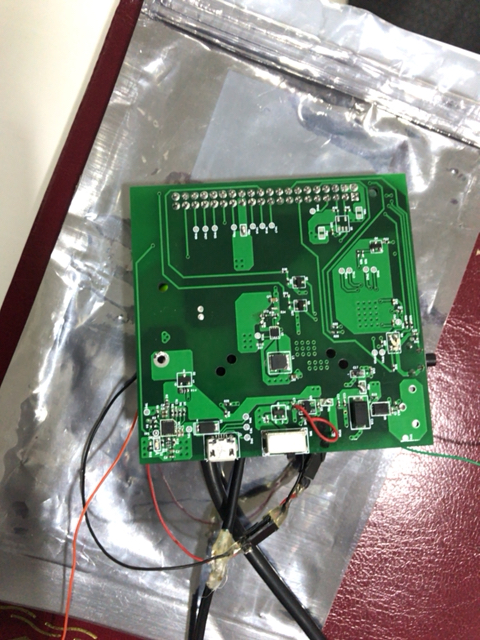
A new version of one of our enterprise imaging products passes bench testing. Inside this product is an OS engine running on a microprocessor, computing images, videos, algorithms and anything you can throw at it. Specially engineered for clients, it has evolved from the older versions. At Fasmicro, we are helping to preserve the Freedom many enjoy through technologies we supply across Africa.

In Africa, household consumption is expected to reach $2.5 trillion by 2030

0

In Africa, household consumption is expected to reach $2.5 trillion by 2030 with Nigeria, Egypt, and South Africa accounting for nearly half of that. This presents exciting opportunities for brands that want to grow in retail. But how do they approach this in an increasingly cluttered and competitive market?

Adding impetus for this need to expand is the fact that the continent is becoming the next big global manufacturing hub, mimicking China. Research from the Chinese Ministry of Commerce indicates that Africa’s population will reach two billion by 2050, representing the largest labour pool in the world. In 2017, privately-owned Chinese companies made more than 150 investments in the manufacturing sector on the continent, up from only two in 2000.

It is the fast-moving consumer goods segment in particular that is in high demand, offering brands the platform to strengthen their footprint, embrace new media, and be more innovative in how they use digital opportunities at retail touch points. Considering that low and middle-income buyers will collectively have a disposable income of almost $680 billion by 2020, there is considerable potential for brand positioning and awareness in retail environments.

But connecting to the modern African consumer from a retail perspective is no easy task. While online shopping is certainly a valuable channel and digital marketing a core component of strategy in 2019, many shoppers still want the physical experience of a retail store. There should certainly be a balance between the two environments, avoiding the temptation to spend too much on online tactical elements while foregoing the in-store point of sale opportunities that are arguably critical decision-making and exposure touchpoints.

For example, in South Africa with its 11 official languages, brands often forget the value of advertising in the vernacular or slang of its specific target market. If the digital landscape has shown organisations anything, it is in the value of specialising more and generalising less to create more meaningful moments. The same applies to in-store media. By being focused on tactical experiences, brands will foster improved customer loyalty at a time when this is notoriously difficult to do.

Political and economic uncertainty aside, consumers are likely to be in an even stronger financial position than in the past. Brands should therefore invest now in the ‘quiet time’ on technologies that aid better insight and positioning. For example, data-gathering or machine-learning (artificial intelligence) solutions that can assist in improved data analysis.

This, in turn, will result in better-targeted campaigns delivering customers a brand experience they want and need. Allowing brands to become more efficient in their online and offline approaches maximising marketing budgets for profits.

Ultimately, brands need to be open to harnessing new technologies and fresh insights to better position themselves in the dynamic retail environment. The world’s attention is starting to shift towards Africa. Now is the time to start capitalising on it.

By in-store advertising innovators Smart Media

The AI Microchip Era Begins

0

As part of its strategy to accelerate the development of AI devices for the home, LG has developed its own artificial intelligence chip (AI Chip) with proprietary LG Neural Engine to better mimic the neural network of the human brain to greatly improve the processing of deep learning algorithms.

The AI Chip incorporates visual intelligence to better recognise and distinguish space, location, objects and users while voice intelligence accurately recognises voice and noise characteristics while product intelligence enhances the capabilities of the device by detecting physical and chemical changes in the environment. The chip also makes it possible to implement customised AI services by processing and learning from video and audio data in order to enhance recognition of the user’s emotions and behaviors and the situational context.

Products utilising the LG AI Chip take advantage of the On-Device AI to operate even without a network connection. What’s more, LG’s AI Chip employs a powerful security engine to better protect personal data from external hacking. Processing that does not require high security is designed to run in a general zone and jobs that require higher security run in a separate hardware-implemented security zone.

LG’s AI Chip is designed to enhance the recognition performance in the products it powers such as an advanced image recognition engine for simultaneous localisation and mapping (SLAM). For example, its powerful image processing function corrects for distortion caused by wide angle lenses and generates brighter and clearer images in dark environments. LG Electronics plans to include the new AI Chip in future robot vacuum cleaners, washing machines, refrigerator and even air conditioners. In addition, LG will expand the reach of its artificial intelligence solutions through collaborations with outside companies, universities and research laboratories.

“Our AI C?hip is designed to provide optimised artificial intelligence solutions for future LG products,” said I.P. Park, president and CTO of LG Electronics. “This will further enhance the three key pillars of our artificial intelligence strategy – evolve, connect and open – and provide customers with an improved experience for a better life.”

That SEC is Investigating MTN Nigeria’s Listing Is A Distraction from Needed Market Reforms

0
SEC Nigeria

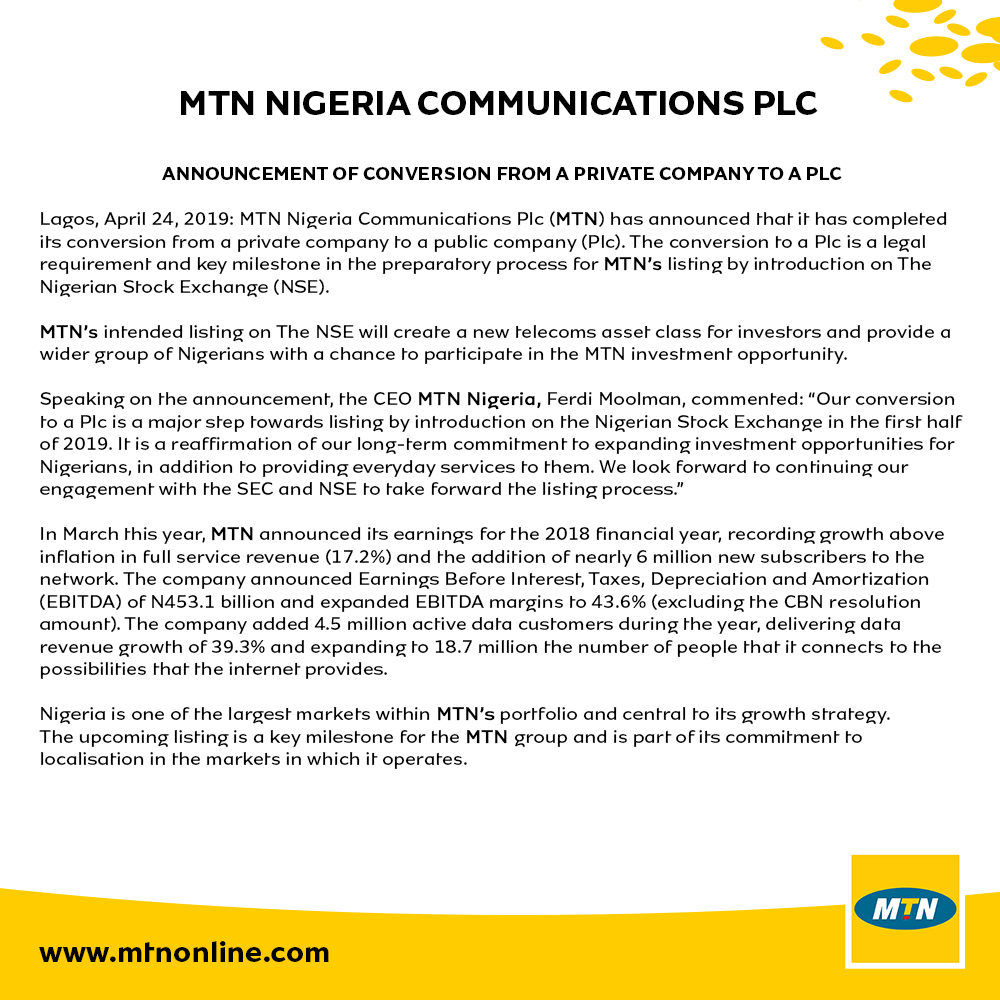
Many Nigerians are not happy that they are yet to have the CLEAR ability to buy the shares of MTN Nigeria on the Nigerian Stock Exchange. MTN had listed via Introduction which means unlike the typical IPO, the holders of the shares are not obviously obliged to make the shares available for trading. Technically, it was listed publicly but not evidently tradable publicly. That the Securities and Exchange Commission (SEC) is investigating this is not great news because Nigeria has listing by introduction in the books. That MTN decided to use it should not be handled with bad blood. I understand the frustration – everyone wants to get into the game but right now you need to know big connectors before you can get the shares. Largely, it is not really public since without knowing the current holders, you will be out of luck to buy the shares.

The Securities and Exchange Commission (SEC) is investigating the process that led to the listing of MTN Nigeria on the Nigerian Stock Exchange (NSE) last Thursday, THISDAY learnt yesterday.
A source said the application of the telecom firm was initially turned down by the NSE Council before it was later reconsidered, without the authorisation of SEC

[…]

“For Listing by Introduction, you are not obliged to make shares available to the market to buy at all. For Listing by Introduction, shareholders that were existing prior to the company being listed have the opportunity to trade their share.
“So, if you are not a shareholder of MTN Nigeria prior to the listing, you will not be able to sell any share. You only buy from willing sellers in the market,” the source added.

The implication of this listing path was well documented. I did write thus “MTN Nigeria is arriving on the floors of the Nigerian Stock Exchange (NSE) via a special gbaam – listing by introduction and not through the typical IPO (initial public offer). Simply, the company will list already existing shares without any requirement to issue new ones or raise new funds”. Simply, MTN Nigeria has planned not to raise new funds and that means it is possibly not going to trade shares. Nigeria knew this and approved its papers. MTN followed the books – and tested elements which many have not used. We should not make life hard for it.

Comparison between IPOs and Listings by Introduction:

IPO Listing by introduction
RAISE NEW FUNDS ? X
ISSUE NEW SHARES ? X
LISTING OF SHARES ALREADY IN ISSUANCE X ?

What needs to happen is that SEC needs reforms. It is SEC that needs help so that we can examine our market rules to be sure they are up to date as our economy has been redesigned since those rules were written. On this one, Nigeria needs to allow MTN to have peace. This company never wanted to raise money from any listing. Magically, it saw a way to comply with the listing requirements without messing up with its share structure. It did that – and it is not a crime because everything it did is in the books. If you hate the style, go and change the market rules! A simple line – “If you list by introduction, you must make 5% available for public trading” – will fix this in future.