DD
MM
YYYY

PAGES

DD
MM
YYYY

spot_img

PAGES

Home Blog Page 6892

11 Largest Shareholders of MTN Nigeria

0

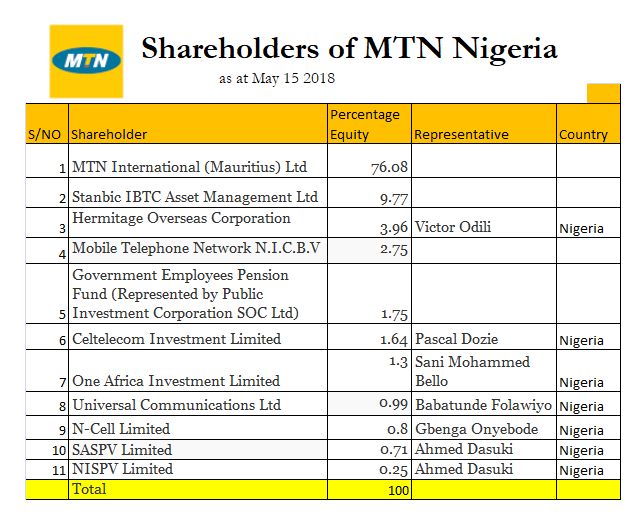
Premium Times just published breakdown of MTN Nigeria ownership as at May 15, 2018. They have the top 11 key shareholders, controlling the entire 20,354,513,050 Ordinary Shares of the company. Six Nigerians are there controlling about 10% – those men will surely have good Christmas and Sallah ahead! Yes, MTN shares are doing well on the Nigerian Stock Exchange. MTN Nigeria has about 67 million subscribers with close to 40% of the market share. You can read more about these shareholders here.

*For 11, some publications have Karl Olutokun Toriola

Google Restricts Huawei’s Use of Android; Huawei Responds with Statement

0

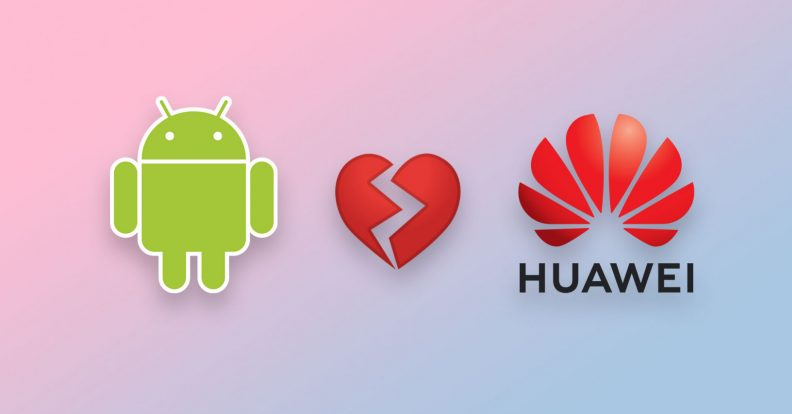
This is a big one for all the noise of one world and one global family – it seems it works when some are winning and others are asking for aids. Provided that order stays that way, the winners will be happy. But when the others begin to rise, then tension will rise. So, it was shocking that Google, obeying order from above, is restricting Android from Huawei. BBC explains it thus as “Google launches the next version of Android later this year, it may not be available on Huawei devices.”  Recently, Huawei was added in the dreaded “entity list” which will restrict its capacity to import technologies from U.S.

Google has barred the world’s second biggest smartphone maker, Huawei, from some updates to the Android operating system, dealing a blow to the Chinese company.

New designs of Huawei smartphones are set to lose access to some Google apps.

The move comes after the Trump administration added Huawei to a list of companies that American firms cannot trade with unless they have a licence.

Google said it was “complying with the order and reviewing the implications”.

Huawei said it would continue to provide security updates and after sales services to all existing Huawei and Honor smartphone and tablet products covering those have been sold or still in stock globally.

“We will continue to build a safe and sustainable software ecosystem, in order to provide the best experience for all users globally,” it added

Of course China is not innocent itself, lacking to understand that global markets cannot treat it the way it was treated 30 years ago. It has to make concessions for other countries to also rise. Its stubbornness in refusing to recalibrate its economic architecture (by reducing state capitalism) will affect nations like Nigeria, Ethiopia, and Rwanda from rising. While U.S. may be brash in its tactics, China needs to understand it is a big boy on the global table and needs to make changes for the small guys to have seats.

For Huawei, maybe there is a plan B after all the big talks. You have an opportunity to show the world. You said you have planned for this ban; the opportunity is here to show your customers that nothing has changed.

In the short term, I expect Huawei to lose market share in the consumer mobile device market. Huawei response to the ban below:

“Huawei has made substantial contributions to the development and growth of Android around the world. As one of Android’s key global partners, we have worked closely with their open-source platform to develop an ecosystem that has benefitted both users and the industry.

Huawei will continue to provide security updates and after-sales services to all existing Huawei and Honor smartphone and tablet products, covering those that have been sold and that are still in stock globally.

We will continue to build a safe and sustainable software ecosystem, in order to provide the best experience for all users globally.”


Jumia, Have a Formal Response on Citron Allegations; The CNBC TV Response is Not Enough

0

I just listened to Jumia Nigeria CEO (Juliet Anammah) explaining the Jumia side of the Citron “fraud” allegations against the African ecommerce pioneer. She put a show there on CNBC Africa. As I wrote, when the news broke, “The Americans are wrong – Jumia is not a fraud”, I saw no basis for Jumia to think adding those merchants or users will change its trajectory.

Yet, across all events I have attended, that question has been coming up, and it is getting really nauseating that Jumia has failed to put a formal response. This TV response is not effective – not many people have time to watch a 26-minute show for answers which are all over the place. You cannot rely on the Citi Research reaction since Citi did come to the same conclusion – Jumia respond and explain the two areas of concerns.

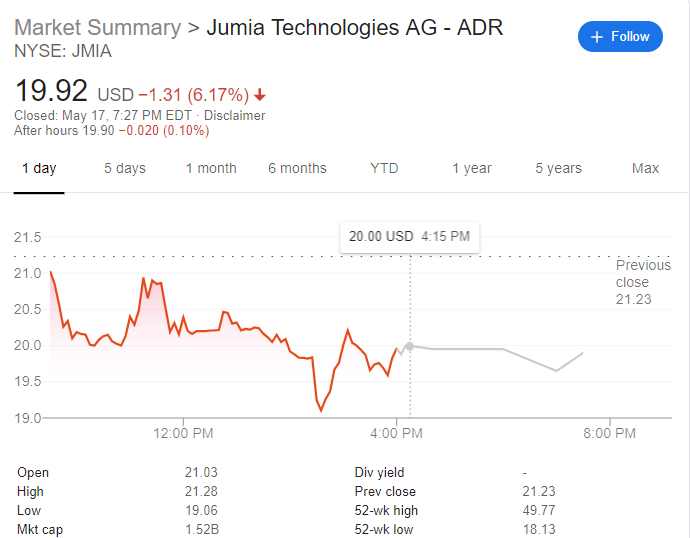
Jumia – put a formal response. This allegation can break you in America. Look at the stock – it is dropping. Largely, you had a great quarter but this lack of press management could be eroding trusts in your potential investors. This is America where data and news move markets.

Citron Research Calls Jumia a “Fraud”, Stock Drops [Download the Report]

LinkedIn Summary

Jumia is a category-king company but its response to the Citron allegation gets EDEFE, as scores, from me: E on speed, D on stubbornness, E on substance, F on readiness, and E on value preservation. The CNBC interview from Jumia Nigeria CEO is not enough. They need to put a formal response. Like I wrote the day the news broke – “The Americans are wrong – Jumia is not a fraud”. But that message must come from Jumia! This is America where data and news move markets.

Our Goal is Simple: Zero Revenue Leakage Even on Cash-based Transactions [Videos]

3

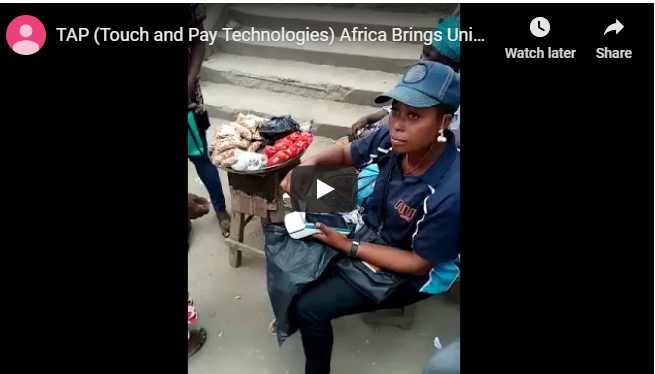
Our goal is simple: zero revenue leakage even on cash-based transactions whether you are in your shop or not. You sell garri, we capture all payments digitally. You sell mama put, all payments are recorded. You have okada riders riding for you, you get revenue visibility. You own a bus, you know how much the conductor collected. You run a shop, all transactions are captured live.

This is unification of digital and physical in payment. If you want to stop revenue leakage, theft, pilfering, etc in your business – offline and online – email my team for a demo anywhere in Nigeria.

She is selling airtime and recording all cash receipts live.


The OB Translate Mission of Translating 2,000 African Languages

0

By Nnamdi Odumody

A Nigerian software developer Emmanuel Gabriel has created an AI platform which can translate over 2,000 African languages.

OB Translate uses deep learning neural network to translate over a 1,000 African languages seamlessly and on demand. It also uses human knowledge to teach the platform and helps in some cases with content moderation for customers.

This service will help in eradicating the communication barriers in Africa, enabling seamless cross border trade across the continent to unlock opportunities which is in line with the African Union’s goal of economic integration by creating a single market. The productive and services sector will be able to trade their goods and services across a common economic market of $2.5 trillion without language barriers by utilizing this platform.

Translating human languages is one of the things we have experienced that AI is not only well suited for, but quite good at too. Services like Google Translate have demonstrated over the years that it is quite possible, as they get better, that the role of human text translators could be reduced. However, what has been missing has been the translation of African languages.

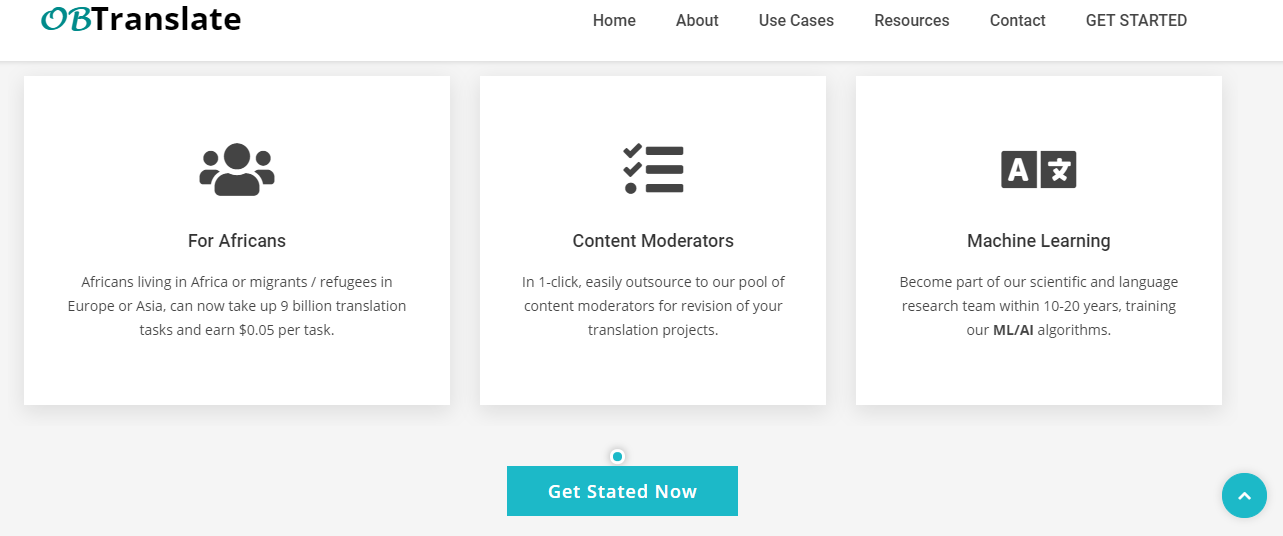
This is the part that Gabriel believes OBTranslate can make a difference. The AI powered platform also hires and pays Africans with knowledge of their native languages to perform tasks language related tasks on OBTranslate and earn money.

“Our machine language, AI algorithms with neural network connections have curated billions of tasks waiting for Africans who can teach our machine their local dialect. The first phase of the project comes with 9 billion tasks, and the 2nd phase comes with 12 billion tasks. It is projected to hire about 100 million Africans, with a projection of US$3.6 billion passive income for Africans with the capacity,” said Gabriel.

OB Translate machine learning and artificial intelligence algorithms have curated over 9 billion accurate tasks which can be translated in over 2,000 African languages with its neural network. Its goal is to break the language communication barriers in rural and urban areas in Africa

Google Translate which also uses AI in translating languages lacks the expertise in translating African languages fluently. This is the void OB Translate wants to fill and explains why it hires and pays Africans who are fluent in their indigenous languages to perform language related tasks on its platform and earn money.

The first phase of tasks which it has curated for Africans to train its AI in their local dialects is 9 billion tasks while the second phase is 12 billion tasks, and is projected to create 100 million jobs by hiring Africans with $3.6 billion to be earned by those with capacity in language fluency.
OB Translate’s platform will enable an augmented future where self driving cars, smartphones and wearables, robots, sensors and other wireless communication technologies can communicate and interact with Africans in their local languages.