DD
MM
YYYY

PAGES

DD
MM
YYYY

spot_img

PAGES

Home Blog Page 6916

What Africa’s Shoprite and Spar can Learn from Walmart Robots

0

By Nnamdi Odumody

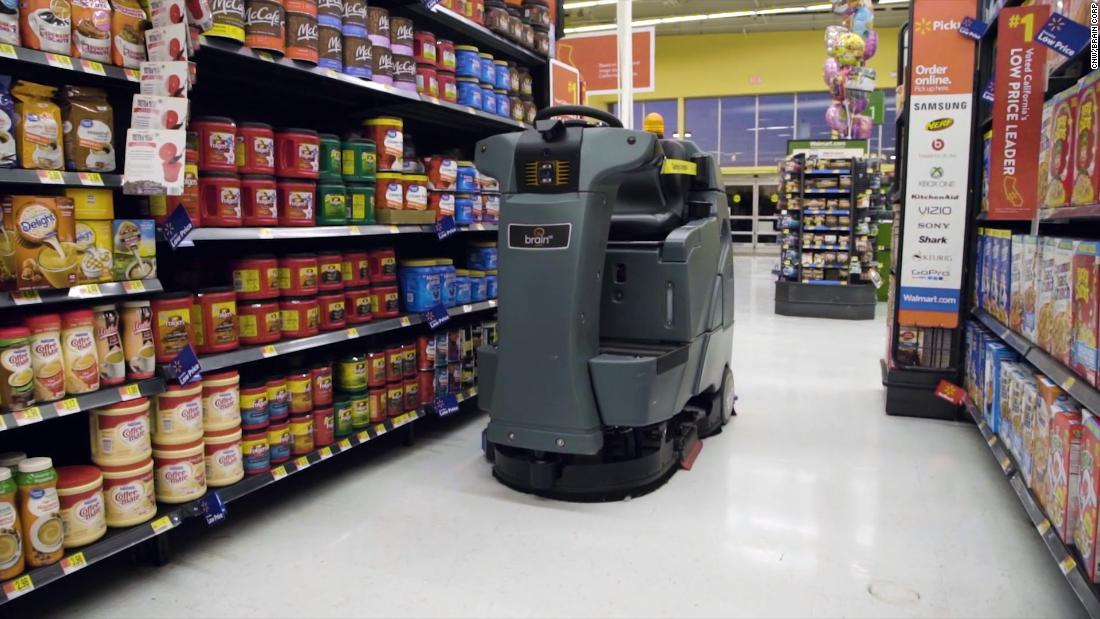
Walmart will deploy thousands of robots to its stores. By 2020, it will have 920 autonomous floors scrubbers in 1860 of its more than 4700 stores. It will also have robots that scan shelf inventory in 350 stores, and bots at 1700 stores that can automatically scan boxes as they come off delivery bucks and sort them by department onto conveyor belts.

According to Walmart, these smart assistants will reduce the amount of time workers spend on repeatable, predictable and manual tasks in stores, and allow them switch to selling merchandise to shoppers and other customer service roles.

CEO Doug McMillon said that automating certain tasks will give associates more time to do work they find fulfilling and to interact with their customers. He believes that deploying robots will increase sales and make stores more efficient in operations because while robots can unload trucks and keep up stores overnight, it will prove difficult with humans.

Walmart has been testing out this technology in hundreds of its stores over the past year. Running operations in its 178,000 square foot supercenters are expensive as more shoppers prefer ecommerce. It invested more than $2billion in 2018 to remodel stores across the country and equip them to handle online purchases for in store pickup.

Its strategic redesign has seen it leverage emerging technologies like artificial intelligence and blockchain to deliver the best customer experience better than its physical competitors. Today, the race is between Walmart and Target in the physical retail space, and Walmart and Amazon in the digital retailing space.

Africa’s leading retail brands Shoprite and Spar should learn from Walmart and invest in robotics to deliver smart services for its customers across the continent. Besides saving labour costs, they can improve efficiency and build stores for the smart economy which will improve margins.

[Apply] $3.2 Million BOI and All On Off Grid Energy Debt Fund

0

There is a new All On (a grid energy impact investment fund) opportunity for those working in the renewal energy space: $3.2 million available fund, seeded by Shell Nigeria, to support energy entrepreneurs. The financing terms beat the typical bank terms in Nigeria, TC Daily newsletter explains. Download the form here and apply if you work in the renewal energy domain.

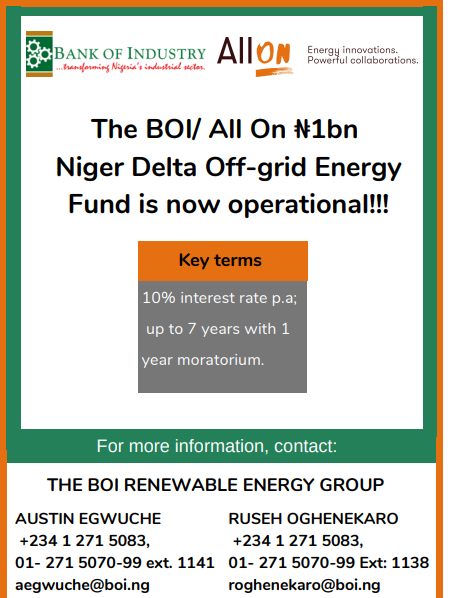
All On Energy has announced the launch of a N1 billion Bank of Industry and All On Niger Delta Off Grid Energy Debt Fund. All On Energy is an off grid energy impact investment fund for Nigeria seeded by Shell. The fund will provide local currency debt financing to facilitate the deployment of energy solutions by access-to-energy companies in the Niger Delta at 10% interest rate per annum (with a one-year moratorium) and tenor of up to seven years. According to All On Energy, the goal of the Debt Fund is to stimulate the growth and spread of off-grid energy businesses in the Niger Delta. Find out how you can apply here.

Comparison of Uber and Lyft Using their SEC Form S-1

0

I have made my prediction that Uber will buy Lyft within three years. Someone did note also, on LinkedIn, that car companies can band together and take it off the public market. Largely, it will be hard for Lyft to thrive in a world of Uber. Alliance of car companies buying Lyft to deepen their ridesharing future is a better possibility since Uber buying can hit antitrust challenges.

On July 14 2017 (see video), I made a case that Uber will merge/acquire Lyft. As Lyft loses steam, post-IPO, and Uber coming to party, the pressure will heat up on Lyft. Then Lyft will surrender, and Uber will buy it within three years. Similar rivalries have ended together: Elance/Odesk (now UpWork),  Groupon / LivingSocial,  Sirius / XM and  Rover / DogVacay.

These numbers below are from Uber and Lyft respective Securities and Exchange Commission Form S-1s.

2018 Revenue

Uber: $11.3 billion

Lyft: $2.2 billion

2018 Loss

Uber: $1.85 billion (Adjusted EBITDA loss)

Lyft: $911 million

Total Cities

Uber: 700+ (globally)

Lyft: 300+ (across U.S. and Canada)

2018 Booking revenue from ride-hailing service

Uber: $41.5 billion

Lyft: $8.1 billion

Users in 2018

Uber: 91 million (including other services like Uber Eats)

Lyft: 30.7 million

Drivers in 2018

Uber: 3.9 million

Lyft: 1.9 million

Rides in 2018

Uber: 5.2 billion (includes scooter and bike rides, Uber Eats deliveries)

Lyft: 619 million

After Jumia IPO Day 2, Andela and Interswitch Should Focus on Listing in New York

0

After Jumia Day 2, I declare for Andela and Interswitch to abandon any alternative plan that is not New York (NYSE or NASDAQ) listing. Forget London Stock Exchange (LSE) and Johannesburg Stock Exchange (JSE) and hit the land of Yankees. Nonetheless, I remain convinced that Alibaba Group through Ant Financial will buy Interswitch in order to have presence in Africa since it has picked properties in other global regions as it pursues payment system unification.

I have been tracking acquisitions by Ant Financial, an affiliate company of Alibaba Group. The Chinese company which is already bigger than Goldman Sachs is on spending spree, buying the world. London-based FT reported , few weeks ago, that it was in talks to buy WorldFirst, the UK-based international payments group, for about $700 million. The U.S. government had blocked its love-songs to MoneyGram, rejecting the proposed acquisition.

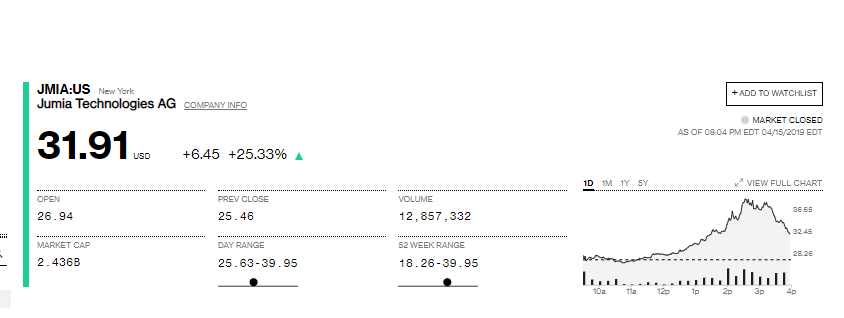
Did you see that 12,857,332 volume on Jumia Day 2? That is a solid whet of appetite from investors.

Jumia, source Bloomberg

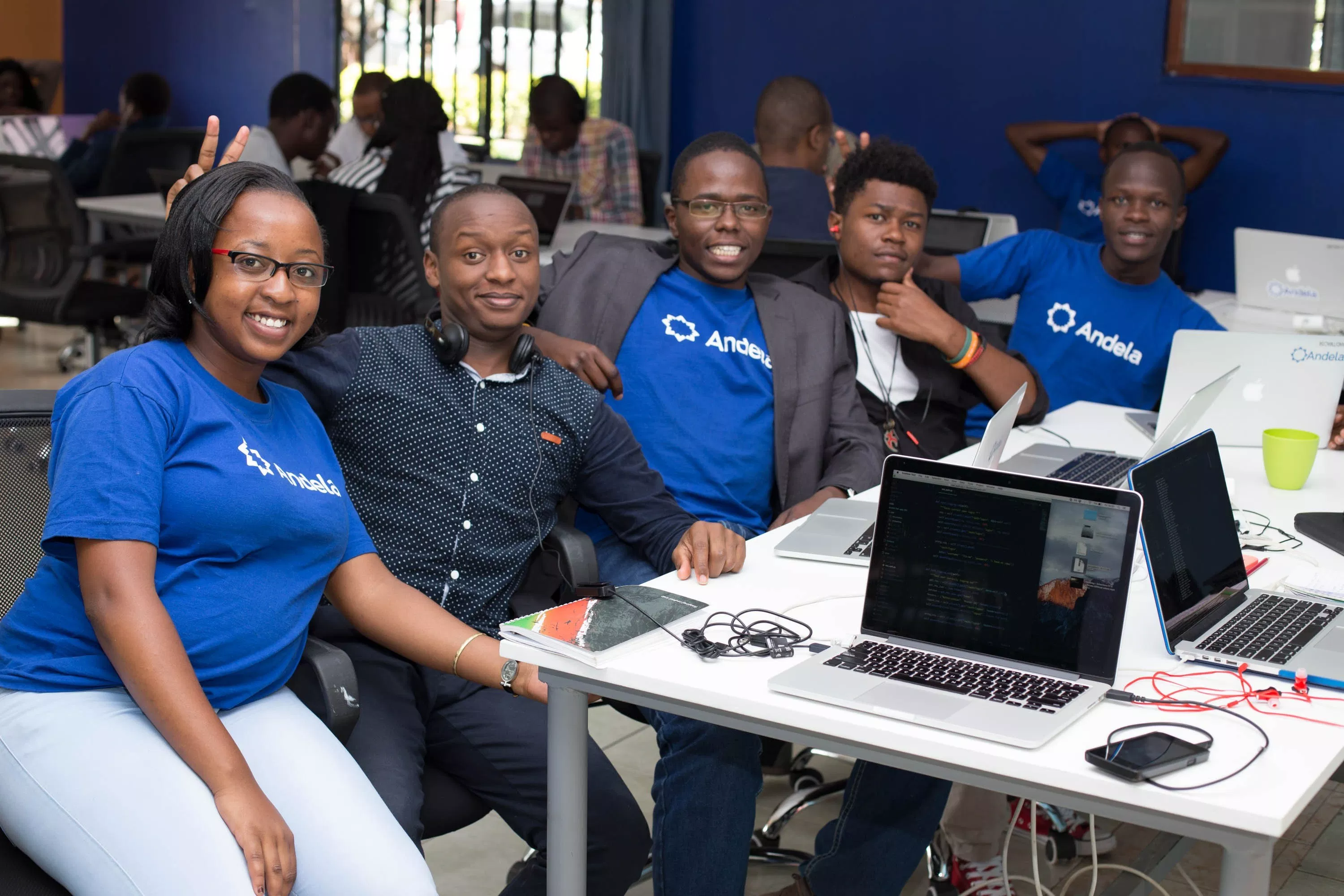
Andela identifies and develops software developers. The company launched operations in Nigeria in 2014, to help global companies overcome the severe shortage of skilled software developers and has offices in Nigeria, Kenya, Rwanda, Uganda and the United States. It has raised millions of dollars as it pursues its mission – a really great one in this age where “software is eating” the world!

Interswitch is an Africa-focused integrated digital payments and commerce company that facilitates the electronic circulation of money as well as the exchange of value between individuals and organisations on a timely and consistent basis. The company started operations in 2002 as a transaction switching and electronic payments processing company that builds and manages payment infrastructure as well as deliver innovative payment products and transactional services throughout the African continent.

JingDong or JD.com Bounces Back, Q4 Sales Surged

0

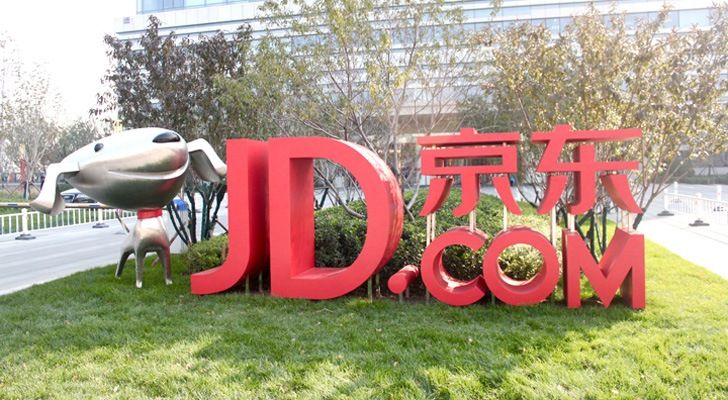
Recently, JD.com or JingDong has been making headlines in the international scene. This could be partly because of the arrest of its CEO and founder Richard Liu or Liu Qiangdong last August 2018. However, the latest news about JingDong is a breath of fresh air amidst the controversies. The company’s shares dramatically surged after it uploaded online its earning during the fourth quarter. JingDong’s revenue surged 22 percent annually reflecting $19.6 million and pounding estimates by $210 million.

It is worth noting that over the years, the annual growth of JingDong in terms of gross merchandise volume has been slowing down steadily. In the past couple of quarters, the growth of the company’s active user acquisition fell. According to its previous report, its yearly active customer accounts are at 305.5 million at the end of 2018. This indicates a huge drop from its 313.8 million active users at the end of June 2018.

JigDong has nonetheless shown some progress in enticing more big names to be in their platform in the fourth quarter. For instance, in October 2018, JingDong allied with the Xinyu Group, China’s largest global watch retailer. This lead to the debut of several stores for luxury brands like Certina, Rado, and Hamilton. In addition, Sulwhasoo, the top luxury beauty brand in Korea and DKNY, also forged alliances with JingDong and opened stores within the company.

So far, JD is stabilizing and its profitability is slowly improving. In December 2018, the company debuted a $1 billion buyback plan. Its equivalents and cash propelled by investments increased by 33 percent annually to $5 billion despite its cash flow stay in the negative region.

Earlier today, JingDong disclosed that it sold its luxury platform TopLife to Farfetch. According to reports, the sale amounted to $50 million. Farfetch will now incorporate TopLife to its business in China. The transition will be supervised by Farfetch’s managing director in China, Judy Liu. This tactical move is most likely one of the significant moves to combat the difficult economic landscape JingDong is currently experiencing in China.

The latest deal will provide Farfetch Level 1 entry to the app of JingDong. On the other hand, JD will have access to its partner’s network of more than a thousand luxury brand and store partners. This impressive shift in the business direction of JingDong happens at a very opportune time. it can be recalled that in the past months, several luxury groups like Kering and Hermes have shown resilience to the decelerating economic condition. This indicates a strong demand for the luxury brand from Chinese consumers.

The extended alliance of JingDong with Farfetch will boost the company’s operation in China and offer its customers a wide array of brands that would usually take years before a fresh player could get noticed in the demanding and highly competitive luxury fashion industry. JD.com’s primary competitor, Alibaba has recently entered into the luxury business. Aside from setting up its very own special platform for luxury brands called Luxury pavilion, has also formed a partnership with net=a-Porter last October 2018.

This recent shift in JingDong’s focus is because of the vision of its CEO Richard Liu. After he was arrested in August 2018 in Minneapolis because of alleged sexual misconduct and was released the next day, said that he will take JingDong to new heights by going to a new direction. Liu, who also goes by his Chinese name Liu Qiangdong founded a retail store in 1998 and closed it after six years to transform it into an online store.

JingDong has also formed a partnership with Walmart and Tencent. Lately, the Chinese online retailer concentrates on delivery and has made several drone models to transport the packages to its clients located in rural areas.