DD
MM
YYYY

PAGES

DD
MM
YYYY

spot_img

PAGES

Home Blog Page 6948

Nigeria’s 2019 Fintech Nucleus – Payments, Insurtech, and AI

0

The Financial Services Industry in Nigeria is experiencing a tremendous change, as startups and traditional players within the industry continue to leverage new technologies in providing financial services.

With an estimated population of over 193 million, 162 million mobile subscribers, internet penetration rate at 84%, about 104.6 million internet users as of August 2018, and the financial exclusion rate standing at 41.6%, Financial Technology (“Fintech”) opportunities in Nigeria continue to deepen.

In terms of funding, according to the Nigeria Startup Funding Report (Q3 2018), the total amount of investment in technology companies in the country within the periods starting Q1 to Q3 2018 stood at $118,463,785. Interestingly, 73% of this fund was invested in Fintech companies. This is not surprising. In the same 2018, within the Global Fintech space, Fintech companies backed by venture capital raised nearly $40 billion (up 120%) across 1,707 deals globally (up 15%) over the past year. We expect this trend to continue through 2019.

In this edition of Fintech Nucleus (PDF), we start with Finley’s 1836 electric telegraph and deep-dived into the Fintech space and ecosystem. We explore the regulatory framework for the Nigerian Fintech space covering major trends in payments, Insurtech, and Artificial Intelligence, to mention but a few. And with a bias for AI Fintech startups, the authors take a wrap of the Fintech Nucleus with our Fintech feature.

We hope you find this edition of the Fintech Nucleus insightful and informative. If you would like to discuss any of the information contained in this report in more detail, please reach out to the authors.
Download the report here (PDF).
Contributor: Ademola Adeyoju

Jumia Files IPO in New York As A German Firm, Not A Lagos Company; Not An African Unicorn

0

Unlike what everyone had written, Jumia is actually filing in NYSE as a German company, not a Lagos company. So, technically, we are yet to win that race. So, guys, it is not done yet: no Nigerian startup has indeed listed in New York for whatever the prize may be! I put this for record purposes as from Techcrunch to everyone, the messaging was a Nigerian firm but looking at the real stuffs that matter, Jumia is a German firm within the eyes of the American investors.

Today, Jumia is operating in 14 African countries with Nigeria the largest market but its principal executive office is in Berlin Germany, not Lagos Nigeria, according to SEC documents. This changes nothing but making it evidently clear that the march to the first Nigerian firm to NYSE remains alive.

I am expecting a company with the executive office in Nigeria. Sure, we understand that Jumia Germany is a holding company of all the pieces of Jumia in Africa. That is typical and the very reason we cannot say a Nigerian company has filed in New York. I expect a time when the holding company is based in Nigeria. So, going forward, my reporting on Jumia as it concerns its operations in New York will be classified as a German company which is what it is. So, Jumia cannot claim to be an African unicorn because it is not African.

Jumia Files IPO Papers in New York, Has 4 Million Customers

These African Women Are Using Technology To Solve Major Societal Challenges

0

By Nnamdi Odumody

African women are amazing. From Queen Amina who fought invaders that threatened Zaria to Princess Inikpi and Queen Idia who paid the ultimate sacrifices to save their respective kingdoms, women have always stood in the gap when demanded. Across the continent, a new generation of women is innovating, and creating disruptive solutions to some common problems.

Brenda Katwesigye was shortsighted. This compelled her to start Wazi Vision which provides affordable and accessible eye care services to children. Her affordable eyeglasses, made out of recycled plastics by female artisans in Uganda, reduce the cost of eyeglasses by 80 percent while increasing accessibility for people. Also, she managed the development of a mobile application that uses virtual reality to perform visual acuity tests, bringing eye testing closer to people in areas that cannot afford expensive eye testing equipment.

Beth Koigi witnessed water scarcity in her native Kenya. This led her to start Majik Water which harvests water from air and converts it to drinking water using solar energy. Her device which won first prize at the EDF Africa awards this year could provide a solution for 1.8 billion people which are estimated to have water shortage globally. In Sub-Saharan Africa, 319 million people do not have access to clean and safe water. Out of this amount, 12 million people don’t have access to adequate clean drinking water, and over the next decade water shortages are expected to get much worse.

Majik Water uses desiccants such as silica gels to draw water from the air. The gels are then heated up with solar power to release the water and then collect the released water vapour, making it energy efficient. The current system can generate up to 10 litres of filtered water per day with the team looking to scale up to 100 litres at a cost of only 0.08 pounds per 10 litres. According to her, there are six times more water in the air than in all the rivers in the world. Majik’s Water device can work in low humidity of 35 percent and above in most and semi arid areas in Kenya.

Nneile Nkholise is the founder of IMed Tech, a biotechnology company, specializing in the design and manufacturing of custom made medical solutions to improve lives of Africans with 3D printing. Their products are produced with the goal of creating innovative medical solutions to help people requiring custom made medical prosthesis, bio-implants and other medical solutions to assist in enhancing lives and improving the overall health of Africans. She also founded 3DIMO that optimizes injury detection and prevention using athlete specific biomechanics data.

Dr Omolabake Adenle, founder of Ajala Studios, created voice recognition and speech synthesis software that can understand and digitize spoken African languages. The solution can synthesize speech from African languages and present them as digitized text. Digitizing African languages in this way allows Africans to interact with hardware devices such as mobile phones and digital services such as call centre applications by speaking their local languages. The software can be integrated into a wide range of devices and third party software applications.

Philipa Ngaju Makobore from Uganda invented an Electronically Controlled Gravity Feed (ECGF) infusion set, a medical device designed to accurately administer intravenous (IV) fluids and drugs by controlling the rate of fluid flow based on feedback from a drop sensor. Over 10 percent of children admitted to East African hospitals need immediate infusion therapy. Findings from a trial indicates that over infusion in children increased the absolute risk of death by 3.3 percent at 48 hours. Erroneous delivery rates can result into serious adverse effects. The ECGF solves this problem as it is very easy to operate and has key safety features which include alarms for rate of infusion (rapid or slow), total volume (over or under) and faulty sensors. A battery utilizing a hybrid (AC main and solar) charging bed powers the device. The ECGF has the potential to save lives by providing accuracy and safety at 8 percent the cost of a brand new infusion pump.

Across generations and in our own time, African women continue to lead. Even in this new era, their works continue to inspire.

It Is Official – NNPC Is Recruiting; Fresh Grads, Managers in Tech and Admin Areas

0

The Nigerian National Petroleum Corporation (NNPC) says it has opened its portal for recruitment of fresh graduates and experienced professionals into the system.

Ndu Ughamadu, its Group General Manager, (Public Affairs Division), confirmed this to the News Agency of Nigeria (NAN) in Abuja on Wednesday.

He said that the portal for the recruitment was opened on Wednesday.

The recruitment portal address is https:/careers.nnpcgroup.com.

“The portal was opened today and I have received hundreds of inquiries whether it is correct or not.

” We are going to recruit people from different engineering fields, especially fresh graduates and equally in the administrative areas,” he said

Mr Ughamadu said that recruitment would be in three categories of fresh graduates, senior officers/ supervisory cadre and managerial cadre. (NAN)

Nigeria’s GlooNG Pivots from Ecommerce to E-Procurement as Gloopro

0

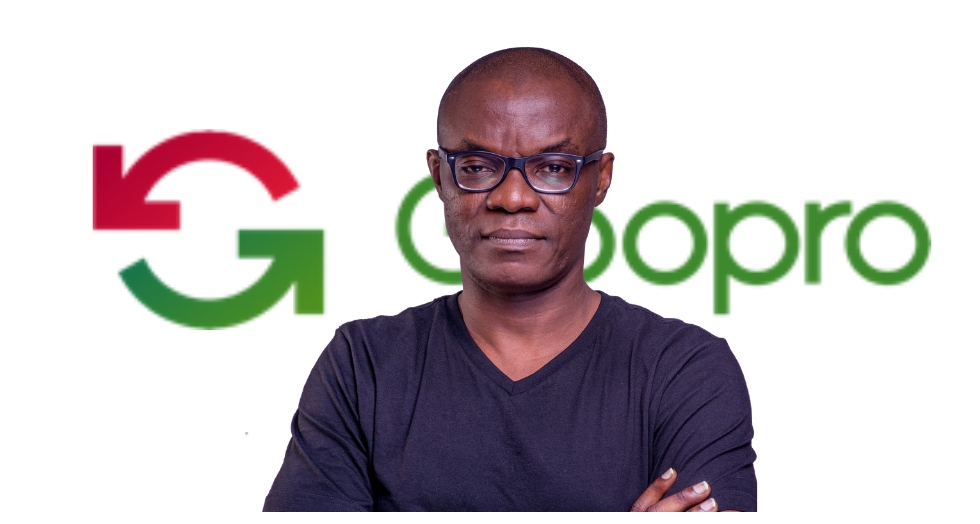
Gloo.ng has fully evolved and it is now called Gloopro. The company has left ecommerce for B2B e-procurement services. It will supply large and medium scale companies with everything from laptops to pencils, and in the process earn monthly fee and a percentage on goods delivered. Gloopro is a pivoting vision as it is simply adding a technology layer to solve a problem which already exists in markets: procurement.

Across many Nigerian business sectors, from banking to insurance, there are vendors supplying items to their business clients. Gloopro has joined that except that it has structured its services as a digital platform. With great visibility for its clients, to monitor inventory pipelines, there is a latent opportunity here to differentiate in the sector.

In addition to Unilever, Gloopro clients include Uber  Nigeria, Cars45 and industrial equipment company LaFarge. Cars45 CEO Etop Ikpe and a spokesperson for Uber Nigeria confirmed their client status to TechCrunch.

Olusanya believes the company can compete with other global e-procurement providers, such as SAP Ariba and GT-Nexus, by “leveraging our sourcing and last-mile delivery experience in Nigeria” and expertise working around local requirements in Africa.

Gloopro expects to hit $4 million in revenue by the end of the year and the company could reach $100 million over the course of its international expansion into countries like South Africa, Kenya, Morocco, Egypt and the Ivory Coast, according to Olusanya. A seed investor briefed on Gloo.ng’s estimates confirmed the company’s revenue expectations with TechCrunch.

There is a promise here as the old marginal cost paralysis in its ecommerce business has gone. Now, it can build a business and scale, knowing clearly that it is not a digital business, but a business that uses digital tools to improve its operations.

Marginal Cost And How To Price Digital Products