One of the most important elements in technology ventures is efficient integration of market systems. In short, most times, companies win based on the quality of integration into customer ecosystems. Integration is a key component of business model, and does matter a lot, on differentiating consumer-focused and enterprise-focused businesses.
A consumer-focused business (e.g. Facebook, Nairaland) builds its integration to serve mass-produced solutions. Usually, the best solution in the sector is adopted massively by many users, and over time, it wins the market. An enterprise-focused company (e.g. IBM, ATB Techsoft) delivers solutions to companies but must customize them to meet the specific needs of the enterprises. Doing that means that winning is no more just about technology, but support, sales force, and capacity to close deals and sign contracts.
Facebook is a consumer-focused company. It has built its integration to focus on making the best product that serves mass market (of customers). These products are largely uniform. It does not have to customize anything from one user to the other. The marginal cost in the business is very low – distribution is non-convoluted – and it can just scale really fast because it does not need to have many sales people.
But when it comes to IBM which is mainly an enterprise-focused company, the products, though similar at core, are designed to be customizable for customers in order to meet their specific business technical frictions. It cannot just expect the web to do the job. So, it needs to have sales force, contract team, etc for it to thrive.
The implication is that the architectures of Facebook and IBM businesses are different because the customers they serve are different. If Facebook wants to start doing enterprise business, it will fail before it restructures its system to become like a company that can support companies. Similarly, if IBM wants to start doing consumer business, it will struggle until it recalibrates to become like a consumer-focused company. Those changes are at the heart of integration – linking solution value into users to solve their frictions. The value could be connecting with friends (Facebook) or implementing a new database (IBM).
This is the reason why great companies like Google, a leading consumer-focused business, will struggle when it moves to enterprise-market. Think of Google Cloud where it continues to struggle as Amazon AWS and Microsoft Azure leap ahead. Google will be fine, but to do that, it must build a sales team which is not typical in Google in its consumer search-driven business. The realization has not much to do with technology: Google does have extremely great cloud technology with many suites. But that is irrelevant: its integration does not fit the ways it can deliver value to enterprises.
You will say the same as why Microsoft has struggled on leading any major sector in the consumer business: it is a company wired for enterprises, working with OEMs to bundle Windows in laptops and desktops. It was never in the business of dealing with end customers at scale. Bing is there but it continues to struggle while Azure became a runaway success because Azure is just like Windows – an enterprise business which Microsoft understands.
All Together
Integration is at the heart of a business model. Most times, the way a company is structured affects its capacity to win. Even when the competing product or technology is at the same level of quality, the integration system with customers is what really determines success.
Google Cloud is just as good as Microsoft Azure but the business model of Google has not been well integrated to serve enterprise customers, leading to Google Cloud struggles. Similarly, Microsoft despite any great technology it can make is yet to understand how to do consumer business at scale. So, Facebook, for instance, can go enterprise but it will struggle until it re-integrates, since its current integration is biased for consumer business.
The message is this: as you build, understand your market so that you can have the right integration with your customers. It is only when you get integration right that you can deliver higher level of values to the business frictions of customers. At that equilibrium framework, your reward will come: business success.
Hello, Ndubuisi Ekekwe, This is particularly true as there’s a very distinct customer journey between B2B and B2C. Apparently, only the right integration can help businesses (B2B or B2C) deliver a customer experience that move hearts and wallets.
This is Ndubuisi Ekekwe, your fellow citizen. I read a post on my blog written by Nnamdi. I was blown away by your work.
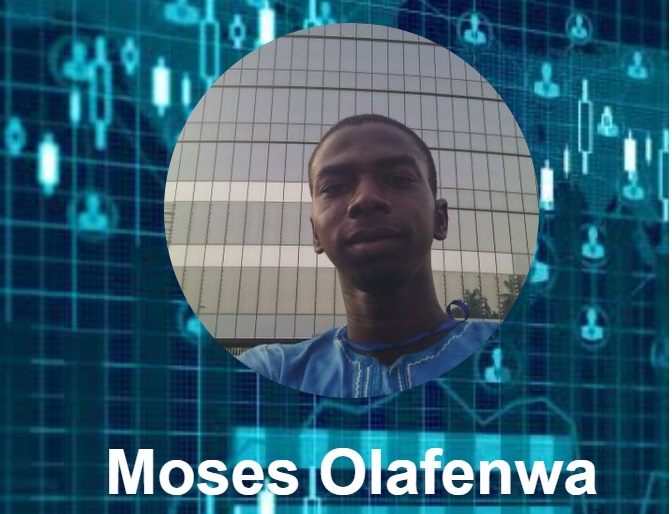
Moses and John Olafenwa, the CEO and CTO of AI Commons (now called DeepQuest AI), respectively, launched Deep Quest AI to advance artificial intelligence and make it accessible to every individual and organization in the world.
They created Deepstack, an AI server which can be easily installed, used completely offline or on the cloud for facial recognition, object detection, scene recognition and custom recognition for enterprise, consumer and security applications. Its API allows you to run thousands to millions of requests without pay as you use costs, and provides the perfect integration channel for all your applications. Also, it makes it easier to add new recognition APIs at will, with capacity to deploy instantly with strong user privacy.
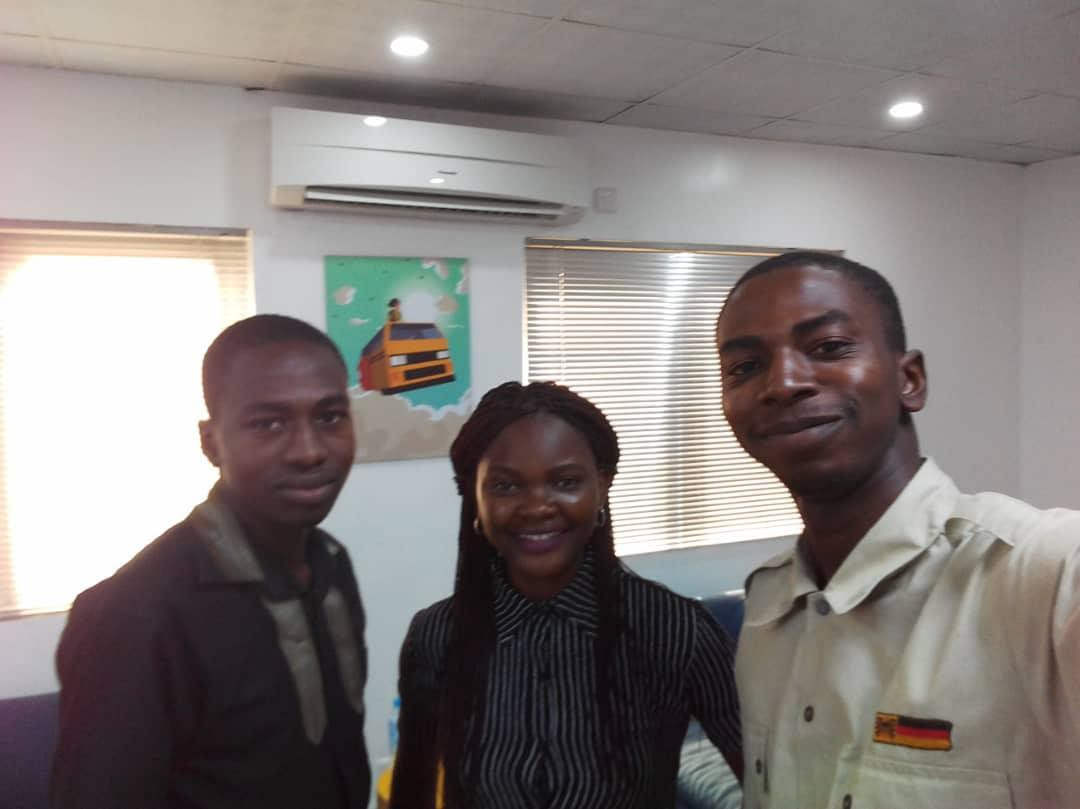
Quickly, I marshaled to track both in Nigeria and within minutes, I spoke with Moses. I offered jobs to start on Monday but Moses “smiled”. I offered to fund your ideas immediately, Moses “smiled”. Because that happened, your story becomes more exciting: jobs and money serve great people! You both are amazing.
I told Moses that I will make this post to show young people the way the world works. I wish Moses had given me the opportunity to sign the offer letters or write the cheque. Nonetheless, your story is what Nigeria needs.
Good luck into the exciting future. You have my direct phone number!
Moses and John Olafenwa, the CEO and CTO of AI Commons (now called DeepQuest AI), respectively, launched Deep Quest AI to advance artificial intelligence and make it accessible to every individual and organization in the world.
They created Deepstack, an AI server which can be easily installed, used completely offline or on the cloud for facial recognition, object detection, scene recognition and custom recognition for enterprise, consumer and security applications. Its API allows you to run thousands to millions of requests without pay as you use costs, and provides the perfect integration channel for all your applications. Also, it makes it easier to add new recognition APIs at will, with capacity to deploy instantly with strong user privacy.
Many developers around the world currently use their solutions and they provide extensive and comprehensive tutorials for developers, machine and deep learning engineers and researchers. Their technologies, tools and knowledge are available to individuals, teams, organizations and institutions across the globe in English, Chinese and French languages.
Through ImageAI, a game changing product from their stables, they have created a computer vision library which empowers developers to easily integrate state of the art artificial intelligence features into their new and existing applications and systems. This solution is used by many developers, students, researchers, tutors and experts in corporate organizations.
ImageAI is a python library built to empower developers to independently build applications and systems with self-contained Computer Vision capabilities. Built with simplicity in mind, ImageAIsupports a list of state-of-the-art Machine Learning algorithms for image prediction, custom image prediction, object detection, video detection, video object tracking and image predictions trainings. ImageAI currently supports image prediction and training using 4 different Machine Learning algorithms trained on the ImageNet-1000 dataset. ImageAI also supports object detection, video detection and object tracking using RetinaNet trained on COCO dataset. Eventually, ImageAI will provide support for a wider and more specialized aspects of Computer Vision including and not limited to image recognition in special environments and special fields.
It provides API to recognize 1000 different objects in a picture using pre-trained models that were trained on the Image Net-1000 data set. The model implementations provided are SqueezeNet, ResNet, Inception V3 and DenseNet. It also provides API to detect, locate and identify 80 most common objects in everyday life in a picture. Also, its extended API helps to detect, locate and identify 80 objects in videos and retrieve full analytical data on every frame, second and minute. This feature is supported for video files, device camera and IP camera live feed. New image recognition models on new image datasets for custom use cases can also be trained with its API and also provides implementations to integrate and deploy the custom image recognition models.
Another game changing product is Torch Fusion, a modern framework built to accelerate research and development of advanced deep learning systems. It provides a complete platform for loading datasets, defining metrics and models and training them with extensible trainers that can be seamlessly customized with custom training logic all with full support for training on both CPUs and GPUs. Torch Fusion provides applications and extensible specialized trainers for a wide range of conditional and unconditional Generative Adversarial Networks which are state of art for image generation.
All Together
Africa and especially Nigeria must support inventors like Moses and John Olafenwa to scale their missions and position the continent, solidly, on the path of AI future. Heralded to be as impactful as the invention of fire, AI will have real implications for markets and industries. Young people like Moses and John offer huge promises, and must be supported.
I wrote this piece, circa 2008, when the NigComSat project was at its effervescence. More than ten years later, NigComSat has failed. Imagine if Nigeria had used the alternative – build indigenous capability as described in my piece. Sure, it was one of those articles, deep in the night, after dealing with transistors and circuits, one sought exhalation of the mind.
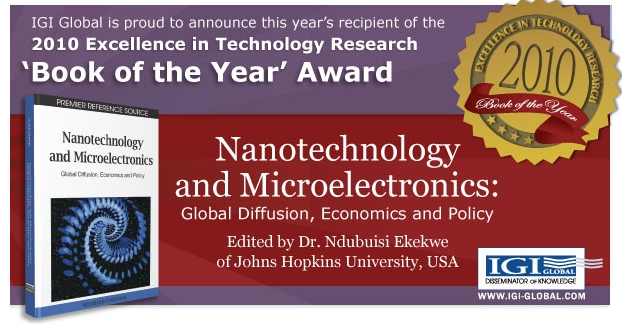
The week I wrote that article, I was working on my book – Nanotechnology and Microelectronics – which later received IGI Global Book of the Year Award in 2010. Working on that book, I interviewed a Director General in Brazil who was coordinating a national program to bring Brazilians, in diasporas, to return to Brazil to help engineer a government policy on microelectronics.
The outcome of that initiative is the very reason why electronics passes through Brazil into Latin America today. Yes, from Foxconn to Apple, Brazil is the first call in Latin America.
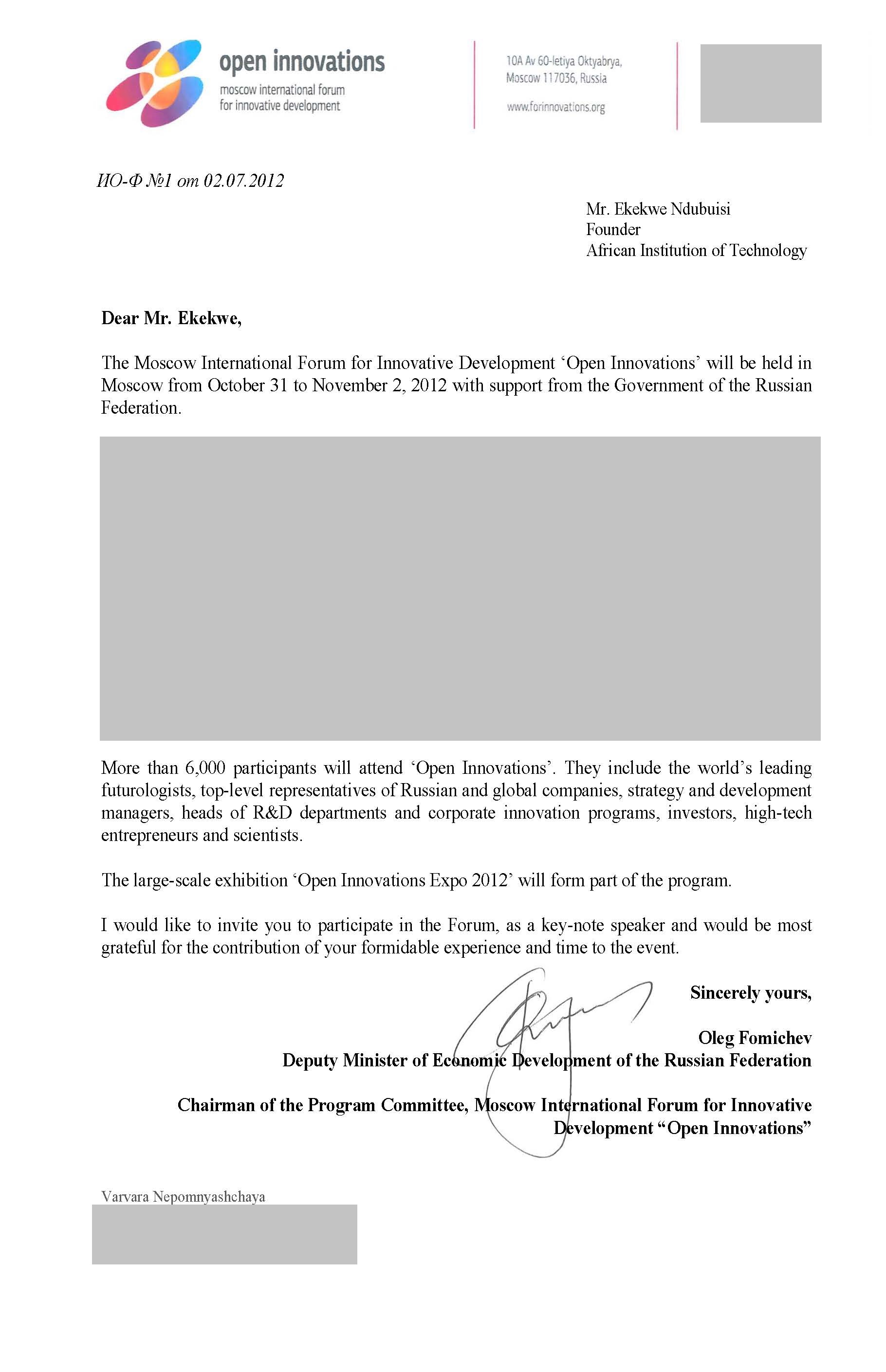
At that time, I was consulting for a Moscow-based company on an innovation project. I did reach out to Nigeria but it was just hard. But my work in Moscow was superb that the Government of Russia invited me to keynote one of the largest technology events in Russia. That took me to Russia for the first time.
Invitation by Russia
Nigeria needs to make real decisions and give its citizens the opportunities to fail or thrive. Any initiative that is not anchored on strong university system, bringing SMEs and industries together will fail. Governments are never good in technology acquisition and adaptation, and that is why next efforts must be radically designed to have indigenous elements.
Summary Used for LinkedIn
Sure, you might have read the trending piece (click to read) I wrote in 2008 on NigComSat, the largely failed national satellite project. I was a student then, and honestly believed that Nigeria could have done the modeling differently with more homegrown components, for sustainability. Largely, the national space programs are on stasis at the moment.
At that time, I was consulting for a Russian company. Russia was developing new sectors and I noticed the model: markets, startups and universities. Nigeria was doing none of those. I continued my work with Russians till 2012 when the Mayor of Moscow and the Deputy Minister of Economic Development of the Russian Federation invited me to Moscow. They also gave me a platform to keynote the 6,000-participant Open Innovations Forum.
So, as you read the piece, I want you to have the perspective: nations do stimulate industrial sectors. President Trump just passed an executive order on AI. If you scan that document, the path will be markets, companies and universities. If that had been done in Nigeria, it would be another government agency.
We need to be smarter in our policies and execution of initiatives. Humbly, I have served entities and can attest that the best policies happen when there is less of government even though government is driving it!
Prof Ndubuisi Ekekwe’s book received the prestigious IGI Global “Book of the Year” Award in 2010
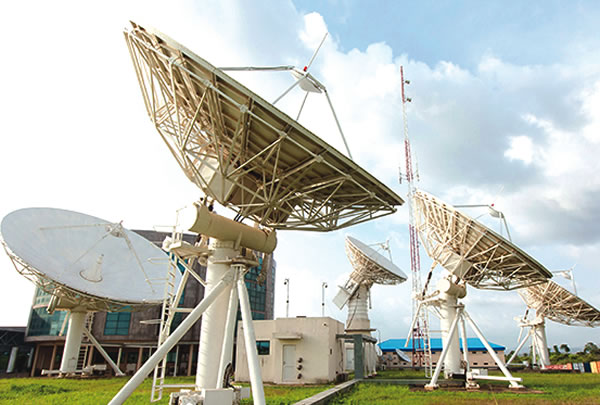
Our nation wants to stand with giants and demonstrate our arrival in the space technology. But instead of doing it with pride by tasking our universities and research agencies through provision of resources to advance our space industry, we chose the easy way out. Simply, we hired Chinese for N40 billion to design, develop, manufacture and launch satellites with fanciful name NigComSat (Nigerian Communications Satellite). Except the name, there was nothing Nigerian about the whole experience. Our leaders have constantly failed to re-engineer our future by advocating policies that diminish bottom-up creative technology diffusion. NigComSat was a missed opportunity to call the nation into science and technology rebirth. Properly executed, many kids would be dreaming of becoming rocket scientists across our cities and villages.
Arguably, having a Nigerian satellite is a lofty idea considering the potential benefits it will bring to our telecommunication sector. It will digitize our economy and facilitate rapid technology advancements in many of our industries. It promises to become one of the fastest means of connecting our rural communities into the world of bits and bytes. Tele-education, e-commerce, tele-medicine and rural telephony would be immediate beneficiaries. It can also create jobs by enabling broadband access and cushion web-based technologies across the nation. Unfortunately, the execution of NigComSat left many Nigerians worried. I think our government must pursue a new alternative.
At the short-term, our government should focus on buying space segment on hundreds of existing commercial satellites and wait until Nigerians can design, develop, manufacture and launch Nigerian satellites themselves. This short-term purchase, 20% of the N40 billion, should cover few years these pseudo ‘Nigerian satellites’ are expected to last. Besides, Nigeria should look at the option of tax credits to private firms that are ready to invest in broadband and web-based technologies, especially to rural communities. As these technologies emerge, efforts must be made to support banks to ensure that we have an effective electronic payment system. We can create more than 6 million jobs in three years if we have a strong e-commerce accessible by 20% of our population and a functional NIPOST (Nigerian Post Office) to move goods around.
For the long-term, Nigeria must use this opportunity and the resources to develop a viable and enduring engineering culture. I propose a National Science Foundation (NSF) to be managed by technocrats that report directly to the Presidency. This NSF will shape fundamental research and science education through disbursing competitive, limited-term grants in response to specific proposals from the research community. This community includes both our tertiary institutions and enterprises with innovative ideas but lack funding.
Also, this NSF will work with Nigerian University Commission (NUC) to replace our existing university model where teachers are promoted largely on seniority with one that rewards ingenuity in labs and classrooms. As NSF adopts the peer review system to manage federal money, it will fund at least 500 Nigerian students yearly for doctorate degrees in science and engineering in our campuses. With these students, our teachers will have committed and cheap resources to solve the problems proposed in their grants. As our research culture matures, our schools must also replace the current system where lecturers are guaranteed lifetime employments despite colossal teaching and research failures with a tenure system. Tenure system will ensure that only the brightest and the fittest are retained while the laggards are fired after 5 years. I suggest 40% of the N40 billion should be channeled into the NSF.
Another 10% from he N40 billion should be used to open a National Technology Transfer Fund. This fund will be available to institutions, enterprises and all agencies that require funds to commercialize technology. Unlike a typical bank loan, this fund must have no interest and should be accessible after viable feasibility studies of the inventions are ascertained. NSF will manage this fund and will work with technology transfer experts to assist the schools or firms commercialize their ideas.
Back to the satellite project, government must immediately expand its commitments to National Space Research and Development Agency (NASRDA) and give them funds to start real research instead of looking for private firms in China to buy satellites from. I propose giving them 20% of the N40 billion with concrete mandates on what must be achieved. As they progress, more funds will be made available.
The remaining balance of 10% would be used to establish an institute, Institute of Space Science & Technology (ISST), under the control of NSF/NASRDA and administered in the four federal universities of technology in the country. This will be similar to the United States Engineering Research Centers which enables multiple universities collaborate, share and shape specific scientific areas. As ISST matures, it will be an organic pathway to train and develop future space engineers in the nation who can actually move to NASRDA and help evolve a truly Nigeria’s satellite. ISST should be encouraged to hire experts from around the world to strengthen their programs.
We are Nigerians; we are smart and ingenious. My understanding of our problems is simply the failure of our leadership to devise means to connect us to solve them. We have the capacity to leapfrog in science if government will produce a plan with leadership. The same government that gave us Digital Bridge Institute, Abuja with understanding that we need constant training to sustain emerging trends in telecom sector does not see a similar need on electricity. New technologies on power systems have made more than 20% of our NEPA (or PHCN) engineers ineffective. Our minor challenge is modernizing the power equipment, but the major one is re-training some technical staff that started work 25 years ago with WASC and cannot cope with the complexity of rapidly evolving modern power technology.
Yet, for any progress in space technology, we need electricity. I propose we reorganize NEPA into autonomous 37 entities in 36 states and Abuja. The state-level NEPAs will focus on marketing and distribution while a single entity will be responsible for generation. Until we create a small level competition in electricity with punishable electoral consequences, we may not overcome this stasis. This will be followed with establishing Power Systems & Technology Centers in four campuses for training and technical collaboration with NEPA. We have to engage the universities to rediscover better ways of continuity, capacity and change management owing to lack of master plans for our cities. University is the epicenter of raw dreams where minds are liberated and prepared to shape the world. It remains an organic system that sustains national policy and vision and no succession plan or development can succeed without those students and professors. It is an asset generation of our mod ern leaders have ignored.
In conclusion, let our leaders give us challenges and make available the resources and structure to achieve them. We will prove to them that in 10 years, we will give them a truly Nigerian satellite and earn respect around the world. It will not only advance our progress, it could become a symbol of our renaissance in science. Yes, it could be a vision bigger than us, but in our history, we have proven to be optimists and ‘can-do’ people, unafraid of challenges. We are Nigerians-people of faith and hard work, though diverse, we are united in nationalist passion to restore our dignity in the midst of nations. We sing the anthem and salute our flag because we love Nigeria.
Ekekwe is a doctoral engineering student at the Johns Hopkins University, USA
One of Latin America’s leading digital companies is MercadoLibre. The firm is an ecommerce company which has excellently adopted the double play business model. It has a payment unit, MercadoPago, which is anchoring huge growth with payment transactions up 72% year on year, to a total payment value of $5.3 billion. But the biggest news: the offline payments are now overtaking the online on-platform payment. This company built a payment operating system, making it a solid preferred choice for brick-and-mortar retailers to adopt MercadoPago as the payment solution of choice.
And that’s reminding some analysts of how PayPal, which was originally purchased by EBay in 2002 and used as its payments service, wound up being more valuable than its parent company, analysts at both Susquehanna and BTIG noted in separate reports. PayPal separated from EBay in 2015 to concentrate on expanding its electronic transactions business without being shackled to the slow-growing online marketplace. “We remind investors that PayPal, once just a piece of eBay, is now worth 3 times more than its former parent,” BTIG’s Marvin Fong wrote in a note.
Simply, MercadoLibre is no more just an ecommerce provider in Latin America. It has since evolved as a payment and fintech company. It has a clear double play just as Alibaba has on Alipay. You can also include the old eBay which had Paypal before the latter was spurn out.
I explained in the duality element that digital products which thrive are typically both products and platforms. It would be hopeless to build modern digital products without having a moat through platforms. Interestingly, the greatest digital ICT utilities have double plays in their business models: if Amazon decimates many brick-and-mortar stores, it would welcome many online to sell them cloud services. Alibaba welcomes you to its marketplace platforms, and you certainly have signed up for its (partly affiliated) payment processing solutions (Alipay) which command commissions.
All Together
It seems there is a clear correlation between ecommerce success and payment in emerging markets. From Alibaba to Alipay, MercadoLibre to MercadoPago, there is something inherently powerful why successful ecommerce companies in emerging economies have built or acquired solid payment infrastructures. Indeed, you cannot have an ecommerce without a functioning payment system.
Largely, once these firms begin, they quickly realize that the payment business is doing better than the ecommerce unit. Latin America’s MercadoPago has seen offline payment overtaking online in-platform payment as people seem to thank the company for the payment solution over the ecommerce platform. From every angle you look at it, the real ecommerce business is truly payment in emerging market. It is something to seriously consider as you write a business plan on the next ecommerce startup.
Yes, I am beginning to think Zinox Group, owner of Konga, should acquire/merge with one of the leading payment startups in Nigeria to unlock more value. The Konga platform provides the oasis while the payment fintech opens new territories. Yes, I do know that there is KongaPay but that is not a category-leading fintech unit. The likes of Paystack and Flutterwave will be optimal for Konga.
Comment: Perhaps the next phase of the fintech evolution will be M&As between e-commerce and fintech. I however think that unlike other markets, e-commerce companies in sub- Saharan Africa (with the exclusion of South Africa) still has to grapple with distribution at the last mile and hence unable to unlock real value. I’d rather like to see M&As between logistics providers and ecommerce in the short to medium term while M&As with payment platforms as a medium to long term strategy.
We know for a fact that payment for now is largely cash based. Once the market friction due to last mile distribution is addressed by ecommerce companies, they’ll be able to bring real value to the table during M&A discussions with payment start-ups. From a market valuation perspective (using funds raised from VCs), payment start-ups are valued way higher than ecommerce companies and that can influence discussions should e-commerce companies try to merge with payment start-ups now.
My Response: That is a really brilliant analysis, Kunle. You summarized it here “I”d rather like to see M&As between logistics providers and ecommerce in the short to medium term while M&As with payment platforms as a medium to long term strategy”. Yet, my thesis is that I do not expect any last-mile logistics company in Africa (exc SA) in the next decade because no one can afford to do that. It is extremely capital intensive and it is not really a startup job. So local ecommerce companies are not going to be in positions to acquire or merge with such entities. Only national postal services or big brands like Amazon can execute such if they show interests in Africa.
Comment: I was about to mention eBay/PayPal acquisition, until I saw it in the report; so it’s a trend. Ecommerce and payment platform are becoming interrelated and interdependent of each other.
When you look at it critically, it is more or less about covering the flanks, making sure that you do not leave sizeable money on the table. Also reinforcing the one oasis strategy.
Again, when it comes to payment seeming to outshine the ecommerce itself, it’s simply natural. Almost each and everyone of us with disposable income do more of payments than purchases on weekly or monthly basis. You can make one or two purchases weekly, while on the other hand, more than twenty payments tasks have been carried out, ranging from transfers to all kinds of transactions. In other words, money exchanges hands more than goods, the ratio could be in the region of 7:1 in some cases.
So when you see Fintech companies springing up here and there, it’s partly due to the magnitude of monetary exchanges humans conduct on daily basis. Of course not every player in that space has given deeper thoughts as to the whys of the proliferations.