DD
MM
YYYY

PAGES

DD
MM
YYYY

spot_img

PAGES

Home Blog Page 6958

Africa’s Cheap Labour Comparative Advantage Has A Major Disrupter: AI (Artificial Intelligence)

2

This post has received the highest interests from African policy leaders. Simply, Africa cannot copy the Chinese developmental paradigm because what made China successful will not be relevant in this era because of AI. The cheap manufacturing jobs of the 21st century belong to AI and not human beings. So, anyone pushing the path of industrialization to create low-level jobs is already disrupted. Yes, a farm in England has no single farmer, from planting the crops to harvesting them. Simply, no one is sending you cheap labour from the Western world to Africa because machines will do them!

Read it if you have time.

This morning I made a remote presentation to a Presidential Committee on innovation in an East African nation: any industrialization policy based solely on China and India models will struggle in the age of AI (artificial intelligence). The country has an evolving strategy to mirror China and to a large extent India in its industrialization policy. In an extensive brief, I made it clear that we have a major dislocation which would make it challenging for any country to replicate China and to a small extent India on the path to industrialization. The issue is AI which will create a massive shift in how products and services of the 21st century are developed, manufactured and distributed. A farm in England has no single farmer, from planting the crops to harvesting them.

[…]

The factory jobs of the future will not cement our future. We have to position, and to innovate at our own levels, and build local capabilities. By innovating, we create new basis of competition, making even some Western World systems and processes obsolete, as MPESA made every digital payment system in the world.

There is a huge opportunity across industrial sectors to pioneer new ways. We can only do those by pushing higher because if we just think cheap labour will take us where China and India are seated, AI, our biggest competitor today, may make that difficult.

Africa Needs New Ideas, AI Will Disintermediate China and India Industrialization Models

LinkedIn Comment on Feed

I think it’s a faulty argument from the beginning for anyone pushing for industrial policy on the basis of cheap labour, it simply shows lack of awareness and significant detachment from the reality on ground. Same way you cannot push for agricultural policy for commercial farming on the basis that 65% of Africans are farmers. Obviously, to practice agriculture business at scale, you do not need to send more people to the farmlands, the reverse is actually the case.

Just like in many things about Africa, we are highly handicapped in the area of storytelling, so when we have a good policy to push, we end up messing up everything with the way it is presented, thereby devaluing a brilliant policy framework in the process.

We need industrial policy that is forward thinking, the AI that will “take over” all our jobs cannot be trained in China or America, you do not import your data elsewhere and reuse same in a different setting, this is where our own basis of competition and differentiation lies. Any threat of job taking is demystified when you look at each case from the right perspective.

We have plenty things to keep our people busy, but we must improve greatly in our storytelling capabilities, it’s key to better valuations.
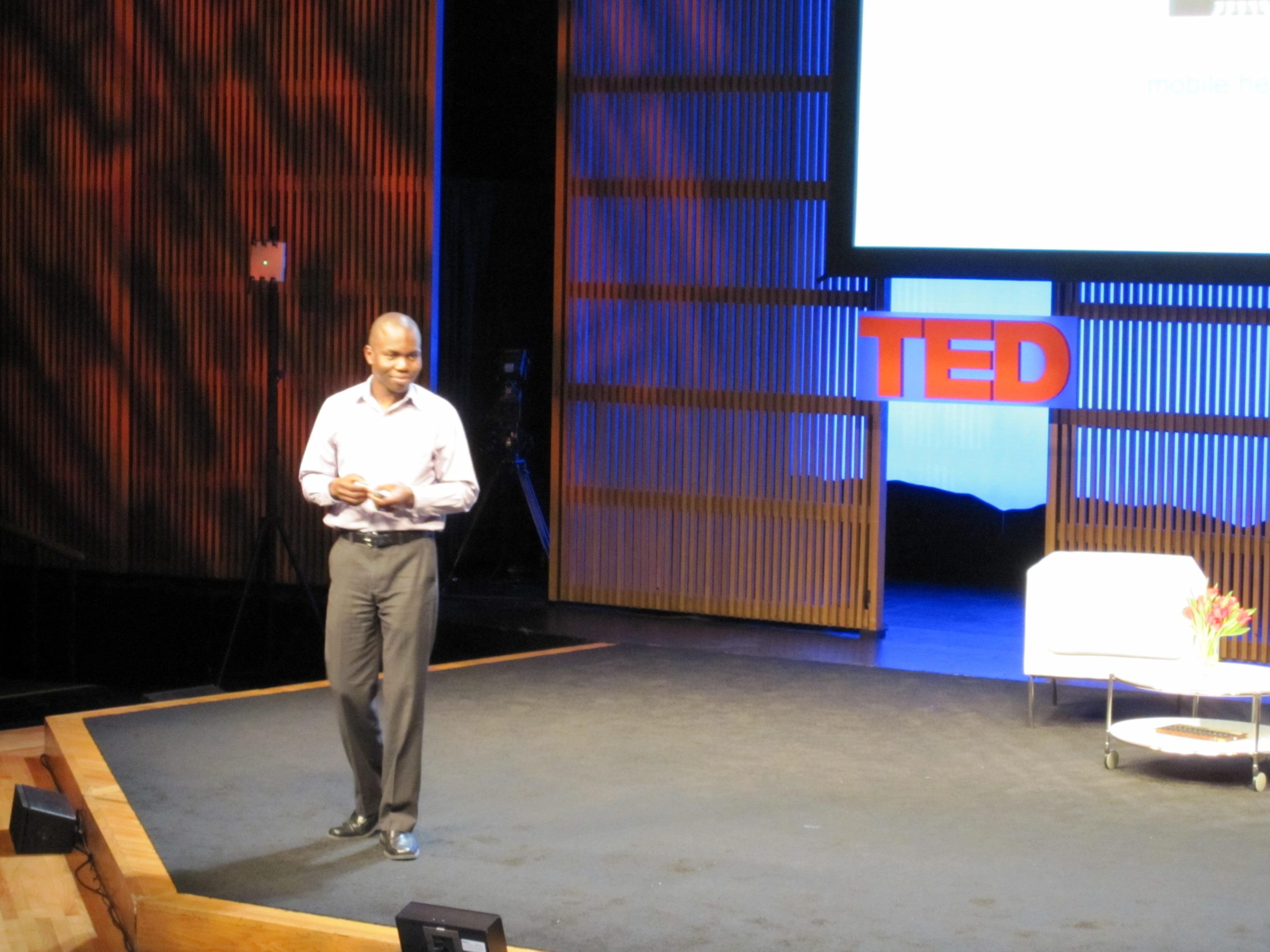

The Theme for My Business Webinar is “Winning in Nigeria (and Africa)”; REGISTER

0
hire

Join me in March for my business innovation webinar as we discuss secrets that help founders, startups and entrepreneurs thrive. The theme for this webinar is Winning in Nigeria (and Africa). No matter whatever they tell you – this is the best time to be taking action in Nigeria and Africa. The wealth of the next 30 years is being seeded today, just as the wealth of today was created in 1990s by amalgam of new generation of banking and IT entrepreneurs.

I am not sharing theories from New York or London – this is my 6th time in Africa this year. In short this February, I came into Nigeria twice. There is a reason for that: abundance lives here, but you must have observation and awareness, and then UNLOCK opportunities, to find your moments. I do think – we can inspire people to move to the next level.

Join me and let us have a business conversation – REGISTER here. It is largely free but I want you to pay to appreciate my tim; just $15 or N5,000.

Register: There are two ways to register (please email tekedia@fasmicro.com after payment to set up your account):
  • Use Paypal and pay $15 here
  • Pay into any of the Nigerian bank accounts (N5,000) listed here.


Join Ndubuisi Ekekwe for Tekedia Business Innovation Webinar

What Is Information Architecture? Providing Structure to the Digital World

0

We live in a digital era and understanding everything that is happening around us should be everyone’s priority before choosing a system on which they want to depend for today knowledge, data, service and production acquisition. This post helps you get started with your quest by, first of all, defining information architecture, and then breaking it down to what is involved. For a student in need of academic writing help, it is as simple as downloading an academic assignment via a writing App or logging onto a custom service platform to place a paper order. In the process, answers to questions like who can write me a thesis paper become easy to find.

However, that is not as far it goes. We are surrounded by information plethora, and everything we do in the 21st century will always have a strong link with seeking knowledge online, buying a product on web-based retail sites like Amazon or eBay, signing for government services via a web portal or connecting with friends on social networks.

Now, taking note of all these and many others, a little inquisitiveness should get you asking more questions like, who is behind seamless experiences we get on a website, mobile applications or when shopping online? What about security layers that keeps you safe online? Well, there are architectural practices that make all these possible, and in this case, it has everything to do with information experts such as IT project managers, back-end and front-end developers, computer scientists and data analysts. Keep reading to find out more.

Definition of information architecture

With the above prelude at the back of your mind, it is also important to understanding information architecture in definitive terms. Well, different publications may put it differently, but, a basic outlook has everything to do with designing a working and seamless product. Interconnectedness of various components of a complete IT infrastructure, therefore, plays significance.

If, for example, you are asked to design a website,  it is imperative to, first of all, craft a working plan that brings together a host of things such as database, preferred design template, algorithm, programming language, User experience (UX), User interface (UI) and others. With all the above taken care of, the next stage is a carefully planned process and meticulous t decision making. In a nutshell, there is no room for mistakes once you become part of a team working towards developing an information system.

A big team working together

Moreover, it is noteworthy that deployment of an IT infrastructure isn’t something you can realize working alone.  Unless you want things to fall apart midway, you shouldn’t risk such a path. Experts will tell you that it is like building a house. There is someone who comes up with a plan for construction, a plumber, and a mason and roofing specialist.

Now, given that information architecture makes it possible for everyone to access the digital world (Internet of things) via multiple tech gadgets such as smartphones, let’s look at a simple illustration such as developing a shopping App for smartphones.

The following are, therefore, key tasks and responsibilities that would yield forth a working platform/architectural design:

  • Designing steps buyers will take from the time they sign into a shopping application such as viewing different products, reading descriptions, adding items to cart to checkout. It is the responsibility of a professional information architect to make sure such a process is not only seamless, fast and convenient, but also gives buyers unmatched user experience.
  • Ensuring that the application works efficiently without lags. In this regard, technical aspects of a project are another task involved in designing and deployment of information architecture. Here, you must take into account user experience as well. For example, what sort of database will you find by clicking a button? Is everything in order so that whatever information you seek, it is always in the right place, and at the right time?
  • User interface design is another pivotal role undertaken by architects of information.  Think about a website, its navigation buttons, color themes, textual overlay and other elements that would make your visit worthy a good experience. In a nutshell, usability of an IT product is a pivotal aspect of information architecture you can’t afford to ignore.

Key skills for information architects

Thus far, it is clear that becoming a successful information architect is no mean feat. You need proper training on a whole range of things, including how to manage IT projects effectively. The following skills would, therefore, come in handy:

  • UX design and wire framing.
  • SLQ
  • Web development with an emphasis on JavaScript.
  • Data Modeling.
  • Mapping and analysis of business processes.

Final Words

In summary, information architecture is one of today’s indispensable career fields. Every business that runs its activities needs a working system. Specialties in this area also understand that that without having a proper plan for an agile project you want to execute through scrum. Thesisgeek.com can help you with the planning and mapping.

The Facebook’s 1,000,000 – Nigeria’s Immersive Connectivity in 2022

0

MainOne has announced a metro fiber infrastructure project in two states of Nigeria, with support from Facebook. The infrastructure collaboration is part of Facebook’s efforts to connect more people to broadband internet. As part of this project, MainOne is building and operating approximately 750 km terrestrial fiber infrastructure in Edo and Ogun States, two of Nigeria’s fastest growing states.

These open-access transport networks will provide metro fiber connectivity to reach more than 1,000,000 people in Benin City, Abeokuta, Sagamu and 10 other towns by connecting mobile operators’ base stations, Internet Service providers, Points of presence (POPs), and public locations including schools and hospitals. This partnership will leverage MainOne’s strength as a wholesale Telecoms Infrastructure service provider with investment from Facebook and support from local regulatory and state authorities to further deepen broadband penetration in Nigeria.

Speaking on the partnership, Ibrahima Ba, Network Investments Lead for Emerging Markets at Facebook, said: “We are working closely with MainOne and other partners to accelerate broadband deployment. In Nigeria, we are bringing together Facebook’s learnings from scaling our global infrastructure with MainOne’s knowledge of the local environment to develop and test new working models for multiple operators to access common infrastructure.”

Remember my prediction that by 2022 we will have immersive connectivity in Nigeria. This is going to be part of the equation. As providers like MTN battle satellite providers even as global ICT utilities like Google and Facebook enter the fray, customers would see significant drop in prices even as quality improves.

*APO newswire contents are copyright-free – so I used some parts verbatim.

President Buhari’s Victory Speech on 2019 Nigeria Presidential Election

0

President Muhammadu Buhari has delivered an acceptance speech for his victory in the polls. INEC had called the presidential election last night.

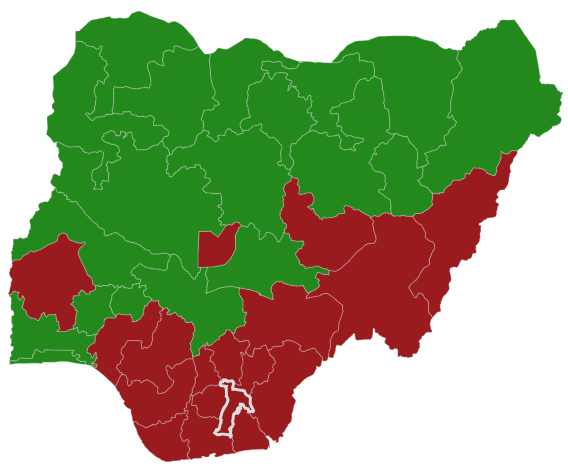
Nigerians voted on 23 February. President Muhammadu Buhari (APC) faced former Vice President Atiku Abubakar (PDP). APC won 19 states while PDP won 18. Also, APC won 15,191,847 votes while PDP picked 11,262,978 votes.

To be declared the winner, an aspirant must win a majority of votes cast, and at least 25% of the votes in 24 or more of the 36 states. Based on these numbers, President Buhari is projected to be re-elected.

The Full statement ….

My Dear Nigerians,

First and foremost, I give thanks to Almighty God Who has spared our lives to witness another victory for Nigerian democracy and victory for our party APC.

2. I thank the millions of Nigerians who voted to re-elect me as your president for the next four years. I am deeply humbled and profoundly grateful to you for judging me worthy of continuing to serve you and for your peaceful conduct.

3. In particular, I would like to thank Asiwaju Bola Tinubu for his masterful leadership as Co-chair of the Campaign Council. I would like to also thank the Party Chairman Adams Oshiomhole, the Director General of the Campaign Council Rotimi Amaechi, all members of the Presidential Campaign Council and other various Support Groups.

4. My grateful thanks to all those who contributed to the logistical expenses of the campaign in such a vast country like Nigeria.

5. I also thank the millions of volunteers, self-appointed overseers, canvassers, agents, escorts and sentries who sacrificed so much of their time and resources to ensure the success of these elections. I do not have the words adequate to thank them.

6. Although Saturday’s elections were relatively peaceful, troublemakers in a handful of states attempted to disrupt an otherwise orderly process. Security agencies will bring to justice all those arrested in the process.

7. I am very sad at the grievous loss of lives during these elections. Security agencies will step up their efforts to protect voters in the forthcoming State elections.

8. I would like to commend our security agencies, as severely overstretched as they are, for handling the difficult task of securing the country during the election period.

9. I will like to make a special appeal to my supporters not to gloat or humiliate the opposition. Victory is enough reward for your efforts.

10. We give thanks also to our Domestic and International observers for contributing to the success of our elections and for their interest in our country and our developing democracy.

11. The new Administration will intensify its efforts in Security, Restructuring the Economy and Fighting Corruption. We have laid down the foundation and we are committed to seeing matters to the end. We will strive to strengthen our unity and inclusiveness so that no section or group will feel left behind or left out.

12. I thank you for your support and may God bless the Federal Republic of Nigeria.

Final Results of Nigeria’s 2019 Presidential Election by States – APC (19), PDP (18)