We have updated the post where we announced the Tekedia Business Innovation Webinar which comes up next month. Registration remains ongoing at N5,000 (or $15).
Dates: Friday March 22 2019 (repeat, Saturday March 23, 2019)
Venue: Online.
Time:Time: 10am – 12noon (Webinar); 2.00pm-4.00pm (Questions/Answers). All time Lagos (Nigeria) time
Speaker: Prof Ndubuisi Ekekwe, Chairman, Fasmicro Group
Who Should Attend? Everybody
Why You Should Attend: This webinar will provide tools to make this 2019 the best business-readiness year ever for you.
Register: There are two ways to register (you need to pay to value my time); please email tekedia@fasmicro.com after payment to set up your account:
Pay into any of the Nigerian bank accounts (N5,000) listed here.
To accommodate those that cannot make the event specifically on the noted days, the webinar will be replayed (on-demand) over a week now. Also, we have explained the structure for the Question & Answer section. We do hope this structure will enable more people to participate.
The webinar will be available for a week so that people can watch it later when they have time. So, if you cannot make the noted dates/times, do not worry – you can easily watch the contents when you have time.
Every participant has access to the exclusive section of Tekedia. We will have a page for this event which our team will send you a link later. You can post your questions via the Comment section or you can email us. All questions will receive answers – depending on the questions, we can also answer via posts in the Tekedia exclusive section which every participant has access.
To ensure we can be effective during the live Q/A, we want everyone to post Questions within the breaks as noted, using the Comment section on the link to be sent later.
All contents will be available for those that cannot make the event live.
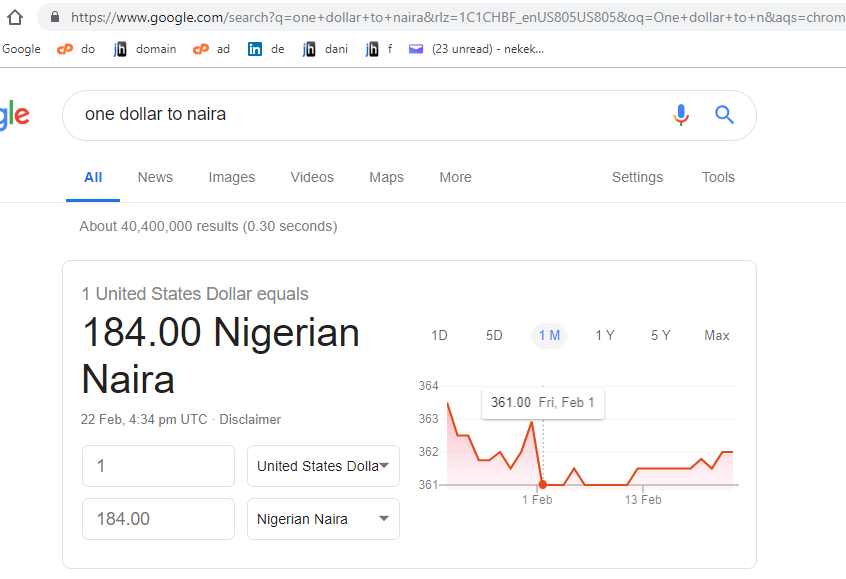
The recently postponed Presidential and National Assembly elections in Nigeria cost the electoral umpire INEC (Independent National Electoral Commission) headed by Professor Mahmood Yakubu a loss of N6.23 billion. The total cost of polling agents for a day election is about N42.7 billion which has also been lost while the impact on GDP is estimated at N191 billion bringing the total cost on the economy to N239.93 billion based on the current exchange rate of N360 to a dollar.
The general elections have been postponed: February 23 for presidential and National Assembly elections and March 9 for governorship and state assembly elections. Once again, Nigeria has shown our level of incompetence but I give INEC credit for simply saying that it was not ready instead of blaming one clandestine intelligence report.
In a global village anchored on technology as its pillar, it is still surprising that we are yet to adopt technology-driven elections. In 2017, the Electronics Development Institute, an arm of the National Agency For Science and Engineering Infrastructure (NASENI), developed a solar powered electronic voting machine with a cloud based election result collation system which incorporates facial recognition, Radio Frequency Identification Device Options of voters identification in addition to thumb print and card reader.
The device has provision for real time election result as voting progresses and diaspora voting to include the over 30 million Nigerians outside the shores of the nation who wish to participate in determining the kind of government they deserve. Also, the device eliminates the common problems we always face with our elections: ballot box snatching, multiple thumb printing which renders the vote cast as invalid, failure of card reader and alteration of data between polling units and collation centers.
When this innovation was presented to the current INEC Chairman by the Hon Minister of Science and Technology, Dr Ogbonnaya Onu, the INEC stated that Nigeria wasn’t ready for such. In a nation where over 80 million citizens use mobile communication for their day to day activities, and over 30 million account holders in banks are associated with Bank Verification Numbers for efficiency in the financial system, INEC may not be overly right in its assessment.
If INEC is really ready to conduct a free, fair and credible election better than what the then Federal Electoral Commission under Prof Humphrey Nwosu organized on June 12 1993 that was won by late billionaire Moshood Kashimawo Olawale Abiola, then it should create a system where everyone can vote irrespective of location once a Nigerian citizen with mobile phone number and National Passport ID, BVN Number, National ID number or Permanent Voter ID number for verification.
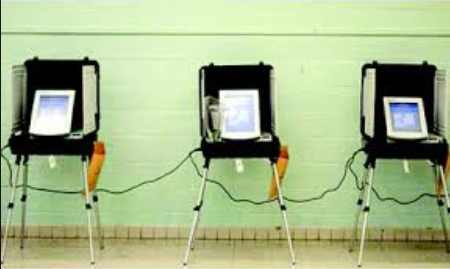
Local voting machine developed in Nigeria (source: Guardian)
It will be programmed to accept only one vote and powered by blockchain technology so that political parties will not have access to steal voters’ information for fraudulent purposes. This way everyone votes and economic activities are not disrupted while the results are transmitted as they are collated in real time and the winner is announced.
INEC needs to adopt technology to conduct elections which will be credible, non-expensive and strenuous on the election personnel and voters in line with global best practices.
The internet as we know it has become such a pervasive part of our lives that most of us can’t imagine a world without it. Whether you’re browsing websites, conducting business or communicating with friends and family half a world away, the internet has made so many things possible that just a generation ago would have been considered unimaginable.
Yet there are so many things about the internet that many of us don’t know. Here are ten exciting facts about the internet that may surprise you.
1. There are close to 2 billion websites on the internet today
As of December 2018, there are more than 1.94 billion websites online and between 4 and 5 million blog posts being published on the internet daily, providing plenty of content for the billions of internet users online today.
2. Out of the close to 7.7 billion people on earth today, more than 4.1 billion are online
The number of internet users has been growing exponentially since the internet exploded in popularity. Around 40% of the global population is now connected to the internet, up from 1% in 1995.
3. Most internet users are from China
China accounts for close to 20% of internet users, with more than 802 million people online in China right now. In fact, the number of Chinese internet users is more than the combined total populations of the U.S., Mexico, Japan and Russia. Internet use is so prevalent in Chinese culture that China has even opened addiction camps to treat the growing rate of individuals addicted to being online.
4. The world’s first website is still online and will turn 28 this year
The world’s first website became publicly available online on August 6, 1991 and is still accessible to this day. Published by British physicist, CERN researcher and inventor of the World Wide Web Tim Berners-Lee, info.cern.ch is a very basic HTML site written with only a few lines of code. It was originally used to facilitate the transfer of information between researchers and students from different universities.
5. Without an Internet Service Provider you wouldn’t be able to get online
Having an ISP, or Internet Service Provider, is what allows you to connect to all the people and content you find online. Think of your ISP as a piece of the pipeline that carries internet traffic all over the world. Although different websites are hosted on different ISP’s, they all communicate with each other and allow for the transfer of data between them. By paying a fee to your ISP, you’re purchasing a piece of that pipeline and an online address, allowing you to send and receive files from other connected devices.
6. More than 250 billion emails are sent out every day
The staggering number of online correspondence sent out daily is growing too. Back in 2010, only about 247 billion daily emails were sent. What’s worse is that more than 80% of these emails are spam!
7. There’s a lot of money to be made online
It’s estimated that there will be more than $3.45 trillion spent on online sales this year as people spend an average of 5 hours each week shopping on the internet. E-commerce is expected to continue its massive growth, becoming the largest global retail channel by 2021 with a forecasted $4.88 trillion market size.
8. About 80% of all online content is NSFW
People have always taken pleasure in viewing the naked female form and the advent of the internet has made it even easier to create, share and enjoy erotica. Statistics show that 12% of all websites and one third of all downloads are NSFW. In fact, before images were even a thing on the internet, people traded ASCII porn online made from only 95 printable text characters.
9. More than 90,000 sites are hacked daily
Cybercriminals use highly advanced computer software to scan for websites with exploitable vulnerabilities that can be hacked easily. Most of these sites (about 83%) use the WordPress platform.
10. The very first YouTube video is called “Me at the zoo”
It was uploaded on April 23, 2005 and features Jawed Karim, one of the site’s founders, exploring San Diego Zoo. YouTube has grown considerably since then, with more than 70 hours of new content uploaded to the video-sharing platform every minute.
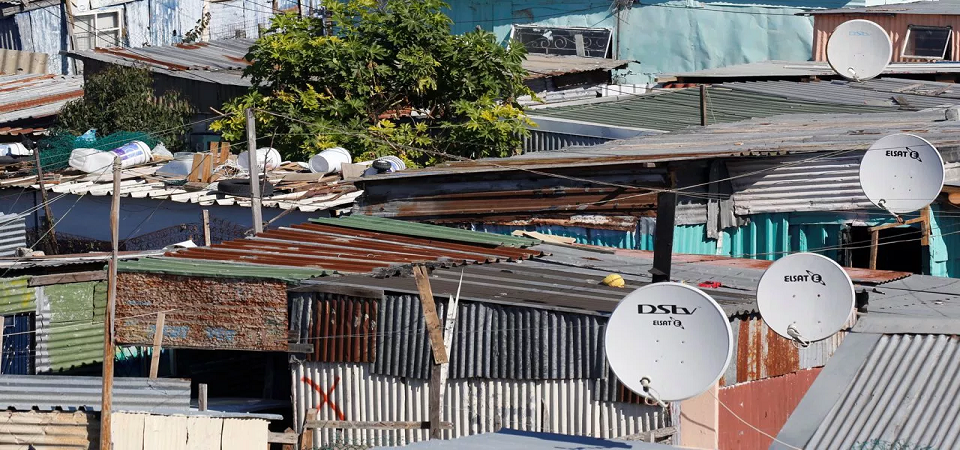
MultiChoice, the brand behind DStv, GOtv, etc, is being unbundled from the Naspers empire, for listing on the Johannesburg Stock Exchange. Naspers is the largest company in Africa by market capitalization.
According to www.iol.co.za, yesterday, Naspers has evolved in recent years into two distinct business lines, which are a high growth global Internet business with international focus and African video entertainment business.
Naspers noted that given their divergent paths, there was no longer a strategic rationale for keeping both business lines together and there are no synergies between them.
The unbundling and listing will result in Naspers’ shareholders holding a direct interest in MultiChoice rather than holding that interest through Naspers.
Meanwhile, in its pre-listing presentation, MultiChoice highlighted how it is the leading entertainment platform in Africa.
[…]
Netflix is a massive threat to DStv, and the South African company has said many times that the streaming service is biting into its Premium subscriber base.
While DStv subscribers in Africa have increased in recent years, its Premium package has lost subscribers. This has been attributed to its high prices and competition from Netflix.
Largely, the company is dividing its operations into two: the high growth global internet business and the Africa-focused entertainment business. Typically (but not always – eBay spurn out PayPal, a better business), when you break companies like that, you keep the high growth in-house and strategically kick the underperformer out. That is what Naspers has done here: the global internet business which includes Tencent investment stays under Naspers while the one we have come to know the company in Africa (yes, the MultiChoice) leaves. With that structure, investors can see value which Naspers is creating in the global internet business where it is clearly killing it.
As Guardian noted in the quote above, the threat of Netflix is real, and to a large extent Naspers has given up. Yes, it does not want to fight because it cannot necessarily do much. In a piece in Harvard Business Review, I explained this dilemma (sure – MultiChoice is not a baby in this game). Simply, there is a global march to online streaming and cable and satellite TV providers are imperiled. Yes, they cannot do much because the world is going to converge on the web for entertainment. Naspers understood that and that is why MultiChoice with DStv and GOtv has to leave home, fast.
But the report also marks the final public disclosure we needed to assess the state of cord cutting at the end of 2018. Altice revealed a net loss of 15,000 cable TV customers in the fourth quarter. We already knew that Charter lost 36,000, Comcast shed 29,000, and Verizon 46,000 for the same period. AT&T lost 391,000 for both cable and satellite TV and satellite-only provider Dish Network shrank by 334,000. Net net, that’s 851,000 fewer paying customers for pay TV.
It looks like the legions of cord cutters set a new record for the quarter and are up significantly from a year ago, when one research firm calculated almost 500,000 departed, at the time a historic high.
And there’s more bad news for the industry. Unlike last year, the number of people signing up for cable-like bundles of channels over the Internet also may be shrinking now. Most of the services, such as Sony’s Playstation Vue TV and Google’s YouTube TV, don’t disclose their subscriber numbers regularly, if at all. But AT&T does, and it revealed a net loss of 267,000 DirecTV Now subscribers in the quarter. Dish, which also discloses for its Sling TV service, increased by just 47,000, about one-quarter the gain of a year earlier. Most of the Internet cable packages raised prices by $5 or more a month during the year, cutting into their appeal to cord cutters—most of whom, after all, are motivated by trying to save money. (Fortune Newsletters)
Sure – those numbers are U.S. numbers. Yet, the trend is global. It is just a matter of time for Africa to catch up at scale and that will happen as broadband becomes cheaper. My prediction has been that by 2022, we will have parity in that domain.
For Naspers, it wants to clean house fast to avoid deterioration of financial ratios on its high growth international internet business by this largely post-peak unit called MultiChoice.
There’s a popular line in product lines management, “when it’s not working, cut it off.” No one derives joy in losing money with reckless abandon, while growth trajectory looks gloomy.
There will always be admirers for Cable TV, but to keep pace with what goes on in the online version of the business, you have to invest heavily, more than your internet competitors, and yet there’s no guarantee for profits. A quandary of some sort.
Naspers doesn’t want its global internet business to be tainted by the conundrum going on in the cable tv space, so a separation became a good move. Maybe it would be a reverse of what GE did with its financial arm, and then became more ‘troubled’ afterwards, leading to countless restructuring and transformation undertakings.
By the time broadcasting rights for sports is dominated by streaming platforms, then we know that the paradigm shift has become palpable, at the moment, movie watchers are having their day.
Each movement brings with it a sizable loss of jobs, streaming platforms cannot have the kind of workforce DStv commands here, including technicians that install the dishes. May our innovations never increase hunger in the land!