DD
MM
YYYY

PAGES

DD
MM
YYYY

spot_img

PAGES

Home Blog Page 6966

From Alibaba to Alipay, MercadoLibre to MercadoPago, Payment Startups Are Ecommerce Catalysts in Emerging Economies

0

One of Latin America’s leading digital companies is MercadoLibre. The firm is an ecommerce company which has excellently adopted the double play business model. It has a payment unit, MercadoPago, which is anchoring huge growth with payment transactions up 72% year on year, to a total payment value of $5.3 billion. But the biggest news: the offline payments are now overtaking the online on-platform payment. This company built a payment operating system, making it a solid preferred choice for brick-and-mortar retailers to adopt MercadoPago as the payment solution of choice.

And that’s reminding some analysts of how PayPal, which was originally purchased by EBay in 2002 and used as its payments service, wound up being more valuable than its parent company, analysts at both Susquehanna and BTIG noted in separate reports. PayPal separated from EBay in 2015 to concentrate on expanding its electronic transactions business without being shackled to the slow-growing online marketplace. “We remind investors that PayPal, once just a piece of eBay, is now worth 3 times more than its former parent,” BTIG’s Marvin Fong wrote in a note.

Simply, MercadoLibre is no more just an ecommerce provider in Latin America. It has since evolved as a payment and fintech company. It has a clear double play just as Alibaba has on Alipay. You can also include the old eBay which had Paypal before the latter was spurn out.

explained in the duality element that digital products which thrive are typically both products and platforms. It would be hopeless to build modern digital products without having a moat through platforms. Interestingly, the greatest digital ICT utilities have double plays in their business models: if Amazon decimates many brick-and-mortar stores, it would welcome many online to sell them cloud services. Alibaba welcomes you to its marketplace platforms, and you certainly have signed up for its (partly affiliated) payment processing solutions (Alipay) which command commissions.

All Together

It seems there is a clear correlation between ecommerce success and payment in emerging markets. From Alibaba to Alipay, MercadoLibre to MercadoPago, there is something inherently powerful why successful ecommerce companies in emerging economies have built or acquired solid payment infrastructures. Indeed, you cannot have an ecommerce without a functioning payment system.

Largely, once these firms begin, they quickly realize that the payment business is doing better than the ecommerce unit. Latin America’s MercadoPago has seen offline payment overtaking online in-platform payment as people seem to thank the company for the payment solution over the ecommerce platform. From every angle you look at it, the real ecommerce business is truly payment in emerging market. It is something to seriously consider as you write a business plan on the next ecommerce startup.

Yes, I am beginning to think Zinox Group, owner of Konga, should acquire/merge with one of the leading payment startups in Nigeria to unlock more value. The Konga platform provides the oasis while the payment fintech opens new territories. Yes, I do know that there is KongaPay but that is not a category-leading fintech unit. The likes of Paystack and Flutterwave will be optimal for Konga.

LinkedIn Comment on Feed

Comment: Perhaps the next phase of the fintech evolution will be M&As between e-commerce and fintech. I however think that unlike other markets, e-commerce companies in sub- Saharan Africa (with the exclusion of South Africa) still has to grapple with distribution at the last mile and hence unable to unlock real value. I’d rather like to see M&As between logistics providers and ecommerce in the short to medium term while M&As with payment platforms as a medium to long term strategy.

We know for a fact that payment for now is largely cash based. Once the market friction due to last mile distribution is addressed by ecommerce companies, they’ll be able to bring real value to the table during M&A discussions with payment start-ups. From a market valuation perspective (using funds raised from VCs), payment start-ups are valued way higher than ecommerce companies and that can influence discussions should e-commerce companies try to merge with payment start-ups now.

My Response: That is a really brilliant analysis, Kunle. You summarized it here “I”d rather like to see M&As between logistics providers and ecommerce in the short to medium term while M&As with payment platforms as a medium to long term strategy”. Yet, my thesis is that I do not expect any last-mile logistics company in Africa (exc SA) in the next decade because no one can afford to do that. It is extremely capital intensive and it is not really a startup job. So local ecommerce companies are not going to be in positions to acquire or merge with such entities. Only national postal services or big brands like Amazon can execute such if they show interests in Africa.

Comment:  I was about to mention eBay/PayPal acquisition, until I saw it in the report; so it’s a trend. Ecommerce and payment platform are becoming interrelated and interdependent of each other.

When you look at it critically, it is more or less about covering the flanks, making sure that you do not leave sizeable money on the table. Also reinforcing the one oasis strategy.

Again, when it comes to payment seeming to outshine the ecommerce itself, it’s simply natural. Almost each and everyone of us with disposable income do more of payments than purchases on weekly or monthly basis. You can make one or two purchases weekly, while on the other hand, more than twenty payments tasks have been carried out, ranging from transfers to all kinds of transactions. In other words, money exchanges hands more than goods, the ratio could be in the region of 7:1 in some cases.

So when you see Fintech companies springing up here and there, it’s partly due to the magnitude of monetary exchanges humans conduct on daily basis. Of course not every player in that space has given deeper thoughts as to the whys of the proliferations.

Topics for My “Winning in Nigeria (and Africa)” Business Webinar Released

0

The Tekedia Business Innovation Seminar is planned every quarter. It is my desire to use it to support the ecosystem. The Q1 2019 webinar (register here) which is already scheduled has a theme titled “Winning in Nigeria (and Africa)”.  These are the topics we will be discussing in the webinar and the question and answer session.

  • The Purpose and Fixing Frictions of Nations
  • Framework 5 – Our Five Frameworks to Unlock Values in Markets
  • Pillars for Establishing a Company while Living aboard
  • Investment Options for that Naira Right Now
  • How To Begin With Minimal Funding (Case Studies)
  • 20 Huge Emerging Opportunities
  • Questions and Answers

(Except the first two and last, others were suggestions from participants. If you have topics, email my team for subsequent webinars.)

Dates: Friday March 22 2019 (repeat, Saturday March 23, 2019)

Webinar Theme: Winning in Nigeria (and Africa)
Register: There are two ways to register (you need to pay to value my time); please email tekedia@fasmicro.com after payment to set up your account:
  • Use Paypal and pay $15 here
  • Pay into any of the Nigerian bank accounts (N5,000) listed here.

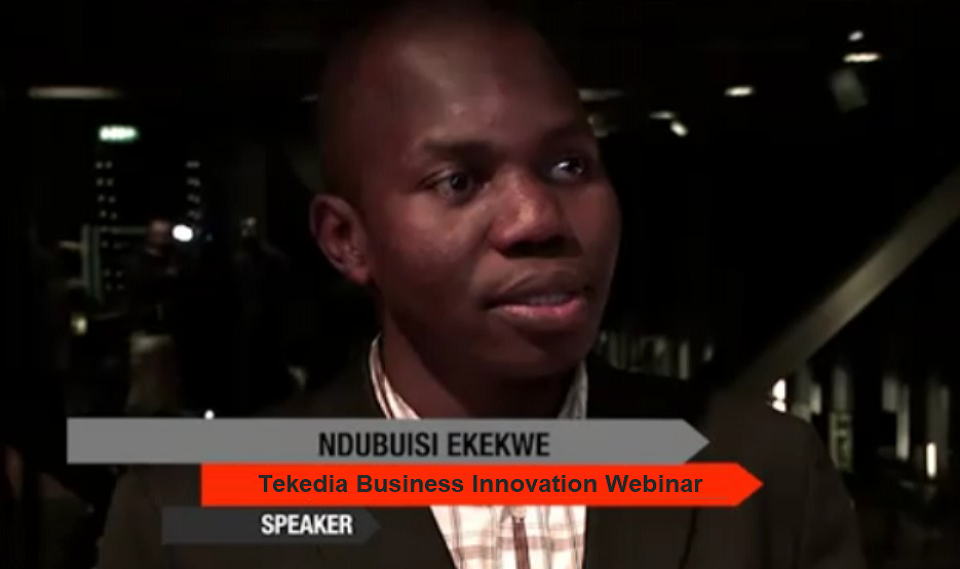
Join Ndubuisi Ekekwe for Tekedia Business Innovation Webinar

My Company Receives Inventors Award

0

We are the only Intel Corp embedded partner in West Africa and one of two in continental Africa.  You attain that level by having quality in electronics. You work into areas, do some things, and plants start running again. So, it was all magical that Fasmicro received an inventors award from institutions we have fixed their frictions.

As we celebrate, we report that all those that applied to work with Zenvus Loci, as partners, have now been contacted by our team. I do hope to sign your partnership agreements with our business. We still welcome companies across Africa that want to join our partnership network.

We’re Launching A New Hardware Product (Loci), Distribution Partners Wanted

The Intriguing APC Suspension of Governors Okorocha (Imo) and Amosun (Ogun)

0
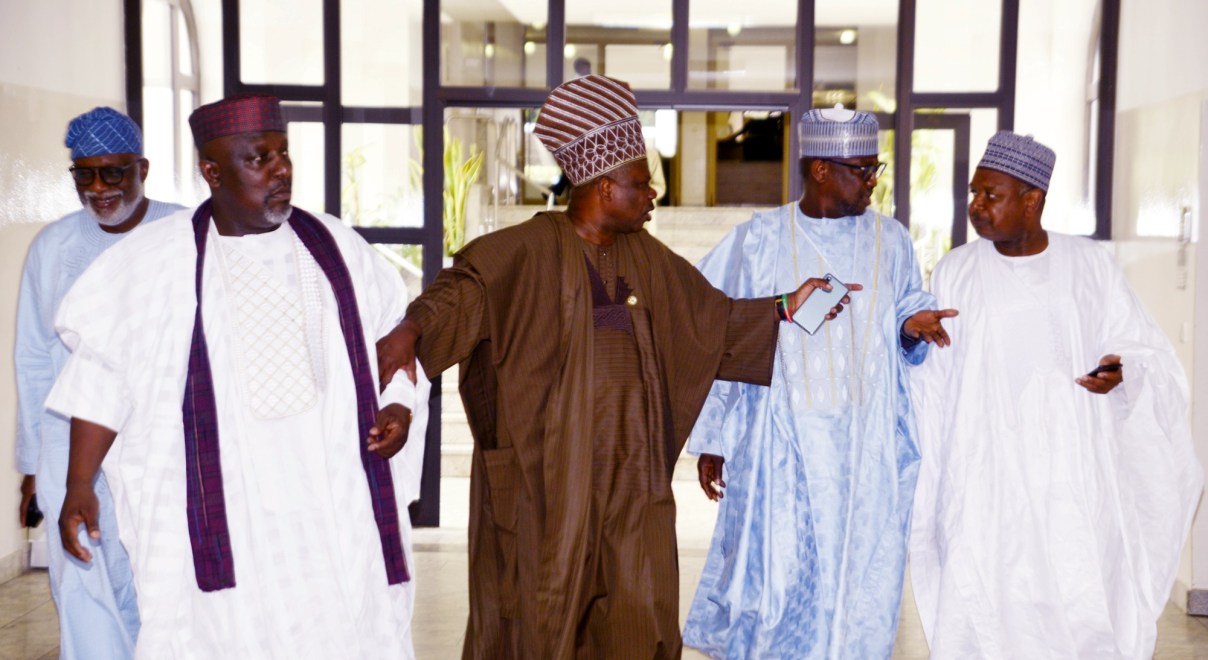
Pic.10. From left: Govs. Rotimi Akeredolu of Ondo State; Rochas Okorocha of Imo; Ibikunle Amosun of Ogun; Abubakar Sani-Bello of Niger; and Abubakar Bagudu of Kebbi, arriving for a meeting with President Muhammadu Buhari at the State House in Abuja on Thursday (4/10/18). 5369/4/10/2018/Sumaila Ibrahim/BJO/NAN

Politics just like business wins on addition. If you try to do subtraction, you score an own-goal which is a very bad thing. The news is that Governor Rochas Okorocha (Imo State) and Ibikunle Amosun (Ogun State) have been suspended by APC, Nigeria’s ruling party. Perfect timing!

The National Working Committee (NWC) of the All Progressives Congress (APC) has suspended Governors Ibikunle Amosun and Rochas Okorocha of Ogun and Imo States from the party.

[…]

Messrs Amosun and Okorocha have had running battles with the party after their preferred candidates for upcoming governorship election were rejected by the party.

Both governors are now backing the candidates after they defected from the APC to other parties.

For students of strategy, let us do some brain works here:

  • They have to be suspended after the presidential election because apparently they mattered before it.
  • They have done all things which ordinary citizens could have been kicked out of the party, but as governors, they have real influence on electioneering state machineries.
  • They allowed them to win Senate seats before the exits. But could not imagine losing the states because of their actions. To ensure the party keeps the states, they have to leave.
  • APC leaders are not stupid: if you control a state, your chance of winning a presidential election in that state, in my model, is close to 87%. This is planning for 2023!

Yet, there is no real suspension: after the gubernatorial election next week, Okorocha and Amosun will visit Aso Rock. The APC state flagbearers just want them out of the state machineries ahead of the election.  And the National Working Committee executed that. It is a smart thing to do because if given the opportunities to rig, you already know the people the (former APC) governors would prefer (the alternative candidates, the non-APC candidates they are supporting).

Simply, APC does not want to take risk by allowing Okorocha and Amosun in APC state secretariats or sending them as APC representatives near INEC offices next week as their voices would be that of Jacob even though the bodies may feel like Esau’s.

Also, in this day of suspension, APC suspended the minister of Niger Delta Affairs, Pastor Usani Uguru Usani and the Director-General of the Voice of Nigeria (VON), Mr. Osita Okechukwu.

BELOW IS THE FULL TEXT OF THE STATEMENT

    Anti-Party: APC NWC Suspends Amosun, Okorocha, Usani, Okechukwu

The National Working Committee (NWC) of the All Progressives Congress (APC) has suspended the Governor of Ogun State, Ibikunle Amosun and the Imo State Governor, Owelle Rochas Okorocha for anti-party activities.

Also suspended by the APC NWC over anti-party activities are the Minister of Niger Delta Affairs, Pastor Usani Uguru Usani and the Director-General of the Voice of Nigeria (VON), Mr. Osita Okechukwu.

This decision was reached on Friday at a meeting of the Party’s NWC, presided by the National Chairman, Comrade Adams Oshiomhole at the APC National Secretariat.

The NWC has also taken a decision to recommend the expulsion of the suspended individuals to the National Executive Committee (NEC) of the party.

The NWC would also issue a query to the Governor of Ondo State, Rotimi Akeredolu over his glaring anti-party activities, which greatly affected the fortunes of our candidates in the recently-conducted Presidential and National Assembly elections in the state.

Recall that the NWC had earlier written to the suspended governors on their anti-party activities, and several other steps were taken to ensure they desist from taking actions that are inimical to the interests of our party and candidates. Notably, these individuals have not shown any remorse and have actually stepped up their actions.

The party reviewed the serial anti-party activities of the concerned individuals before and during the last Presidential and National Assembly elections in their respective states and resolved to enforce party discipline in line with our constitution.

The NWC noted how the suspended members have continued to campaign openly for other parties and candidates that are unknown to our great party, even while they have constituted themselves as opposition to APC candidates in their respective states.

Importantly, the NWC is closely monitoring the activities of our members across the country, and particularly, in the states these suspended members belong to. We wish to reiterate that any member of our party who takes any action solely or in line with the directives of the suspended members to undermine our party’s candidates in the coming governorship and House of Assembly elections would face disciplinary actions.

We wish to congratulate our members nationwide for the victories we recorded across the country in the last elections and particularly, the renewal of our party’s mandate for President Muhammadu to continue to pilot the affairs of this country for another four years. This could not have happened if not for the hardwork and commitment of our members. We therefore urge all our members to unite and work ever harder to ensure victory for our candidates across the states in the coming governorship and House of Assembly elections.

Consequently, the NWC calls on our members to disregard directives and actions of the suspended individuals as APC would continue to live by the dictate of our constitution.

SIGNED:

Mallam Lanre Issa-Onilu

National Publicity Secretary

All Progressives Congress (APC)

The MasterCard’s $500 Billion African Prediction

0

$500 billion.

That is the number MasterCard Foundation has projected the ecommerce sector in Africa could generate in a year by 2030. Largely, that will be roughly 20% of the projected size of Africa’s economy of by then. Except the hard number, there is nothing revealing there: the world of commerce will move online because the web remains the only infrastructure that reduces the marginal cost of doing many things at exponential level compared with whatever currently exists.

Yes, African commerce and trade will move online, because that is the final destination. In short, in a perfect internet economy, marginal cost becomes absolute zero which means transaction cost and distribution cost go.  There is no economic infrastructure sphere that can compete with that, and that is why the web is the future.

Yet, it has been bumpy, in Africa,  as the march to ecommerce has made many poorer than richer, from Kalahari to old Konga. But inflection point is on the way, as logistics, immersive mobile connectivity, and citizen re-orientation converge.

2022 will be the magic year in Africa for that Eldorado moment to kick-in, on ecommerce, because most of the challenges would have been curtailed.

2022 Will Usher The Era Of Wireless Nigeria, Africa