DD
MM
YYYY

PAGES

DD
MM
YYYY

spot_img

PAGES

Home Blog Page 6977

Nneka – “Mother is Supreme”

0

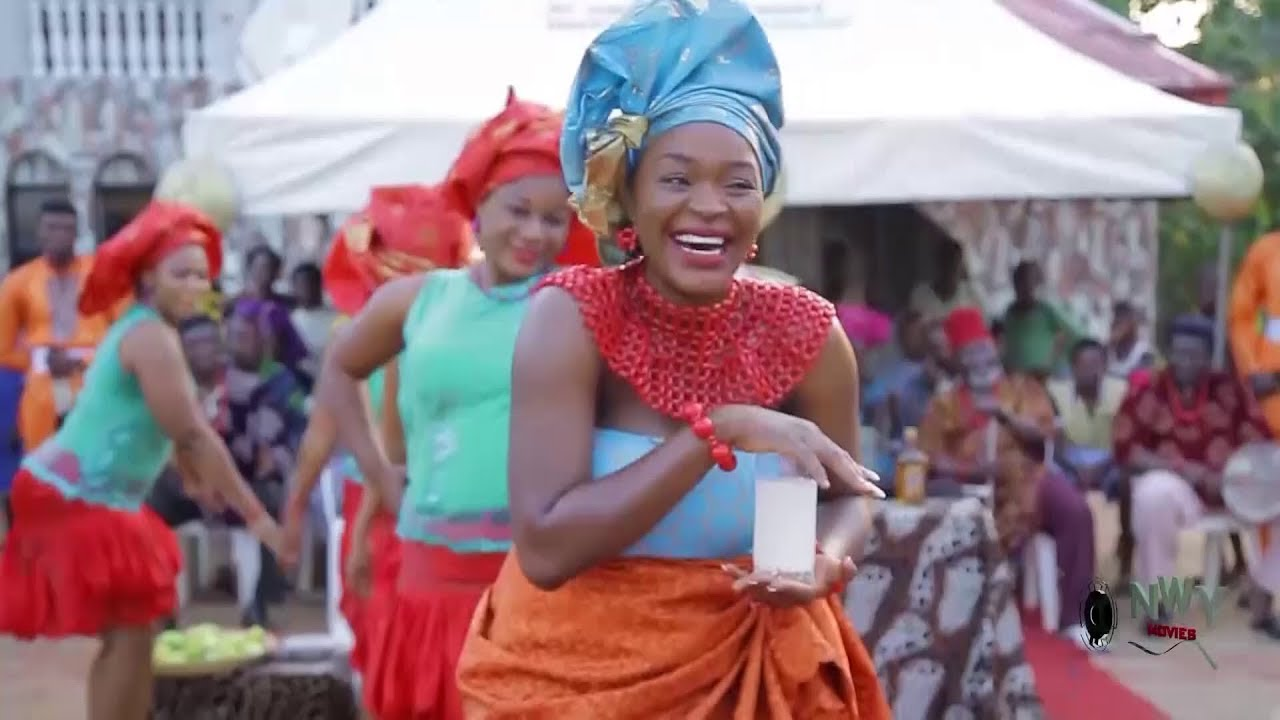
Great LinkedIn comments on the piece explaining some elements in Igbo culture (Nigeria). Let me drop these lines from Things Fall Apart where Chinua Achebe explained, at deeper level, the meaning of Nneka.

The following day, Uchendu gathers together his entire family, including Okonkwo. He points out that one of the most common names they give is Nneka, meaning “Mother is Supreme”—a man belongs to his fatherland and stays there when life is good, but he seeks refuge in his motherland when life is bitter and harsh.

Of course, with the positive comments coming from the piece, I will surely like to give a talk in UN Women titled Nneka, explaining how ancestral Africa had recognized women before colonialism through indirect rule redesigned that fabric. In the days of Okonkwo Unoka (Things Fall Apart), mothers were supreme but in the days of Obi Okonkwo, a descendant of Unoka and Western educated, in No Longer at Ease (Umuofia had fallen to foreign powers), that was gone.

When a young boy arrives at his mother’s birthplace, he automatically assumes rights over most. If you check, as elders break kola nuts and drink palm wine, they first ask “do we have nwaada here?” If there happens to be nwaada, they will acknowledge him, and once after taking the palm wine, they will give him, over the sons of the soil. The idea is this: no matter what brought you to your mother’s birthplace, you are welcome! We will feed you before we eat. You are protected from any harm.

While Africa cultures certainly were not gender-neutral on many areas especially on property rights, there are many contradictions. A stubborn man would better face elders (men) in the village than face Umu Ada-nwanyi (married out women from a community) who typically come back to resolve serious issues.

The irony is this: the women’s fathers might not have given them properties like lands but they technically have real influence in their fathers’ lands. They are those women that levy fines and expect everyone to pay, right from their husbands’ houses. They gather once in a while to make sure their fathers’ domains are functioning. And any woman married into their fathers’ communities that do not behave well will get into trouble with them.

Largely, if you study many African cultures, you will see extremely efficient systems which served their purposes. Of course, there is no denial that women were not treated well but looking deeper you would understand that many things happened due to lack of wisdom.

As a village boy, I asked my grandmother why the fishes in the local stream could not be killed while the big waters’ fishes could. She simply explained that harvesting fishes in our local stream would make it nearly undrinkable as the current was not efficient enough to clean the fishing induced-perturbation process. But in the big streams, the current was large to bring equilibrium to any perturbation fishing process could cause.

Yet, to make people adhere to respecting that, elders would make it illegal to do so. With the religion of the time, it was associated to one god but technically it was not really about any god – they just want to have a decent stream to use for home needs and using a god will scare people from polluting it. That is why people who “test” deities (after becoming born-again Christians), by killing those fishes are missing the point: you are not fighting any god, you are simply destroying an equilibrium for good drinking water in a community.

If you check, the decision to make people not to fish in that small stream came out of deep observations that the body of water was critical for the survival of the village. And for generations, they honored that tenet to survive because water sustains life. The rascality of looking for one small fish, in a small stream, endangering lives of villages, can only be stopped by telling everyone that one deity owns the fishes. Practically, the fishes are free, but man in ancestral Africa feared gods, and everything was associated with gods to maintain order!

Linkedin Comment on Feed

“That is why people who “test” deities (after becoming born-again Christians), by killing those fishes are missing the point: you are not fighting any god, you are simply destroying an equilibrium for good drinking water in a community.” Actually, we had a system that worked, but in our quest to “modernise’ and ‘conform’ to what our newest headmasters like, we ended up losing our identity, and now suffering identity crisis.

The Umu-Ada will bend you, that you are stubborn is not really for them, you must behave. When they gather during ceremonies: waste time in bringing their food, then you are going to eat all the food yourself; and make one ‘irresponsible’ comment while the food is out there, you won’t only apologise with all the energy in you, you also need to pay ‘fine’, for you to be forgiven.

Most times, when we shout “gender equality”, we miss the point. We have a better system in Africa, which only needs few tweaks and upgrading, but somehow the slavemasters convinced us to toss everything and embrace confusion.

I think we have so much to teach the West, rather than them lecturing us; maybe we teach them how to raise kids that can respect their elders, and also – how to run peaceful families. Some business there.

Saving That Kingdom

President Buhari’s Full Statement on Election Postponement by INEC

0

I totally understand the frustration from Mr. President. Please get the dilemma here. He could not have asked the Army to take over election materials logistics when INEC told the world about 36 hours ago that it was ready. These lines, from Mr. President, are believable : “INEC themselves have given assurances, day after day and almost hour after hour that they are in complete readiness for the elections. We and all our citizens believed them.”

Mr. President, do one thing for Nigeria: ask INEC, after the election, to send the list of people that dropped the balls to the Head of Service, Federal Republic of Nigeria, and demand accountability. Unless we have that in our systems, anything will continue to happen.

This is President Buhari’s full statement…

I am deeply disappointed that despite the long notice given and our preparations both locally and internationally, the Independent National Electoral Commission (INEC) postponed the Presidential and National Assembly elections within hours of its commencement.

Many Nigerians have traveled to various locations to exercise their right to vote, and international observers are gathered.

INEC themselves have given assurances, day after day and almost hour after hour that they are in complete readiness for the elections. We and all our citizens believed them.

This administration has ensured that we do not interfere in any way with the work of INEC except to ensure that all funds were released to the commission.

We now urge INEC to ensure not only that materials already distributed are safe and do not get into wrong hands, but that everything is done to avoid the lapses that resulted in this unfortunate postponement, and ensure a free and fair election on the rescheduled dates.

While I reaffirm my strong commitment to the independence, neutrality of the electoral umpire and the sanctity of the electoral process and ballot, I urge all political stakeholders and Nigerians to continue to rally round INEC at this trying national moment in our democratic journey.

I, therefore, appeal to all Nigerians to refrain from all civil disorder and remain peaceful, patriotic and united to ensure that no force or conspiracy derail our democratic development.

I have decided to move back to Abuja to ensure that the 14.00 hrs meeting called by INEC with all stakeholders is successful.

Muhammadu Buhari

Daura, February 16, 2019


Nigeria’s INEC Votes Incompetence

Disrupting Nigeria’s University Education for 21st Century Development

0

By Nnamdi Odumody

After over four months of industrial action by the Academic Staff Union of Universities (ASUU) which led to the disruption of academic activities nationwide by federal government and state owned universities leaving students at home, the strike was called off obviously for political reasons as most students will work with the INEC (Independent National Electoral Commission as ad hoc) staff in the forthcoming elections.

Strikes have become a key factor in Nigeria’s educational system – the nation’s tertiary institutions are no longer globally competitive, with absence of infrastructure, and outdated teaching systems largely irrelevant for national and global development.

Every year the nation’s universities produce over a million graduates with very little capacity for them to be absorbed in the federal, state civil services and private sector. This creates a huge unemployment burden in the nation. The 21st century economy is one which is driven by a skillful, knowledgeable and globally competitive workforce, and sadly Nigeria’s tertiary institutions are not producing graduates with those characteristics. The skills of the future are Critical Thinking, Empathy, Design Thinking, Agility, Collaboration, Data Science, Business Intelligence, Digital Marketing, Additive Manufacturing, etc. Our curricula do not adequately include courses in the aforementioned areas.

In order to prepare our youth for a technology-driven future which they are currently witnessing, university education should be disrupted to create graduates with in-demand skills to transform Nigeria into a knowledge-driven, productive high per capita income country.

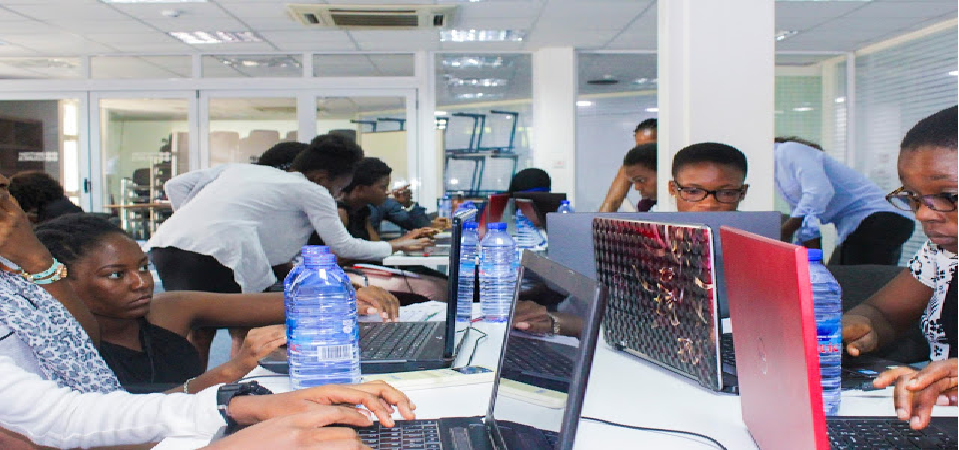
A Ghanaian named Fred Swaniker, an alumnus of Stanford University, was dissatisfied with the poor leadership and relevant skills which has made Africa underdeveloped, and home to the world’s poorest people, despite enormous natural resources, he took action. He decided to do something about it by establishing African Leadership University which has an ambition to raise 250,000 transformational leaders across Africa by training 10,000 young Africans in each of its planned 25 campuses for the continent which will create 3 million leaders over the next fifty years.

Its breakthrough learning model puts students at the core, and enables them to drive their own path, learning from their peers and bringing the real world into the classroom. From day one, they are made to solve African problems. By the time they graduate, they already have one year work experience under their belts, enabling them to be job creators instead of job seekers.

Another African who is trying to disrupt the university educational system in order to enable millions across the world access quality education for cheap is Fadl Al Ghazi, an Egyptian, who runs startup called Nexford University. Nexford University wants to make it possible for you to get degrees from top global institutions from their platform (e.g. an MBA for as little as $80 a month). This is a game changer considering that the average cost of an MBA from any top university abroad is in the neighborhood of $20,000-$50,000 or even more.

With MOOCs (Massive Open Online Courses), platforms like Udacity, Facyber, EDX, Coursera providing alternative learning for millions of people across the globe to learn and earn nanodegrees, things will improve. In future, relevant skills and the emergence of technologies like Virtual and Augmented Reality which have provided new experiences for experiential learning, the universities of the future in Nigeria and Africa will not be the ones whose models are currently used in teaching undergraduates on the continent but that which will prepare them with smart, interactive, peer-based learning technologies. The overriding goal is to get them to solve real life problems based on what they have learnt.

The ASUU Strike – Why Nigeria Should Strike for Primary & Secondary Education, Over Tertiary Education

Nigeria’s INEC Votes Incompetence

0
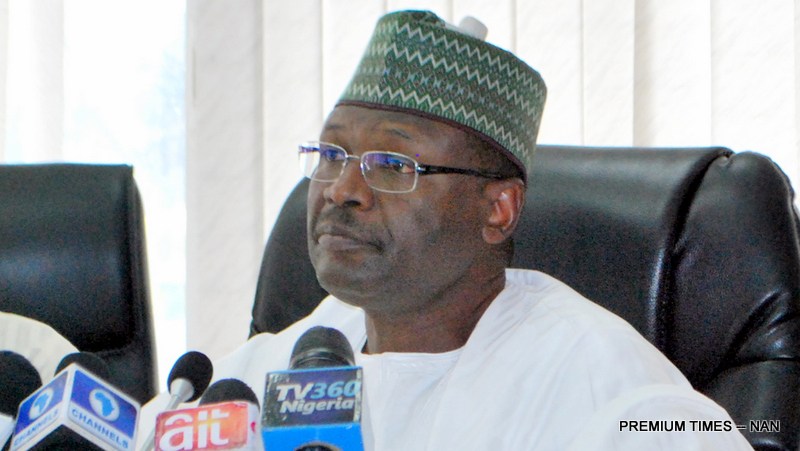
PIC.19. From left: National commissioner, Independent Electoral Commission (INEC), Prince Solomon Adedeji; chairman of INEC, Prof. Mahmood Yakubu; and another national commissioner, Prof. Antonia Okoosi-Simbine, during the INEC’s presentation of certificate of registration to five new political parties, in Abuja on Friday (16/6/17). 03311/16/6/2017/Hogan-Bassey/ BJO/NAN

The general elections have been postponed: February 23 for presidential and National Assembly elections and March 9 for governorship and state assembly elections. Once again, Nigeria has shown our level of incompetence but I give INEC credit for simply saying that it was not ready instead of blaming one clandestine intelligence report.

“The Independent National Electoral Commission met on Friday, 15 February 2019 and reviewed its preparation for the 2019 general elections scheduled for Saturday, February 16, and Saturday, March 2.

“Following a careful review of the implementation of its logistics and operational plans and its determination to conduct free, fair and credible elections, the commission came to the conclusion that proceeding with the election as scheduled is no longer feasible.

“Consequently, the commission has decided to reschedule the Presidential/National Assembly elections to Saturday, 23rd February 2019. Furthermore, the Governorship/State House of Assembly/Federal Capital Territory Area Council elections are rescheduled to Saturday, 9th March 2019.

“This will afford the Commission the opportunity to address identified challenges in order to maintain the quality of our elections. This was a difficult decision for the commission to take but necessary for the successful delivery of elections and consolidation of our democracy.

“The Commission will meet with key stakeholders to update them on this development at 2 P.M at the Abuja International Conference Centre.”

Until Nigeria begins to build institutions, where processes and standards are enshrined, we will not make progress. Since 1999, we have done this many times and yet every four years, we continue to struggle.

Yet, for me, the biggest paralysis is this idea that federal-level (presidential and national assembly) elections must hold before state-level elections. Largely, you have a feeder system where the triumph of a political party at the federal-level will cascade into the state-level elections. When it was evident, last night, that today’s election would not hold, I had expected a flip where people vote for their local leaders before opportunities for the national ones. But that will not happen as they have shifted everything to maintain the pattern.

Finally, what has happened to Festus Keyamo? He does not write anymore like a fine lawyer many have known him for. Blaming PDP does not help his mission. Festus should know that leadership is not simply holding a microphone!

“We condemn and deprecate this tardiness of the electoral umpire in the strongest terms possible….

“We have earlier raised the alarm that the PDP is bent on discrediting this process the moment it realized it cannot make up the numbers to win this election. We are only urging INEC not collude with the PDP on this.

“We are truly worried because as early as Friday morning, some known PDP Social Media influencers unwittingly announced this postponement, but quickly deleted the message and apologized to the public that it was fake news,”

This is a big shame and something good planning could have prevented.

LinkedIn Comment on Feed

In 2011, Jega postponed the national assembly elections, while accreditation had started in many polling units. Then in 2015, it was for “intelligence report”, at least it was announced earlier enough, so wasn’t much of a surprise. Then in 2019, elections postponed few hours to commencement.

Go through the INEC’s statement, they didn’t actually apologise, just a simple statement, telling anyone who cared to listen that they weren’t ready; so deal with it!

A party in power will argue that four years is too small to bring transformational leadership in a country, and now INEC has consistently demonstrated that four years is too small to plan for elections without excuses. They asked for fat cheque and got it, they never complained of money, there was excess money; perhaps they were surprised that they could get such amount of money for their operations, and so “logistics” slipped out of their collective memories…

We frown at our headmasters over “meddling” and “interference”, and yet we keep letting them know that we don’t actually know how to get anything done. INEC has become another NNPC, a perpetual inefficiency has become its second name.

As for Keyamo, nothing much, people initially overestimated his intelligence.
Like Like Francis Oguaju’s comment Reply

Making Nnewi A Special Economic Zone for Automotive Industry

1
Nnewi, Nigeria

by Nnamdi Odumody

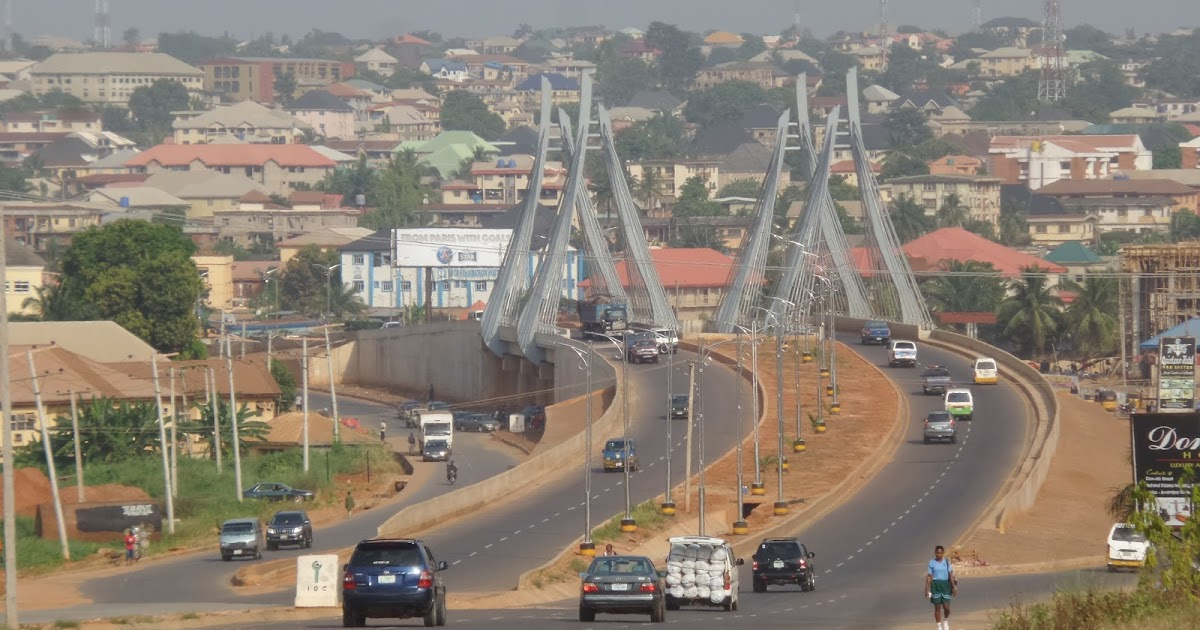
Nnewi, a town in Anambra, South Eastern Nigeria is famous for the enterprising spirit of its inhabitants which has earned them fame as one of Africa’s cities with a high per capita of millionaires and multimillionaires  in dollars.

Spend time with an Arochukwu/Ohafia (Abia) or Nnewi (Anambra) boy under apprenticeship and see the level of dedication. They build their masters and their masters make them.

Today, Nnewi is the most industrious tribe in Africa and has the largest concentration of millionaires per capita. A land where secondary school dropouts control factories and empires. While we celebrate the founder of Innoson Motors [never attended any university] for establishing the largest indigenous auto plant in Nigeria, he would continue to celebrate his masters.

The town is home to the biggest cluster for automotive industries in Nigeria as most of its entrepreneurs are involved in the production and other activities along the value chain. But in comparison with other global auto clusters, Nnewi doesn’t fare all and this can be attributed to lack of support from the government in provision of infrastructure and other things which can make the city globally competitive.

A car made in Nnewi by IVM

Recently, a lawmaker representing Nnewi North and South Federal Constituency, Hon Chris Azubogu, in conjunction with the National Automotive Design and Development Council has begun the development of an Industrial Park in Nnewi South which will be the new home of the automakers based in the ancient community.

On completion, the Anambra State Government should partner with the Federal Government to make the industrial park a Special Economic Zone (SEZ).

A special economic zone is an area in which the business and trade laws are different from the rest of the country. SEZs are located within a country’s national borders, and their aims include increased trade balance, employment, increased investment, job creation and effective administration.

This is important as some of the parts used in the production of vehicles and other automotive systems in the Nnewi cluster are imported from foreign countries. Doing the SEZ will attract companies from across the globe with supply chain services tailored for vehicle manufacturers, to set up shop in the industrial park, and in the process aid the local players to integrate world class design and production.  As the virtuoso circle happens, Nnewi will produce vehicles which will cope with the demands of domestic and foreign consumers of the 21st century.

Also, software designers will flock to the zone to aid the local manufacturers with the creation of intelligent vehicles. This will lead to enormous job creation for the youth and contribute significantly to the GDP of the state and nation. Largely, making Nnewi a SEZ for automobile sector is urgently needed.

The Innoson Motors Vision, Building Africa’s Largest Indigenous Car Company