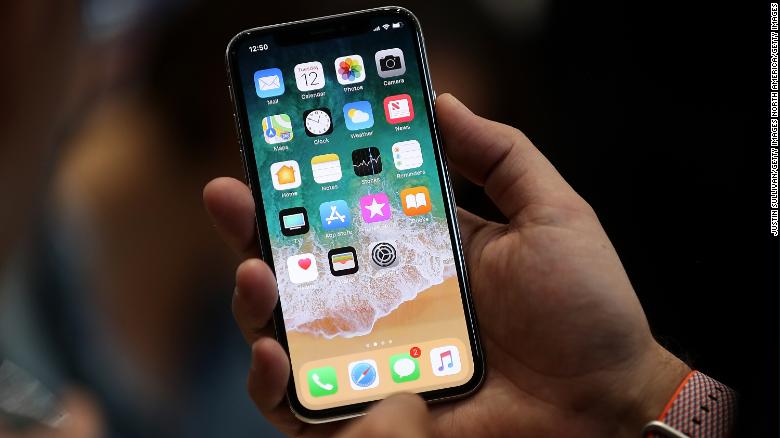
Few days ago, I noted that for Apple to find success as it pivots to services, away from hardware, it would need to open its closed ecosystem. My thesis was based on the fact that services thrive on volume, and Apple needs to improve its marginal cost on serving users. The construct of network effect does not just make products better, through the positive continuum of virtuoso circle, it also improves competitiveness through cost-service efficiency.
Apple would be fine but it needs to understand that services win on volume, and it is time it adjusts strategy to grow user base with cheaper devices. If not, the revenue will be dropping from here.
Interestingly, the company has indeed started that, opening up its ecosystem via partnerships with Amazon and Samsung. Simply, you can now access some of Apple’s services in non-Apple hardware. The era of proprietary hardware running on exclusive software is over since iTunes now can run on Samsung device and Apple Music blazes on Amazon Echo.
Apple is famous for its “walled garden” approach to software, for the most part limiting its software and services to customers who buy its hardware. To maintain its services momentum, Apple is loosening up its restrictions on who can use them. Apple announced in November that Apple Music would become available on Amazon’s Echo speakers. And Sunday, Samsung said it will put an iTunes app on its smart TVs.
Apple has opened a new era – the Services Era. Yes, we are in the post-iPhone era, in Apple World, since the tech juggernaut announced that the number of iPhone sold would not be reported. Simply, going forward, iPhone is nothing but a revenue contributor, and should not be treated differently.
The crash in iPhone sales is changing Apple business model
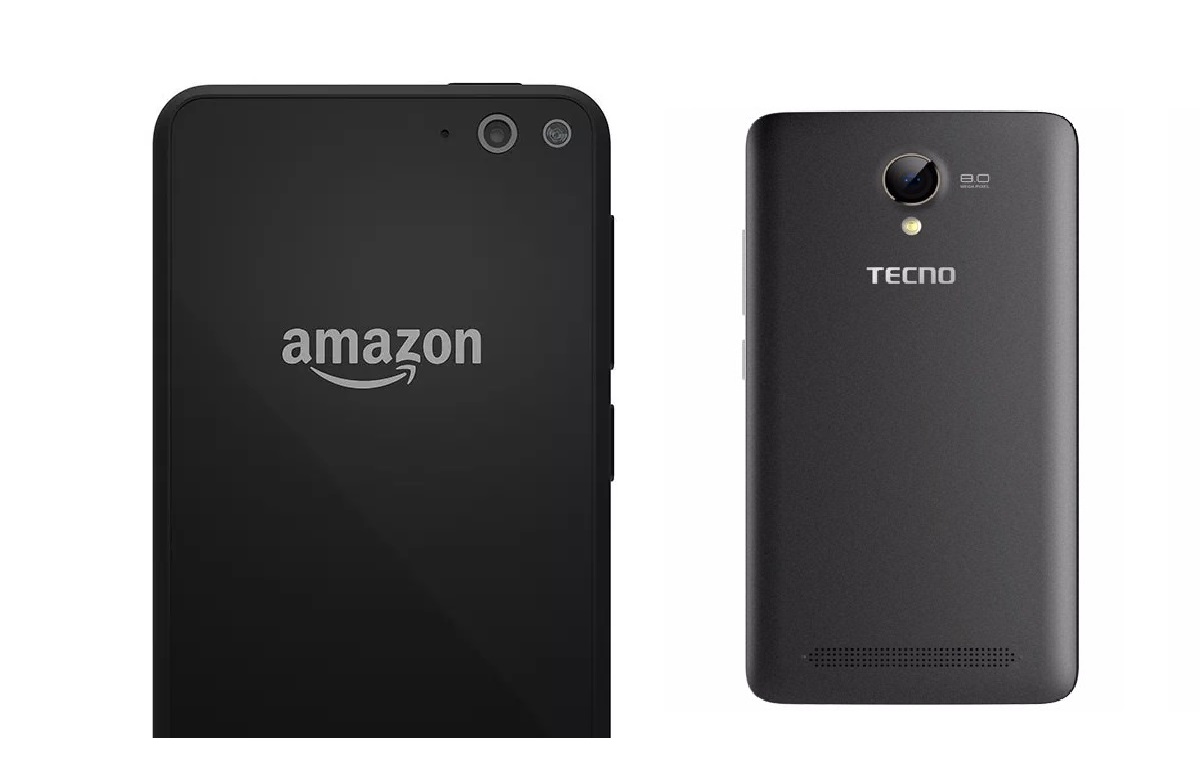
My prediction is that within five years, Apple Pay, Apple Music, iTunes, and iCloud will work in any decent device in the world. Yes, your Samsung and Tecno devices will qualify. Apple has been normalized because as the African proverb says “when the general public cooks for you, you cannot finish the food, but when you cook for the general public, it would never be enough”. You cannot have all mobile device manufactures in one platform, against one single manufacturer called Apple, and yet expect Apple to survive for long!
LinkedIn Summary
As expected, Apple has opened its walled-garden, and in coming weeks some of your Samsung and Amazon devices will run iTunes or Apple Music. As I have noted in the past, Apple business model of packaging proprietary hardware on exclusive software would work until the hardware reaches finite improvement maturity.
Today, I predict that within five years, Apple Pay, Apple Music, iTunes will run in any Tecno, Samsung or decent device in the world. Apple has ended the iPhone era, internally (not reporting number sold, nothing special anymore), beginning the Services era; those services must be hardware-agnostic if Apple must thrive.
And do not count out the possibility of $300 Apple uPhone (u for “universe”, lol) to help on that service volume; I suggested that last Aug.
The gate to the garden is now open…it can only get wider, from here.
With U.S. reporting high incidence of mental health issues among entrepreneurs, I want to add my voice to it. Building companies is not a vacation job. It requires high intensity which has real impacts on the practitioners. My message is this: have balance and DELEGATE as you execute your Mission. I say DELEGATE and learn how to do same very well. You can get a coach to learn how to plan your day and achieve more. On my table is an exercise book which captures all that must be done daily: I throw the issues to people, and then do the ones I must do. Then, later, I check if things are going well.
If you run a startup, please consider your state of health even as you work 21 hours to fix market frictions. What is happening in U.S. where founders are going “mental” is terrifying. The world needs you. From TechCrunch…
While national mental health statistics are troubling, they are downright terrifying for entrepreneurs. According to a study by Michael Freeman, entrepreneurs are 50 percent more likely to report having a mental health condition, with some specific conditions being incredibly prevalent amongst founders. Founders are:
2X more likely to suffer from depression
6X more likely to suffer from ADHD
3X more likely to suffer from substance abuse
10X more likely to suffer from bi-polar disorder
2X more likely to have psychiatric hospitalization
2X more likely to have suicidal thoughts
Unlike small business owners, entrepreneurs are scalability engines and most are restless in nature: why wait next week when there is today? That nature is why they change the world. But they pay a huge price doing same. Some have broken homes, and some just flip.
Then, add the Nigeria crazy wahala which Americans do not experience: the electricity, the traffic, and the security challenges. Yes, Nigerian entrepreneurs have other things which they must manage besides the typical growth elements.
As usual, I will offer a solution – if possible, read this piece I wrote in Harvard Business Review – The Leadership Lessons of Ants. Simply, learn from the Ants and Delegate. That is one way to get your sanity back. We need you to continue to serve Africa in wealth, wisdom and great health. Happy New Year!
INSIGHTS FROM LINKEDIN FEED
1. Well, we are reading this because someone is keeping track and providing data in these areas, you do not have such a luxury over here. I am certain that a lot of people down here are suffering one mental issue or the other, but because of our ‘spiritual’ outlook on things, no one pays attention, until one completely goes bonkers. In all things, a sound mind in a sound body, that’s how you get a sound person; anything short of that is dangerous to oneself and the society at large.
2. Interesting findings which point to the sometimes avoidable quest for success. It is almost a catch 22 because it does appear timing can make a whole lot of difference when it comes to product invention. One of the symptoms stands out to me though, I understand people are born with ADHD and it’s not really triggered by stress or work related pressures. You either have or you dont – just to varying degrees.
3. Not even when you run business in Nigeria where everything, including the government, is conspiring to ‘kill’ you. Funnily enough, spending 5 hours daily in Lagos traffic has absolutely nothing to do with fixing market friction.
4. This is undeniably true sir, I can recall personally experiencing chronic Depression and Suicidal thought when my 2 Startup failed after investing a good sum of all my asset and also have a major family crises. But the good thing is that I bounced back as a result of having established quality hashtag#Relationship, my friend where with me constantly. So the startup surer way to avoid all the turmoil is to ensure one has Good Friends.
5. Nothing new. Most great men/women always danced along the borderline of genuity and outright insanity!!!!!
Amazon reported that it has sold more than 100 million devices with Alexa, its voice assistant technology. In other words, Amazon has in 100 million “computers” the elemental form Africans have been communicating for centuries: voice. Yes, for centuries, Africans have preferred voice for practically everything: property rights documentation, education, and war strategies. Except the Ethiopians, no African culture invented any indigenous way of writing at scale.
More than 100 million devices with Alexa on board have been sold. That’s the all-too-rare actual number that Amazon’s SVP of devices and services, Dave Limp, revealed to me earlier this week. That’s not to say Amazon has finally decided to be completely transparent about device sales, however. While the company claims it outstripped its most optimistic expectations for the Echo Dot during the holiday season, Limp wouldn’t give a number for that. Instead, Limp says, Amazon is sold out of Dots through January, despite “pushing pallets of Echo Dots onto 747s and getting them from Hong Kong to here as quickly as we possibly could.”
Now, imagine if Amazon decides to make really affordable smartphones specifically engineered for Africa. Great things can happen. If it does that, it can use the Amazon Alexa on smartphone to enter the Africa ecommerce market. I do believe vividly that it would have a really great chance. Today, its smartphone market share in Africa is 0%, but that does not matter for a company with tons of money.
I personally still believe that Amazon will bring ecommerce operations to Africa once the dust settles in India. One way it can create differentiation could be the way it conducts that business. A voice commerce integrated on Amazon visual commerce (yes, vCommerce) where the business is done via voice and visual would create a new level of separation, engineering disruption for a continent that remains largely not-well educated.
The present model of ecommerce was built on text. Of course, we know that it has many limitations. If you see a product but you cannot figure out the name or how to describe it, you would be out of luck. Never take for granted that it requires a certain level of skill to design search queries. So, the news that Snapchat is moving into the space, to use visuals to drive and anchor the search is interesting. Simply, you can visually search for most things and that will help the discovery process at scale. This is visual commerce (vCommerce) at infancy when ecommerce integrates visuals over text-based descriptions.
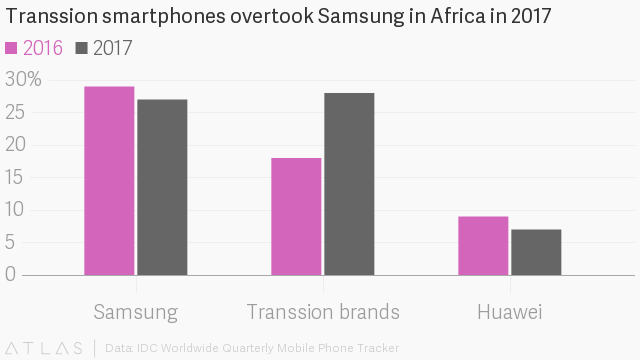
Of course Samsung has Bixby, Apple has Siri, and Google has its own. But the fact today is that Amazon Alexa is extending the competitive gap. If that dominance continues, it can make Alexa another modern operating system. And it is very possible that any operating system built on voice will win in Africa. That is why Tecno, Samsung and Huawei – the leading smartphone brands in Africa – should take note, because the future belongs to voice computing especially in Africa.
There are many opportunities in the voice assistance space in Africa. In short, if you make it, you will get customers even in the enterprise market. The following are simple examples:
Banks working on agency banking will adopt the technology to reach customers who are largely not literate enough
Insurance firms will also use it to build new solutions, based on voice
Many government services will move from text to voice, solving the illiteracy barrier
Africa’s leading ecommerce companies like Jumia and Konga will come on board. Of course, you must make sure such a technology works with our accents
There is a shift in computing at the consumer level, where people can talk to their phones and the phones get things done.
After posting this piece, I saw this via TechCrunch on Marc Andreessen prediction. Watch out, the future’s voice.
On audio:
“The really big one right now is audio. Audio is on the rise just generally and particularly with Apple and the AirPods, which has been an absolute home run [for Apple]. It’s one of the most deceptive things because it’s just like this little product, and how important could it be? And I think it’s tremendously important, because it’s basically a voice in your ear any time you want.
For example, there are these new YouTube type celebrities, and everybody’s kind of wondering where people are finding the spare time to watch these YouTube videos and listen to these YouTube people in the tens and tens of millions. And the answer is: they’re at work. They have this Bluetooth thing in their ear, and they’ve got a hat, and that’s 10 hours on the forklift and that’s 10 hours of Joe Rogan. That’s a big deal.
1. The Alexa concept is a good one: freedom and choice are prime aspects of value creation. Once you hit those bull eyes in your innovation journey, you could well be smiling to the banks. On counting the numbers, one should not also lose sight of the experimental disposition of the ‘big’ markets. So many buy, not just to get value but to experiment, appraise and critique. Millions of dollar are spent on such dry run aspects which of course are recorded as user-customer utility sales.
It will be nice to see how Alexa and the likes will deepen in Africa where communication to some extent is not properly codified or say standardized- using Nigeria as a case. Voice recognition softwares first turn speech into text before they execute.
I am curious to know what will happen when a typical Nigerian says ‘I’m coming’ while in essence they are going away. What will Alexa do? Can Alexa decode the human aspects of voice which saddles the African communication behavior?
2. The challenge is in introducing products that are supremely affordable for African consumers. It is not enough to love voice over text, the willingness to pay a fair price must be factored. If the details of the 100 million items sold were to be available publicly, don’t be surprised that they were more or less all bought by those who can read and write, and not by Africans who are in love with voice based transactions.
Amazon will come to Africa, but the fact that it is not in a hurry to do so shows that Africa remains just a promise: high volumes with little purchasing power.
What usually happens is that the ROI on R&D must first be achieved by the product owners, before they consider the African markets. So we have to wait until Amazon feels that it has made enough money from other richer regions, before coming here. And in the meantime, African company cannot develop such products; so we keep waiting for the big guys to look our side…
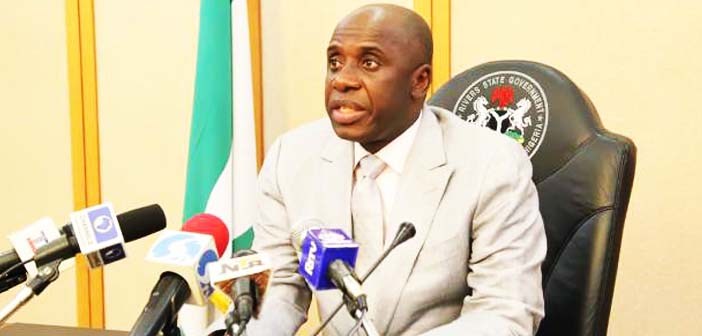
I do hope the alleged Rotimi Amaechi’s voice, as reported by Premium Times is fake. Also, can someone explain to me why ministers and commissioners (paid by the citizens) are allowed by the Nigerian Constitution to serve in partisan Director-General positions of electoral campaigns?
The recording contains a portrayal of Mr Buhari as a dismal failure who has been unable to meet the expectations of various segments of the society, ending with a dismissal of Nigeria as a never-going-to-change hopeless nation.
The transcript of the recording reads: “These are not things you publish ooo. If you publish them, you will never sit with me any day.
“Three years of Buhari oo, everybody is crying, crying…pressmen are crying, farmers are crying, workers are crying, politicians are crying, students are crying, three years oo!
“The rate of poverty is very high. The people are hungry. Nigeria will never change!”
Across the nation, PDP and APC commissioners are appointed DGs of governorship campaigns, and at the presidential level, Rotimi Amaechi, a federal minister of transport, heads President Buhari election campaign.
Before you attack APC – this did not start with Buhari; from Obasanjo to Jonathan administrations, this has been the norm. A female minister headed the women wing of PDP while she was a minister!
As the alleged voice of Amaechi depicts, being partisan takes away any objectivity. That is why I think Nigeria should update the Constitution to make it illegal: if you are appointed into a federal or state cabinet, you cannot be involved in any direct partisan politics like running elections, as a Director-General, unless you resign your cabinet position. Unless we fix that, we will not have objectivity in service; one message for the public, one for the inner club.
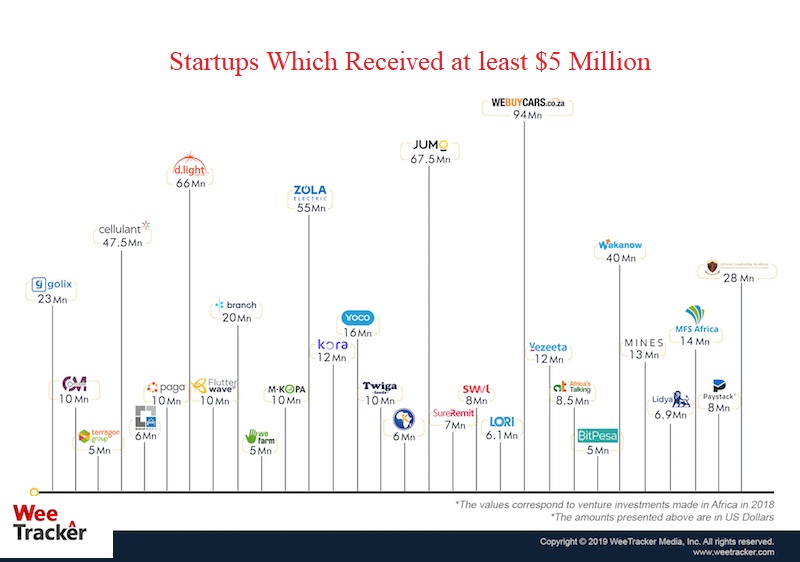
According to numbers compiled in WeeTracker’s Venture Investments Report 2018, US$726 million was invested across 458 deals in African startups. That is a 300% gigantic leap in the total funding amount and over 127% increase in the number of deals as compared to 2017.
In terms of the number of deals, all inclusive, NIGERIA outperformed all other location with a total of 136 deals. South Africa, which gave it a close competition stood second with 107 deals, followed by Kenya with 73 deals. This trend has a slight deviation from the last year where South Africa had topped the chart. Joining the race this year along with the investor’s preferred destination are countries like Egypt, Uganda, Ghana and Tunisia.
A total of 243 investors participated in the investment landscape in Africa
458 startups raised funding in various rounds throughout the year
80% of the deals were concentrated in South Africa, Nigeria & Kenya.
Fintech retained its top position as the sector with most funding.
30 startups made it to the 5 million club of fund raising across the continent
Startups which received $5m or more. Source: WeeTracker