DD
MM
YYYY

PAGES

DD
MM
YYYY

spot_img

PAGES

Home Blog Page 7002

A Law Of Power – “Never Outshine The Master”

0

Robert Greene’s classic – The 48 Laws of Power – is a book I have come to rely as I serve important people in the world. My most important phrase, in that book, remains “never outshine the master”.

That understanding is very important especially when some of my Igbo brethren ask me to make a presentation on their behalf before their foreign clients. I did one in OTC few years ago. When moments like that come, my job was to make the master flow through me, and not me, even though I work to show brilliance and capabilities.

The man who might not have finished secondary school but has tons of money to hire anyone he wants MUST be the master in that boardroom. He must assume the command. He must be presented as the leader, even when he is not talking.

“Never outshine the master” does not mean that you cannot shine. The real deal is making sure you understand that you are a messenger. It takes wisdom to watch two elders in the village debate on things which you certainly know better than them, and yet hold your peace, until they invite you.

How do you disappear as you stand for that master so that you keep appearing? You must learn how not to outshine the master. That does not mean that you cannot pursue excellence. Without that the master will not even allow you near him! Yes, you must deliver so that at the end, he will say “I am good in building great teams”, and his partners will congratulate him for that.

Simply, you must manage the delivery and perception as you serve that master. In politics, business and most things, it is an important wisdom to have if you want to keep moving up!

LinkedIn Comment On Feed

The perfect example can be found in the Holy Book, John played the perfect game, without taking the shine off the Divine Master, even when he had the chance to play that ridiculous ‘smart game’ most humans usually get entangled in, whenever an inch is given to them.

I remember one presidential media chat that took place before the 2015 general elections in Nigeria, where the anchor did virtually everything possible to outshine the president she’s interviewing, it was beyond ridiculous anyway. But we see similar things in many places, even those sent to give material or financial support to some people, end up posturing as if they are the real benefactors; a good example of what it means to overplay one’s usefulness and relevance.

Earlier this morning, I was reflecting on the distinctions between humility and timidity, and why one must not be mistaken for the other. Humility will allow you to maintain a cool head, even when advising or representing those you think you are better off, you aren’t called for a popularity contest, so do not make any attempt to outshine the person who ordinarily should be the centre of attention. To do so may as well qualify as stealing by tricks, and that makes you a thief.
Samsung’s Mobile Future Is On Galaxy M, Not Galaxy S10

0
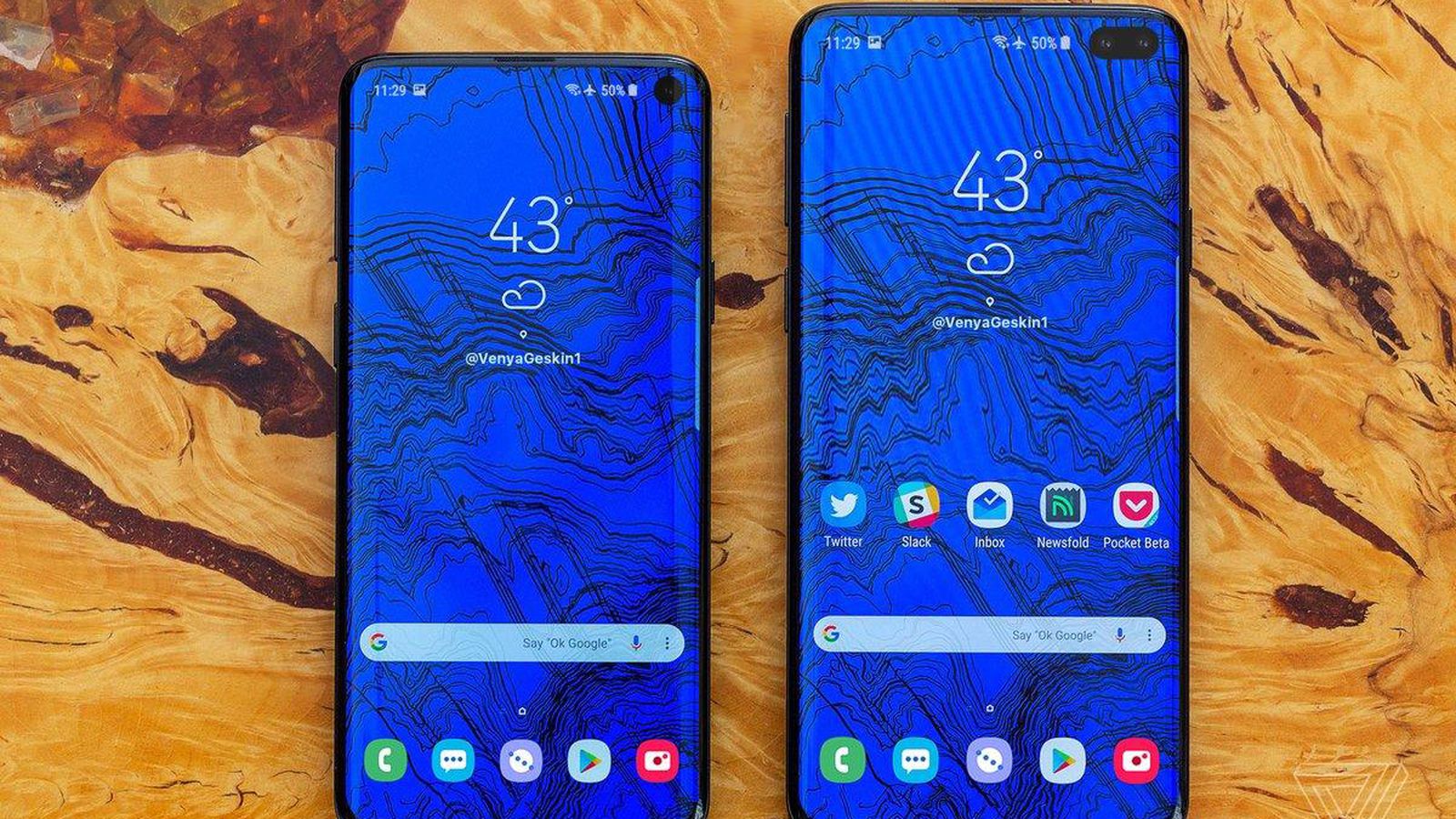
Samsung Galaxy 10 rumors (Source: CNET)

On February 20, Samsung will launch the latest version of its flagship smartphone, the Galaxy S10, to the world. You can count that the price will move north in the spirit of making more money per unit sold. Yet, despite the hype around Galaxy S10, the future of Samsung mobile device business will be anchored on another phone which is not getting a lot of press attention because it is not a fashionista. The new lower-priced Galaxy M is the device that will position Samsung to compete as the service era begins to take effect for mobile device makers.

Samsung will launch its new lower-priced Galaxy M series in India before the smartphones roll out globally. Asim Warsi, senior vice president of Samsung India’s smartphone business, told Reuters that three devices will be available through its website and Amazon India at the end of January and are intended to help the company double online sales.

Samsung is currently trying to recover its lead in India, the world’s second-largest smartphone market behind China, after losing it to Xiaomi at the end of 2017, when Xiaomi’s sales in India overtook Samsung for the first time, according to data from both Canalys and Counterpoint.

Largely, in a world which is largely on transition into the post-smartphone era, except some regions like Africa, devices have become better on quality despite their prices. When that happens, customers are no more necessarily moved by brand logos because any device can get the job done. The implication is that devices become commoditized.

Think about it: two decades ago, people bought laptops focusing on the brands. But over time, laptops have become very reliable across the board that undue attachments to the specific brand have faded. In other words, laptops have become commoditized as buyers simply look for value over paying for brand logos. You want a decent laptop, not specifically a Dell or HP laptop!

This design of minimizing the impact of brand is coming to smartphone. Galaxy M offers Samsung that opportunity to ride that global competitive smartphone market over the fashionista Galaxy S10. In a post-smartphone era, device makers would move into services. Interestingly, succeeding on services demands volume. So, what Samsung needs is to have many people in its ecosystem to win on Bixby and not extra dollars on hardware via Galaxy S10. Samsung Pay will appreciate that strategic redesign as it needs more users to have competitive relevance in a world where everyone is doing an element of fintech.

Nigeria’s Ecommerce Startup, Gloo .ng, Fails

0
Gloo founder (source: Twitter)

I did not see this before posting my piece on ecommerce earlier today where I recommended avoiding ecommerce venture in Africa (except South Africa) yet. Gloo, one of the “most successful”, and well known ecommerce companies in Nigeria is shutting down. Few days ago, it was DealDey that gave up.

Unless you have a double play in Africa, think again, as you venture right now in ecommerce. Companies like old Konga, DealDey, OLX, etc never had double play. When that happens, the gestation period to profitability via pure ecommerce operations becomes longer, triggering cashflow challenges which lead to failures. Those challenges emanate because we have severe logistics problems which must be fixed to unlock opportunities in the sector.

No one takes glory for the failure of these entities. It is painful to write on them. Here (LinkedIn), last week, a company wanted to hire my practice to come up with a strategy for an ecommerce venture it was plotting. I declined 3 times and the firm did not give up. Then, I stopped responding. There was no need of collecting the money, for no value, because I see no path to success yet in that sector, in Nigeria.

Simply, the problem is not your website: the paralysis is something you have no control unless you have $800 million to build a regional logistics system.

Nigeria Launches China-Funded Satellite TVs in 1000 Villages, DStv Take Note

0
MultiChoice, DStv,
DStv systems

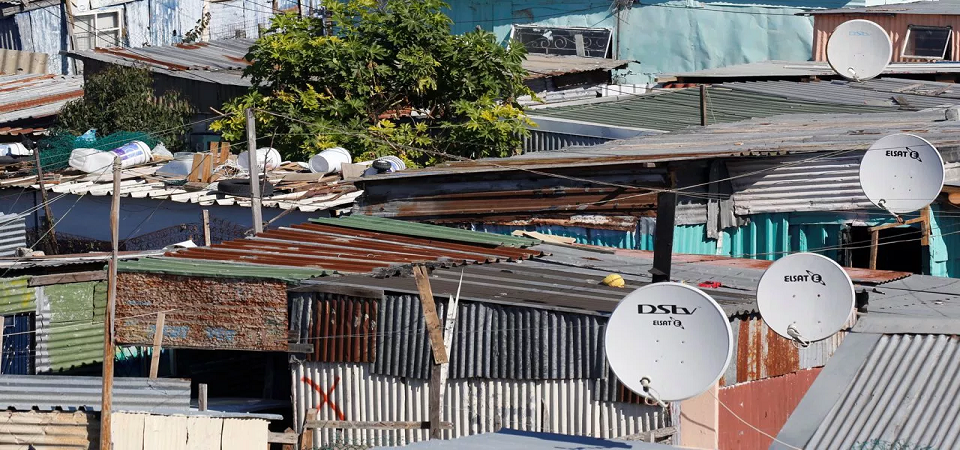
Nigerian Government launches a satellite TV initiative supported by the Government of China. Our government has selected 1,000 villages to test-run the service which will carry 30 digital channels. If these channels have European football via Chinese licensing rights, through satellite, MultiChoice’s DStv Nigeria has a headache.

The Minister of Information and Culture, Lai Mohammed, has launched a project to provide free satellite television to 1000 villages across Nigeria.

The project is being funded by the government of China.

Mr Mohammed flagged off the project Monday in Kpaduma 3, a village in the Federal Capital Territory, (FCT).

The minister said the 1000 Villages Satellite TV Project was announced by Chinese President Xi Jinping at the 2015 Forum on China-Africa Cooperation (FOCAC) in Johannesburg, South Africa.

He said the project is under the ”Ten Major China-Africa Cooperation Plans” that were announced at the event.

[…]

”With access to more than 30 digital channels, with crystal clear pictures and Hi-Fidelity audio, the DSO roll-out brings the benefits of digital television to all households.

”We call this the democratisation of information and entertainment, ” he said.

Mr Mohammed said the 1,000 villages project could not have come at a better time.

Network Slicing Paving The Way For 5G Business Models

0
5G

By Olayinka Oduwole

In my previous piece on 5G, I mentioned the use of Network Slicing, Network Function Virtualisation (NFV) and Software Defined Networking (SDN) as possible technologies to achieve virtualization and softwarisation within the core of the 5G network. The softwarisation of the 5G network has in essence triggered the development of new business models for 5G which were not possible using the architecture of previous cellular generation.  For example, Network as a service, Radio as a Service etc. are services that can be offered due to the virtualized environment. Here, I delve a bit about the use of Network Slice as a tool to aid the development of new business models for 5G.

A network slice is simply an end to end logical network running on a shared physical infrastructure. It offers a way to deliver services with different requirements within the same physical infrastructure in a 5G network.

5G is typically classified in terms of ultra-high bandwidth, ultra-reliable and low latency and Internet of Things (IoT) applications. For example, a remote surgeon may require low latency to aid his surgical procedure whereas a customer with AR/VR technology may require ultra-high bandwidth to download a TV broadcast. These service requirements are different and can be uniquely delivered on network slices tailored to the needs of the consumers.

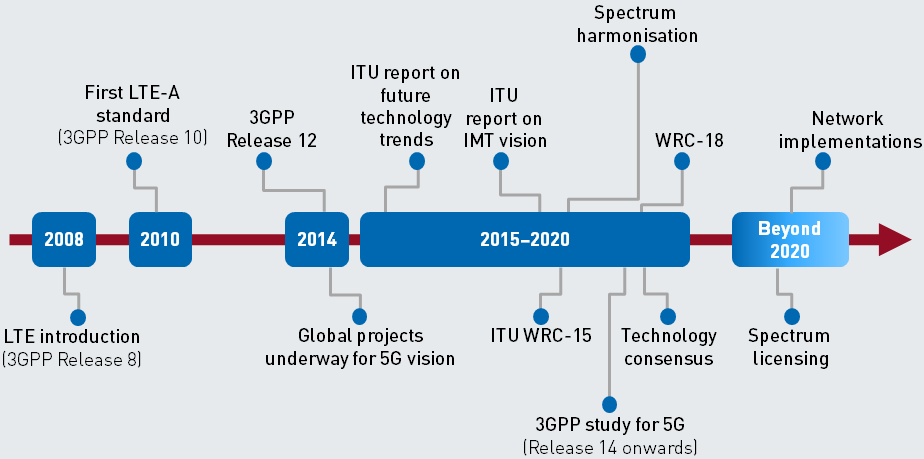
Timeline towards 5G [Source: Analysys Mason, 2014]
It is also possible that a client (or vertical) require two or more of these services simultaneously, for instance, an automated car may require high bandwidth for its entertainment as well as low latency for assisted driving; these services could be delivered on different slices packaged together as a business bundle for the client. The client can also decide to have multiple slices from different operators to serve its needs. Furthermore, a client requiring two or more services may have a unique hierarchy for these services. Thus, network slicing offers the opportunity to tailor the application to meet the need of the client.

Network Slicing has also given mobile operators the opportunity to differentiate their offerings into Network connectivity, where connectivity services such as bandwidth, latency, coverage, mobility etc. are offered to the client and Network resource services, where other resource are offered to the client as services in the form of Big Data analytics, Edge Computing, Cloud Computing, Localisation, Security etc., as highlighted by GSMA.

Slicing can either be vertical or horizontal. Vertical slicing refers to the development of slices to serve the different requirements of the industries (often referred to as verticals). For example, using the example of the automated car above, vertical slicing implies that a slice would be created to meet the entertainment needs within the car and another slice for assisted driving. Horizontal slicing, on the other hand, implies developing slices to meet the needs of individual machines or users. For example, a horizontal slice could serve the need of a consumer in a smart home as well as sensors within a smart industry. For a horizontal slice, the service requirements are the same but requested by different clients.

The use of Network Slicing also presents a challenge when the client roams from its home network to an international network. How do you guarantee that the client enjoys the same quality of experience whilst having access to the tailored slice for his/her application? In order to overcome this challenge, three options have been recommended by GSMA below:

  1. The International network issues a globally agreed slice to the customer.
  2. The International network issues a slice similar to the slice used in the home network.
  3. The Home network request for permission of control of the resources of the international network to provide a slice with the same functionality as previously offered within the home network.

5G is expected to act as the backbone for a variety of verticals ranging from healthcare, manufacturing, consumer applications, transportation, logistics, energy, environment, construction etc. These verticals have a myriad of requirements; hence a one size fits all network architecture would not work. Network Slicing thus offers the opportunity to develop a flexible, agile and elastic network which is able to meet the demands of the verticals on the fly; thus encouraging the development of new business models which help justify the investment in 5G networks.