I recently wrote a piece on the global outlook on 5G and there was an interesting comment about meeting the last mile connectivity in Africa. In this new piece, I address some of the barriers towards achieving last mile connectivity in Nigeria and conclude with some recommendations that may help address these barriers.
In recent times, there has been an appreciable number of submarine cables landing in Nigeria delivering a capacity of about 15-19 tbps to the country (this number is subject to verification). However, a noticeable challenge that has been highlighted is that most of these cables land in Lagos. The Government has pointed out the need to establish other landing points outside this major city (e.g. Ondo, Delta, Rivers, Bayelsa) to drive down costs and for security reasons.
Furthermore, it has been noted that multiple operators have island of cables that are not interconnected within similar regions of high traffic; this therefore implies that regions like Lagos have multiple fibre coverage while other regions e.g. rural areas lack fibre coverage. This poor network planning is one of the main factors contributing to the poor last mile connectivity in Nigeria.
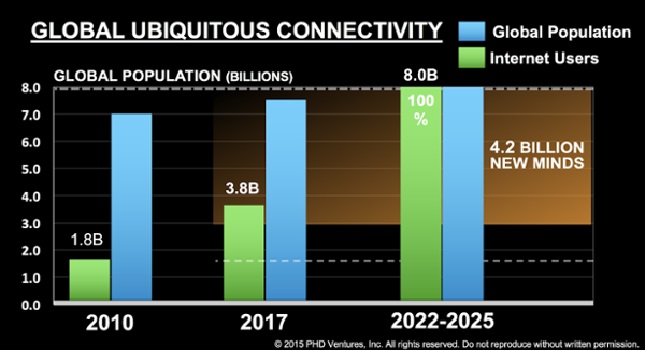
Source: Terragon
Furthermore, from a telco’s perspective, the poor return on investment means that telcos’ are discouraged from deploying telecommunication infrastructures in rural or under-served areas.
In order to address the last mile connectivity, it’s important that the Government create incentives that would encourage telcos to invest in connectivity in rural areas and other less profitable regions. This can be achieved through the efficient use of the Universal Service Provision Fund (USPF), a fund representing mandatory contributions from mobile operators and telecommunication service providers to address the digital inequalities. For instance, USPF can be used to cover the costs of deploying extended fibre coverage to rural areas; this would then encourage telcos to invest in rural connectivity. Data from A4AI shows that the USPF in Nigeria is spent annually on various projects within the country. Perhaps, a transparent system of documenting and providing information on the exact projects and cost of projects funded by USPF annually should be encouraged.
Besides, technological solutions such as the deployment of low cost small antennas with green initiatives can be deployed in rural areas to help address the poor rural connectivity. This would no doubt help drive down costs associated with CAPEX and OPEX. The use of Satelites, as an alternative technology, can also help address this connectivity challenge; however, the huge cost associated with this technology may hinder its deployment in rural areas. Companies looking to deploy rural connectivity solution should also be offered incentives by the Government to encourage their investment in these deprived areas.
The Government should also consider policies that would support both an active and passive sharing of infrastructures among operators whilst supporting net neutrality. Passive infrastructure sharing is already prevalent in Nigeria, with the likes of IHS Towers acquiring towers belonging to MTN, Airtel and 9mobile. Active infrastructural sharing, on the other hand, needs to be encouraged and would require a close knit collaboration among mobile operators. It may squeeze operators’ margin but would no doubt help in pushing broadband prices down.
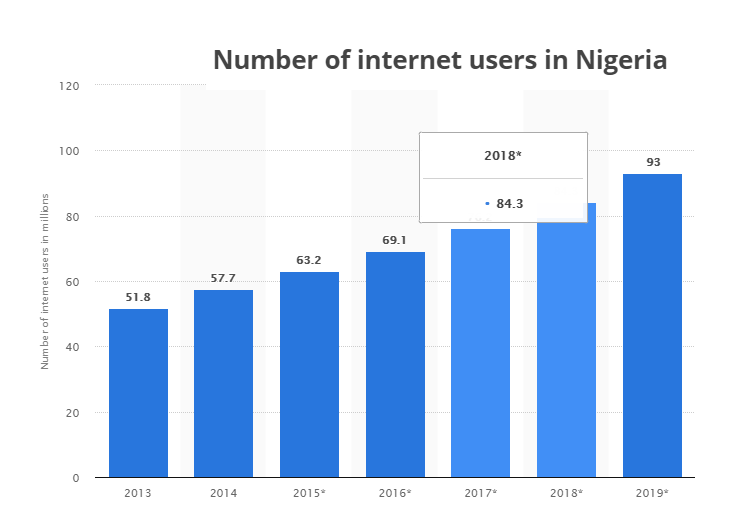
Source: Statista
Poor network planning was mentioned as a barrier contributing to the poor last mile connectivity. The rapid explosion of the telecommunication sector in Nigeria was not anticipated by the Government; this therefore means that little or no plans were in existence to deal with the rapid explosion. Market forces thus became the driving force determining where and when to deploy new networks. This has thus created a digital divide among different regions of the country. In order to address this challenge, it is important for the regulator to work alongside telcos to plan new networks and perhaps encourage the deployment of fibre layout during the construction of new infrastructures like roads, homes, buildings etc.
As earlier stated, market forces are incapable of bridging the digital divide that currently exists in Nigeria. Achieving last mile connectivity in Nigeria no doubt requires a concerted effort among Government, Civil Society Organizations, Policy makers, mobile operators, service providers, academia etc. It also requires a combination of solutions ranging from policies to technologies, transparency to regulations etc. As the United Nations has stated, ‘Access to broadband is a human right’. Hence, it is important that Nigeria looks into achieving last mile connectivity and most importantly ensure that none of its citizens are left behind in the digital race, especially as the world looks to move into an era of ubiquitous connectivity, massive data and internet of things.
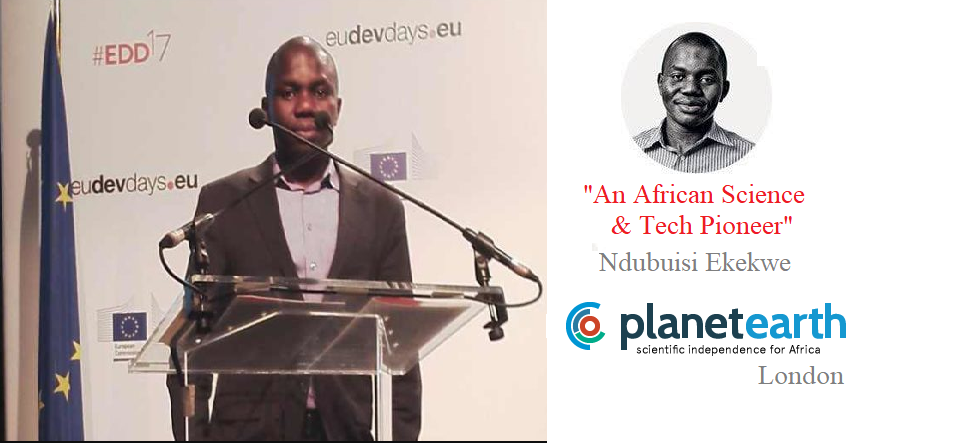
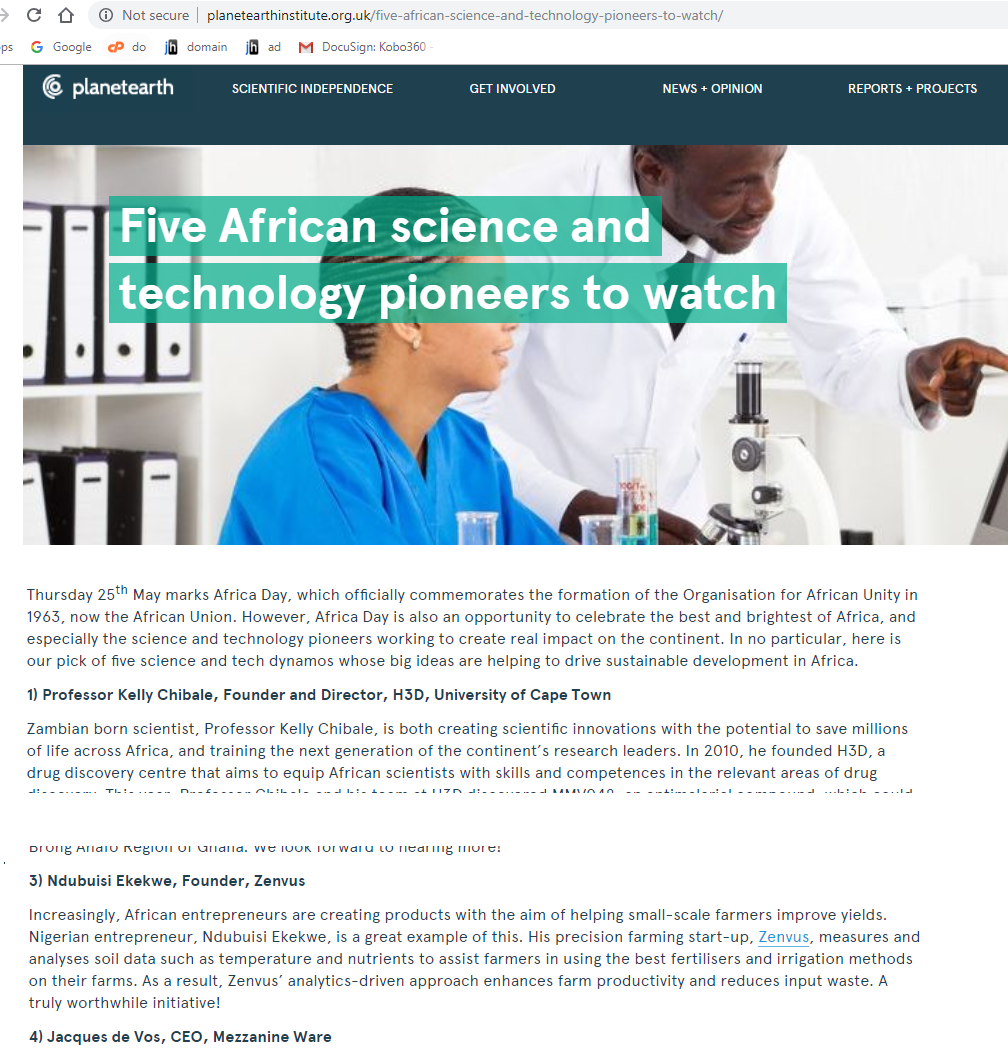
I will be in London in February to give a talk [private type hosted by moneymen]. While in town, I would visit a British non-profit, Planet Earth, which honored me as an “African Science & Technology Pioneer” during Africa Day. The non-profit which is chaired by a former Chief Secretary to the Treasury under ex-UK Prime Minister Rt Hon Tony Blair, selected me among the “five science and tech dynamos whose big ideas are helping to drive sustainable development in Africa”.
Africa Day is also an opportunity to celebrate the best and brightest of Africa, and especially the science and technology pioneers working to create real impact on the continent. In no particular, here is our pick of five science and tech dynamos whose big ideas are helping to drive sustainable development in Africa.
Let me know if you have programs we can connect while I am in UK.
I use Apple products like iPhone and iPad on the go but I prefer my Windows PC at home. To deal with the interface, I have looked for a way to manage files between my iOS devices and Windows PC. Good people, I have a very impressive solution: IOTransfer 3.
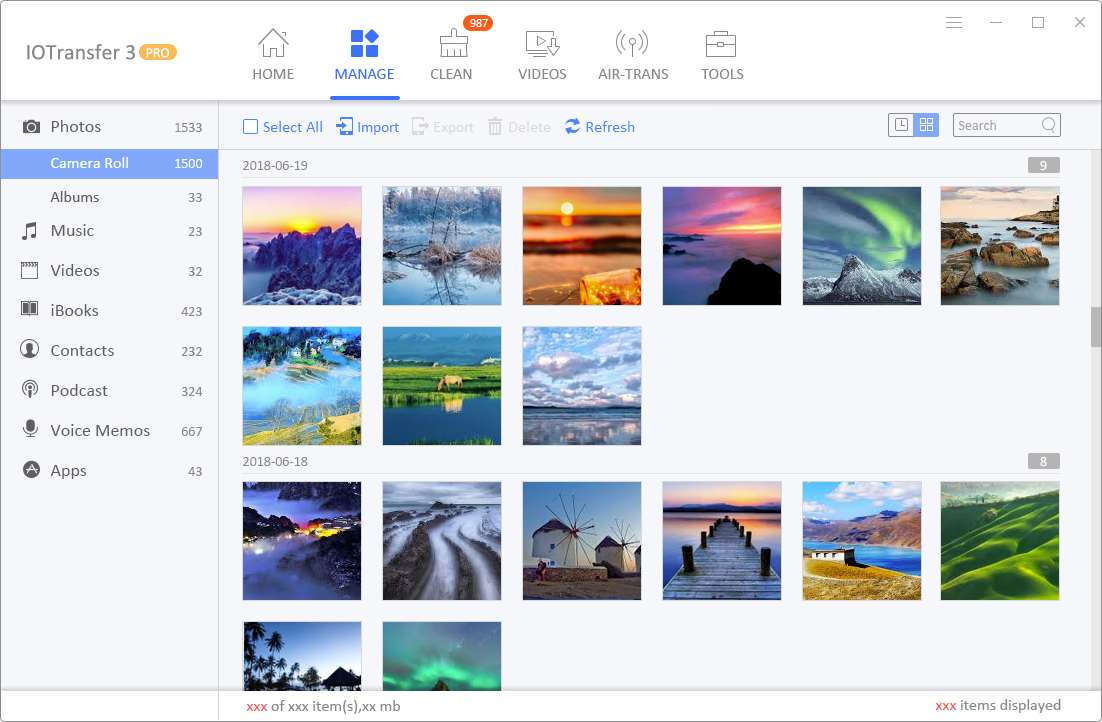
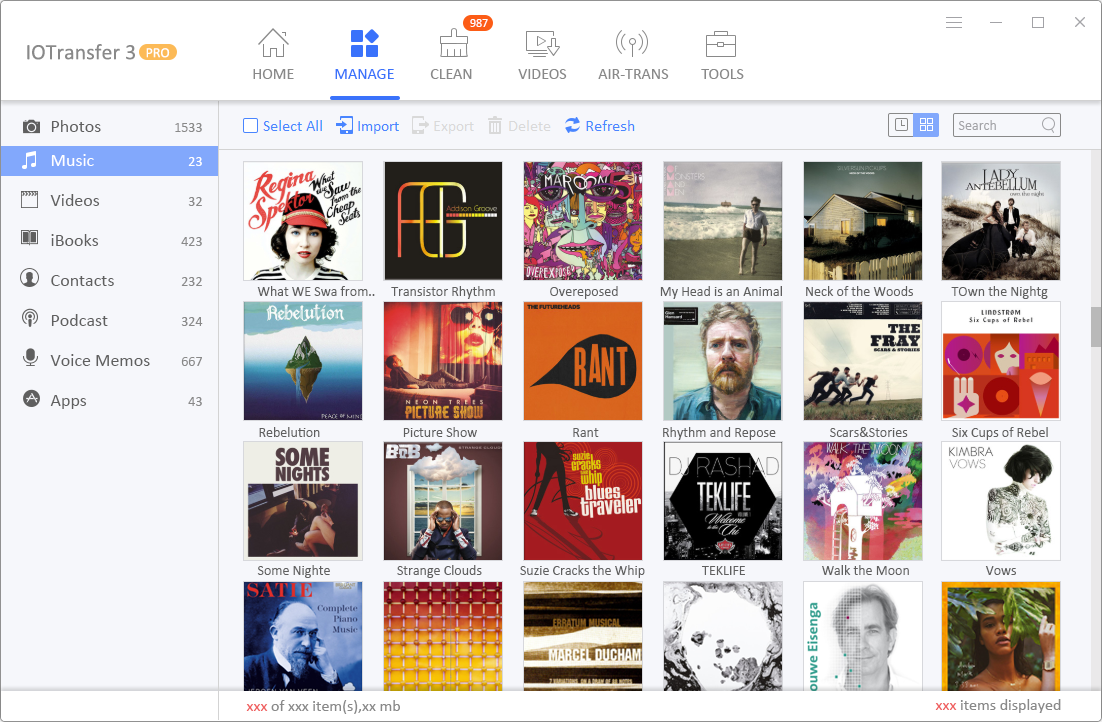
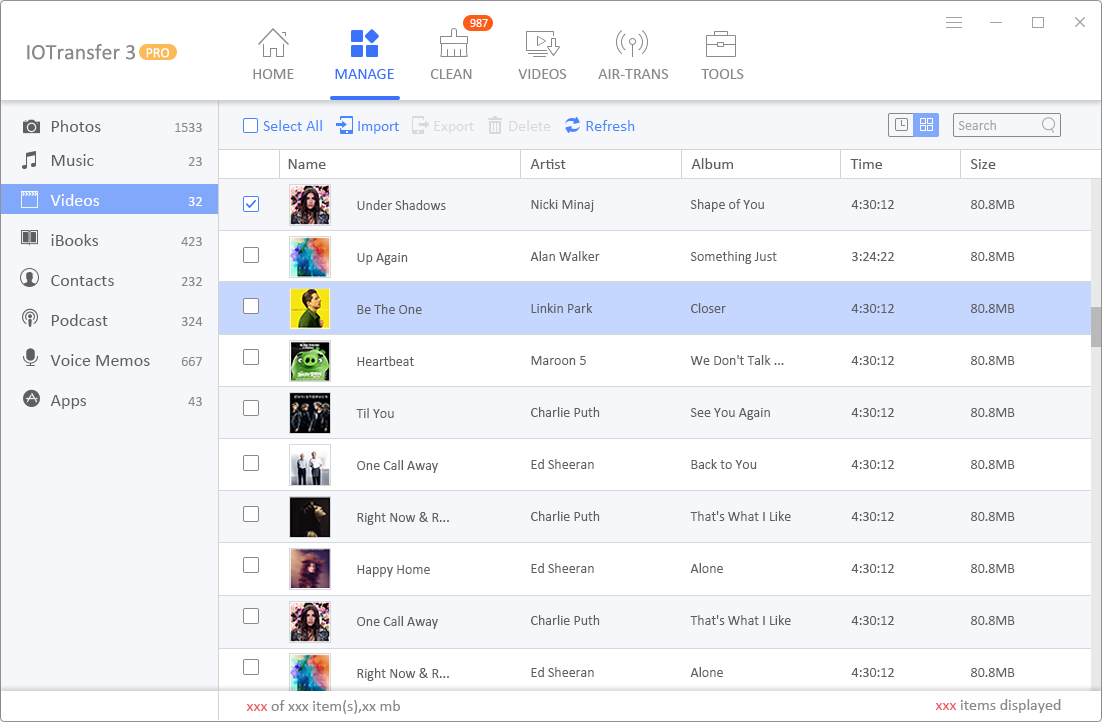
IOTransfer 3 is a simple and yet effective iPhone Manager app. It is also a powerful video downloader and converter for Windows. IOTransfer 3 provides a 1-click solution to easily transfer photos, music, videos, and contacts from your iOS device to PC. It also helps you import, export, and delete more contents, such as iBooks, Podcasts, Voice Memos, Apps in the MANAGE tab. Thus, it is a perfect iTunes alternative.
Additionally, the optimized VIDEOS feature supports downloading various videos from more video websites to your iPhone/iPad/iPod and PC so that you can watch them offline. The improved CLEAN feature supports to clear more caches and junk files on your iOS device to free up more space.
The newly developed AIR-TRANS, which adopts WiFi Direct technology, allows you to quickly and wirelessly transfer photos, videos, and other files between iOS device and PC on the same local network. What’s more, the newly added Converter feature in VIDEOS helps you effortlessly convert video files into various file formats including audio file formats and automatically transfer them to your iOS device. No need to worry about unsupported video file format anymore.
IOTransfer 3 Major Features
With IOTransfer 3 you can easily export and import photos, music, videos, contacts, iBooks, Podcasts, Voice Memos, Apps between your iOS device and PC with just one click.
Other than its hassle-free device management feature, IOTransfer 3 is also a best in class free online video downloader and converter. With this tool, you can directly save videos and movies to iPhone and iPad. And also IOTransfer video converter ensures the easiest way to convert videos to other audio or video formats like MP4, AVI, MKV, FLV, MP3 and more.
With its new feature AirTrans , IOTransfer 3 transfer allows you to wirelessly transfer music, photos, videos and etc. between iPhone, iPad, and computer via WiFi. Easily and safely manage, backup and bulk-delete files in the local WiFi network.
IOTransfer 3 is also capable to scan your iPhone or iPad to remove useless files from your device to free up more space and memory.
How to use IOTransfer 3?
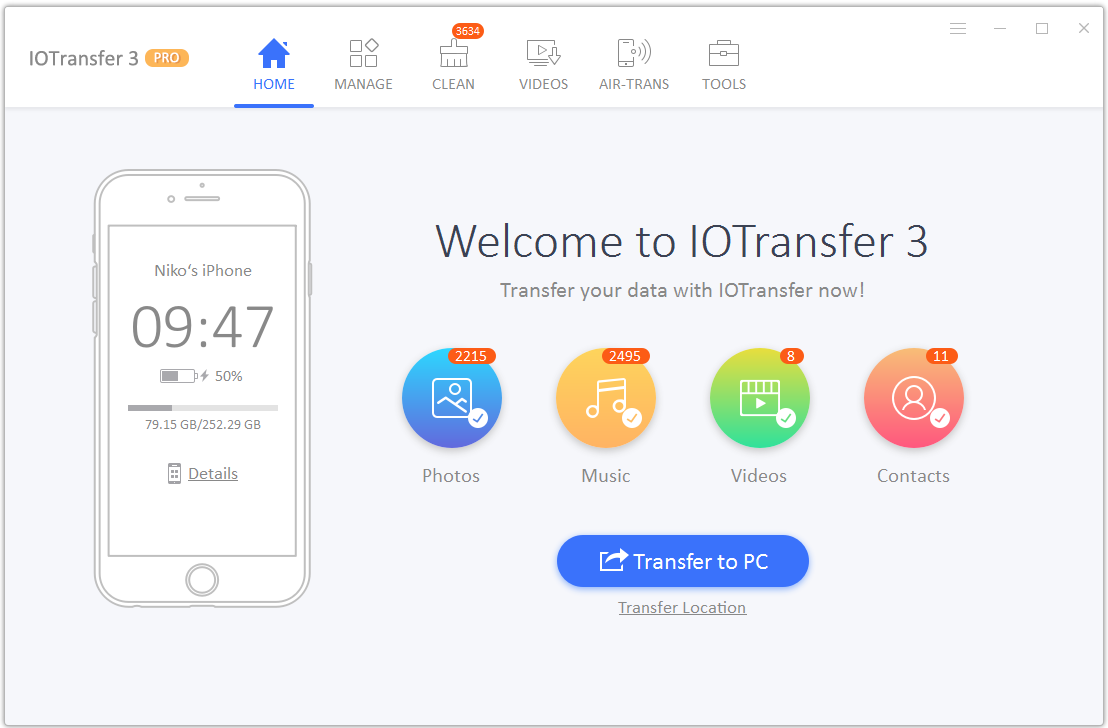
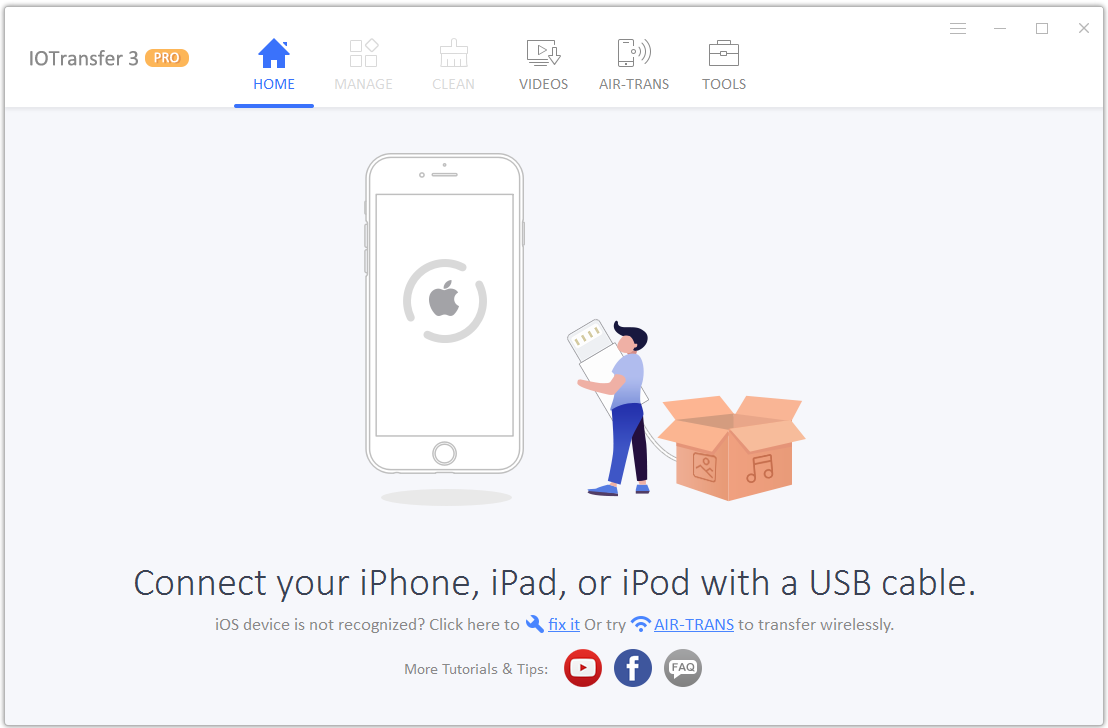
First, download IOTransfer 3 from the official website and install it on your Windows PC. After that connect your iPhone, iPad, or iPod with USB cable. After allowing the access to the device with computer you will be greeted with a homepage, where you can see the option to transfer photos, videos, , and contacts to PC with a single click.
If you like to import and export selected files between Windows and iPhone or iPad use “MANAGE” tab. This is where you can also remove unwanted apps from your iOS devices by choosing the option “Apps”.
Next to MANAGE tab you can find “CLEAN” option. With this feature, you can easily and safely clean junk files from your iOS devices and free up some space in your iPhone or iPad.
In “VIDEOS” tab you can find the option for video downloader and converter. Choosing “Downloader”, you can easily download any videos from YouTube, Facebook, Twitter, Instagram or any other popular network by simply copy-pasting the video link to the box. Also, you can instantly transfer the downloaded videos to your iPhone or iPad.
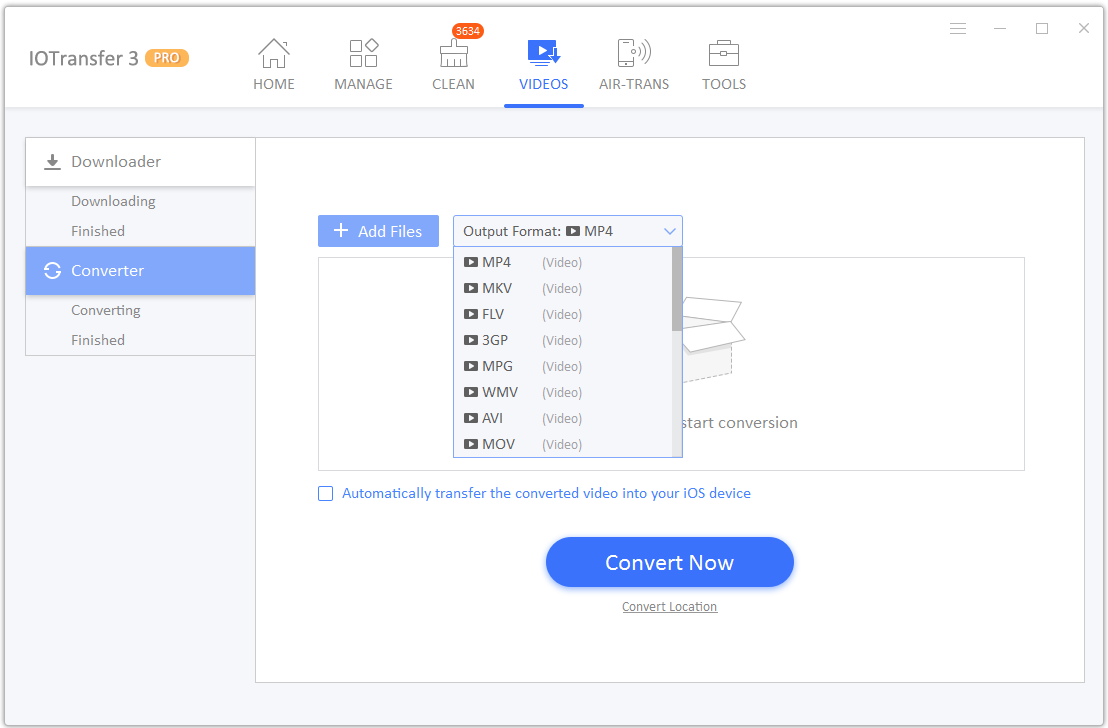
With “Converter” option, you can convert the videos you have to different format, even to audio format as well. Also, you can find the option to transfer automatically the converted videos to iOS device.
Next, “AIR-TRANS” feature will help to connect your iOS device wirelessly with Windows PC and transfer files between the devices without using a USB cable. However, to activate this feature you have to download AirTrans app from App Store for your iOS device. Now you can connect both devices by clicking “Start Transfer” button in PC and then scanning QR Code by using AirTrans app in your iOS device.
And the last tab “TOOLS” you can find some new and under development tools from IOTransfer .
IOTransfer 3 is indeed a powerful iOS device management software accompanied with a clean user interface, free online GIF maker, video downloader, and converter. Anyone who is looking for a better iTunes alternative, then this is the one for you.
All Together
This solution is working for me. I will recommend for you to go for it. It is the best in the industry at the moment.
A United Nations Development Programme (UNDP) report might not have done the correlation, linking the Igbo Apprenticeship System and Human Security & Human Development in southeastern part of Nigeria, yet, the conclusion is evident: “the most human security secure geo-political zone is the South-East”, in Nigeria. Largely, with such an emphatic conclusion, I expect government to put resources to investigate further.
The report under the theme “Human Security and Human Development” makes a compelling case that unchecked poverty; persistent hunger; uncontrolled diseases; lack of access to basic services; disregard for human rights; sub-optimal response to natural and man-made disasters; unregulated natural resources exploitation and use – among others, pose serious threats to human development today.
The report further highlights the existing gap in human security across the geo-political zones of the country; – the most human security secure geo-political zone is the South-East while the North-West and the North-East geopolitical zones are the least human security secured, with residents of the Federal Capital Territory being the worst in most realms of the Human Security Index. The North-East region of the country has been the most affected by the more than 5 yearlong military insurgency. It also remains among the least developed parts of the country.
This is not rocket science: Silicon Valley produces all these category-king startups because of the fluidity of capital and support systems in the region, and southeastern Nigeria is humanly secure because of its own version of entrepreneurial venture support system. Whether it is Nnewi or Silicon Valley, people rise with support from communities.
My question is thus: how can we get our politicians to pay attention to what is working here in Nigeria, over the natively esoteric complexity of Silicon Valley, for applications in other regions in Nigeria, especially the northern part, as noted in the UNDP report?
To watch the video below, click the image or visit here.
Innovation can be defined as the introduction of new things and methods that produces value in the market. It is also the aspiration of individuals, private institutions and governments to achieve development by generating creative ideas and introducing new products, services and operations that improve the overall quality of life.
According to Robert Solow, technological innovation is the ultimate source of productivity and growth.The innovative capacity of a country defines its global competitiveness in the comity of nations. The Fourth Industrial Revolution which we are all witnessing is an era where knowledge driven countries with a high emphasis on science, technology and innovation will dominate resource driven economies.
“Innovation distinguishes between a leader and a follower” Steve Jobs, Cofounder Apple Computers
Innovation Components and Indices
The following are some key components of innovation:
Institutions and Regulatory Environment
Human Capital and Research
Funding and Investment
Competitive Environment
Innovative Products and Services
Infrastructure
Knowledge and Technology
Besides, innovation is essential to
Improving the quality of life
Increasing economic diversification
Enhancing knowledge economy
Improving competitiveness
Creating High Skilled Jobs
Promoting Entrepreneurship
According to The World Economic Forum Global Innovation Index 2017 ten most innovative countries are as follows
Switzerland
Sweden
Netherlands
U.S.A
U.K
Denmark
Singapore
Finland
Germany
Ireland
Israel which is fondly referred to as the Startup Nation has built an economic success which has it’s roots in Science and Technology Innovation. It was second in the 2016 World Economic Forum Global Innovation Index and hosts approximately 300 Multinational Corporations R&D Centers. An average of 20 new R &D Centers are established every year. It is first in the world in Venture Capital Investments in ratio to GDP and R&D investments as a ratio of GDP. In 2016 an Israeli Startup Mobileye which develops autonomous navigation technologies for vehicles that was seeded at the Hebrew University of Jerusalem was sold to Intel Corp, the semiconductor technology giant for $15.3 billion. A testament to the Israeli Innovation Ecosystem.
Another nation which has built an economic miracle rooted in innovation is the Republic of Korea. Home to 51 million residents and a GDP of $1.1 trillion and per capita of $35,920 it was the world’s most innovative country in 2016 according to the Bloomberg Innovation Index. The 20 largest conglomerates(Chaebols) contribute 57 percent of the country’s total investment in R&D and second in the world in government R &D investment as a ratio of GDP.
The secret of the Korean success is due to the following:
Leading Applied Research
Innovation Based Final Products
High Application and Implementation Ability on Large Production Lines
Large and Stable Conglomerates(Samsung, LG, Kia, Hyundai,e.t.c)
Recently Alibaba Group, the Chinese E-Commerce giant announced plans to invest $15billion in seven new research centers around the world over the next three years to focus on developing new technologies with labs in China(Beijing and Guangzhou), the U.S.A (Bellevue and Mateo), Russia(Moscow), Israel(Tel Aviv) and Singapore.
From the list above we can see that no African country was featured. Africa’s disposition to a commodity driven trade based economy as opposed to a knowledge driven one which fosters innovation that leads to economic growth has made it a subservient region for foreign technologies. If the African narrative is to be told in the Second Machine Age we must do a paradigm shift and invest heavily in Research and Development to solve our problems and via extension global problems.
Southeastern Nigeria Case
The Southeastern Region came close to achieving a Research Driven industrial status amongst African states during the short-lived Biafran Republic. The Biafran Research and Products Department headed by Prof Gordian Ezekwe and his team achieved many feats which if the Federal Government had built on after the Nigerian Civil War would have propelled Nigeria to become an industrialized nation.
Prof Oliver Udemmadu Mobisson pioneered the first Black African personal computers and servers at the Industrial Development Centre in the defunct Anambra State University of Technology in 1983 which if subsequent administrations that governed Nigeria had supported would have made the Eastern region the technological hub of Africa.
All hope is not lost as the South East can still create an Ecosystem which will make her lead in Innovation in Africa. The following solutions can help to achieve that:
Human Capital Development: The South Eastern governments should increase her spend on developing the skills of her youthful population in Data Science, Artificial Intelligence, 3D Printing, Robotics, Embedded Systems, Liberal Arts, Design Thinking, African History and Philosophy and Emotional Intelligence to become critical thinkers that can solve her problems with creative application of technology and via extension global ones too.
Easy Migration of Talent: To create a successful innovation ecosystem like Silicon Valley, Shenzhen, Tel Aviv and Bangalore, there must be easy migration of talent from all parts of the globe into the region. It is important because the pool of talents from different divides with their various skills will metamorphose and create successful technology brands. Elon Musk was born and bred in South Africa before migrating to Silicon Valley where he has established himself as one of the top people there. Sergei Brin, the Cofounder of Google fled Communist Russia at 6 with his parents to come down to the U.S.A where he has also made a success story of himself too.
Fostering Open Innovation and Collaboration: Open Innovation and collaboration is essential in building a leading innovation ecosystem. As talent migrate from different parts of the globe to the South East there will be exchange of skills sets and collaboration to create solutions to problems. Organizations in the region should establish Open Innovation Labs which will be open to people who will come there to ideate and collaborate leveraging on their different talents to innovate.
Establishment of Centres of Excellence For Research and Development: Centres of Excellence for Research and Development which will proffer solutions to the region’s and Africa’s challenges should be established in all the higher institutions in the East. They will focus on fostering innovation in areas of competitive advantage to the region’s economy and develop inventions which can be transferred to industry partners or commercialized to become successful startups. Areas where Centres of Excellence can be established include:
i. Centre Of Excellence For Metalworks at Nnamdi Azikiwe University, Awka: Awka was synonymous with ironsmithing in pre-colonial Igbo civilization. Now that we are in the era of exponential technology, further research and innovation can be used to improve the skills of Uzu Awka in line with global realities and make the ancient city a global ecosystem of metalworks development.
ii. Centre of Excellence For Automotive Technology at Federal Polytechnic, Oko: This Centre will focus on developing innovative technologies that will support the nearby Nnewi Automotive cluster in order to churn out solutions which will make the players there create products which will be proudly African with a global appeal.
iii. Centre of Excellence In Environmental Sustainability at Federal Polytechnic ,Oko: Climate change is a global billion dollar problem awaiting solutions. Countries are faced with different challenges due to the ozone layer depletion and Africa is not left out. The major threat the South East faces is erosion and flooding, while in the Northern Region it’s desert encroachment due to the Sahara desert rising and the South West and South South region, flooding due to their closeness to the Atlantic Ocean. A Centre of Excellence in Environmental Sustainability at Federal Polytechnic Oko which coincidentally is being threatened by erosion will create innovative technologies that will solve the environmental problems the region and other constituent parts of Nigeria are faced with and can also be applied to other African countries with similar issues too earning it global reputation and revenue as jobs around environmental sustainability technology will be created there.
iv. Centre of Excellence in Food Security at Michael Okpara University, Umudike: Food Security is a major challenge in Nigeria and Africa. Africa as the second most populated continent has a problem feeding her large population. A Centre of Excellence at Michael Okpara University will be tasked with innovating technologies that will help the motherland achieve food security .
v. Centre of Excellence In Nanotechnology at Federal University of Technology, Owerri: As the foremost university of technology in the region, a Centre of Excellence in Nanotechnology should be established there. Nanotechnology which is a disruptive technology has the potential to transform every industry from agriculture, security, healthcare, water, energy, manufacturing, ICT, e.t.c and the South East can become a hub for Nanotechnology development in Africa courtesy of the breakthroughs that will be achieved at the Centre of Excellence in Nanotech.
FUTO is a top technical university in Nigeria
vi. Centre of Excellence in Biotechnology at University of Nigeria, Nsukka: Biotechnology is transforming the operating systems of the human and plant cum animal lifecycle. It is a multibillion dollar industry which countries like Singapore have positioned themselves as global centres of R & D in the field. The University of Nigeria, Nsukka should establish a Centre of Excellence that will make it Africa’s No 1 Centre for Research and Development in all aspects of Biotechnology. This will have a large scale economic impact as an ecosystem around Biotech will be established there which will boost the community and regional economy.
vii. Centre of Excellence in Alternative Energy Development at University of Nigeria, Nsukka: Nigeria for decades and several African countries are plagued with erratic power supply which has made homes and businesses run on fossil fuel powered generators which pollute the environment and are harmful to human existence reducing life expectancy due to the poisonous chemicals they release into the atmosphere. Africa is blessed with abundant natural resources like the sun and wind which are alternative clean energy sources which do not harm the environment and humans as they are renewable. A Centre of Excellence in alternative renewable energy sources at UNN will solve a major problem for Africa and increase the continent’s GDP and the regional economy as their entrepreneurial acumen will be fully exploited to actualize their potentials.
viii. Centre of Excellence in Manufacturing at Federal University of Technology, Owerri: The Igbo people of South Eastern Nigeria are respected for their spirit of enterprise which is dominant in the commercial cities of Onitsha, Nnewi and Aba which they built after the Civil War and established industries that produce products in the automotive, leather and garment industries, household items, metal works, e.t.c without any form of government support. In an era where technology is disrupting the manufacturing industry and rewriting the rules of global competitiveness of manufactured products, a Centre of Excellence in Manufacturing should be established at FUTO since it is close to the manufacturing clusters in the East to innovate solutions to the problems the industrialists there face in the production of their goods and make them earn global appeal across the globe.
ix. Centre of Excellence in Fashion at Abia Polytechnic, Aba: Aba which is the MSME Hub of Nigeria hosts about 200,000 people in the fashion, leather and garment manufacturing chain. But lack of research and development in advanced technologies has made the cluster non competitive globally when compared with other clusters in London, Milan and Paris. An establishment of a COE will change the narrative and increase the contribution of the Aba fashion industry to the GDP of Abia State and will attract investors from all parts of the globe to support the ecosystem.
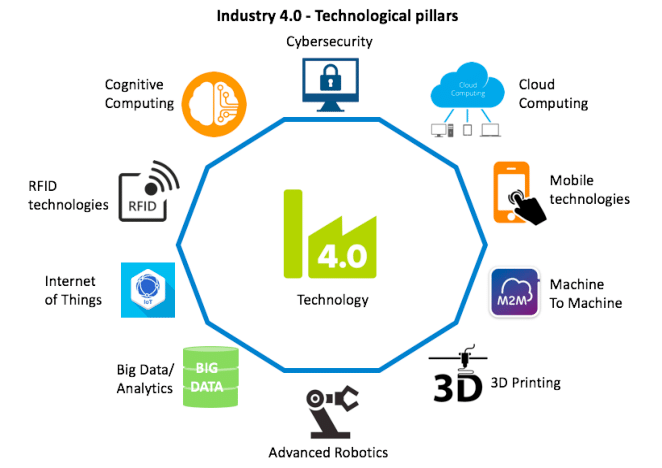
Also Centres of Excellence should be established in all Universities and Polytechnics in the South East to drive Research and Development in the following technologies which are the hallmark of the Fourth Industrial Revolution:
Artificial Intelligence
Robotics and Intelligent Automation
Next Generation Computing
Big Data Analytics
Internet Of Everything
Blockchain
Virtual Reality
Augmented Reality
Additive Manufacturing
Technologies for industry 4.0 (source: researchgate)
Establishment of Innovation Parks: Innovation parks should be established in all the tertiary institutions in the South East where the innovations which are being developed at the Centres of Excellence will be developed to become finished products for consumers by startup companies which will be incubated at the park. The Innovation Park will be an ecosystem of it’s own because all the components which make up for one(Strong Collaboration with Universities and Polytechnics for R and D, Venture Capital, Industry support from the private sector, e.t.c) will be provided at the facility with state of art infrastructure to support technology innovation.
Establishment of Intellectual Property and Technology Transfer Offices in all the tertiary institutions: They should be established in all the universities and polytechnics to register patents on all the innovations coming from the research centres of excellence and also to facilitate technology transfer to companies that will want to commercialize the inventions. The Hebrew University of Jerusalem Technology Transfer arm Yissum earns close to a billion dollars annually in sale of patents.




![[Full TED Video] â??Igbo apprenticeship system that governs Alaba Intâ??l Market is the largest business incubator platform in the worldâ? Robert Neuwirth](https://www.tekedia.com/wp-content/uploads/2018/11/Igbo-Alaba-market-TED-901x450.png)