Courtesy of IOTransfer, the creator of iPhone Manager, here are awesome eight fun facts about iPhone. Since its first release in 2007, Apple iPhone has brought countless revolution in the Smartphone market, obsoleting every other smartphone on the planet in every way that mattered. It changed the way how people used a cell phone, from the way we text/take a photo/view pictures, to the way we play games and listen to music. So far, iPhone’s evolution is connected with more than 200 registered patents, which is quite remarkable for just one single phone.
SEATTLE, WA - JUNE 16: A visitor checks in at the Amazon corporate headquarters on June 16, 2017 in Seattle, Washington. Amazon announced that it will buy Whole Foods Market, Inc. for over $13 billion. (Photo by David Ryder/Getty Images)
I have explained Conglomerate Tax using Dangote Group: governments pay taxes to conglomerates to have them in their domains. Simply, with the power vested on conglomerates by markets, they get governments to support their future ambitions in ways no other entity could. They have that ability because they focus on fixing the upstream challenges in economies where they operate because they have accumulated more capabilities than anyone. Yes, as Dangote Group builds a refinery, it could extract more goodies from governments than a man building petrol filling stations since government can easily find builders of petrol filing stations over people with capacity to invest billions of dollars on refineries.
The Kogi state scheme will be launched in more states soon. As noted in the press release, the Basing Authority will provide the land. That means Dangote Group will not have to pay for it. There is nothing wrong with that. He is investing to provide food security, provide youth employment and also improve the communities. That is what conglomerates do because they are the best creators of jobs, at least in short terms. While the state can plan to sell the land and invest the proceeds in startups, it may take years before those startups can generate the kind of employment and economic activity a conglomerate like Dangote can deliver in a year. For having that capacity, conglomerates tax nations. In other words, you have to subsidize their businesses through government supports for them to help you fix your pain points like unemployment as a government. They operate at the upstream level where the pain points are massive in the operations of governments. Their reward is Conglomerate Tax: the subsidization of their business operations due to their capabilities to help support government initiatives at scale.
Amazon with the selection of its HQ2 has proven that Conglomerate Tax is global: US cities are going to pay Amazon to come and stay in their communities. You cannot get the deal they are giving Amazon because you are not a conglomerate. Irrespective of what people may write about Amazon, Amazon has not invented anything new: the world has been like that for ages. You cannot expect a firm to put $5 billion in a place without expecting governments to give incentives in a world where cities compete against one another. If a businessman does not understand that, it means it is not handling its fiduciary responsibility very well.
Shieber sees essentially three problems with Amazon’s HQ2 process and announcement:
Amazon’s wealth drives its corporate power, which forces governments to do its bidding by applying to its reverse RFP process.
The incentive packages lined up by NYC and Northern Virginia are a form of corporate welfare that would be better used for everyday citizens, plus Amazon would have come anyway.
Amazon is not-transparent about its data or process, even while it collected data from hundreds of city governments.
Do not cry about it when your government is giving out incentives to conglomerates; they have reversed many things as the quoted TechCrunch article brilliantly noted thus: ‘Increasingly though, companies have learned that cities will come far and wide to fight for jobs. In fact, rather than bidding for projects and having city governments or their economic development agencies select winners, companies can propose projects, have cities bid and then the CEO can make the call. I call this a “reverse RFP.”’
Before the golden decade (1990s) of Nigerian entrepreneurship, there were banks. Those banks became known as old generation banks because new ones emerged in 1990s, disrupting the then banking order with superior customer experiences. During the 1990s, some of the elite banking institutions we have in Nigeria today were established, from Zenith Bank to GT Bank to UBA (nee Standard Trust Bank).
Unlike the golden decade (the 1990s) of Nigerian entrepreneurship when amalgams of new generation banks were born, seeding a new age in the nation’s financial system, this moment cuts across sectors.
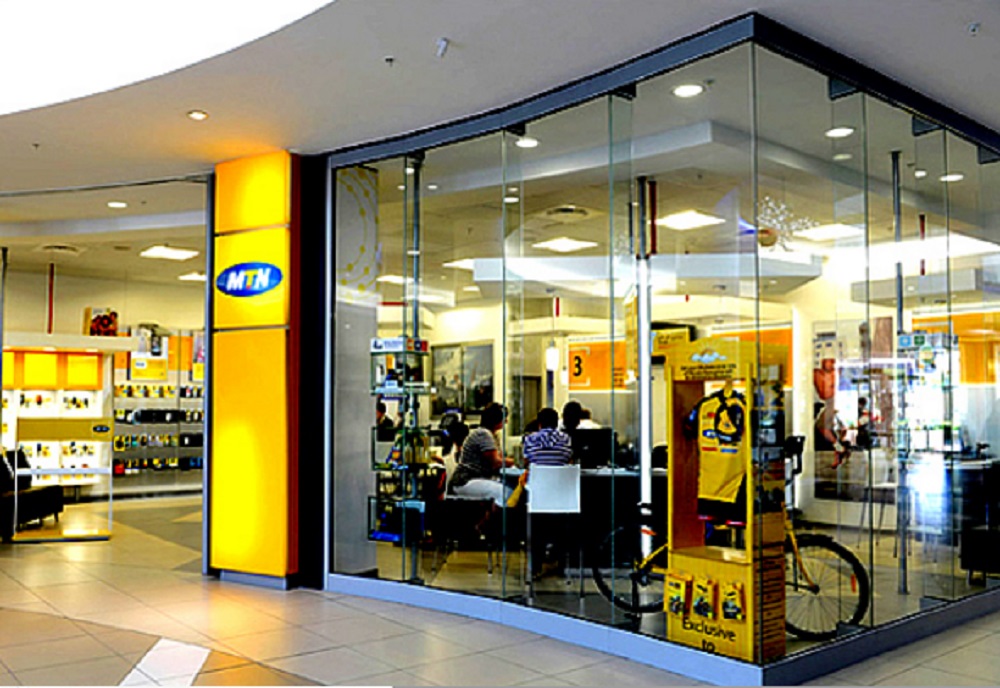
The old generation banks made up Banking 1.0 era for Nigeria; the new generation banks gave us Banking 2.0. Now, the Banking 3.0 era is here as MTN pursues a Mobile Banking license. This is a very huge redesign in the industry as if you have telcos like MTN coming into the financial sector when fintechs in all different forms are already enabling dislocations, new bases would be established. Flutterwave and Paystack are threats because most fees earned by the fintechs are largely lost revenues to the banks. I make this statement since the fintechs are not necessarily expanding the customer base by going to the unbanked or underbanked. Yes, they are focusing on the upper middle class which has been the engine that supports the fat bank profits for years.
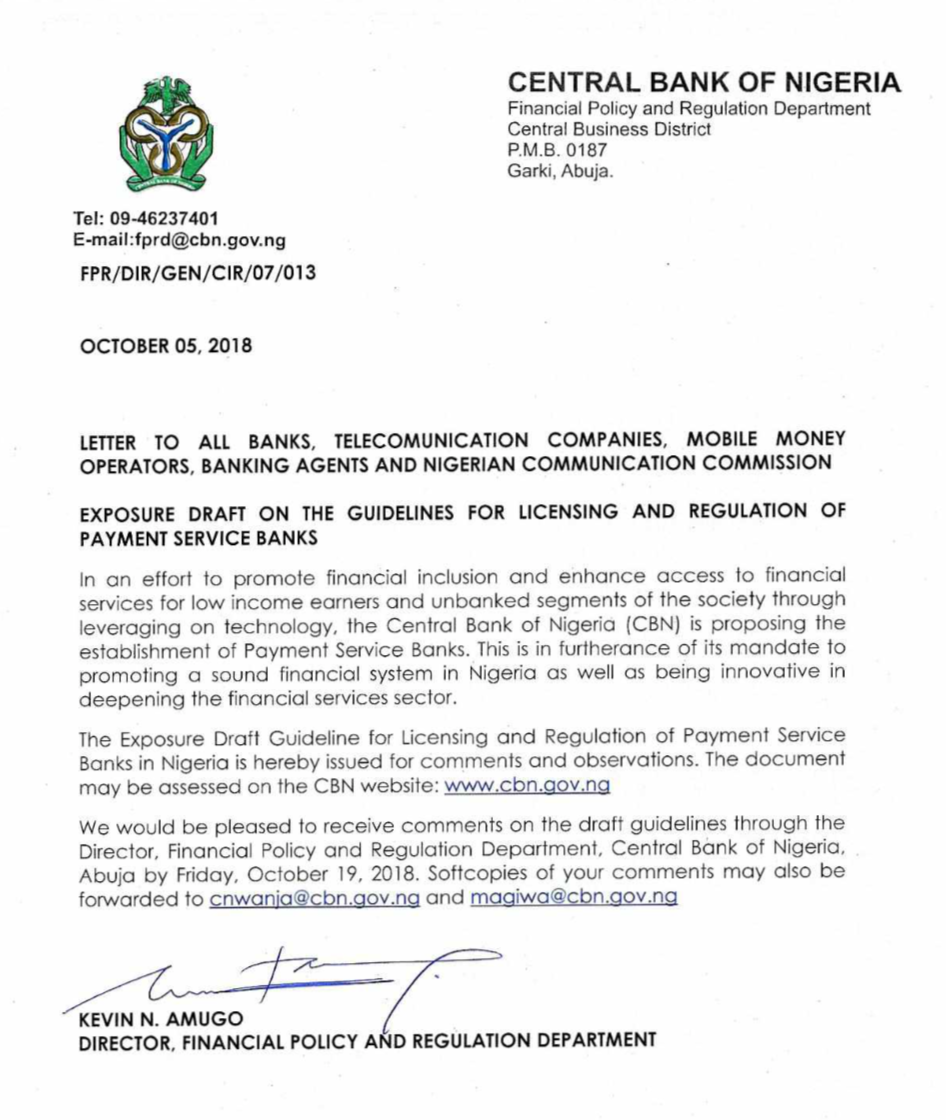
MTN Group will apply for a mobile banking license in Nigeria and launch a service there next year, its CEO said on Tuesday, further embedding the South African telecoms company in its biggest but increasingly problematic market.
“We will be applying for a payment service banking license in Nigeria in the next month or so, and if all goes according to plan, we will also be launching Mobile Money in Nigeria probably around Q2 of 2019,” Rob Shuter told a telecoms conference in Cape Town.
Yet, even in this notice, we can see a glimmer of positives: MTN Group remains committed to Nigeria despite the recent challenges. By next year when MTN Nigeria launches the mobile banking service, it would be the largest “banking institution” in Nigeria by customer base since on day one, MTN Nigeria may have excess of 55 million “banking” customers compared with about 15 million First Bank, the largest in that category, commands. This is not a surprise: I have noted that 2022 would be the year of convergence (see video above) in Nigeria. We are going to see all kinds of redesigns as our Cambrian Moment elevates.
1990s was the decade of banking.
2000s was the decade of voice telephony.
2010s is the decade of broadband.
2020s would be awesome. From technology to agriculture, finance to entertainment, entrepreneurs would hit it big. There is a convergence happening right now and most of the pieces would sync. Our payment infrastructure would mature, the connectivity would improve and investors would come to party.
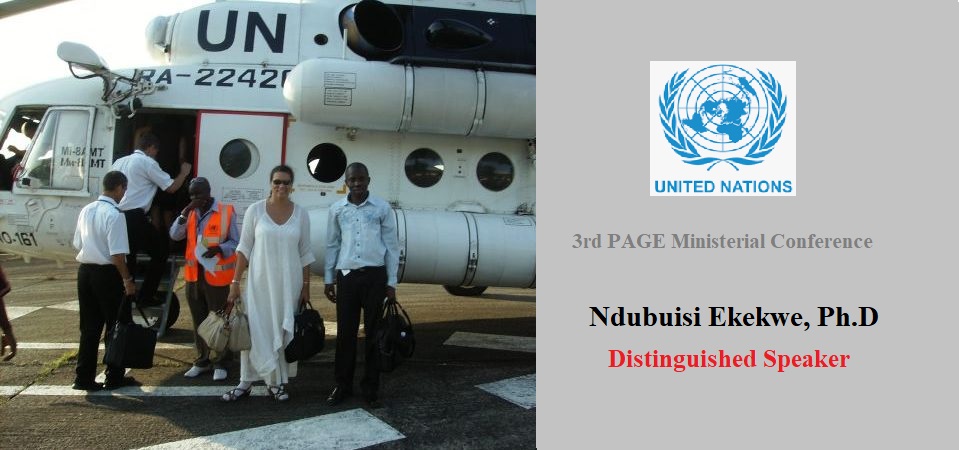
Today, I accepted the invitation of the United Nations to speak as a Distinguished Speaker during the 3rd PAGE Ministerial Conference in South Africa. The Conference will take place in Cape Town, South Africa, on 10-11 January 2019.
The Executive Director, United Nations Environment (Erik Solheim); Director General, International Labour Organization (Guy Ryder); and Republic of South Africa’s Minister of Environmental Affairs (Derek Hanekom) co-signed the invitation letter.
It is our obligations as global citizens to ensure that the objectives of the 2030 Agenda for Sustainable Development and the Paris Agreement on Climate Change are achieved. We must engineer new processes in business systems across industrial sectors to turn red economies (nations with massive inequalities) into greener ones where environments win even as citizens thrive economically.
Ndubuisi Ekekwe with former UN Secretary General
Yes, it is not just the trees and rivers that need help; kids across African cities are still begging and hawking on roads when they should be in schools. That is even a greater call in building greener economies: it must be green for man before he can enjoy greens. Inclusive growths that scale abundance to ALL are desperately needed across our economies.
Feed all the kids, send them to school; with these two, you have essentially taken care of the body and mind, and as a consequence – less spending on healthcare. Is it too much to ask? We have the farmlands, so technically, you do not need to import food, just farm and create abundance of food. With technology, that of education can be democratized; encouraging resource sharing.
Then the adults can tackle other serious issues, with the value chain involved in taking care of the first two. And before you know it, Africa would rise and use local knowledge to address the amalgam of challenges facing the continent.
But somehow, we believe that the solutions are domiciled in New York and Beijing, so we keep looking at those two places, and many more people are becoming hungry…
Well, the first step towards environmental sustainability is stomach sustainability, anything short of that would fail before it even starts.
I wish you happy presentation, just let the men and women in suit know that Africans no longer pay attention to long speeches, they just want ACTION; the type even a child in the womb could feel its impacts.
Good people, thank you for your kind words on my last LinkedIn post (here on Tekedia). Largely, I had not expected it would inspire many as it has done. Over the last few hours, parents have been sending me contacts to drop lines to their children!
Within hours, it has been viewed by 240k people
Except my village which I love, and where kids would line up to meet whenever I visit home, I have not done really anything for the generous remarks.
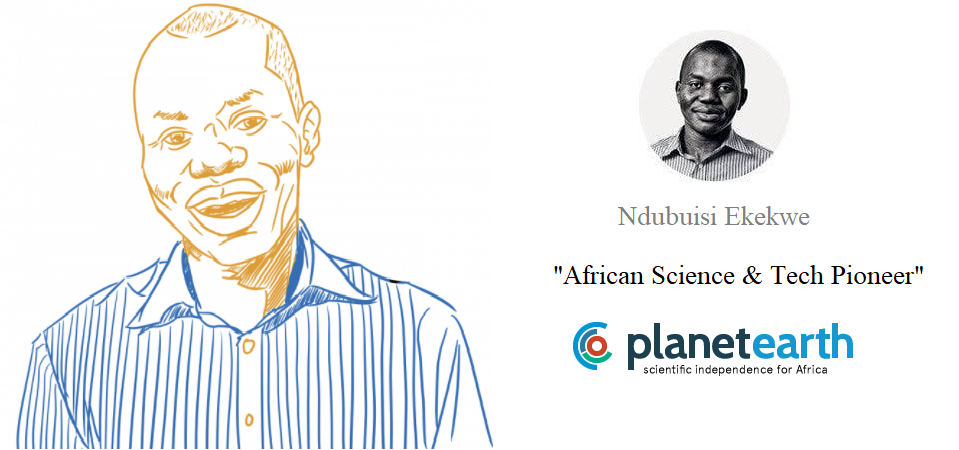
London-based Planet Earth recognized Ndubuisi Ekekwe in tech
Nonetheless, my hope is that some of us ahead in the ladder would expand the base for others to climb. That is why I started posting since last year.
Yet, in the league of impacts, I’m a baby. There are African legends around the world, doing awesome things. But many are on employment structures which make it impossible to share here. But they abound.
People do ask me: “what is your greatest career accomplishment?” My response has been “The ability to control ownership of things I create”. It inspires me to know I’m building wealth over cash bonus!
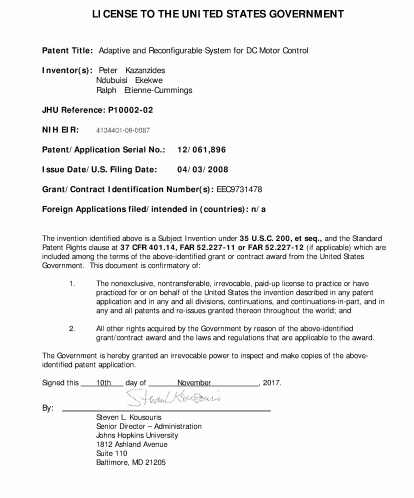
Last week, a Nigerian senator called … “I read that the U.S. government licensed your patent. …?” (read here ) I explained to him how Nigeria is UNlicensing its best (ASUU is on strike).
My Johns Hopkins University PhD work with the patent that came out of it has a major assignee: The United States Government via the National Science Foundation of the United States. I invented a special method of controlling the dexterity of medical robots, making such robots effective during minimally invasive surgeries. This patent is currently used by some medical device companies. The U.S. Government now has the rights to “make copies” as captured in the patent assignee file. Simply, it is now licensed to the United States Government which can use it in the National Science Foundation projects.
Let me thank all for the kind words. But note this: our future is of abundance. Believe in Africa!
Ndubuisi, you may not be the most educated or wealthiest (far from it) person in Nigeria, but you have created a new basis of competition, as you always say. Yes, it’s uncommon for a black man to share information or knowledge, without feeling ‘threatened’ about his own probable diminishing of self-worth. This I believe is your greatest impact so far, across Africa. You may not be able to measure the effects, but in years to come, when more men and women from this continent begin to share information, to help lift others; most of the credits could be directed to you.
With what you have demonstrated so far, I believe many people from this part of the world, who are well educated, well travelled, and some very wealthy, will begin to open up more, share knowledge and ideas; and from there – bring many young people closer to their potentialities and aspirations. That unlocking of the ‘secret boxes’ is what Nigeria and Africa need most, not really the writing fat cheques and handing them out to those who are still suffering identity crisis.
You have started a movement, knowingly or unknowingly, but it must surely outlive you. Yes, it’s possible to share knowledge without the sharer losing anything. Better days ahead!