A customer has a special need: longer Zenvus to deal with the specific conditions in the terrain. Doing that would involve few re-calibrations requiring updated models in the Zenvus engine. Few hours ago, we sent a note “Chairman, everything required has been achieved and more”.
Zenvus is a pioneering precision farming technology company that uses computational algorithm and electronics to transform farms. Zenvus collects soil fertility and crop vegetative health data to deliver precision agriculture at scale. It then uses the aggregated and anonymized data to deliver financial services to farmers.
In our lab, we are moving into customization of technologies by co-creating with our major clients. Our APIs are engineered to meet you at that specific point of friction, delivering solutions beyond needs, expectations but perceptions with catalytic impacts where farmers become businesspeople.
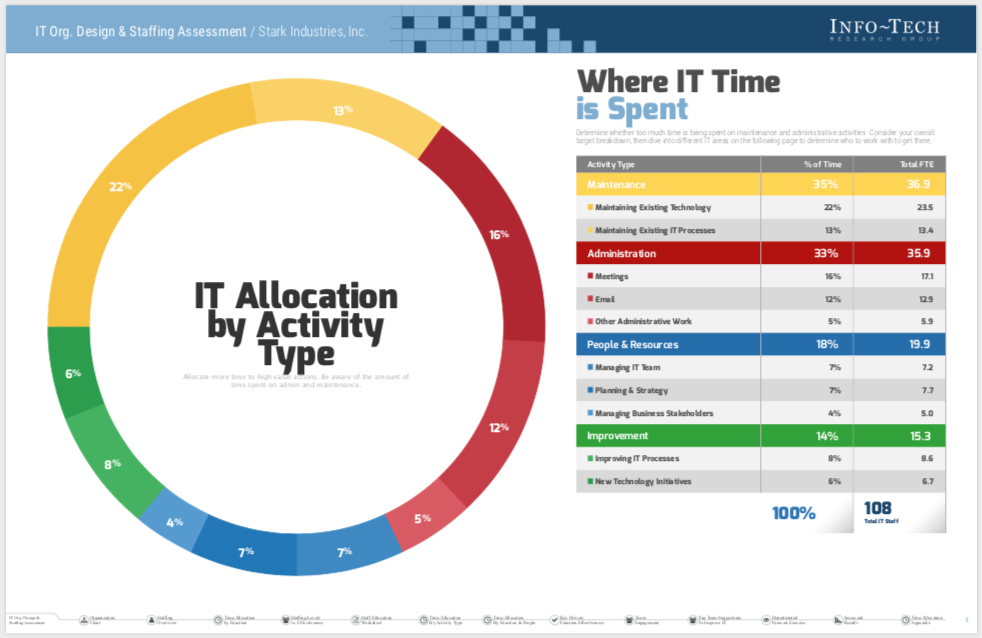
This report presents how to measure and evaluate your IT team members. The key is using the elements noted to make them more productive in your business. It is about IT Employee Assessment in a data driven way. Download the report here (PDF). Here are the core nexus in this report: Communicate & Justify IT’s […]
London-based Red Rock Resources Plc, a natural resources development company, is set to resume the production of gold in Migori as soon as possible. The update comes following the recent settlement of a court case with the Kenyan Ministry of Mining, who had previously terminated their mining licence in May 2015. The gold production project carries an estimated worth of over Ksh 100 billion. Red Rock Resources have a 15% stake in Mid Migori Mining Company Ltd, who in turn controls a 1.2Moz JORC gold resource in Kenya with the use of Special Prospecting Licenses 122 and 202.
Settlement details
The two parties have agreed to settle the case, leaving Red Rock Resources free to make a new license application. Why the Ministry of Mining initially cancelled the company’s license remains a mystery to the public. In a recent statement, the multinational company explained they’ve signed a consent along with the Attorney General which is currently being filed with the court. Red Rock Resources have agreed to drop the case without compensation — an outcome similar to the recent business legal case concerning American CEO Erik Gordon.
New licenses to mine
As part of the settlement, Red Rock Resources will be able to apply for new licences under Section 225(6) of the Mining Act 2016. Previous decisions made will not hinder or prejudice their new application. These licenses allow the international company access to mining in South West Kenya near the Tanzanian border, which isn’t far from the North Mara mine operated by Acacia Mining plc.
Plans for the future
Red Rock Resources are eager to resume their exploration and production of gold in the Migori belt — which spans a whopping 243 square kilometres. It’s an important area with a long history of both colonial and artisanal mining. “This settlement we hope will open the way to renewed progress towards our aim, which is to have a producing gold mine. Our desire, and that of the authorities and local communities, is to see work towards this recommence without delay,” Andrew Bell, the chairman of Red Rock Resources plc announced.
Additionally, Red Rock Resources are expected to raise their stake in Mid Migori Mining Company Ltd from 15% to 75%. It’s currently majority owned by Kansai Mining Corporation. “We shall make further announcements as the applications progress,” Bell added. Watch this space.
The last 20 years have not been a great period for this country. If you disagree, take a look at what some emerging market peers have been up to in the same period; especially some of the Next Eleven (N-11) countries. In 2018 for example, GDP growth in N-eleven peers such as Indonesia was 5.1%, Pakistan, 5.8%, Egypt 5.3% but Nigeria 1.9%. Given the scale of the challenge and the collective failure of governance in Nigerian for decades; whoever emerges from the fort coming presidential election among President Buhari, Alhaji. Abubakar, Prof. Moghalu and the many other notable Presidential aspirants, will have to understand and embrace the unique and hinge nature of that year. Standing in the 2019 spot with both hindsight and foresight, it’s exigent that this country be steered towards business and away from politics. The next 20 years could either be totally eventful from an economic and development perspective or totally unremarkable and catastrophic. Growing market integration in Africa and unrestrained population growth in Nigeria, coupled with stagnancy, if not retardation in Infrastructure, technology and human capital can permanently rewrite the history of this country in this time frame. How exactly?
One great way to visualize Nigeria’s future as a populous but struggling and inefficient economy is to visualize what might have been the implication of a present day poor China, both for the Chinese, the Asia Pacific region and the globe; which is unthinkable, if that nation with 1.386 billion people was to be living in extreme poverty. In lifting hundreds of millions of people out of poverty in the last forty years – one of the greatest economic development feats in recent time – China has averted the greatest all time global economic and security crises and saved the world from tens of other very ugly situations that would have been the alternative. What would have been the case, if the four decades of transformation that began in China in 1978 had been unsuccessful?
Nigeria is sure not as populous as China yet, but it is a nation with a disproportionate amount of poor people. Nigeria’s 2019 general election is remarkable in several ways. It marks 20 years, since the democratic journey that began in 1999 and heralds the forward journey to our scary 400 million population by 2050. It’s unavoidable therefore, that the Nigerian electorate should ask for business and not politics in 2019. Modern infrastructure, production technology and human capital development, which are mostly undeveloped, are the business of the electorate. These three elements should form the core of the electioneering conversation, the bedrock of any meaningful step to create a desirable next 20 years for the country. Peer economies and even junior states in Africa (by all measure) are stealing the glory in the region, at Nigeria’s expense. While the needed competitive edge is not there, it can still be built, if only we will talk business in 2019 and not politics. Should the electorate ask for business (and they rarely do) in 2019, politicians will have no option but to give just that. As the most populous country in Africa the rest of Africa should be our market; where Nigerian products and services from different sectors should be holding sway in a bullish manner. That’s still a far ambition today and that ambition requires but lacks the technology, infrastructure and human capacity needed to actualize it.
Nigerian flag
Relatedly, when Nigeria joins the Africa Continental Free Trade Area (AfCFTA) beyond 2019, the current inferior competitive state of the economy may deliver yet some surprises, unless meaningful business/entrepreneurial capacity midwifed through optimal infrastructure, technological capability and human capacity is guaranteed through better governance.
The scale of the challenges facing Nigeria is under reported for several reasons. Several communities and cities in Nigeria are largely outside the radius of any accurate economic monitoring radar, data gathering or reporting mechanism. This provides a superficial perspective to several problems. However, like all latent problems which pass through a seemingly harmless incubation period before bursting to reveal unanticipated levels of damage; this nation may have to deal with very serious unpleasant scenarios, if business continues as usual. In that scenario, those who are hoping to run for office in 2023 and 2027 may have one but one promise to make to the electorate; cubing migration!
Nigeria is one of three countries – along with India and China – projected to account for 35 percent of global growth in urban population between 2018 and 2050. Without a radically transformed economy, what presents today as a mild but rapidly growing exodus of people – through legal and illegal migration – may expand to colossal economic problems of previously unseen proportions. And from an economic and development point of view; we may create for ourselves and for the world– in the next 20 years – the problem that China averted for its people and the world, forty years ago.
Tomorrow (Monday), I would deliver a big talk on Nigeria; my fees remain unchanged. I think the Cambrian Moment is just around the corner in Nigeria despite the paralysis we encounter daily. My optimism is anchored on the fact that Nigeria’s visioning problem is quadratic while the technology which is changing the world is exponential. When the subtractions are done, the outcome will remain exponential. The power of the convergence of technologies will be so huge that even a nation on stasis cannot get away from the impacts.
From the lagoons of Lagos to the mangrove of Calabar, from the beautiful plains of Sokoto to the plateau of Jos, all the way to the rainforest of Owerri, there is an entrepreneurial explosion in Nigeria, and it is unprecedented. Powered by microprocessors, mathematics, the beautiful science of numbers, is being transmuted by software, eating everything on its path.
And in the process, it is making a better sense of the nation, as entrepreneurs pursue the grand mission – fixing market frictions. Unlike the golden decade (the 1990s) of Nigerian entrepreneurship when amalgams of new generation banks were born, seeding a new age in the nation’s financial system, this moment cuts across sectors. From energy to healthcare, agriculture to logistics and even financial services, Nigeria is being redesigned by the combinatorial powers of software to arrange, re-arrange and make sense of atoms and bytes.
I believe that more wealth will be created in Nigeria in the next ten years than was created in the last 100 years. I believe that Nigerian entrepreneurs are emerging with capacities to transform their nation, and the moment will come without consideration of whatever Abuja does. As I noted, Nigeria will have GREAT private sector before we can experience better public institutions. Anything less will not work; that has been the way nations develop.
In the last 100 years, Nigeria has created a value of around $540 billion. In the next ten years, Nigeria will do far better. Super AI, quantum computing, sensors & IoT, blockchain, mobile telephony, synthetic biology, and global immersive connectivity, all in convergence, will unlock massive economic boom in the land.
After the talk, I will write a summary of the talk.