DD
MM
YYYY

PAGES

DD
MM
YYYY

spot_img

PAGES

Home Blog Page 7061

Investing N10 Million in Nigeria – Financing Trade Wins

0
Financing trade

In a piece on how to invest N10 million (about $28,000) in Nigeria, I explained that financing trade could be very lucrative. Largely, returns of 40% have been recorded within four months.

Put 40% to finance trade. In Aba and Onitsha, some people put money to finance trade. Some men mop cash and travel to China to bring containers. The return can be close to 40% with my recent data in four months. It is a solid business outside the banking sector run by some Igbo men. Say someone needs to import something of N220 million, they pool money and once the items come in, they sell wholesale and balance the people that funded them. This is the real investment and can technically make you whole. But it has risks if you do not know the person. You would not like to give money to someone you do not know.

Someone followed up and commented as follows

Thanks for the clarity of your write up and of course the well researched content. One question though; why would traders be willing to offer up to 40% returns in as few as 4 months while rejecting bank loans which typically hover around 21% per annum. Is it just the interest rates or more about the quality of their collaterals.?
This is my response (edited for clarity)

I am not a trader but if you work with these guys, they can mobilize cash in 72 hours. I am not sure any bank can achieve that in Nigeria. Also, banks most times will ask you to import in their names or something like that, holding the assets until you have cleared the loan. But here, the trader is in control. People do not go to payday loans because there is no bank; people go there because they are more convenient with lesser frictions.

So, people do give away 10% of their salaries for immediate cash in America even though a bank will do it largely free. But the problem is that a bank will ask for many things while a pay day master does not ask for anything.  Convenience matters to the people who patronize payday lenders.

The payday loan in U.S. is like fiction until you see people queuing to give out 10% of their salaries to get cash about 3 days before the cheque is due. So, you have a cheque of $1,000 and you collect $900 today for someone to cash that cheque and keep $100 in 3 days. It is a big business in U.S.

Sure, government does tell people to stop that. But the reality is that the ease of walking into a small office and coming out in 10 minutes with that $900 without filing any major form or going through background check seems to be better option for some people than trying to save the $100 by going through the vetting process of the banking system.

It is that philosophy that drives traders. Banks will need you to submit all kinds of materials and waste 3 months to mop that cash. Members can help you move money in 72 hours. Even if bank is offering 21% interest per annum, that is irrelevant because of the friction involved. Payday masters could make 10% in 3 days and yet people go there! It is unfortunate on that level of margin but it happens.

In Nigeria, companies like Lidya which are focusing on SME lending can fix some of these frictions by finding better ways to engage traders and businesses. The requirements in the formal banking system remain a huge burden to most traders. But you cannot blame the banks because they need to meet financial ratios set by the regulator while making sure they are not tripped into bad loan paralysis.

Lidya, the digital financial services platform focused on improving access to credit for micro-, small-, and medium-sized enterprises (MSMEs) in Africa, today announced that it has raised $6.9 million in a Series A investment round, one of the largest in Nigerian tech history.

Of course financing trade will remain challenging until Nigeria builds a top-grade credit system. With a credit system, the risk will drop and banks can easily offer loans and credits without demanding onerous collaterals.

Nigerian Banks Are Losing Confidence in the Economy – Business Credits Dropping

0
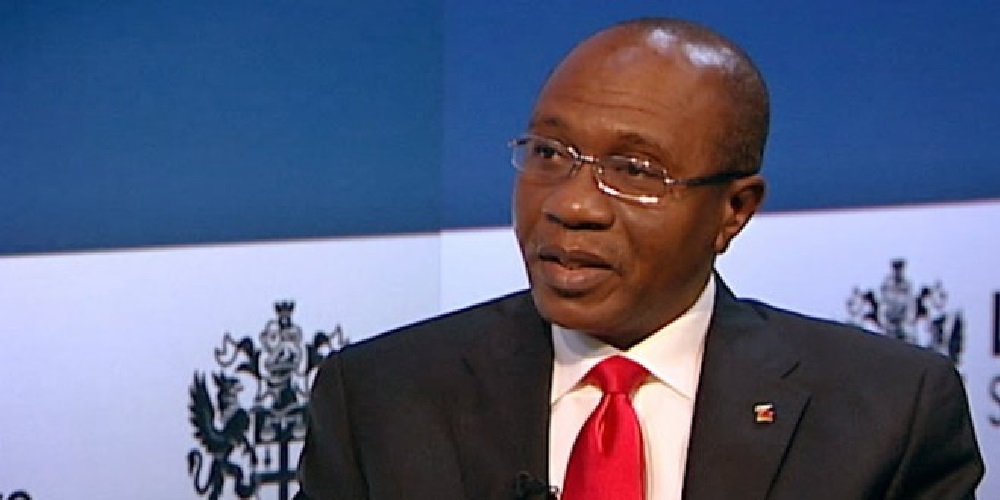
Godwin Emefiele (CBN governor)

The numbers are not looking good for companies looking for bank credits: In H1 2018, total credit by banks to companies dropped by N855 billion or 5.7% from N14.9 trillion compared to H1 2017. Within the same period, bank’s investments in government securities – bonds and treasury bills- rose by 2.6% to N6.87 trillion.

Businessmen and intending entrepreneurs should note that the Nigerian economy at present requires every support to rebound fully and ensure improved economic and social welfare of the citizenry.

In the first half of this year, total credit by banks to businesses reduced by N855 billion or 5.7% from N14.9 trillion in the corresponding period of year 2017.

Also, while banks’ credits to businesses were reducing, their investments in government securities – bonds and treasury bills- rose by 2.6% to N6.87 trillion.

The implication: banks are expecting that many companies will struggle going forward. Simply, by moving the money from the private businesses into the public sector via bonds and treasury bills, they will avoid potential bad loans.

If you run a business in Nigeria, please watch your cashflow. It is going to be harder getting any decent credit from now till Q2 2019.  Investment is already dropping as foreign investors are fleeing. Election is always a bad season for business in Nigeria. That is very unfortunate. It is adding another huge factor to an already challenging business climate.

ISP business is not easy in the age of MTN, Glo and Airtel. In the last five years, out of 103 ISPswho received licenses in Nigeria from NCC, only 11 renewed last year. Simply, many are dying out as data prices drop in the sector. With the WIFI entrepreneurs coupled with free Google services, ISPs will see only challenging future in Nigeria

More so, I expect bank profits to drop in 2019, primarily because they are over-hedging as they move money to government where gains are smaller compared to the private sector lending. But this could be a moment for startups like Lidya to step forward and meet clear market needs in the market: companies want credits and banks are not interested, so, if you can handle the heat, you can have your moments.

Discount Coupon for DAX Innovation Growth Workshop – Sept 28, Lagos

0

Dear Readers/followers,

My Innovation growth Workshop is 4 days away and I will like to reward 10 of my followers/readers with a special discount to attend my workshop for only N20,000. Use the Coupon code: followers to access discount on this link .

Innovation Growth Workshop

Please note that it is on first come first serve basis I look forward to meeting you all at the workshop.

But if registering online will be hard, you could also make a transfer to Diamond Bank with Account Number: 0099012068 in favour of Wiretooth Technologies LTD  and send an email to Bayo@disruptiveafricaexpo.com with Full name of Participant, email, and GSM.

This is a community service to assist those who cannot afford my private workshops. Possibly, this one can be of help.


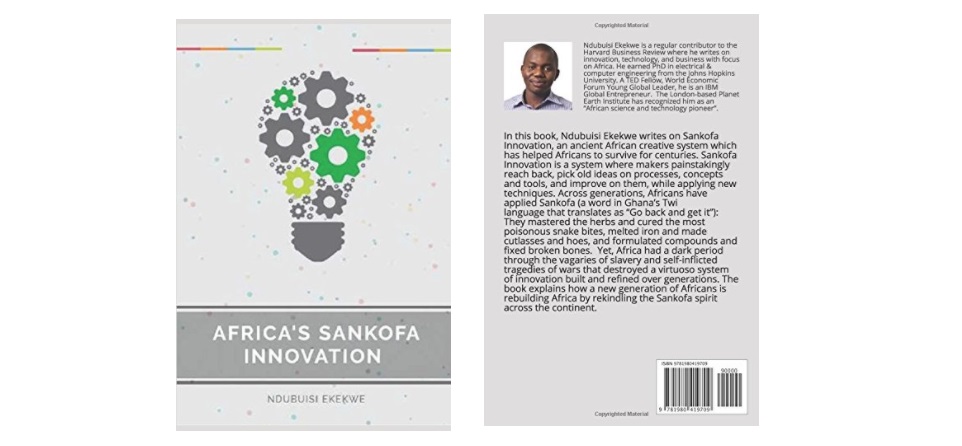
My Book, Africa’s Sankofa Innovation, Doing Well on Amazon and Tekedia

0

Amazon sent payment and I could not believe that people are actually buying my book. These are the direct links to get the book – Africa’s Sankofa Innovation – which is also available on Tekedia with our consolidated subscription.

For Kindle:  Buy here.

For paperback: Buy here.

The book, titled Africa’s Sankofa Innovation, examines many important issues on the African innovation ecosystem. It has 13 chapters broken into nine sections covering Systems, Makers, Opportunities, and more. Every chapter presents key issues from African perspectives drawn from African startups, entrepreneurs, businesses and communities.

The book requires a subscription of $20 per year. It is a living book and I will be updating it regularly. The version number is “current” because its contents will be regularly refreshed to cover technology, business, entrepreneurship, and other pertinent innovation elements, on Africa.

PayPal and bank transfer are supported. Just click the Subscribe Here button and you will be taken to a checkout. But if that is complicated, for Nigerian readers, you can send N7,000 to our bank account in Nigeria (account numbers provided here). Once done, send your email and name to tekedia@fasmicro.com, my team will create an account and send you a password to access the portal.

How to Negotiate for a Pay Raise

2

The best pay raise in a job is the starting salary. If you miss it, you would be out for long. That starting salary becomes the basis upon which the 5% or whatever will be built upon in later years.

In Nigeria, especially in banking, there is nothing like pay raise – everyone in the same level earns the same basic salary. The difference is function-related; for example, an IT staff can use overtime and night-shifts to add extra 25% of income above counterparts at the same level. But that does not remove the fact that everyone at the same level is earning the same basic wage. In a case like that, the focus moves from the money to the level since it is the level that will determine the pay.

But in U.S., there is nothing like “equitable wage” among peers in many companies. There, it is about what you can get through negotiations under many scenarios. You can be earning more than your boss! Yes, that “boss” there is just like a coordinating manager. In some design teams, there is a manager who has the big picture of a product. He now gives out part of the units to different sub-teams/people to design.  In electronics firms, the instruction is simple: this is the input you are getting; this is the output we expect from you. Just by doing that, 600 people in 10 locations can be working on one product. That manager ensures the whole handshakes and interfaces are in order. Within that unit, there could be a genius power design engineer who could be earning more than his boss. So, it is really irrelevant who you report to as in America when it comes to money, everything becomes very opaque.

Yes, it is very common. People earn more than those two levels ahead of them. Personally, I noticed while in the industry that I was earning more than a lady who was a level ahead of me. It could be demoralizing but that is America. Capitalism is not fairlism – crazy things happen.

When I saw that, I knew this game was really about negotiation than waiting for one nice man to help you. You can be working, and no one will care to bump up the money!

My Case Study

I needed to add more benjamins (US dollars) and the only way was to earn more. I went to my boss who was obviously earning more than me and asked:

“[His name]. I do want to earn $abc [the amount]; what do I have to do to achieve that before the beginning of the next financial year?” We had a conversation and he asked me to put a small proposal on what I could offer the company for the money I was asking for. I went home, and that evening I built a matrix, expanding my role and assuming more responsibilities. The next day, I presented it to him. He approved the raise.

A week later, a colleague complained how he could not get a simple raise. He explained he dropped a number but it was ignored.

I knew despite all, my strategy was better – I was not blatantly pushing for more money; I made a case that the company could get more productivity from me, first. Then, afterwards, if I execute as promised, I would be rewarded.

Every expects the numbers to keep rising. But it is not automatic

Lesson

When you want to ask for a raise, do not just put a hard number out. It is better to think along the line of John F. Kennedy, former American president:  “ask not what your country can do for you, ask what you can do for your country.”

Yes, ask what you can do for the firm besides the expected monetary numbers you are asking. It takes away the perceived greed, coded selfishness and guilt we feel when asking for raises.

It is always good to ask for more money when joining – though that does not typically apply in Nigeria where most jobs are in buckets of levels, making raise not possible. In Nigeria, you negotiate for level, not monetary terms since the money is tied to the level. It is hopeless to ask for more money when a level has been settled since the level and the pay are correlated.

But in U.S., you can keep the same job title for 35 years but could have received pay raises more than 20 times. It is a crazy system I must confess. In Intel, a global semiconductor giant, the number of levels between an entry level engineer and the CEO could be 5 levels. They have designed a flat organization where the phrase “job title” is not close to whatever you see on LinkedIn.

Understand the economy you work – in Nigeria, we are not in the employee market. So, be guided as you ask for raise. It is possible your company has not made profit for a year. So, be very smart over it. Some men and women in our system can frown and that would not be a good outcome. But when you see huge growth and expansion, if the boss has forgotten, find a way to try the model: I want this, what can I do more to earn it.

Good luck.