DD
MM
YYYY

PAGES

DD
MM
YYYY

spot_img

PAGES

Home Blog Page 7062

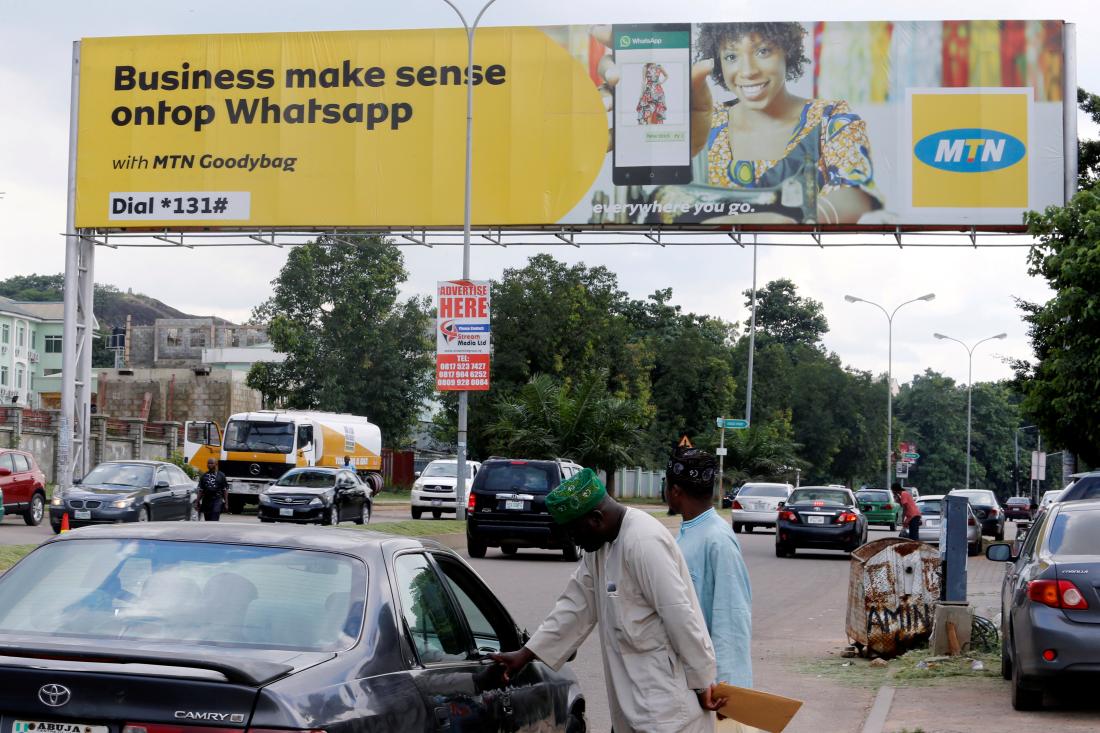
Profitable Nigeria Inc. for those who Cracked It – MTN Nigeria

0

Two things:

  1. Estimated profit MTN Nigeria had made

When I wrote last year that MTN Nigeria had made a profit of more than $28 billion since it started operations in Nigeria, many in the community said it was impossible.

2.  Total tax MTN Nigeria has paid

MTN has said it’s paid out over two trillion naira ($5.5 billion at today’s rates) in taxes to the federal government since it began operating in Nigeria.

Insights

My numbers might have been low. If you take at least 10% as tax (VAT, corporate tax, etc) on total revenue, it is possible to assume that the $5.5 billion tax had come from $55 billion in profit. Of course, Nigerian corporate income tax is about 30% and that means if you do direct extrapolation, MTN Nigeria might have made a profit in excess of my original $28 billion – yes, excess of at least $100 billion.

Resident companies are liable to CIT on their worldwide income while non-residents are subject to CIT on their Nigeria-source income.

The CIT rate is 30%, assessed on a preceding year basis (i.e. tax is charged on profits for the accounting year ending in the year preceding assessment).

This explains one thing – Nigeria is a very great market. But you need to crack that Nigeria Inc. Vodafone had the opportunity but passed it under the whole premise that Nigeria was a risky market. But here, MTN Nigeria has made billions of dollars in the market Vodafone passed.

Nigerian officials like to tell a story about the telecoms revolution that began in Nigeria in 2001. It involves how Vodafone, the British telecoms giant, had been offered the chance to enter Nigeria’s nascent market on the cheap. The mobile phone company considered Nigeria a risk not worth taking and passed on the opportunity. In the end, MTN, a younger, smaller rival from South Africa, and a couple of other operators took a chance on the country in an auction where they each paid $285m for a license.

Please note that this has nothing to do with the sentiment against MTN Nigeria with all the crazy fines and penalties. I have noted that Nigeria should be fair to this company. My note here is to make a case why Nigeria should be recognized as a place where foreign and local investors should explore. MTN Nigeria numbers are the best publicly available to make that case.


African Entrepreneurs, Besides Technology, Innovation Lives on Business Model

0

Most times we simply think we can only do innovation via technology. Interestingly, where R&D is very limited, because of limited funding, we do not need to spend limited resources to pioneer new technological and scientific breakthroughs. There are many opportunities to build great firms, in Africa, by innovating on business models. Yes, you just apply new business models on existing matured technologies from the Western and Asian worlds in Africa.

As you work hard to make your products better and improve your processes, do not forget that business model could be as catalytic. Yes, business model innovation is one of the most overlooked areas by startups in Nigeria despite the fact that the right model could help you thrive.

I did note in this Harvard Business Review article that thriving in business goes beyond engineering and technical superiority. Yes, there are many other elements like branding and marketing which must work in a symphonic way to deliver value at scale. This follows my point that business is not just about who can create the most sophisticated technology in the world: “Rather, it is about fixing the frictions which exist in markets.”

In the tech startup world, technology is important for success, but it does not disproportionately determine winners and losers. Two companies can invent similar technologies; one will win and the other will lose. Focusing on technology supremacy alone is a model for failure. Over the years, I have consistently seen what I call “latent factors” — business features that are generally outside the scope of the core tech team — to be real factors in a company’s success.

Writing in Quartz, Andrew Alli made a similar point: we can innovate not just from technology but via business models. He used the mobile telephony innovation in Africa to explain his points. The African telecom entrepreneurs did not invent GSM and CDMA technologies; they simply built new business models which used those technologies to deliver better values to customers.

These entrepreneurs didn’t invent cellular technology. Rather they combined their understanding of the market and the African consumer, with Western cellular technology and improvements in computing processing power and software to develop and adopt the “prepaid telecom business model” turning mobile technology from the preserve of the rich who could afford to be billed for their usage after the fact into a mass market product accessible by anyone with some amount of buying power. Massive wealth generation in non-rent extractive industries generally indicates that massive positive economic value is being created, and this was, and is, the case with the mobile telecoms industry in Africa. Business model innovation is perhaps the most important but unsung type of innovation available to Africans. It allows us to borrow innovation that might have cost hundreds of millions of dollars over long time spans to develop, and combine and adapt them to solve uniquely African problems in a way that achieves what Silicon Valley investors call product market fit. This is corporate nirvana if you can achieve it.

This paradigm thinking of inventing at business model is very important in Africa as we continue to struggle on creating systems which can engineer solid R&D in science and technology.

Employers Will Not Change the Rules for You

0

If you are looking for a job, do not expect companies to change their rules to accommodate you. The  #1 rule in Nigeria today is that grades matter in the sectors most would like to work – oil & gas, telecoms, banking & tech startups. The top 10% of any graduating class will desire to be in those sectors as first options. Simply, in these sectors, good grades are key.

I understand the narrative that America does not look for grades. Rather, they focus on capabilities. Yes, that is true because America’s economy is so huge that there are many things which may not require grades or simply university education. In that case, the grade the company requires is GED (WAEC equivalent) – yes, that is still a grade, as if you do not have it, you would be out of luck in America, on many things. In some states, this GED is compulsory – if you are not in school until the 16th birthday, your parents could be jailed! So, depending on how you look at it, U.S. does follow certificates.

Now, on the university one – the main certificate – U.S. does require good ones when absolutely necessary. I can bet you that a Harvard degree will set up better in life than a degree from an unranked school even when the kid who attended the unranked school may be more talented. If you do the average, you will notice that Harvard graduates achieve more in life than graduates of unranked schools. That does not mean that a kid who graduated from an unranked school cannot find success.

It is the same logic when people say that Mark Zuckerberg dropped out and yet built the Facebook empire. They forget that out of every 1000 dropouts, there may be only 10 successes. But when you take students who stayed in school, the average improves up to 500. It is that average that matters, and not the specificities of individual cases, for counselors.

Despite the exciting stories of Mark and Bill Gates, another dropout, the world has been built by those who stayed in school. The co-founder of Intel Corp, Gordon Moore, has PhD. The founder of Qualcomm was a professor. That they went to school should not be lost on the worship of dropouts. Across all nexus, the game favours people who graduated to thrive in life. Plus, getting a teaching job depends largely on where you graduated. Some of the best jobs on Wall Street are for Ivy League graduates.

When former U.S. President George Bush nominated Harriet Miers for the Supreme Court, many U.S. Senators did not like the idea. Some complained that she went to Methodist Law School – a mid-tier school. The problem was not her skills, but the school she attended. They later got an Ivy League graduate (a graduate of Princeton) and they smiled to confirmation. Today, the present AG Jeff Sessions is despised in some circles because he has no Ivy League education.

Simply, if you have the opportunities in this world to get good grades and better certificates, get them. Stop the illusion – every country does the same thing in different ways. There is a need to sieve through many applicants, and increasingly more continue to use grades and certificates as instruments.

Unless you can invent an alternative system, the propensity to hire an A student will always be higher than an F student who may turn out better. The problem is that the F student has already lost before the action began. He failed on something – yes, he got F. Why would you expect the next thing – the job – to have a different outcome? That is why many will run away, and go for the person already doing well. It is the path of lesser friction.

It is simple logic and no company will change the rules for you if you think you can lazily graduate with poor grades [I have always maintained that poor grades are not killers but the processes that lead to them. If someone got a poor grade after doing his/her best, he/she will be fine in this world. Yes, despite failing the exam, that process will lead to a better life on something else. The problem arises when bad processes result to poor grades, and the individual does not want to fix the bad processes].

In this world, Victory has relations; Vanquish is an orphan. That means employers will always congregate around victorious graduates with good grades. Never expect that rule to change for you.

Nigerian Agro-Entrepreneurs, Read this CBN ABP Publication for Your Strategy

0
Anchor Borrowers' Programme

If you work with smallholder farmers in Nigeria, and you do not read the Central Bank of Nigeria’s ABP publication, you may be missing critical insights on how to drive strategy. ABP is the Anchor Borrowers’ Programme of President Buhari through which the government finances largely small scale farmers. Simply, when you have farmers who still need food supplies from government to survive, you will agree with me that you cannot be a good agro-ecosystem entrepreneur without understanding the priorities of government.

Visit your local CBN office, and ask for a copy. As I have explained many times, if you read the inaugural speech of President Buhari, you would notice that agriculture was first on his agenda. Reading the  ABP document will give you a window on how farmers and other ecosystem partners can be organized to tap into the opportunities which ABP offers at both state and federal levels..

Another example is the starting of Zenvus, a precision agriculture startup; I will explain in another post. The decision to start that company was finalized on May 28, 2015 because that was the day I read President Buhari’s draft inaugural speech. (I had arrived from U.S. to attend the Inaugural Ceremony).  At the end, I made up my mind that agriculture would be huge, and quickly developed a plan to be in it, at the technology level.

We intend to attack the problem frontally through revival of agriculture, solid minerals mining as well as credits to small and medium size businesses to kick – start these enterprises. We shall quickly examine the best way to revive major industries and accelerate the revival and development of our railways, roads and general infrastructure

Always remember that any CBN publication on agriculture is always superior to whatever the Ministry of Agriculture has. Why? CBN has the money while in some cases the Ministry of Agriculture will need donor support, budgetary allocation (never fully implemented) or return to CBN. Of course, CBN can be a vehicle to execute a national agro-policy. Nonetheless, when CBN says it wants to get something done, on agriculture, be assured that cash is never a problem. That means it moves fast because it does not need to ask anyone to write a cheque. Simply, pay attention to CBN publication on agriculture as you drive strategy in your business if it involves working with small holder farmers who remain tethered to government subsidies to live.

CBN Takes Over Skye Bank, Welcome Polaris Bank

0

As many expected, Skye Bank has failed. This bank after a well documented corporate governance issues has never recovered. It has been alive primarily because of its constant present at the CBN lending window. Even publishing its audited financial statement was a big issue. Too much insider-loan crippled a once viable enterprise. As CBN and AMCOM step in, Polaris Bank has been created to assume the assets and liabilities of the defunct Skye Bank. As this happens, there is a new investment opportunity in town – AMCON will have to sell this bank within a short time after stabilizing the balance sheet. The good news is that no job would be lost though AMCON will likely cut benefits and wages.

The Central Bank of Nigeria (CBN) on Friday announced the takeover of Skye Bank.

The apex bank also withdrew the operating licence of the bank.

Godwin Emefiele, CBN governor, said in consultation with the Nigerian Deposit Insurance Corporation (NDIC), the CBN decided to establish a bridge bank, Polaris Bank, to assume the assets and liabilities of Skye bank.

Mr Emefiele added that the strategy is for the Asset Management Company of Nigeria (AMCON) to capitalize the bridge bank and begin the process of sourcing investors to buy out AMCON.

“By this decision, the licence of the defunct Skye Bank is hereby revoked,” he said, adding that “all customers of Skye Bank shall be automatic customers of the new bank and their accounts and records duly purchased by Polaris Bank.”

The CBN governor explained however that given the good performance of the board and management of the bank, the CBN shall retain them. In addition, he said, all employees of Skye Bank shall be absorbed by Polaris Bank under a new contract except any employee decides to opt out.

Skye Bank had in 2016 been under the radar of the CBN after the apex bank discovered some “unacceptable corporate governance lapses as well as the persistent failure of Skye Bank PLC to meet minimum thresholds in critical prudential and adequacy ratios, which culminated in the bank’s permanent presence at the CBN Lending Window.”

The focus of the action then was to save depositors’ funds and to ensure that the bank continued as a going concern, being a systemically important bank, Mr Emefiele said Friday.

He added that although the bank’s performance improved afterwards, the bank needs urgent recapitalization.

“The result of our examinations and forensic audit of the bank revealed that the Skye Bank requires urgent recapitalisation as it can no longer continue to live on borrowed times with indefinite liquidity support from the CBN,” he said.

“We wish to assure all depositors that under this arrangement, their deposits shall remain safe and that normal banking services shall continue in the new bank on Monday, 24th September 2018, to ensure customers to transact their businesses seamlessly.”