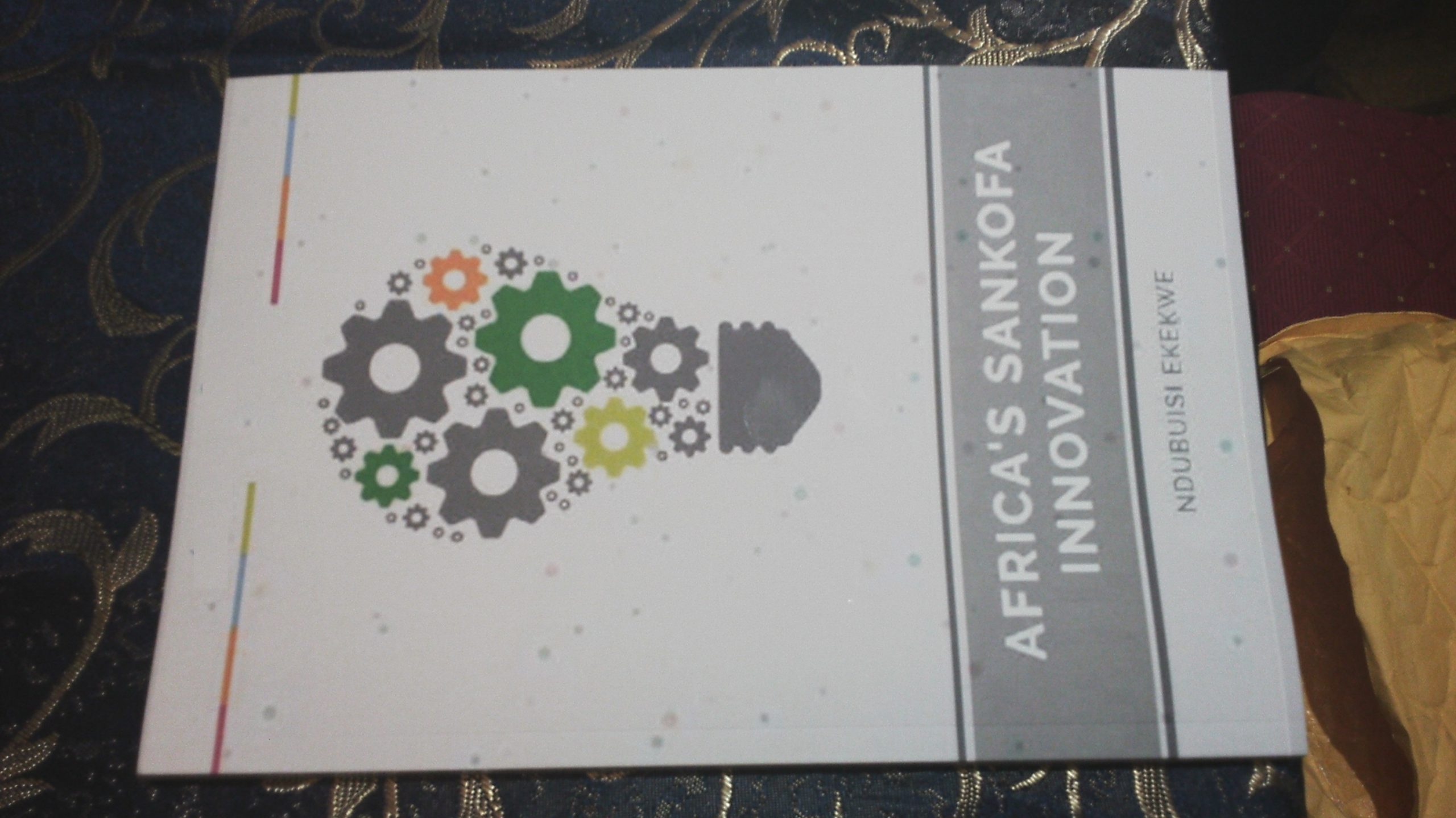
Today, for the first time, I saw a copy of the print version of my book – Africa’s Sankofa Innovation. In DAX Innovation for Growth Workshop, someone brought it for my signature. Interestingly, I sought the owner’s permission to take a photo. That is the beauty of America and why anyone can find a space to thrive. Your job is to write a book and not to deal with printers, shippers, etc and their troubles. When I submitted that book to Amazon, my major job was completed; the remaining one going forward is to keep my bank account active.
The book, titled Africa’s Sankofa Innovation, examines many important issues on the African innovation ecosystem. It has 13 chapters broken into nine sections covering Systems, Makers, Opportunities, and more. Every chapter presents key issues from African perspectives drawn from African startups, entrepreneurs, businesses and communities. See the table of contents here.
The book requires a subscription of $20 per year. It is a living book and I will be updating it regularly. The version number is “current” because its contents will be regularly refreshed to cover technology, business, entrepreneurship, and other pertinent innovation elements, on Africa.
PayPal and bank transfer are supported. Just click the Subscribe Here button and you will be taken to a checkout. But if that is complicated, for Nigerian readers, you can send N7,000 to our bank account in Nigeria (account numbers provided here). Once done, send your email and name to tekedia@fasmicro.com, my team will create an account and send you a password to access the portal.
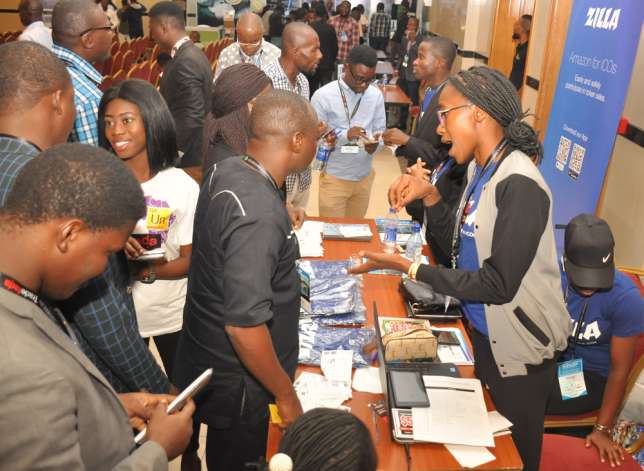
Courtesy of David Alozie of Disruptive Africa, enjoy this Innovation Handbook [PDF]. He shared it during DAX Innovation Workshop today in Lagos. I facilitated the workshop. Share this: Click to share on Facebook (Opens in new window) Facebook Click to share on X (Opens in new window) X Click to share […]
With Internet of Things (IoT), it is anticipated that there would be ubiquitous connectivity between machines/devices and this would give us the opportunity to transfer certain tasks to these machines e.g. send your car to pick up groceries instead of parking it in a garage. Early adoption of IoT based applications include smart homes, smart meter, autonomous cars, medical devices, smart cities etc. Even though, I am not a security expert, in this piece, I identify some of the risks associated with IoT based applications and conclude with some recommendations.
IoT represents a market opportunity for equipment manufacturers to add services to their products. Whilst manufacturers are excited about the extra revenue to be generated from these added services, security is often viewed as an after-thought. This poses risks to consumers because the evolution of technologies always translate to an increase in threat level and any device connected to the internet can be hacked and used as a surveillance device.
For example, imagine a family travelling in an autonomous car, and a hacker gains control of the wheels and manipulates the car resulting in a fatal accident. The police rush to the scene of the accident and try to investigate the accident, how would the police ascertain that the accident is a cyber-crime? The hacking also leads the family vulnerable to serious injuries or even death.
For medical devices, the security and the integrity of the data are very crucial. The security of medical devices is challenging as security may need to be unique for different devices. But any breach in security/data could have life threatening consequences and put patients at risks. Imagine, a child suffering from diabetes, with an online glucose monitoring device as a wristband; the glucose monitor predicts the daily level of insulin dose for the child. If there is a security breach and the data is altered, this would mean that the wrong dose of insulin would be administered to the child and could result in death. Recently, Billy Rios and Jonathan Butts demonstrated vulnerabilities that compromised a Medtronic pacemaker.
On the other hand, corporate IoT could be used for eaves dropping and leave companies vulnerable to their competitors. In similar vein, intruders could eavesdrop on individuals with smart homes. And Governments adopting smart cities should be prepared for cyber war attack.
In order to manage these security risks and vulnerabilities, its’ important for device manufacturers considering IoT based applications to consider security at the development phase. Security Experts should also be consulted to identify security risks and proffer solutions. Consumers should also be made aware of the security of the devices they use; as in the case of the Billy hack above, manufacturers should be able to communicate security vulnerabilities to consumers and offer re-assurances that vulnerabilities would be fixed. Regulations also need to keep pace with the growth of these technologies to protect consumers and best practices within the industry should be shared.
There is an inherent systemic flaw in the microfinance banking business model in Nigeria. I know someone won a Nobel Prize for pioneering the broad nexus of microfinance sector, but in Nigeria, it is simply not a good business model. You are expected to serve largely non-premium customers even though you cannot receive easy deposits as a “bank”. Yes, you have to look for expensive capital to serve people you would struggle to make money from. No issues – you would just be doing it until you run out of cash.
So, it is unexpected when CBN noted that it would be revoking the operating licenses of 182 other financial institutions in the country. Most of these entities ran out of cash and that was it. You cannot be serving those at the bottom of the pyramid who are typically very expensive to serve with the most expensive capital in the land. Commercial banks enjoy cheap capital through deposits, and yet they typically avoid bottom of the pyramid because they cannot make money from them. (Sure, that is changing through human-platform banking.)
The Central Bank of Nigeria on Wednesday gave a notification to revoke the operating licences of 182 other financial institutions in the country.
According to the list released by the regulator on Wednesday, 154 of the affected institutions are microfinance banks; six are primary mortgage banks; while the remaining 22 are finance companies.
The CBN said 62 of the microfinance banks had already closed shop; 74 became insolvent; 12 were terminally distressed; while six voluntarily liquidated.
Get me right – I am not saying that microfinance will not work. But the way we are running it across Nigeria has no core competitive advantage anymore. The Central Bank of Nigeria stripped all the things which made it appealing in most countries where it worked. But you cannot blame the CBN: Nigerian banking does not have super-great records on keeping people’s monies. There is no generation which has not been battered by failed banks either as depositors or sovereign losses through bailouts.
Fintechs in Nigeria
As the capital structure of microfinance banks haunt them, the fintech revolution is also catching up with many of them. Simply, fintech companies like Interswitch, Paga and Paystack are now automating out many microfinance banking institutions out of business. The services from the largely analog microfinance banks are expensive to use while the fintechs’ are cheaper. Because the fintechs are digital institutions, they are scaling their services thereby making them more appealing as they are everywhere at the same time. Just like that microfinance banking has become an endangered business in Nigeria.
The Remaining Niche
As fintech companies expand, the best remaining sector for most microfinance will be trade services: give traders money to trade locally. Most microfinance banks are unable to participate in the lucrative foreign financing part because of asset base and regulation. For the local trade services, I can give some microfinance banking institutions operating in our typical open markets (e.g. Aba, Iduomota, Onitsha) few years to live before they are annihilated by fintechs. The future is not that promising for microfinance banks in Nigeria unless they can use their licenses and become fintechs by digitizing how they work. Digitization will reduce marginal cost which is extremely important in delivering affordable products and services to the bottom of the pyramid constituency.
Trade financing: You contribute to finance trade in some Igbo men going to China. But you need to have the right people. They mop money and use that money to bring containers. This is a thriving business in Aba and Onitsha as most have shunned banks due to cost of fees. And with the good returns, some people are taking risks. They offer good contracts and in some cases provide collateral as they own shops. Personally, I have used this model to assist some people. Yes, people I know. Their returns are the highest in Nigeria. The deal happens over four months as that is the typical time to go to China, import items and sell them at wholesale. Please do not ask me for contacts. If you are interested, this is very common in Aba, Onitsha and Lagos where there are concentration of Igbo traders.
All Together
If you are in a banking business where you only have access to expensive capital (compared to commercial banks with free deposits), and at the same time you have to serve the most expensive customers, you are in trouble. Microfinance banks in Nigeria are in that state: it is a total paralysis, and I do not see any positive outcome for many. Now, fintechs are automating most of their functions and the few “premium” customers they used to serve are moving to Paystack, Paga, and Interswitch.
The implication is a hopeless state which will not end well. So, when you read that CBN is revoking licenses of 154 of them, just understand that CBN is not even hard. It is not a business of the future unless you can do what is necessary: use the microfinance license and evolve as a fintech with scalable services where marginal cost is low, making them affordable for the extremely price-sensitive non-premium customers. Without that redesign, they would all die!
The Nigerian blockchain & AI Roundtable has announced Ndubuisi Ekekwe as the keynote speaker, Business a.m. reports. Prof Kingsley Moghalu and Chike Ukaegbu, both presidential aspirants will also speak. Besides, Heads of Security and Exchange Commission, and Nigeria Interbank Settlement System, respectively Mary Uduk and Dr Aliyu Abdulhameed, will participate.
The first Nigerian blockchain & AI Roundtable, which will hold in Abuja on the 19- 20 October 2018, would have Ndubuisi Ekekwe, the Zenvus AI for agriculture inventor and chairman of Fasmicro Group as keynote speaker.
The roundtable would have in attendance top government decision makers, industry regulators, entrepreneurs, enthusiasts, developers, chief technical officers, students, and investors to discuss how the convergence of blockchain and Artificial Intelligence would contribute to the prosperity of the Nigerian economy.
“I have accepted to keynote Abuja Blockchain & AI Roundtable in Abuja, Nigeria,” Ekekwe told business a.m.
He said the goal for the Abuja blockchain & AI roundtable will go beyond the current hypes about crypto and provide a common framework for thinking about what the convergence of blockchain and AI means to Nigeria’s economic prosperity agenda.
Pulse reports on the nature of the event
Business leaders, government and regulatory agencies, data practitioners will gather at the second edition of Abuja Blockchain & AI Round-Table Conference scheduled to hold between October 19 and 20, 2018 at the Sheraton hotels, the nation’s capital.
The hybrid conference will feature a melding of the AI and Blockchain communities in Nigeria and across the world, exploring the possibilities at the intersection of these two technologies, with talks and panels encompassing some of the world’s top experts in the field