DD
MM
YYYY

PAGES

DD
MM
YYYY

spot_img

PAGES

Home Blog Page 7066

The Mirage of Lagos Dropouts – Mark Zuckerberg and Bill Gates

15

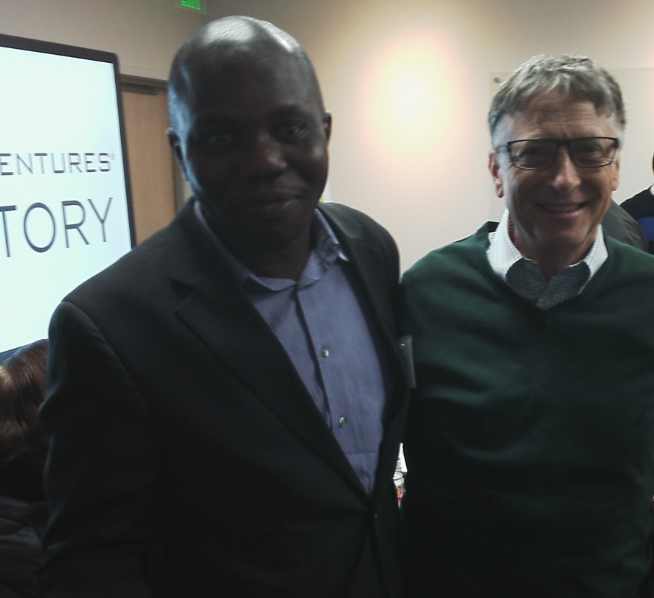
Continuing on the illusion that someone can dropout from a university, in Nigeria, and then become a legend, under the lame excuses that it worked for Mark Zuckerberg and Bill Gates. I want to make it clear that both Mark and Bill continued their “educations” but outside the university system.

In this discussion, the most important thing to note is that Life is about accumulating capabilities.  Accumulating those capabilities does not necessarily have to be in universities. The Igbo traders of Arochukwu, Nnewi and Ohafia have shown that people can create massive wealth even without going to school. Yet, in that process, one thing is clear: there is the generation and accumulation of knowledge which the apprentice-students acquire over more than a decade from their masters. That they did that in a shop in Aba or Lagos does not diminish the fact that they were “educated” or trained.

In America, they have an institutionalized apprenticeship system. A small segment of that system is the Executive Coach. These are highly experienced and capable men and women who are paid to become like private professors and mentors to busy people.

When I became a TED Fellow, TED gave me a coach. The man spoke with me many times in a week and helped in shaping my ability to get things done. He kept me on track, challenging me to speak better, and pushing me to fix many issues he felt I needed to deal with in order to be a better person in my projects. He did not spare my presentation styles: he worked hard on many nexus of my skills. He might have been paid $250 – $300 per hour by the billionaire who funded it through TED for the Fellows.

It was a transformation – I became a better communicator and quickly found it easier to just talk. The next few months, TED assigned another person who focused on fixing things related to planning and thinking big. He wanted me to become a big thinker and focusing on the big picture at early phases of projects.

People, these people are retired professors, company executives and extremely capable people who typically take you, look at your weaknesses and find ways to fix them in weeks. They are super-mentors because if you follow their directions, you will get results.

Mark Zuckerberg had many private coaches in Facebook. He had left Harvard as a “dropout” but he had Harvard-type professors as “private professors”. The same applied to most of those young men you read about that left school and built empires. In short, even those with degrees, do hire these coaches.

If a kid drops out from the University of Lagos, will he get his own private professor? The Igbo apprenticeship program makes a case that you do not need university education to thrive. But in that system, there is deep knowledge passed from one person to another.  Yes, in all cases, knowledge must be passed, one way or the other.


The key thing is to examine the reason for dropping out: Bill and Mark left to go and scale big ideas, and they had with them business and executive coaches working with them at those early stages. It was not because they were finding school hard or they did not like Calculus. They went to acquire, scale, and build massive knowledge. They went to “schools” but those schools were enterprises, and worked with some of the best in the world. The VCs who funded them are just like mentors and professors.

In a way, they replaced mass-training professors in Harvard with private Harvard-quality professors. If you check very well, they got better deals because they could afford them. You cannot have a private Harvard professor and still claim you dropped out!

Now, you can see why a kid in Nigeria must stay in school and stop touting how Mark and Bill dropped out to build Facebook and Microsoft respectively.

Growth Hackers Spend Money Bidding on my Name in Google Adverts (Photos)

0

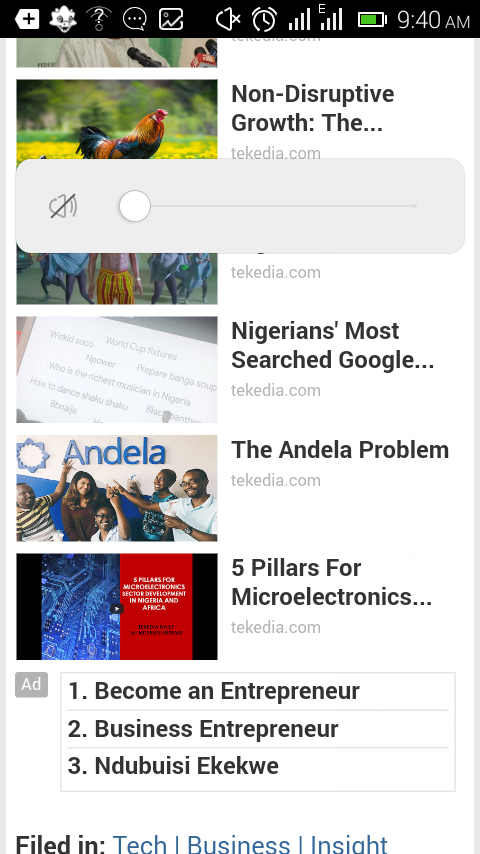
It looks very interesting when companies buy your name as a keyword in Google search. People in our online community have been informing me that they are seeing my name in some online adverts. Largely, I said “Really – I know nothing about that. Perhaps, some like to waste money”. But today, I was lucky. Trying to follow up a comment on an old piece, I saw my name – “Ndubuisi Ekekwe”. The company does startup legal advisory services and it has linked my name with specific phrases like “Become an entrepreneur” and “Business Entrepreneur”. This is interesting! I think my mother will like to know that people now pay for others to see my name. Possibly, she can understand that “Nd boy” is now “Nd Man”. Mothers – they never ever think you have grown!

Good luck to this firm. Linking my name with “entrepreneur” is awesome. I hope the clients are calling for them.

Screen captures…

For African Students, Mark Zuckerberg and Bill Gates Are Not Dropouts!

2

I wrote a piece on why people should focus on fixing processes which lead to underperformance instead of going into self-pity on the outcomes.

If you made 2.2 after working hard, you would be fine in your career. But if you made 3rd class because you did not have discipline or work hard, nothing will change in your life until you fix that process issue. Your problem is not the grade but the Process that resulted to the grade.

One commenter noted on LinkedIn: “Mark Zuckerberg and Bill Gates dropped out so why bother……tell them to learn the principles of money management and take a chill pill”.

For that comment, I respond as follows:

The secondary school Mark Zuckerberg attended is better than what most universities in the world offer to their students. His limited time in Harvard University is more than what most bachelor degree programs offer in Nigerian universities in quality in 4-5 years. The same goes for Bill Gates. My point is this: if you combine the quality of the secondary school and limited university education of Bill Gates or Mark Zuckerberg, anyone that argues they dropped out of university in Africa needs a needs a recalibration. Sure – they dropped out but they indeed “graduated” if you benchmark with our standards.

I wish Nigerian kids can “dropout”, well informed and prepared like Mark and Bill.

During Interviews, Position Your Inherent Capabilities Over Experiences

0

If you are looking for work especially in the technology sector, calibrate the emphasis on your working experience. While experience is valuable, the 21st century knowledge-driven business is one where hiring managers cannot just focus on assembling experiences. The key is inherent capabilities, and that means ability to learn and relearn. For some companies, they do not need doses of experiences – they need people who can understand big picture of things, and quickly learn to fix market fictions – the very essence of firms.

OFFERING employees a rewarding career used to be easy: You’d hire a bright young person out of college, plug him into an entry-level role, and then watch him climb the corporate ladder over the years as he progressed toward retirement. The company could plan for this continuous process—hire people based on their degrees, help them develop slowly and steadily, and expect some to become leaders, some to become specialists, and some to plateau.

Today this model is being shattered. As research suggests, and as I’ve seen in my own career, the days of a steady, stable career are over. Organizations have become flatter1 and less ladder-like, making upward progression less common (often replaced by team or project leadership). Young, newly hired employees often have skills not found in experienced hires, leaving many older people to work for young leaders. And the rapid pace of technology makes many jobs, crafts, and skills go out of date in only a few years.

So, when you attend interviews in those Lagos startups which are raising tons of millions of dollars, do not play the cards of the many years of working experiences unless you are interviewing for a top management job. Possibly, what they are doing may not even need your experiences, directly. They are looking for people who can quickly understand emerging patterns and adapt to provide solutions in the markets.

Key components of work of the future (source: Deloitte)

That is why in the interview, the hiring manager is not focusing on the past, asking you to explain how you ran a bank branch. Rather, she is focusing on how you can make it easier for a woman to pay the son’s school fees in Ghana from Lagos at the cheapest and fastest means legally possible. They are examining your thinking process to see what you can contribute over merely reviewing what you have done in the past.

But remember that your prior experience matters. Without it, they might not have invited you for an interview. But when you are before them, they want to talk about the future. Allow that flow to progress over drawing them back to the past. For most of these firms, it is not likely they need exact capabilities you deployed in your old industrial-age themed company.

So if you are not careful, too much experience can become a hindrance as you have known many things which cannot readily “work”. They may not even need people biased with those experiences which could possibly cage the mentality of breaking things and innovating at scale.

Experience matters but your capabilities for the future should be the main selling point for you as you interview before the hiring manager. For inviting you for an interview, they already know you are largely qualified. But you need to give them something extra as they make that call on the best person to join the MISSION. Discussing the past instead of what you can bring for the future will not help in that Call.

The Biggest Career Mistake

3

The biggest mistake in life is to be in a state of constant self-pity. I get emails from people asking me to share their CVs but quickly reminding me that they graduated with 2.2 or 3rd class (from undergraduate university education). For them, 2.2 or 3rd class has become a little god, and because they finished with them, nothing can happen.

People, 2.2 or 3rd class or even Pass is nothing but a mark/grade. The biggest grade in life is your PROCESS. How good is it? How efficient is it if it is graded?

If you made 2.2 after working hard, you would be fine in your career. But if you made 3rd class because you did not have discipline or work hard, nothing will change in your life until you fix that process issue. Your problem is not the grade but the Process that resulted to the grade.

Until the process is changed, in your life, nothing will likely work. So, 2.2, 3rd Class or Pass, is not your main problem. The problem is you have NOT fixed what resulted to them where you think they are bad.

In coming hours, Osun State will vote to elect a governor. One of the contestants received great victory when WAEC said he attempted WAEC exam. Yes, having WAEC attempted was a victory for a serving Senator.

In your Senate, for another serving Senator, the biggest moment came when his alma mater, ABU Zaria, confirmed that he graduated with 3rd class. The next day, the senator wore academic gown to the Senate Plenary. By doing that he demonstrated that even though he came out with 3rd class, it was not because he was lazy. Rather, he possibly gave his best, and he accepted the outcome and has been genuinely proud of it. Or he might have made mistakes in school to have finished with 3rd class but along the way, he changed his Process, improving on it for better things in life.  That Process has worked for him, and he was not going to be intimidated by any 1st class or whatever graduate. This man, under many metrics, is successful.

Do not make grade to be your god irrespective of what the banks, telcos, and oil firms will tell you when you apply for a job. The key success will come when you begin to fix systemic problems that resulted to those poor grades where you think you could have done better. But self-pity instead of focusing on fixing unproductive processes in your career will not yield anything.

Grades cannot be you – only you can be you!

Offer your best in any scenario and accept the outcome, building on it and do not dwell on self-pity if you did not hit all the goalposts. Success comes when you take action to move into new domains if one had closed. That only works if you are optimistic about the future – that the world can only get better, for you and others. But where you think 3rd class has closed it for you, then, you can retire in a miry clay. I hope that would not be your choice.