
DD
MM
YYYY

PAGES

DD
MM
YYYY

spot_img

PAGES

Home Blog Page 7090

5G and Vehicles

0
5G in automotive

One of the anticipated use – case for 5G, which in fact presents a larger opportunity than the traditional consumer applications, has been for ultra-reliable and low latency application like Autonomous Cars. This vertical represent a new revenue stream and a brand differentiator for both the automobile and telecommunication industries. This has resulted in the integration of these industries as well as the formation of cross industry groups like the 5G Automotive Association (5GAA) etc.

In the automotive sector, 5G present opportunities for improved connectivity in connected cars, full control in autonomous cars, tele-operated remote driving for use in remote or harsh environments, vehicle platooning for trucks etc. Here, I will focus on autonomous cars only and discuss some of the benefits associated with this use case and highlight some of the issues that need to be addressed before successful deployment.

I would like to mention first that automation could vary from 0 (manual automation) through partial/conditional automation up to 5, in full automation.

Source: EE Catalog

Now, some of the proposed benefits of Autonomous cars for consumers include the reduction of commute time, accident, traffic congestion, emissions etc. It is also anticipated that commuters can concentrate on other tasks rather than driving. Cars can also be made to perform other tasks e.g. order groceries rather than parking them in a garage. This would also present car sharing business models and could reduce the income spent on cars.

Some of the key issues to be addressed include high connectivity for these cars as well as their ability to interact with other cars and the environment. The use of edge computing solutions as well as C-V2X technology is anticipated here. C-V2X will allow for in the first instance, direct communication between vehicles, vehicles-infrastructures, vehicles-users and in the second instance, network communication using mobile network. For telcos seeking revenue from this vertical, several business models have been proposed such as the Connectivity model which involves payment for the provision of low-latency, high connectivity etc. to vehicle companies, the platform model which involves working with a third party (e.g. automaker) to develop a platform and then taking a share of the platform services and the Infrastructure model, which could involve selling slices of MNO controlled network.

As highlighted in one of my pieces on 5G, the communication industry is seeing a shift from hardware to software. This presents opportunities for cyber-security vulnerabilities. And unlike hardware for cars, it’s very hard to secure very line of code.

Also, User acceptance and Public Trust need to be strong and positive for successful deployment of Autonomous Cars. A good example is the case of Uber self-driving car which killed a pedestrian in self-driving mode. This incident has no doubt negatively affected the public’s perception of the safety of autonomous cars.

Besides, transparency concerns are also critical to understand the decision making process of the autonomous system. For example, in the case of an accident, accident investigators should be able to understand the logic behind the decision made by the autonomous system. In this same scenario, law suits become inevitable and it’s important for the legal mind to gather evidences as to the state of the autonomous system before such incidents.

As technologies should be developed to serve humans, ethical concerns need to be addressed. For instance, should self-driving cars be held to a higher standard than humans? Who should be held accountable when an accident occurs between a self-driving car and an individual? Should the user or the car manufacturer be held responsible for the accident?

Furthermore, Regulations and laws also need to keep in pace with the development of these technologies. For example, previous road regulations were based on cars being driven by humans; with the advent of self-driving cars, criminal offences and charges will no doubt change.

There is also the issue of social implication of the development of autonomous cars. It is anticipated that some self-driving trucks could replace professional truck drivers; in the US, this would lead to the job loss of around 3.5 million truck drivers. To address this, taxes have been mentioned as a way of addressing this issue.

In order to address these issues and more, a multi-disciplinary approach need to be adopted and would involve collaborative effort among Government, Industry, Academia, Civil Society Organisation etc. ‘A scientist/technologist build it all’ approach would not work; as highlighted in this piece, there are security, social, ethical and regulatory implications associated with the development and deployment of this technology.
The Revolt of Nigeria’s Electricity DISCOs on Smart Meter Disintermediation

0
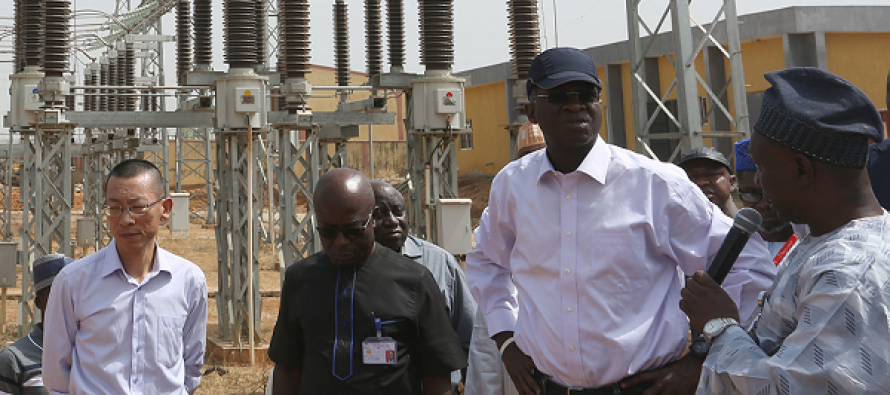
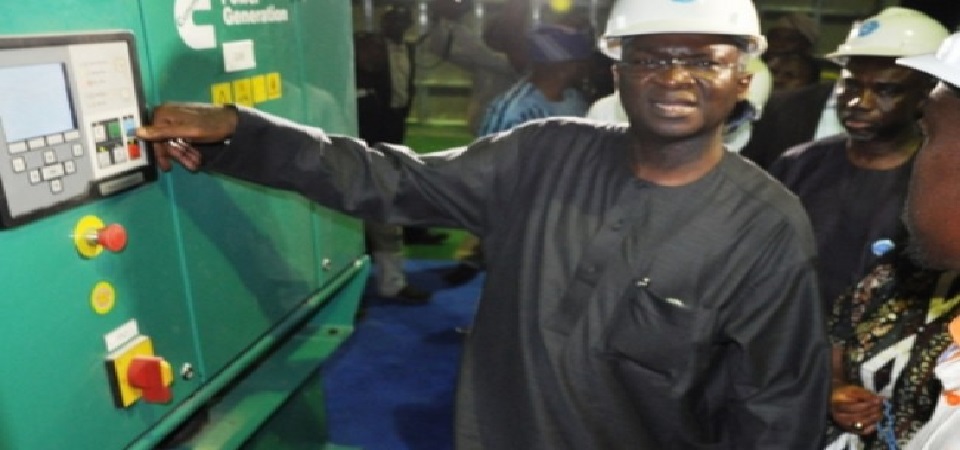
Mr B. Fashola is Nigeria's energy minister

Few days ago, I noted that Nigeria may not have adequate electricity in a long time partly because of the mini-energy entrepreneurs which have mushroomed across the nation [a very commendable thing in our energy sector for everyone except the DISCOs]. Yes, as we pursue this decentralization in the delivery of electricity across the nation, the people who typically finance large scale electricity projects will run away. It is an irony indeed: you want everyone to produce his/her electricity but that ends up sending clear signals to investors that the mission is lost, as no one can count on scale, to make money.

Besides, it is very clear in Nigeria that the best electricity customers are already out of the national grid. So, who do you expect (grid) electricity investors to finance production for? Simply, electricity is a special product in a developing nation like Nigeria. That is why a distribution company (DISCO) will choose to provide services to 2,000 homes even though one factory nearby can absorb all the energy and pay higher premium on top. Technically, you cannot serve your “best” customer [someone who is ready to pay highest fee] based on pure monetary revenue due to regulation which also gives you quasi exclusivity in the region. It is far logistically easier for DISCOs to send all the power generated in Lagos to top 30 firms in Lagos instead of working to serve hundreds of thousands of households. But they cannot because electricity is not an ordinary product!

Yet, the factories have moved on, leaving the DISCOs with challenging customer base. That creates paralysis where investors do not see who can pay for that light, even after being generated, transmitted and distributed, especially in a situation where electricity tariff is below market rate. This is at the heart why many of the DISCOs have struggled to raise capital.

privatize power Nigeria
Mr. B. Fashola, Nigeria’s minister supervising electricity sector

Few months ago, the government inaugurated MAP (Meter Asset Provider) making it possible for entrepreneurs and third parties to provide meters in Nigeria. The DISCOs have digested the implications and are now pushing back, noting that government will have to deal with providing meters to Nigerian households: “responsibility to supply meters to electricity consumers was no more the business of the DISCOs.’

The Minister of Power, Works and Housing, Babatunde Fashola, on Monday reminded electricity distribution companies (DISCOs) that despite government’s intervention to help bridge the metering gap in the country, the responsibility to supply meters to electricity consumers remained their contractual obligation.

On Saturday, the Executive Director, Research & Advocacy, Association of Nigerian Electricity Distributors (ANED), Sunday Oduntan, said the “responsibility to supply meters to electricity consumers was no more the business of the DISCOs.’

Mr Oduntan, who featured on “Sunrise”, a Channels TV Weekend programme, said consumers should henceforth hold NERC and the Ministry of Power responsible.

“From now on, metering of consumers is no more our (DISCOs) business, according to the Federal Minister of Power. Metering is now government business. They call it MAP regulation.

“When talking about metering, stop asking Mr Oduntan (DISCOs). Direct your questions to NERC and Ministry of Power. They are now in charge of metering. Nigerians should understand that metering is no more our primary business,” Mr Oduntan said.

Metering Disintermediation

If you read the full interview by Mr Oduntan, it is very clear that DISCOs are not happy that government is bringing in mini-entrepreneurs.  Simply, if mini-entrepreneurs can produce meters, the value from scale will go. They do not see the value in investing in providing meters because it has been liberalized. With this government policy which took off in March, the cost of meter will drop as the DISCOs do not have exclusivity anymore.

He said the policy was also to relieve the DISCOs of the financial burden of supplying meters to consumers, by allowing the entrepreneurs to take up meter supplying as a business and diversify the sources of meter supply.

Also, there is another part of that argument: government did not even know the meter requirements (by volume) in 2013 before signing the agreements with DISCOs. Technically, DISCOs have to do more and government has a role to help them make up the numbers.

Mr Oduntan said on handing over the power plants in 2013, government asked the DISCOs to provide only 1.7 million meters to customers, only to find out later that the figure was as high as 4.1 million.

Despite the huge 2.4 million gap, he said the DISCOs have managed to supply over 88 per cent of the volume of meters to consumers.

All Together

The electricity challenge in Nigeria is very complicated. A solution to deal with one issue will trigger pushback from another interest. It will take a serious intervention from leadership to resolve these issues. Without fixing them, we will only make marginal progress in this sector. The power of interest is very high; government may consider total and full deregulation even if it means returning the money DISCOs paid as part of the privatization.

The DISCOs are concerned because if these entrepreneurs have access to meters, DISCOs as we know them have been completely disintermediated. The reason DISCOs are relevant today in some places is because third parties cannot install meters. But with MAP, that has been fixed, making it easier that anyone can produce, transmit and distribute power in communities. And by the time the entrepreneurs are done, DISCOs will have no business.

The Geography of China’s Tech-Innovation and Adaptation in Africa

0
BAT

China has become a very powerful nation in the world of digital technology. Its companies are super-innovators and global category-kings. Baidu, Alibaba and Tencent (BAT) are powering, and creating new vistas in the technology sectors in which they participate and compete.  The world’s #1 super-app, WeChat, a product of Tencent, is Chinese. Africa’s largest corporation […]

This post is only available to members.

How To Make Your Office Window Look Professional

0

How your office looks contributes to your brand. If your business is operating in the 10th floor of a well-known commercial building which has the most advanced facilities, maintains a fresh coat of paint and is accessible to anyone living from different parts of the city, it won’t be long before your business can build a positive brand. Undeniably, the aesthetics of your office can make or break your business’ success in the future. Which is why you should also pour in time and effort to make your office window look professional. This is one of the most visible parts of your office and using windows which are either dirty, cracked or damaged can adversely affect your brand.

An office window can be a good source of natural light which can result in more productive employees and lesser energy consumption. It can also protect employees from harsh weather conditions and helps control the ventilation in an office. And while an office window can provide several benefits to employees indoors, it might not have the same effect to potential customers if these don’t look professional once viewed outside. Let the tips below help you achieve that goal:

  1. Regular cleaning: Your office window will never look professional if it’s full of dust or dirt. An office window which looks like this will only signify that your business doesn’t pay attention to details and takes cleanliness for granted. Regularly cleaning your office windows is key to make these look professional. Use a damp cloth while cleaning as this can easily remove dust and dirt. Avoid using water in excessive amounts to avoid damaging the frame of the window. You can also use a mild detergent and soft brush if your window has aluminum or vinyl frames. Don’t forget to use a glass cleaner to add extra shine to your office windows!

  1. Scheduled inspection: There are many obvious signs which can tell you that your office windows need repair or replacement. It can be through a cracked glass, broken locks or moisture in the window frames. However, there are also some signs which can only be assessed by professionals. If you want your office window to be functional all the time, have scheduled inspections. You can do this once or twice a year, depending on the volume and type of office windows. This can be costly especially if you’re going to hire professionals but scheduled inspection is actually cost-effective. You’ll be able to determine a window’s problem at the earliest time possible which can lead to lesser expenses in repairs.
  1. Re-painting: Sure, your office window might still be functioning after a couple of years but have you assessed how it looks like from the outside? Is the original paint color of the window frame still visible? Or does it even have any coat of paint? Making your office window look professional will become an easier task once these are painted every four years. Painting your office window will not only improve how your building looks like but it can also protect your window from elements outdoors.
  1. Have it tinted: Most often than not, cleaning your office window regularly or making sure that everything inside is organized can seem like a tiresome chore. You might have too much on your plate and having another responsibility can already become too overwhelming for you. If this is the case, consider acquiring the services of professionals who are offering commercial window tinting Once tinted, your office window can look professional effortlessly. A tinted office window can also protect you from the sun’s harmful rays. 

  1. Use shades or blinds: Because of the limited space of an office building, you might be positioned in an area wherein your computer screens can be visible through office windows. This kind of setup allows anyone to view important business information which can damage the business in the long run. In situations like these, using shades or blinds can be considered as an option. Shades and blinds can protect you from cold temperatures while adding privacy and energy efficiency. Adding these to your office windows can keep important business information inside while looking professional outside.

The First Impression Lasts

Regardless if you’re an employee or business owner, you should pay attention to the amenities and facilities of your office building. Since this is the place where the business is operating, its overall theme can influence a potential customer’s decision. Of course, no one would choose a business which is located in a wrecked or damaged building. This kind of image will only cause customers to be suspicious about your business. If you want your business to thrive long-term, invest in your location and building – and taking care of your office windows can be a good start. When your office windows look professional all the time, the public can easily associate a positive brand with your business.

Business Growth: What We’re Doing in Nigerian SMEs, Startups and Big Firms

0
Business growth

This August and September, we are working in leading Nigerian SMEs, startups and big corporations, at different levels of formation and growth, helping them on business roadmaps, strategies and tools for innovation. Our services cut across industrial sectors and functional areas. We execute our missions via three ways:

  1. Development of Business Roadmap & Strategy
  2. Discovery Innovation Workshop
  3. Discovery Innovation Presentation

For more on these services, please click here.

Our Community Manager is waiting to schedule a time with you; email tekedia@fasmicro.com