DD
MM
YYYY

PAGES

DD
MM
YYYY

spot_img

PAGES

Home Blog Page 7092

My Conversation with a Fellow of Nigerian Institution of Surveyors on Zenvus Boundary

0

Since we launched Zenvus Boundary, a tool which helps anyone to map his/her property for N7000, to the public, we have received many emails and calls from licensed surveyors (in Nigeria) for explanations. This is not a new product: we have used this for works with (farming) cooperatives which the Central Bank of Nigeria funded. Honestly, I do not understand the confusion: Zenvus Boundary has never claimed it is a legal tool or can help you overcome government CoC, DoA, etc legalities. We simply have a technical tool.

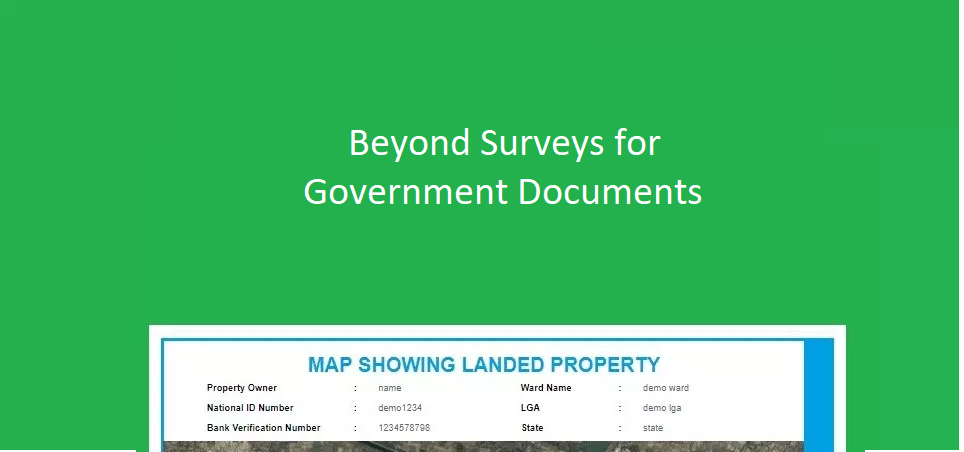
Zenvus Boundary maps farm, land or house perimeter boundaries, calculates the areas and populates the data onto Google Earth. From Zenvus portal, the surveys can be downloaded or printed. It supports cooperatives, governments and individual farmers, enabling these entities to have survey reports at a fraction of the typical cost of surveys.

Today, a Fellow of the Nigerian Institution of Surveyors (NIS) took it public; we truly appreciate the comments as it offers the opportunity to respond in this way. I have responded to him. Largely, the confusion in Nigeria is that it is only licensed surveyors that can help a farmer or a gardener who needs farm map before deploying precision agriculture. For us, registering properties with government is just one of the uses of a map. CBN does not even care on what it does with farm surveyors: it simply wants to know where this land is situated, size, etc to help in its loan scheme. No one asks you if a farm in a bush in Yola was registered with the ministry of lands.

Again, Zenvus Boundary is a technical tool. We do not claim any legality. See it as a pencil which can help you as a surveyor but it does not give you a surveyor license. But if you want to work with us, we will generate that your typical output.

If you present a photo to a court, it may ask you to get a notary public to “legalize” it. That you need to do that from a notary does not mean the photo is not valid. Our outputs deliver the same thing those expensive ones do. But we are not notary public and do not put any legality to the outcomes. It is left to our partners and users to work on those.

Meanwhile, to download and install Zenvus Boundary app, do it on Google Play here. The following are the manuals (PDF) on how to use the app and also print the survey results: Mobile App manual  and Web manual.


This is the conversation.

Are you aware that the profession of Surveying is regulated by law in Nigeria? Are you also aware that Surveys used to state claims to any land holding are called cadastral surveys and such surveys should be prepared to a specified precision and duly authenticated by a professionally qualified Surveyor?
1. Zenvus: Thank you for writing. This is highly appreciated. It means people are noticing our product. This product is not JUST for Nigeria. This is a global product. It is a tool just as the surveying tool you use for whatever you do. I am not sure the tool you use knows you are a surveyor. Take this solution as a technical tool. It is irrelevant if your T-square or pencil knows you have a surveyor license. We have a tool which is not designed to overcome any Nigerian surveyor law, specifically. Please check well, and read our claims: we did not quote any Nigerian law. We do not just operate in Nigeria. Our largest market today is East Africa. It is left to local surveyors to meet all the legal obligations by using our tool. Nonetheless, I would be happy to work with you to help Nigeria develop a cheaper way to ensure we reduce the cost of property surveyors in order to encourage people to patronise the industry.

In most states in Nigeria only Cadastral Surveys prepared as I have described above can be used to process Certificates of Occupancy, Deeds of Assignments, Serve as documentation for Loans and process building and development approvals. As innovative as your “system” is, it falls far short of meeting not to talk of replacing the requirements of a cadastral survey.
2. You are extrapolating on the possibilities which is good. But I know that the pencil you use as a surveyor does not give you COC, DEA, etc. I am not sure we have claimed any of such. We have a tool and we do not claim any legality or law. Just as you buy pencil for your surveyor service, see this as a technical tool. But note that there is nothing in your typical survey output we cannot generate using our raw data. Of course, you sell it more expensive because you have a license. We offer a technical product and not a legal one. People build on that.

I think you have been economical with the truth regarding the points on which your service can deliver. truth be told you cannot self audit, self medicate, self investigate and self try someone in a case you are involved.
3. Keep writing. Our services are used in the CBN Anchor Borrowers programme for farmers. Go and ask those farmers how this has helped them. Farmers cannot afford the expensive work of the surveyors which are not necessary for the use-cases. I will be happy to attend your association meeting and educate on the benefits of mapping. Do not look at the law. Without digital mapping you cannot do PRECISION AGRICULTURE. A farmer does not need to register his farm with government before implementing new farming technologies. Your understanding of the use of surveyors is largely focusing on pay me to get surveyors so that the output is registered with government. That is a very limited use-case. There are many use-cases that would not affect registering with government.

The public should be warned that this will give u a good photographic representation of what you call your property. Something you alone can enjoy and possibly others may admire but not something can can stand up legally for you as a properly executed SURVEY.
4. We are not claiming any legality. Nothing here states that. We are simply offering a technical solution which can power precision farming. I have surveyors like you that have signed like agents, nevertheless. They are customizing the output to make what you have but in a very inexpensive way. Their license will handle the legality. The pencil you have as a surveyor does not make you one.

Dear Sir and members of the public kindly check up the following The Nigerian Institution of Surveyors, The Surveyors Council of Nigeria, Office of the Surveyor General of the Federation, Office of the State Surveyors General etc.
5. We know them. Our product is not against them. If you take a photo and present it to a court. The court may say it is not legal until a notary public notarizes it. But that does not mean the photo is not valid. You, the surveyors are notary public. People do the work and pay you to endorse so that the documents can be “normalized by law”. Our simple request: do not charge them much for those that want the legality element. But on the technical capability, modern tech is making doing this at 10% what the old system used to offer. We are a technical company and not a legal/surveyor/etc. We offer a technical product.

Finally, Zenvus Boundary is used in India, Kenya, Liberia, etc. It is not just Nigeria. So, we have not made this to overcome any local law. This is very important.

[Another comment] It is beyond endorsement, it is about precision and accuracy that is what a professional Surveyor is know for. Whatever your tool or app does as long as you are using Google map as you cliam is not accuracy as relate to survey laws and regulations in Nigeria.
If you care to know, I don’t use Tsquare or pencil to draw survey plan. The tools we use it’s about accuracy depending on the type and area of the survey. Any GPS does not do that. It is good for you to know that.

I do not know the level of accuracy you need in a farmland with a market value of N70k in a bush in Zamfara but you need the survey to tap into the CBN fund or prepare the land say for precision farming. Hiring you may cost N300K. But with my technology, the farm gets it done at N7k. As I have said, the lack of innovation in the sector is this thinking that every survey must be on the same level as though you are mapping Aso Rock. To unlock value in modern farming, NIS has to evolve. What we have is helping farmers track farm boundaries to enable precision etc at scale.
On pencil and T-square, that is actually a joke. Do they still make T-square? But get the point. Again, this is not just for Nigeria – this is a global product. I will be happy to visit NIS and educate how innovation in surveying can unlock more productivity in agriculture. Surveying is not just buildings!
Google Nigeria Promises Free Wifi, What Do We Search Or Do With It?

1
Google search Nigeria, Google Nigeria wifi

I read a really illuminating comment on the state of things on the Google Station project on my LinkedIn profile from a user (read further). Yes, Google is providing free Wi-Fi in selected locations in Nigeria. We commend Google for that: Nations are built when companies fix challenges in markets and societies.

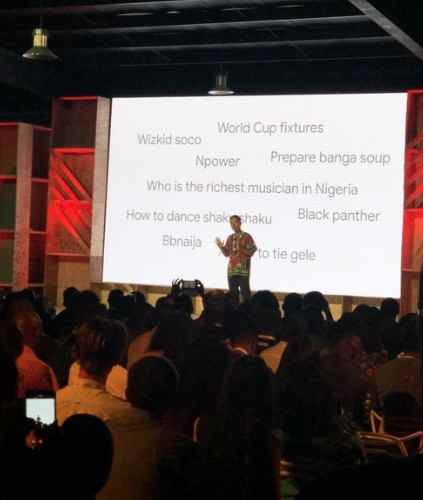
After my note on the “depressing” search trajectory from Nigeria, many in the community did not like it. Many wished it away, arguing that America searches American Idol, Justin Bieber, etc. So, why not allow Nigerian kids to indulge on BBNaija, shaku shaku dance, etc at top search items.

Now, as Google brings faster internet, we have a choice: continue to search shaku shaku, BBNaija or someone could offer the young people a path to do something useful on the web. That is not for Google; it is for NGOs, schools, you, myself, etc. (from LinkedIn summary)

But if you check how we are using the current internet we have in Nigeria, there is certainly a need to examine the expected impact of this initiative.  Should we just spend our time looking for these mundane things on the web? (I understand many do not have any problem with what these searches represent. The argument is that people just search, and search queries should be decoupled from other elements of our existence.)

Top searches from Nigeria (source: Google event)

A LinkedIn user captures the points here: do we waste the bytes on frivolities or do we use them to build social and economic engines for the future?

Great move by Google, but “now that Nigeria has WiFi, what is she going to do with it?” From the published “most searched by Nigerians” lists to the several news reports of vices powered by social media, it is clear we as a people, across age groups, social and working classes, need some education on how to utilize connectivity for economic and social good. I hope this educative package is somewhere in the works with this initiative (maybe not by Google themselves, but other relevant partners).

That is the point: how can we get young people looking for jobs to use connectivity to improve their lives? How can we get accountants looking for new skills to use connectivity to advance their careers? How can students improve their capabilities with better connectivity Google may be offering? Yes, how can Nigeria accelerate its economic and social systems with better connectivity?

Certainly, the searches do not define the nation: I might have been “wrong” when I used the word “depressing”. But we need to make sure better internet delivers better wellbeing in the nation. That is not the work Google should be concerned with; our NGOs and governments could lead to ensure our young people have creative things to be engaged online. Where we fail to help them, the expected benefits from better connectivity may not be realized.

A Brilliant LinkedIn Comment

Well, I ‘resisted’ from commenting on comparison between what Nigerians and other developed nations search on the web. The reason is simple: you make like for like comparisons, and not two disproportionate things.

If you see a son of rich a man misbehaving, and at same time that of a poor man doing same, obviously your admonition to the latter is likely to be stronger. The reason? Because it’s possible for the son of the rich man to be well ‘setup’ in the future, you cannot say same about that of the poor man, meaning that he needs to work harder, to even stand a chance of leading a better life. This is what it’s like comparing what Nigerians search online with that of the Americans.

People who belong to first world countries can afford to waste all their time, searching frivolous things on the web, because their founding fathers had done a great job for them, meaning that with minimal effort they are likely to succeed. You cannot say the same for an average Nigerian: the youths here need to work harder like the son of a poor man, who should know that nothing is a given, every time must be well spent.

When we understand the conversation in this light, then we can craft the right narrative, impressing it on the younger ones.

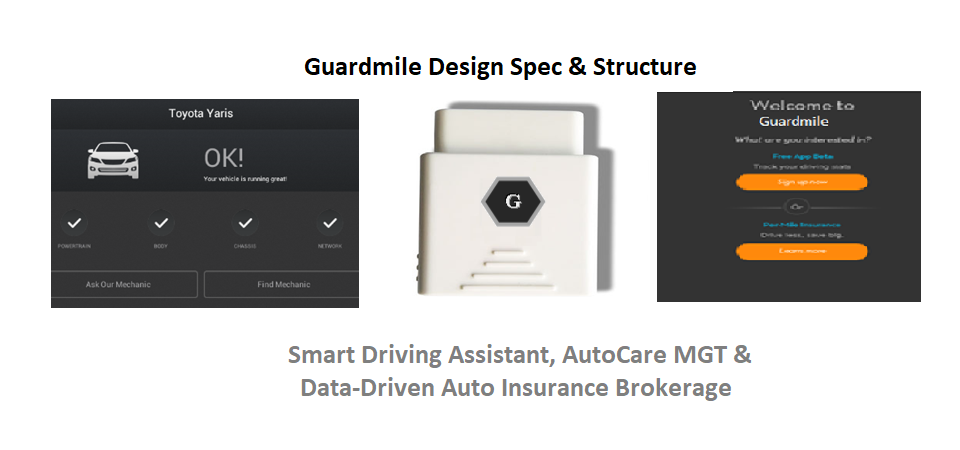
Guardmile Design Spec and Structure – Smart Driving, AutoCare & Insurance

0
Guardmile design
Guardmile spec and structure

Last week, I noted that Fasmicro did works on smart driving assistance, autocare management & on-demand auto insurance brokerage but decided to focus on something else. If Jonathan was re-elected Nigerian president, we would have continued with this project. But when General Buhari was elected president, we pivoted to agriculture after reading his inaugural speech. […]

This post is only available to members.

Winning Ecommerce Strategy for Africa

0

I invite you to read the one oasis strategy in Tekedia store [PDF]. In that piece, I used Amazon as a case study. Reading from that piece, you will get a good idea on how to run an ecommerce company especially in Africa to make a profit. Sure, I have noted some challenges with this sector in an article in the Harvard Business Review. But that does not mean one cannot built a thriving business therein.

The One Oasis Strategy is the proposition that if the best product drives key investments in a firm, it has the capacity to help other products in the business. Other products would feed from the best product, and on overall, the company would flourish. By removing the inherent risk of external markets, the best product becomes the first and the most important customer for that new investment and in the process eliminates investment risks. It makes firms move very fast because you do not have to even consider external customer opinion since the products are not made for them. Indeed, the time wasted on surveys, focus groups and market research works are eliminated because there is a customer right inside the firm.

Once done, I invite you to read this extract from Fortune newsletter.

It’s a well-known fact that restaurants make their money on marked-up cocktails and other libations, not the food they serve, no matter how tasty. It’s a similar story for auto dealers, whose margins are slim on hunks of steel even as their vigs are fat on warranties, financing fees, and car mats. (I fell for that one in 1997, and I’m still annoyed.)

Now we see Amazon has pulled off a similar feat. Its barely-break-even retail business was all it had for years, and for eons Amazon didn’t make money. Just wait, the company’s fans would say. Eventually Amazon’s hugeness will pay dividends.

And it has, but not because the business of traditional retailing suddenly got better. Amazon, instead, is now oozing profits because of the services it has built on top of its something-for-everyone merchandising. It takes a cut from other merchants who sell on its platform. It charges brands and others to advertise on its sites. And its best services business of all is AWS, the online business that rents computing power and software programs to the commercial masses. Fortune Newsletter

As Fortune notes, Amazon does not have to make profit in the best product. It simply needs the best product to ensure it can make the supporting ones work out. The oasis, the ecommerce business, drives payment, advertising, etc. And on those ones, Amazon is finding profitability. This is the winning strategy for ecommerce even in places like Africa.

Facebook’s Unbreakable Gene

0
Facebook CEO

In April 2018, I wrote that no person or government can effectively break Facebook. In my opinion, breaking a platform-business within the same mindset of the industrial age companies is waste of time: one part of that company will grow and dominate just as the previously broken one.

If you decide to break Facebook apart, one part will grow and dominate others. This is possible because of the positive continuum of network effect where the biggest keeps getting bigger and also better. I explained that in a recent piece in the Harvard Business Review. You can regulate Facebook but another company will come to take over its position because in this sector, it is winner-takes-all. Yes, the best wins.  Why? The scalable advantage improves with lower marginal cost.

In a piece in Bloomberg, the Editorial Board made the same point:

Market forces would also likely impede such an effort. The main way Facebook and its fellow tech behemoths have grown so powerful is through network effects: The more people who join Facebook, the more useful it becomes; the more useful, the easier to attract more users. Breaking it up wouldn’t reverse this dynamic. One of the new MiniBooks would in all likelihood emerge as better than the rest — bringing in disproportionate users, data, and advertising dollars, and thus achieving dominance just as Facebook has.

Simply, only markets can put these companies in order – not dead regulations. And markets are working: Facebook lost $119 billion yesterday over its problems.

Facebook lost about $119 billion of its market cap today. Technically, it made history: it recorded the largest loss in a single day in stock market history. But Facebook is lucky: it did not lose because of competition; it lost because of correcting its past. Yes, User Privacy won even as Facebook temporarily lost.

Governments need to focus on policy and standards, and allow these companies to compete. Provided they do no harm, consumers will be fine. We are already used to the best search, best social media, best micro-messaging, etc and even if governments engineer many versions at the end, only one or two would survive. Simply, the best will win because of the positive continuum which drives these businesses.  As the Bloomberg editorial noted, governments need to be on alert to check abuses from platform companies.

Regulators must keep a close eye on this sort of thing, and shouldn’t hesitate to intervene when it’s being abused. The Federal Trade Commission should ensure that Facebook isn’t collecting such data under false pretenses — Onavo, audaciously, markets itself as tool to “keep you and your data safe” — and any new Facebook acquisitions should be greeted with due skepticism by antitrust officials.