DD
MM
YYYY

PAGES

DD
MM
YYYY

spot_img

PAGES

Home Blog Page 7102

DISCOs’ Threats To Exit Nigeria’s Energy Distribution Sector

0
privatize power Nigeria
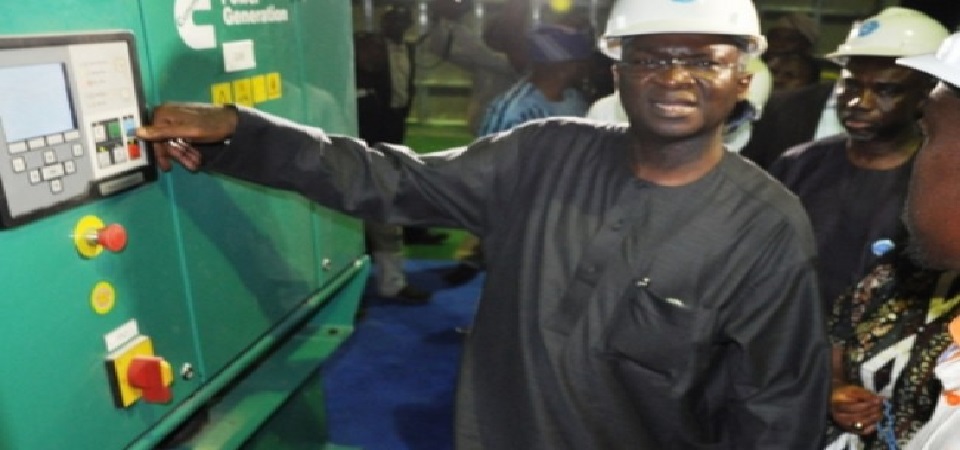
Mr. B. Fashola, Nigeria's minister supervising electricity sector

It is a season of decamping and reconnecting: it is all politics. Yes, it is possible right now that Nigeria is on auto-pilot at state and federal levels as politicians work days and nights to retain their jobs. Unfortunately, numbers cannot like: this is how we are growing, using GDP growth figures.

2010: 11.3%

2011: 4.9%

2012: 4.3%

2013: 5.4%

2014: 6.3%

2015: 2.7%

2016: -1.6%

2017: 0.8%

And if you consider that our power sector is moving into a terrible territory, you would be concerned. Things have gotten so bad that DISCOs are ready to exit the energy distribution sector.

The disagreement between the Federal Government and power distribution companies continued on Tuesday, with the Discos threatening to quit the sector and expressed willingness to resell the power assets at discounted rates.

[…]

Speaking at a press conference in Abuja on Tuesday, the investor in Jos Electricity Distribution Company Plc, Tukur Modibbo, stated that the power firms were doing their best but were willing to resell the companies at discounts to whosoever was interested in them.

He said, “You asked me whether we are willing to quit the business. Now, please listen to me and put it down clearly that we bought our distribution company cash down for $82m in 2013; we are willing to take $72m in 24 hours and leave.

“If you have $72m or Fashola can give us $72m, we are giving him $10m discount; if we get that sum, in 24 hours we are out of this business. Please, is there anybody with $72m here? If there is none, please advertise it for me because I’ve given you the price.”

Modibbo advised the minister to call for a meeting of stakeholders in order to avoid a further deterioration of the sector.

This threat from the DISCOs goes back to my old statement: the problem is the government, past and current. Yes, there is something fundamentally wrong that no one wants to do business in Nigeria’s electricity sector despite the obvious latent opportunities. If the opportunities are there, and people are not jumping to make money tapping them, then you have a policy problem. It is irrelevant if you are shouting for investors to come. Great policies are visible because everyone wants to jump in and make money. But making that money comes with fixing market frictions. In our electricity sector, people are not interested to invest because they see no path to profitability. It is a paralysis that government must fix.

Unfortunately, the problem with Nigeria’s electricity is the government. There is no sector in Nigeria where everyone knows that money can be made than in the electricity sector. Yet, it is also the one where people are not investing. The implication is that we have a misalignment between market needs and investment risks. Everyone understands the real need in the market for electricity. Yet, few are running to invest. No matter how you see it, the problem is not with the investors. The problem is with the government because the right policy is not available to stimulate the animal spirit of capitalism.

This is certainly broken; the distribution companies are doing far better compared with the transmission companies. At the moment, despite the fact that generating companies can expand capacity up to 24,000 MW, a limitation is imposed on the transmission system at about 7,000 MW.  For the DISCOs, they are not close to distributing that capacity and they have no clear incentive to expand because doing so is simply losing money. It is in Nigeria where DISCOs will reject power because selling will be making losses. When you look at it, you will agree with them: they are demanding for reflective tariff, and if we expect them to remain in business, the nation has to carefully examine their points.

Finally, DISCOs have to also ensure they have done their parts. The nation is overdue for smart metering, estimated billing must be discontinued immediately.

NIS – We Want To Partner

2
NIS

Dear Sir,

I am writing from Zenvus. We appreciate all the comments about Zenvus Boundary technology. We want to explore if you can help us reach out to NIS. Our proposal is to offer Zenvus Boundary as an additional digital value to the typical outputs licensed surveyors deliver to customers. We do believe that this will add value to NIS customers if you provide them a digital map besides the paper output. This digital map opens opportunities to all kinds of things.

Zenvus Boundary has a property search engine which provides a public record of any property it has ever mapped. This makes it possible that no one can clone the outputs. Each output comes with a unique code which the user can give to partners to search and verify the ownership (at least as stated on the survey). This has made it possible that financial institutions can independently validate our outputs.

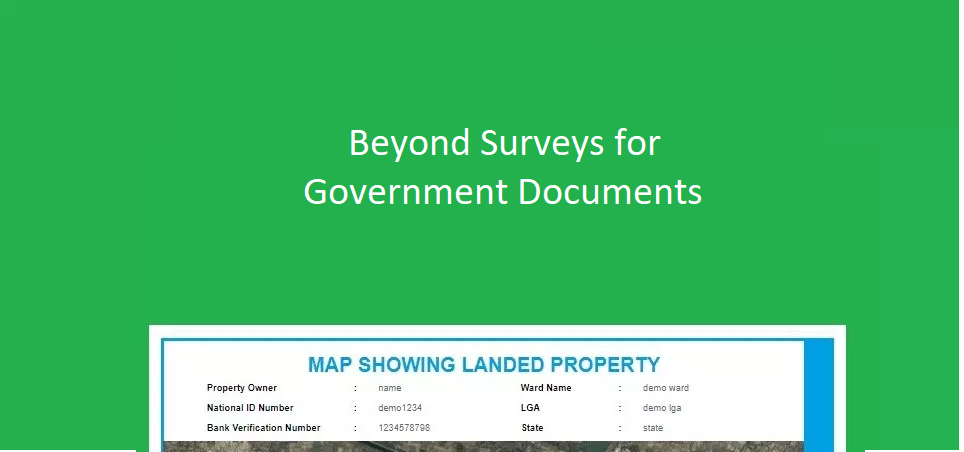
If you plan to use your survey to apply for loan, government verification of property, security, etc and you need the party to check the authenticity in our records, use Zenvus Boundary public search. Use the code on your report (it begins with SB) and check it here (looks like below).

Zenvus Boundary Property Search

As we maintain, we are not a legal advisor. We are not licensed surveyors. Yet, our services offer huge value in Africa. We make integration possible at scale because our outputs are in digital forms which customers can use for different uses. If you have farm sensors to track moisture, temperature and other pertinent data, Zenvus through its digital integration makes it possible to superimpose all that data on your farmland. And we deliver all these solutions for just $20!

I am seeking an opportunity to partner with NIS and will appreciate if you can make an introduction.  We will like to speak in any conference organized by NIS or possible meet the Excos. We want to standardize what we are doing at least for farms and farmlands by working with NIS. We truly believe that this is the future of mapping. Yes, giving people besides paper surveys, digital surveys which they have control on what to do with them.

Some of our enterprise customers use Zenvus Boundary to track farmlands they have invested in Africa. Through our digital maps, the investors rely on global satellites to check how the specific farmland has changed via the vegetation. The cheap maps were produced by the farmers with our low cost solution, making this possible.

As always, we thank NIS for the services to Nigeria. We want to work with all of you to deliver digital surveys with implications for precision agriculture, farm remote monitoring, etc at scale.

Regards,

Nky Udo

Zenvus / zenvus@fasmicro.com


NIS – Nigerian Institution of Surveyors

-We welcome partnerships with similar institutions across Africa

What is 5G? All You Need To Know

0
5G

I’ve often been asked about 5G and the key differentiation from previous generations. In this piece, I explain more about the technical requirements for 5G, from the spectrum, infrastructure to the core. I hereby apologize in advance for the technical details but this is necessary to explain 5G to those who may wish to know more about the recent developments within this field. As standards are being formulated and research is ongoing within this area, please note that there may have been changes in some of the technologies discussed in this piece. And this is only a short guide.

Every ten years, there is always a shift from previous generation onto a newer generation. In 1991, the development of GSM made voice calls to become reliable and cheaper and encouraged the widespread adoption of SMS and MMS. 1n 2001, 3G ushered in an era of data services and allowed workers access to emails from any location and this increased work productivity. 1n 2010, 4G led to the development of mobile internet and video based applications which triggered the development of many sectors like online shopping, e-banking etc. 2020 is not going to be different as it promises an era of high-speed connectivity, ubiquitous coverage and low latency, all thanks to 5G.

WHAT IS 5G?

What exactly is 5G? It’s a newer generation which presents different opportunities to different stakeholders depending on where your interests lie. To an equipment vendor like Ericsson, 5G represents a market opportunity to drum up the sales of infrastructures like small cells etc. To an academic, 5G would provide an opportunity to solve complex research problems and open up the potential for successful grant applications. To a car manufacturer, 5G simply represents the opportunity to make revenues from new offerings like connected cars. To a regulator, 5G would lead to the opportunity to make increased profits from new spectrum release and lots of debate on band issues etc. To telcos, it may represent a way to increase revenue, consider new offerings (verticals) and address the increased competition from over the top (OTTs) applications like WhatsApp etc. For the technology media, it’s an opportunity to increase subscription audience and perhaps pitch the development and deployment of 5G as a race between countries or operators.

ITU has classified 5G in terms of the three use-cases presented below:

  1. Enhanced Mobile Broadband: simply an extension of 4G and promises a speed of 10/20Gbps for either your uplink/downlink. In literal terms, as a user, you should be able to download a HD film in seconds.
  2. Ultra-Reliable and Low latency: Here, a stringent requirement of less than a milli-sec of delay is anticipated for applications like autonomous driving and remote surgery e.g. imagine a robot performing a surgery operation during an emergency, a delay could have damning consequence.
  3. Machine to Machine type Communications: allow for IoT based applications, 106 devices per km2g. smart metering, smart city, smart agriculture etc.

In order to transit from 4G to 5G, a combination of technological solutions e.g. network densification, spectral aggregation etc. have been proposed to maximize the capacity and spectrum usage respectively.

SPECTRUM

Here I explain more on the recent developments within the industry geared at providing more spectrum and increasing the efficiency of the existing spectrum for 5G applications. I also discuss the challenges associated with providing new spectrum for 5G.

The digital switchover has been able to free up spectrum; the 700MHz Band is in fact being cleared of incumbent to provide some bandwidth for 5G. Besides 700MHz, some other bands will be refarmed for 5G.

Furthermore, unlicensed spectrum (2.4GHz etc.) can support offloading from licensed bands. This is important because 5G would involve a combination of different technologies like LTE/WiFI etc. But the issue is Quality of Service cannot be guaranteed when using unlicensed spectrum. So it needs to be well planned and carefully integrated with licensed bands.

Now, the higher frequencies (30-300GHz), termed mm wave, are able to provide a large amount of bandwidth for 5G. The higher the frequency, the more data that can be transmitted. These frequencies were traditionally being used for satellites and radar applications. However, the use of these frequencies for 5G present challenges such as losses, shorter transmission range, signal blocking/absorption by objects etc. as a result of their different propagation characteristics.

Besides, at higher frequencies, the antennas become very small because of the small wavelength dimensions (from the name mm-wave) and the signals propagate very short distances, which is an issue for signal reception. Hence to maximize the signal reception, a large number of small antennas are combined within the transmitter and receiver to provide for spatial and multiplexing gain (hence the use of Massive MIMO technique which simply implies that the number of antennas is far greater than the number of data stream and requires hundreds/thousands of antennas).

To combat the propagation challenges I mentioned earlier, one method is to situate base stations closer to the users (which reduces the loss) or use techniques such as adaptive beam-forming to target the radiation towards or away from the user which also helps to mitigate interference. The downside however with citing base stations closer to the public is that it increases the public’s concern and worry of the effect of electromagnetic radiation on their health.

Now, the use of different frequency bands also mean that you need to be able to combine the carriers in different bands in a clever manner using a technique like carrier aggregation.

Previously, spectrum assignment was static and regulators simply monitor the spectrum to ensure that its’ being utilized for the right purpose. Research has shown this is inefficient and there are better ways to maximize the scarce spectrum resource. For example, the use of dynamic spectrum allocation (e.g.  Nominet Dynamic Spectrum Management) allows for the allocation of spectrum in real-time using a database which checks for the usage, location of user and the demand.

The summary here is that the spectrum needed for 5G would be realized in different bands; hence spectrum harmonization will be key here in providing the needed spectrum for 5G applications.

INFRASTRUCTURE (RADIO)

Here, I discuss the technological solutions within the radio interface to maximize the capacity.

Network Densification has been proposed to improve the spectral efficiency. It simply involves the deployment of low power nodes (pico cells, femto cells, Distributed Antennas etc.) within localized regions of high traffic demands. It’s anticipated that most traffic would originate from indoor areas, hotspots, public areas like stadium, malls etc., hence it makes sense to deploy an overlay of small cells within the macro coverage area.

The goal is to offload some of the traffic from the base stations (macro cells) to the small cells which therefore improves the frequency reuse. Of course, this requires careful network planning to balance the load and address interference challenges.

The small cells could be deployed with self – organizing network capabilities which allows the cells to sense their environment, switch off when in idle mode (reduces energy consumption), coordinate with other base stations to deal with interference challenges within the environment.

As small cells require less power and cooling and can be deployed closer to the user and within existing networks; the deployment of small cells would therefore reduce the CAPEX and OPEX incurred by operators.

Now, since the traffic bottle neck varies from network to network, offloading strategy could be between networks of the same air interface technologies (Macro/small cells) or between networks of different air interface technologies (LTE/Wi-Fi) or between mobile operator core network and public internet. These combination of technological solutions involving the use of network of different technologies or network of multiple layers of different sizes is referred to as a Heterogeneous Network (HetNet) and has been proposed for use in 5G network. Interoperability is vital here to allow these technological solutions work together.

The deployment of a HetNet to increase capacity has to be complemented with a backhaul for this to translate into an enhanced user experience. A proposed technique for backhaul in 5G involves the use of the cloud Radio Access Network (cloud RAN) architecture with Coordinated Multipoint processing (CoMP). In a cloud RAN, the signal processing from the base stations is centralized within a pool and can be visualized whilst CoMP simply involves the dynamic cooperation and coordination between multiple geographically separated base stations to improve spectral efficiency, address interference and reduce energy consumption. Wireless backhaul is also an alternative for use in 5G.

CORE NETWORK

As seen so far, the three use cases of 5G have different stringent requirements e.g. latency, bandwidth etc. It therefore becomes a challenge to support all these services within the same physical infrastructure. Another challenge for the network is that it has to be able to react to the demand of the users regardless of the geographic locations.

To address these challenges, end to end Network Slicing, has been introduced.  In 5G, the network will be sliced into multiple virtual networks to support different radio access technologies or services with different requirements. As network slices are logical arrangements, which can separated into individual entities, the slices can therefore be customized depending on the requirements of the applications. For example, an autonomous system may require low latency whereas a user downloading a video requires bandwidth. These services will be delivered on different virtual network slices and transported within the same physical infrastructure.

Now, in order to facilitate  the smooth transport of the various virtual slices within the network as well as control slices on the fly (depending on application requirements), Network Function Virtualization (NFV) has been introduced. In simple terms, it means the virtualization of network functions like routers, firewalls, evolved packed core etc. and simply represents a shift from hardware to software within the network. NFV would enable the network to become programmable, agile and dynamic and reduces the costs associated with purchasing hardware for network entities. In essence, it would allow the network to be able to react to the demand of the users, a key necessity for 5G services.

The deployment of NFV within a traditional cellular network would make control and management very difficult; hence, the introduction of Software Defined Networking (SDN), an intelligent network architecture, for use within the 5G network. This simply replaces traditional hardware with programmable software services and separates the control plane from the data plane. It allows for a simplified network management and introduces flexibility within the network. SDN allows for the dynamic reconfiguration of the network and thereby give users the perception of infinite capacity for their applications.

The softwarisation of the network has enabled the introduction of newer technologies like Mobile Edge Computing (MEC) within the network. This simply means bringing the cloud/IT services closer to the edge of the network or the users. This reduces latency, improves the quality of experience, allow for contextualized services and efficient use of resources.

In summary, the core will be developed based on a ‘Service based architecture’ due to softwarisation and virtualization. This would allow logical entities within the virtual network to communicate via protocols. The virtualization and softwarisation of the core would also allow for tools like Artificial Intelligence (AI), Machine Learning (ML) and Data Analytics to be used for other capabilities within the network.

OTHER TECHNOLOGIES AND DEVELOPMENT

Other Technologies: There are of course other technologies e.g. Satellites which may have not been mentioned previously but have a key role to play in the deployment of 5G. For example, Satellites could be used for backhaul, offload traffic from base stations, deliver broadband services in underserved areas or emergency regions and for can be used in safety services. The integration of terrestrial and satellites domains within the 5G network is all due to Virtualization.

Waveforms and Access technologies; New waveforms and Access technologies e.g. Non-Orthogonal Multiple Access (NOMA), Sparse Code Multiple Access (SCMA), Quadrature Amplitude Modulation Filter-Band Multi-Carrier (QAM-FBMC) etc. are being researched for use in 5G.

Security and Privacy: The virtualization of the network raises complex issues for critical services and security. The heterogeneous nature of the 5G network mean that each layer of the network could be owned and operated by different operators, therefore privacy concerns become an issue. Interoperability is key for the deployment of 5G and raises important questions on ethics, security and privacy concerns.

Green Initiatives: It is anticipated that Green Communication technologies would be implemented within the 5G network to reduce energy consumption and improve energy efficiency.

Conclusion

5G represents a shift from consumer technologies to industrial technologies as it promises to lead to the development of a highly automated and intelligent environment which would revolutionalise many industries, including automotive, transportation, supply chain, manufacturing, energy and utility services, retail, agriculture, health, education, etc. For this to happen, 5G networks must be able to provide diversified services, support accesses of multiple standards and coordinates multi-connectivity technologies. This has resulted in the virtualization and softwarization of the network to facilitate interoperability and encourage a seamless operation among different technologies. The core is the heart of the 5G network, developed using a service based architecture, which has therefore triggered the development of new business models e.g. Network as a Service and market opportunities which would no doubt justify the investment in 5G. There are however risks and issues that need to be addressed e.g. Spectrum harmonization, Interoperability, security and privacy.

Kenya Must Not Separate MPESA From Safaricom; Platforms Thrive On Dominance

0
MPESA break

It is a big irony: digital dominance delivers better value to customers. Yes, the fact that Facebook has many users is the very reason it is valuable to people. Go and build a better technically superior version of Facebook, many would not care unless you can onboard many people in it. It is an elemental component of the Internet which is driven by the positive continuum that more users deliver better experience, and that leads to more users. Simply, Facebook’s best feature is that it has many people in it. Remove the people, it has no business.

It is under this same construct that I make a case that breaking MPESA from Safaricom in Kenya will hurt MPESA users. The fact is this: MPESA is immensely useful because the telecom company which powers it has many users. That is why MPESA is successful. Safaricom controls 67% of the market, Airtel has 19.7%, Telkom holds 8.6% and Equitel is at 4.4%, according to the Communications Authority of Kenya latest stats.

Ever since Analysys Mason released a report recommending that Safaricom is declared dominant and its mobile money entity separated from its core business, Kenyan telcos have been pushing to have these recommendations or at least part of them implemented.

It has been reported that Telkom, Airtel and other telcos have separately lobbied Member of the National Assembly to push for an amendment to the Kenya Information and Communications Act to declare any telecom with more 50 percent market share is declared dominant.

“We are in a situation where one player has a market control of 65 per cent, bigger than all the other players combined. It is unfair for the rest who are seeing diminishing revenues and can hardly keep up operations,” said Prasanta Das Sarma, Airtel Kenya’s CEO when he appeared before the National Assembly’s ICT committee.

The Kenyan government is right: there is no need to punish MPESA/Safaricom because what they are doing is not necessarily going to hurt consumers. If the competitors want to win, let them innovate and find new categories to dominant. But asking for the break-up of MPESA from its parent is not the best path.

Provided MPESA and Safaricom are not involved in any abusive tendencies in the markets, Kenya should not break them. Moving MPESA from Safaricom will make it harder for MPESA to innovate and evolve. It will be the same thing as separating iOS from iPhone hardware (in Apple) where one company makes iOS and another one makes the hardware. The reason MPESA is a category-king product in the business is because of the close affinity with the operator which ensures that solutions are delivered at the highest quality and user experience.

Competition in Digital Platforms

The way digital platforms work makes them special. They all tap into the duality element where they are both products and platforms. The value comes from the dominant market share they have and the ability to build moats preventing competition. If you want to make them operate as industrial age companies like Unilever, P&G, and Pepsi with regards to competition, you would run into trouble as you will mess them up. Yes, you will take away the very reason why customers like them. Also, their dominance can be ephemeral and very tangential – new apps can easily emerge.

Because of this inherent platform-element, these great companies have duality in their natures: they are both products and platforms at the same time. Facebook has an app (web and mobile) which is a product. That app is also a platform which enables other applications (including 3rd party apps like WordPress plugin) to be built upon.

You want to have many options for users to buy soaps in the markets, making sure one company does not dominate in that physical product. The fear is that if you have only one brand, prices will go up, and users will be hurt as the company may not invest on innovation. Also, in a case of controlled products like electricity where government gives licenses to utilities to provide services to users, the prices are regulated to avoid the utilities which are local monopolies, from increasing them arbitrarily since choices are limited. Utilities need the quasi-monopoly to invest on infrastructure which can only be recouped over decades.

But for digital platforms like MPESA, Facebook, LinkedIn, Twitter and Instagram, you cannot apply the same principles. While buying soap in a market is not influenced by the number of people buying at the same time, using any of these digital solutions is dependent on others using them. So, if you break MPESA from Safaricom which supplies the users, you have destroyed the soul of MPESA. Not many people care about the name. They only know that more value will come because everyone is on Safaricom.

The key to innovation here is that if MPESA has won the specific flavor of mobile money, others should go and pivot something new. There are many things still out there (like blockchain money) which are yet to be invented or perfected. Possibly, they would find a niche and dominate there. They cannot use regulation to win in this way. That is why Kenya should not touch the MPESA/Safaricom alliance. The only losers will be the users.

My point is based on the U.S. interpretation of competition where the focus is on users. For example, if there is only one company that offers a service and users are not hurt, U.S. government will not be concerned. But in Europe, competition is looked from the angle of market players where even though users are not affected; the region wants other companies to have a share in the game. Technically, even though you are taking good care of users, you may need to reduce the goodies to accommodate other industry players. I do think the Europe’s model is faulty in the digital world. I prefer the American model: if you win, and continue to be fair to users, enjoy the benefits. Others can go and find new spaces and dominate. That is how innovation advances.

All Together

The Kenya government is correct by reminding the players that it cannot help them by breaking MPESA from Safaricom. Airtel and others should innovate and pioneer new areas of mobile payment, transfer, remittance, etc. MPESA pioneered the current framework of mobile money, and must be allowed to enjoy the fruits of its efforts provided it is not abusing the dominance by hurting users.

“We are a free market where the market corrects itself naturally without government intervention. Why would you want Parliament to punish success when one player is doing better than the rest of the telecommunications firms?” asked Mr William Kisang, chair of the National Assembly’s ICT committee.

He went further to address Airtel, telling the CEO that they need to invest more in things like a clearer network, better mobile money services and anything else that will attract customers to them before demanding regulations.

Mr Kisang said it all well: find your own path. There are many things yet to be invented in the Kenya telecom sector. Do not punish success and innovation with mindless regulation.

My Conversation with a Fellow of Nigerian Institution of Surveyors on Zenvus Boundary

0

Since we launched Zenvus Boundary, a tool which helps anyone to map his/her property for N7000, to the public, we have received many emails and calls from licensed surveyors (in Nigeria) for explanations. This is not a new product: we have used this for works with (farming) cooperatives which the Central Bank of Nigeria funded. Honestly, I do not understand the confusion: Zenvus Boundary has never claimed it is a legal tool or can help you overcome government CoC, DoA, etc legalities. We simply have a technical tool.

Zenvus Boundary maps farm, land or house perimeter boundaries, calculates the areas and populates the data onto Google Earth. From Zenvus portal, the surveys can be downloaded or printed. It supports cooperatives, governments and individual farmers, enabling these entities to have survey reports at a fraction of the typical cost of surveys.

Today, a Fellow of the Nigerian Institution of Surveyors (NIS) took it public; we truly appreciate the comments as it offers the opportunity to respond in this way. I have responded to him. Largely, the confusion in Nigeria is that it is only licensed surveyors that can help a farmer or a gardener who needs farm map before deploying precision agriculture. For us, registering properties with government is just one of the uses of a map. CBN does not even care on what it does with farm surveyors: it simply wants to know where this land is situated, size, etc to help in its loan scheme. No one asks you if a farm in a bush in Yola was registered with the ministry of lands.

Again, Zenvus Boundary is a technical tool. We do not claim any legality. See it as a pencil which can help you as a surveyor but it does not give you a surveyor license. But if you want to work with us, we will generate that your typical output.

If you present a photo to a court, it may ask you to get a notary public to “legalize” it. That you need to do that from a notary does not mean the photo is not valid. Our outputs deliver the same thing those expensive ones do. But we are not notary public and do not put any legality to the outcomes. It is left to our partners and users to work on those.

Meanwhile, to download and install Zenvus Boundary app, do it on Google Play here. The following are the manuals (PDF) on how to use the app and also print the survey results: Mobile App manual  and Web manual.


This is the conversation.

Are you aware that the profession of Surveying is regulated by law in Nigeria? Are you also aware that Surveys used to state claims to any land holding are called cadastral surveys and such surveys should be prepared to a specified precision and duly authenticated by a professionally qualified Surveyor?
1. Zenvus: Thank you for writing. This is highly appreciated. It means people are noticing our product. This product is not JUST for Nigeria. This is a global product. It is a tool just as the surveying tool you use for whatever you do. I am not sure the tool you use knows you are a surveyor. Take this solution as a technical tool. It is irrelevant if your T-square or pencil knows you have a surveyor license. We have a tool which is not designed to overcome any Nigerian surveyor law, specifically. Please check well, and read our claims: we did not quote any Nigerian law. We do not just operate in Nigeria. Our largest market today is East Africa. It is left to local surveyors to meet all the legal obligations by using our tool. Nonetheless, I would be happy to work with you to help Nigeria develop a cheaper way to ensure we reduce the cost of property surveyors in order to encourage people to patronise the industry.

In most states in Nigeria only Cadastral Surveys prepared as I have described above can be used to process Certificates of Occupancy, Deeds of Assignments, Serve as documentation for Loans and process building and development approvals. As innovative as your “system” is, it falls far short of meeting not to talk of replacing the requirements of a cadastral survey.
2. You are extrapolating on the possibilities which is good. But I know that the pencil you use as a surveyor does not give you COC, DEA, etc. I am not sure we have claimed any of such. We have a tool and we do not claim any legality or law. Just as you buy pencil for your surveyor service, see this as a technical tool. But note that there is nothing in your typical survey output we cannot generate using our raw data. Of course, you sell it more expensive because you have a license. We offer a technical product and not a legal one. People build on that.

I think you have been economical with the truth regarding the points on which your service can deliver. truth be told you cannot self audit, self medicate, self investigate and self try someone in a case you are involved.
3. Keep writing. Our services are used in the CBN Anchor Borrowers programme for farmers. Go and ask those farmers how this has helped them. Farmers cannot afford the expensive work of the surveyors which are not necessary for the use-cases. I will be happy to attend your association meeting and educate on the benefits of mapping. Do not look at the law. Without digital mapping you cannot do PRECISION AGRICULTURE. A farmer does not need to register his farm with government before implementing new farming technologies. Your understanding of the use of surveyors is largely focusing on pay me to get surveyors so that the output is registered with government. That is a very limited use-case. There are many use-cases that would not affect registering with government.

The public should be warned that this will give u a good photographic representation of what you call your property. Something you alone can enjoy and possibly others may admire but not something can can stand up legally for you as a properly executed SURVEY.
4. We are not claiming any legality. Nothing here states that. We are simply offering a technical solution which can power precision farming. I have surveyors like you that have signed like agents, nevertheless. They are customizing the output to make what you have but in a very inexpensive way. Their license will handle the legality. The pencil you have as a surveyor does not make you one.

Dear Sir and members of the public kindly check up the following The Nigerian Institution of Surveyors, The Surveyors Council of Nigeria, Office of the Surveyor General of the Federation, Office of the State Surveyors General etc.
5. We know them. Our product is not against them. If you take a photo and present it to a court. The court may say it is not legal until a notary public notarizes it. But that does not mean the photo is not valid. You, the surveyors are notary public. People do the work and pay you to endorse so that the documents can be “normalized by law”. Our simple request: do not charge them much for those that want the legality element. But on the technical capability, modern tech is making doing this at 10% what the old system used to offer. We are a technical company and not a legal/surveyor/etc. We offer a technical product.

Finally, Zenvus Boundary is used in India, Kenya, Liberia, etc. It is not just Nigeria. So, we have not made this to overcome any local law. This is very important.

[Another comment] It is beyond endorsement, it is about precision and accuracy that is what a professional Surveyor is know for. Whatever your tool or app does as long as you are using Google map as you cliam is not accuracy as relate to survey laws and regulations in Nigeria.
If you care to know, I don’t use Tsquare or pencil to draw survey plan. The tools we use it’s about accuracy depending on the type and area of the survey. Any GPS does not do that. It is good for you to know that.

I do not know the level of accuracy you need in a farmland with a market value of N70k in a bush in Zamfara but you need the survey to tap into the CBN fund or prepare the land say for precision farming. Hiring you may cost N300K. But with my technology, the farm gets it done at N7k. As I have said, the lack of innovation in the sector is this thinking that every survey must be on the same level as though you are mapping Aso Rock. To unlock value in modern farming, NIS has to evolve. What we have is helping farmers track farm boundaries to enable precision etc at scale.
On pencil and T-square, that is actually a joke. Do they still make T-square? But get the point. Again, this is not just for Nigeria – this is a global product. I will be happy to visit NIS and educate how innovation in surveying can unlock more productivity in agriculture. Surveying is not just buildings!