DD
MM
YYYY

PAGES

DD
MM
YYYY

spot_img

PAGES

Home Blog Page 7103

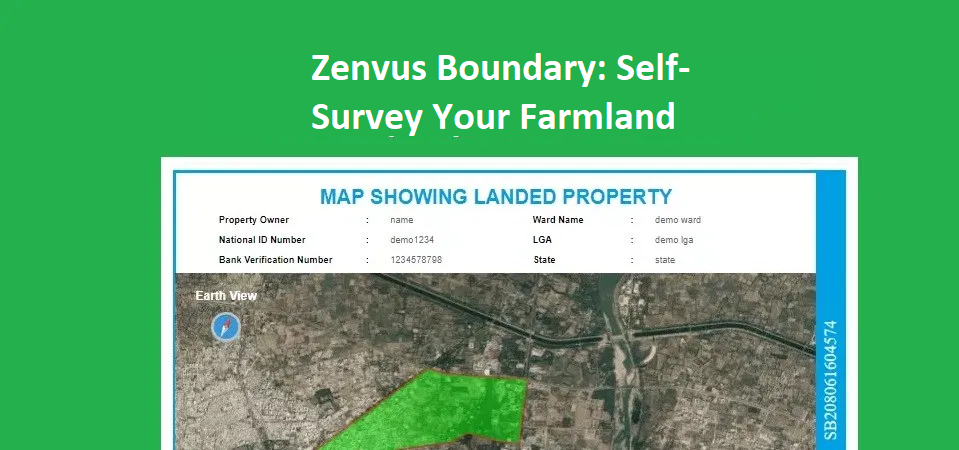
Zenvus Boundary: Self-Survey Your Farmland

12

Many months ago, we created Zenvus Boundary to help farmers in Northern Nigeria to survey their farmlands. The agents that worked with partner-cooperatives informed us that we should make a public version that would enable anyone to self-survey his or her farmland. Today, from the engineering lab of Fasmicro, we announce the launch of Zenvus Boundary.

Unlike the hardware version that comes with Zenvus device, this one is an app which requires a mobile device (smartphone or tablet) with GPS capability.  It does not require internet access to survey a farmland but does require one later for data transfer to Zenvus portal. For enterprises/agents/partners, there is no limit on the number of properties which can be surveyed before data transfer.
Zenvus Boundary – Introduction

Zenvus Boundary maps farmland perimeter boundaries, calculates the areas and populates the data onto Google Earth. From Zenvus portal, the surveys can be downloaded or printed. It supports cooperatives, governments and individual farmers, enabling these entities to have survey reports at a fraction of the typical cost of surveys.

Property owners can do this without any external help. And when done, register with their cooperatives which help them ratify the boundaries with governments. We use this to formalize farmlands and properties, enabling financial inclusion like agro-lending, using farmlands as collateral.

A farmer upon using Zenvus Boundary can download a PDF of the farm boundary report (sample here) in Zenvus account. The Zenvus Boundary also enables cooperatives or unions to have their logos and names emboldened in the reports for each member-farm..

Installation /Manuals

To download and install Zenvus Boundary app, do it on Google Play here with your Android device (either tablet or smartphone). Our app is called Zenvus Boundary. The following are the manuals (PDF) on how to use the app and also print the survey results:

  • Mobile App manual (this explains how to use the app; should be used first)
  • Web manual (after using the mobile app, this explains how to download the report on Zenvus web app).

Brief Usage Instruction

If you download Zenvus Boundary app on Google Play, follow the screen instruction (register, login, etc. Please note the NIN as you need it to access the survey later). Click BEGIN PROPERTY to enter scan mode, put the property info, and click CAPTURE as you walk around the property perimeter. When you are back to the original position, click EXIT PROPERTY. That completes the data acquisition. Once that is done, click the SERVER TRANSFER mode when you have internet on the mobile device. If you are an individual property owner, put 0000  (four zeros, i.e. numerals) on the field code (agents/partners/enterprises, capturing many farmers at once, use the code we sent you). When transfer is done, it will say “…successful”. (Our algorithm will construct the survey with the data, superimposing on Google Map to deliver a survey which puts your property in visual relationship with other properties around.) Copy this link to your web browser https://boundary.zenvus.com/ ; your log Id and password are both the NIN you used for this property in the mobile app. System will ask you to create password and email. Inside you will see your survey to view and print. For Agents, the process is different as you would have access to all properties under your control, read the manuals.

Verification

If you plan to use your survey to apply for loan, government verification of property, security, etc and you need the party to check the authenticity in our records, use Zenvus Boundary public search. Use the code on your report (it begins with SB) and check it here (looks like below).

Zenvus Boundary Property Search

Cost of Service

We have set the price of using this solution to map a farmland perimeter with the survey printed on Zenvus portal at $20 (N7,000 Nigerian naira) per property to maximum of 5 acres [for example, 6 acres would be captured as two farms, for $40]. You would have the opportunity to include your name, LGA, National Identity Number, BVN, etc. Most of those entries are optional.

Franchise/Agent Opportunity

We have franchising opportunities across Africa for those interested in helping farmers, landlords, etc to digitize their property perimeters and locations at bulk. Here, you could have a contract to map farms in a whole village tied to each farmer.

It requires a one-time license fee [email for details] and offers 80% royalty on sales [You charge the farmer $20 but you send 20% to us while keeping 80%].You would have an enterprise account which will make it possible to map thousands of farms. If you are interested, contact zenvus@fasmicro.com. Note: our team has demo logins you can request via email to see how the system works and how you could build a business with Zenvus Boundary.

Sample of Zenvus Boundary

NB: This solution has been used to support Zenvus farm sensors (focusing on governments and cooperatives at the moment) as we need farm boundaries to provide granular insights to farmers using Zenvus AI systems.  Farmers with Zenvus hardware do not need the app, just put the sensor in boundary mode and walk round your farm; the map will be done.

IoT – Where Is The Money?

0

There has been a lot of hype and projections on IoT (Internet of Things) within the technology space; we have seen several forecasts and market models predicting the revenue generation from these technologies. It’s even been estimated that there would be around 20.4 billion connected devices or more (depending on your source) which would no doubt surpass the world’s population. And, this presents a good market opportunity for telcos.

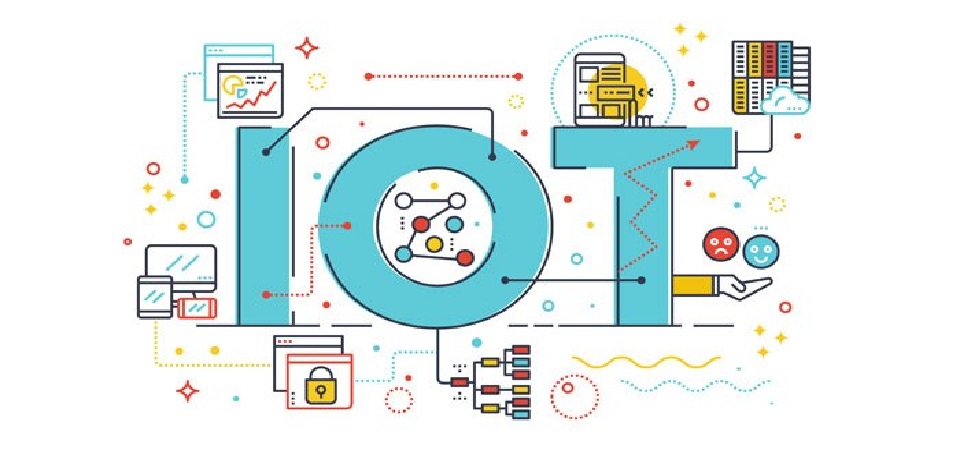
The complexity of these technologies presents a conundrum to telcos exploring areas of revenue generation from IoT. In order to address their concerns, I highlight the IoT value stack below and discuss the potential in terms of revenue generation. Each value stack represents a market.

Device    >>    Connectivity   >>    Gateway   >>    Data   >>    Integration   >>   Applications

The value increases as you ascend the value chain.

Device: e.g.  fridge, sensor. This value stack is all about the design and development of devices. This is a competitive market and price/performance of devices are the differentiator between manufacturers. E.g. depending on functionalities/price, I can choose to either buy a fridge from LG or Bosch.

For device Manufacturers, IoT presents an opportunity to add services to their products (PaaS) and gives them the opportunity to gain revenue throughout the life cycle of their product rather than the conventional one-off payment e.g. adding Connectivity to a fridge allows the fridge to order for groceries when desired by the consumer; this allows the manufacturer of the fridge to make additional revenue every time a purchase is made. The data may also inform the manufacturer of the need for servicing or maintenance before the fridge breaks down perhaps due to an electrical fault.

Connectivity: Here, the remote device e.g. fridge is connected to a communication network. This layer is very competitive and is one of the least economic. Telcos can make use of their existing network to provide the required connectivity (Narrow Band IoT). However, they face stiff competition from other free connectivity options like Low Power Wide Area Network (LP WAN). Telcos have the edge over other communication offerings where quality of service and reliability are important. For global companies, global and seamless connectivity is a key requirement towards deploying IoT within their network; the de-centralised operation of telcos in different markets with local regulations thus presents a challenge.

Gateway: Like a wireless router (can be hardware or software), it collects, analyses and transmits the data from the remote device.

Data: Data from the remote device e.g. fridge is stored, analysed and managed here.

Integration: This is the layer with the highest economic value. It is the point at which the value of the collected data is realized. Here, the data collected is linked with an external application. e.g. the data from the fridge orders for egg from the grocery website.

The Gateway, data and Integration layers represent the server. The vendors here are Microsoft, Amazon and IBM all competing for the market. Differentiation here is solely based on the quality of service and price offered. Data Interoperability is a key issue here, to allow for a seamless operation between data from different vendors.

Platform: Could be software or hardware, it connects everything within the IoT value stack. As IoT represent a novel area to some companies, offering a platform would be beneficial to these companies; hence, platform represents an area of revenue for telcos.

For telcos seeking to find business opportunities within IoT, the key would be to start with their area of strength (connectivity), seek collaboration with partners in other layers of the stack and gradually look into investment within the other areas of the value stack which presents high economic value.

Most Active Investors (Local & Foreign) in African Startups

0

The following entities are the most active investors in African startups at the moment. I have included their recent deals after briefs about them. TLCOM Capital TLcom Capital LLP is a Lagos, Nairobi and London based Venture Capital firm focuse on Tech enabled companies across Sub Saharan Africa. TLcom has been investing across Europe, Israel […]

This post is only available to members.

Beyond Data Scientists, You Need Data Translators

0
Data Translators

Data is the new oil but refining that oil is going to be catalytic in any organization. Great organizations put efforts, after the refining to make sense, and take action based on the insights generated. So, beyond the data scientists, you may need Data Translators. Just as technology needs to be structured to help in meeting the corporate goals, you need someone with capacity to make sense of BOTH the data engineering process and the business objectives. A data refining process which is decoupled from the corporate goal adds no value. Likewise, it would be hard to achieve a corporate goal when no one can communicate it to the data refiners.

A data translator is a conduit between data scientists and executive decision-makers. They are specifically skilled at understanding the business needs of an organization and are data savvy enough to be able to talk tech and distil it to others in the organization in an easy-to-understand manner.

This professional must be someone who can “talk the talk” of both the executives and the data scientists. They are adept at extracting the business meaning and applications from the information they are provided by the data scientists. They not only respect the functions of the data scientists, but also understand the needs of decision-makers; therefore, successful data translators are typically respected by those entities in return.

$150 Billion-Jeff Bezos, We Need You In Africa

0

The Founder and CEO of Amazon. Jeff Bezos, is worth $150 billion, notes Forbes (these numbers change as stock values move). This is a record accomplishment in the accumulation of wealth. But beyond these digits, Jeff Bezos is a builder. He has mastered the integration of the digital and physical worlds at a scale unprecedented in human history. Africa needs him, because if he comes with the same spirit, great things could happen. His AWS business is marginal in Africa; we need ecommerce as that would force him to look at enabling infrastructure.

Amazon investors, including CEO Jeff Bezos, should be in a festive mood, too.

Amazon’s  stock hit a new all-time high Monday. That means Bezos — the world’s wealthiest person — is now worth more than $150 billion, according to Forbes.

For perspective, Bezos is worth more than Microsoft  co-founder Bill Gates and Google co-founder Larry Page combined.

As we explore support from ICT utilities like Facebook and Google, I do think we need to find ways to get Bezos to show interest. He is among the few that can invest in hard infrastructure to unlock more values in the continent. Think of establishing a solid logistical system that will help in the economic integration of Africa. He has done it before and he can do it here. African Union should explore that opportunity with him.

In this video, I explain why Jeff can help in unlocking value in our logistics and transportation sectors which will help in deeper intra-African trade. Do not ask me why we can’t do it by ourselves? Good question, but we have not even started. So, if he shows interest, we need to try an alternative since what we have now is not working. It is so shameful that countries like Nigeria do not have functional postal systems thereby affecting the growth and development of the ecommerce sector
.

 Yes, it may not be a bad idea to ask Jeff to come. African Union will offer him tax benefits (as American cities do) for years. Call it Conglomerate Tax we need to pay Amazon to help develop our logistics/transportation sector.