DD
MM
YYYY

PAGES

DD
MM
YYYY

spot_img

PAGES

Home Blog Page 7103

African Telcos’ Innovation Dilemma

1

I remember the first time I made a phone call; it was 2002. Mom handed me the phone after speaking with Dad; I was so excited. I was all smiles that day. I had seen phones before then. One was in the landlord’s sitting room – a land phone with lots of outside wires all over the electric pole. Each passing year saw diminishing number of wires on that pole until the land phone in our landlord’s sitting room became part of the decoration. So, I came to understand that those wires belonged to a certain company – NITEL – and they were actually disrupted by those companies that made my 2002 phone call possible. Those companies are the mobile operators, the modern telcos.

Today, the table seems to have turned on the telcos. Here’s Prof. Ndubuisi Ekekwe’s summary of the current reality:

It is looking increasingly challenging for telecom operators in Africa. I can predict that African telcos have past their best moments. Yes, MTN, Glo, Airtel Nigeria and 9Mobile will struggle as Nigerians are provided with these new options to connect to the web. It is not just Google; SpaceX is coming along with amalgam of satellite players. Add the pains from OTT solutions like WhatsApp, you would understand why the telcos will have sleepless nights.

Simply, the future will look increasingly challenging for terrestrial operators. Because from internet balloons to satellites, telcos will be under-serve competition and many of them will die. By 2025, I do expect the top four telcos in Nigeria to merge to become two. The four telcos are now more than necessary with all the evolving options.  If they do not merge, they will lose value and that will hurt investors. The world is changing rapidly and the competition will be extremely ferocious that telcos as we have them will continue to see massive loss in ARPU. These GSM players disrupted CDMA players. Now, they need to find ways to survive.

In this article, I will examine two possible solutions that the Telcos can combine in order to get out of this quagmire.

Image result for fiber optics images

The Opportunities /Threats/Challenges

Finding new paths to glory will depend on how telcos leverage two key enablers – 5G and potential MVN (mobile verification number) – in the next few years.

5G

5G is crucial to the future of the telecom industry. Its characteristics of possessing an extremely high speed with zero latency (no lag) positions it as the major enabler for IOT, Driverless Cars, Remote Surgery and other areas. The value here is that telcos can provide better service to internet users while also gaining access to a new broader market of smart systems and IOT.

My position is in view of the recent activity in this space. With precision farming technologies coming onboard and Google launching AI lab in Ghana, smart system innovations will become mainstream in years to come and 5G will be vital as it makes that transition.

The telcos are best positioned to exploit the 5G advantage because they have at scale the very fundamental infrastructure required for 5G connectivity, Fiber Optics! But deploying the other necessary 5G infrastructure is a high cost investment in an uncertain market. Indeed, not many investors will be too keen! To be able to make this upgrade will demand cost effectiveness. One way is to utilize a passive network sharing model; it has been successfully utilized in India. The choice of India’s model is informed by the many similarities that Africa and Nigeria share in common.

With Google building 200 Wi-Fi centers by the end of 2019, the short term impact will see a decrease in revenue for the telcos but may not be enough to be a real threat to their future survivals. This is because of the huge infrastructural cost associated with enabling 5G. Although, Google has the cash, the challenge is really if it will anchor such investments in Africa. If Google does view having 5G capabilities as integral to its future in Africa, it can form partnerships, lay its own fiber, buy an ailing telecom company or rely on the probable 5G-like service of Space X (Alphabet, Google parent, has invested about $1bn in Space X).

On the other hand, the Space X threat is more tangible. Nigeria’s internet penetration is about 47%. Space X may have a better positioning to increase this number but it is important to note the demographics of the unreached 53%. The demographics are usually rural dwellers, mostly uneducated, not financially-capable to own smartphones. In the cities, where the 47% penetration is concentrated, the competition is going to be tough, especially in the short term. The winning model for any of the players will be ‘better service at cheaper rate!’ Space X is more likely to win there in the short term, but still that doesn’t ensure its future in this space. Fiber optics is regarded as a fundamental infrastructure for 5G and future generations of networks. With the telcos’ ability to upgrade to 5G (and future G’s) with access to a new market of connecting smart systems, they possess the potential of gaining market advantage with a radical business model.

Elon Musk’s promise of delivering 5G-like service to billions around the world is still yet a promise. The policy bottleneck associated with fulfilling this promise is even more challenging. Whatever the case, SpaceX must find a scalable way to deploy not only 5G but future generations of networks. If it doesn’t, it may only end up as a good competitor, not really a disruptor!

MVN (Mobile Verification Number)

Fintechs in Nigeria have brought dynamism to the financial sector. But their current approach which depends on the bank Accounts of customers can only be marginally successful. With a unique customer base of about 30 million customers as verified with the BVN (Bank Verification number) for all the banks in Nigeria, the fintechs at their highest peak is only serving 16.7% of the market in a country of about 180 million people.

Telecom services have been crucial in the redesign of the financial sector in recent years. What’s interesting is that the telcos have all the necessary capabilities to be the model fintech that will disrupt the entire banking system in Nigeria. MTN alone had over 53 million active lines in 2017, with the total for all the telcos at over 142 million active lines. Let’s not forget that many of these telcos have presence in many countries; clearly, the telcos have a last mile advantage over the banks.

Just like the issues of transparency and credibility were addressed using the BVN, especially in managing multiple bank accounts, the telcos can make a similar provision using the MVN; Nigeria was reported as the country with the highest usage of multi-Sim phones in the World. The MVN will serve to authenticate the digital identity of the customer just like the BVN. The mobile phones of these customers is an ideal platform regardless of whether they have internet connectivity or not; it is on record that the number of transactions performed using the USSD service has more than doubled the number of transactions on mobile banking platforms for banks offering USSD.

As the telcos fights for their future, they must find new ways to unlock value using the capabilities that they already have. The trend of decreasing ARPU is most likely to continue for telcos as OTT applications continue to depress revenue even as they lose 10 million customers to Google’s Wi-Fi project. Also, SpaceX looms on the horizon! The financial services sector provides an exciting prospect that telcos should not fail to consider. The key challenge in exploring this opportunity is Policy. Exploring this opportunity isn’t all grey area for telcos; Safaricom has modeled how it can be done.

All together

The Telecom sector is definitely not going to be the same. For the Telcos to remain in the game, it will require a redesign that focuses on leveraging their capabilities to unlock value in other sectors, finding innovative ways of deploying better technologies while keeping cost down, and designing new roadmaps that position them for glory in the long term. I hope they succeed.

WhatsApp Payment Circular Pricing Model

0

This is what is called “head, you win, and tail you also win”.  So, WhatsApp desires to make sure that it disrupts phone calls which remain a very popular way of handling customer requests. It imposes fee conditions in a way that it could stimulate demand from users without destroying service experience. So, over time, everyone will adopt WhatsApp because they have gotten quicker responses using it. It is a growth feedback loop which is a positive continuum. I am very confident that AI was used to design this one. This is loop (or circular) pricing model.

After getting acquired by Facebook for $19 billion in 2014, it’s finally time for the 1.5 billion-user WhatsApp to pull its weight and contribute some revenue. If Facebook can pitch the WhatsApp Business API as a cheaper alternative to customer service call centers, the convenience of asynchronous chat could compel users to message companies instead of phoning.

Only charging for slow replies after 24 hours since a user’s last message is a genius way to create a growth feedback loop. If users get quick answers via WhatsApp, they’ll prefer it to other channels. Once businesses and their customers get addicted to it, WhatsApp could eventually charge for all replies or any that exceed a volume threshold, or cut down the free window. Meanwhile, businesses might be too optimistic about their response times and end up paying more often than they expect, especially when messages come in on weekends or holidays.

Fixing Property Fraud With AI

0

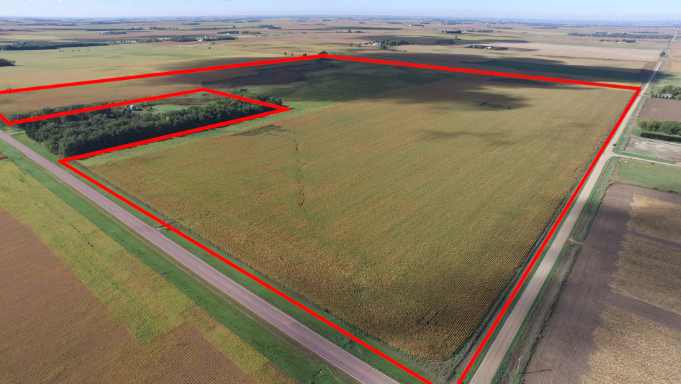
To all users of Zenvus Boundary, today we added a feature which makes it possible that once a property boundary has been recorded within Zenvus Boundary ecosystem, an alert will be triggered if the same boundary is captured by another user. For instance, if you use Zenvus Boundary to map the boundary of a farm, and next week another person (not in your specific Zenvus Boundary) maps at least part of that farm, our system will detect a conflict, triggering an alert to Zenvus Boundary support. We will contact both customers to note what our system has detected.

Zenvus Boundary maps farm, land or house perimeter boundaries, calculates the areas and populates the data onto Google Earth. From Zenvus portal, the surveys can be downloaded or printed. It supports cooperatives, governments and individual farmers, enabling these entities to have survey reports at a fraction of the typical cost of surveys.

Until that is resolved, our Property Search feature will blank the names to avoid either using the property to access loans and other services. The individuals can resolve the problem via government data, oral history, etc. Zenvus Boundary neither offers legal advisory services nor government support services.

You want to be a Zenvus Boundary partner? Click here.

Zenvus Boundary Property Search


WhatsApp Payment Arrives Africa; Welcome Africa’s Single Currency

0
WhatsApp Payment

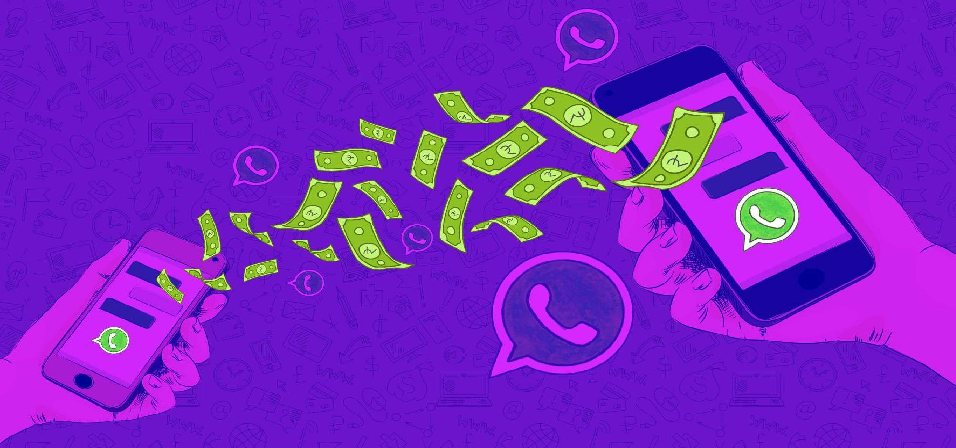
WhatsApp Payment has arrived in Africa. That has been expected since there is no clear path to monetize WhatsApp without subscription which Facebook has no interest in pursuing. Advertisement may not necessarily work for WhatsApp if Facebook hopes to keep the customers happy. So, here we go: WhatsApp payment is here in Africa.

As of Wednesday (August 1) South Africa’s Absa Group officially rolled out WhatsApp banking as part of its continuing effort to develop a digitally-led bank in Africa. Absa has signed on 10,000 customers since early July, according to Reuters.

{…}

“As technology advances and more customers become connected, bringing banking to where our customers are is important to us, especially as we continue our journey to become a digitally-led business driven by innovation,” chief executive of Absa retail and business banking Arrie Rautenbach said in a statement.

The addition of WhatsApp banking is part and parcel to a growth plan for Absa that observers have called “ambitious.” The goal — once it has completed its separation from Barclays — is to capture (and in some cases recapture) market share in South Africa and double sales across the African continent from 6 percent to 12 percent. WhatsApp allows Absa to offer banking services that are available anywhere, anytime, to customers that want to use it.

Absa’s WhatsApp service, ChatBanking, will mostly be simple banking transactions. Users will be able to check their account balances and make payments to existing beneficiaries using brief and natural sounding conversational commands.

The Massive Dislocation

This will be a huge challenge to African fintechs. Payment is going to see massive dislocation because it is always harder to pull people from the ecosystem where they are to another. In others words, why would I launch a fintech app when I can make that payment via WhatsApp which I am already using with that client?  The launch of WhatsApp payment in Africa is a big deal for the local banking and payment ecosystems.

I noted few days ago that WhatsApp’s move into payment would cause massive dislocation in African banking. In this age of chat and social media, transactions have evolved into content, commerce and financial services. To examine the impact in Africa, let us consider what these solutions have done in India where they are already or being deployed. India has about 250 million WhatsApp users, the world’s largest (China is a WeChat nation).

New payment trend in India

All Together

As I wrote few months ago in Harvard Business Review, companies like Facebook, the ICT utilities, can bulldoze themselves into new sectors. Adding payment in WhatsApp is industry-shaping. Largely, we have entered a new dawn where transactions have evolved into content, commerce and financial services – the so called social commerce which WeChat had perfected.

Going forward, I expect new basis of competition with disruptive consequences in the African payment markets. Simply, the game has changed and everyone has to evolve: WhatsApp payment is possible the single African currency; Google Tez is on the way. The good news is that African consumers will experience lesser payment frictions, and that could be a good thing across many communities.

Let’s Visit Your Business in August & Sept in West Africa

0

In coming days, I will be on my way to West Africa. We will be spending 6 weeks starting from the Centre of Excellence (Lagos). We will launch a new business and also use that time to meet current and new clients on our advisory services. We remain the largest embedded electronics company in Africa – the larger of only two Intel FPGA partners. We also help startups, banks, insurers, etc deepen their capabilities through seminars and presentations.  From agtech to health-tech, electronics to advisory, we have a mini-diversified digital conglomerate. Email me or team (below) and let us schedule time. Let us work together to fix that market friction.

Ndubuisi Ekekwe Innovator of the Year CNBC


At Fasmicro Group, we do not recite numbers and tell you what you already know: we deliver unparalleled insights through uncommon perspectives shaped by our experiences as entrepreneurs and advisors in the markets. Our moments are unique because things we share with clients are shaped by our direct exposures to the markets. Fasmicro Advisory Services solutions are structured as follows:

  • Development of Business Roadmap & Strategy: A business plan is not enough to anchor business execution. A Roadmap Document is required especially in a sector which is in a state of flux [changing market, changing model, startup, competition, regulation, etc]. To avoid pursuing many windy paths or dead ends, a roadmap helps to encapsulate a profitable path to the vision with pillars and enablers necessary for success. Read more here.
    • We will conduct a review of the Firm’s current strategy, and identify the current gaps considering the business needs and market best practices and make recommendations to implement the strategic gaps with fit for purpose solutions in line with global best practices and local realities.
  • Discovery Innovation Workshop: To innovate is to set a new basis of competition in an economy, business sector or market. Typically, it results to disruption. This workshop will focus on innovation and growth because growth is the reward of innovation. Otherwise, that innovation is actually an invention. I will be the lead instructor with my supporting crew. The table below provides the workshop structure. We can adapt this workshop to two days.
Day 1 – Innovation Discovery Day 2- Innovation Exploration Day 3- Innovation Design and Applications
The State of Nigerian markets State of the Tech Nation address Becoming a Digital Innovator
Mapping internal & external trends Innovation Translation Filtering & modelling [Business & Functional Vision]
Digital Innovation frameworks Emerging Technologies Labs with Innovation Roadmap Brief
Business Challenges Teamwork / Disruptive thinking Takeoff Vision & Frontiers
Enablers and Creativity tools The Category-Kings Benchmarking [Local  & International] Innovation Execution
  • Discovery Innovation Presentation:This is a two-hour seminar where we will present what is happening in your market, customized for your company, and then offer insights on how you can plot your strategies to win. This goes beyond industry statistics and typical SWOT analysis. We work to help clients see their markets in new ways, providing roadmaps on how they can unlock opportunities. It is an intense talk, combining technology, finance, political economy and strategy. As technology redesigns markets, I break the implications in short, medium and long-terms.
    • Case: How can a (mall) real estate developer understand that ecommerce is a tangential threat since malls can be disrupted by digital commerce in future? My client now considers triple-play designs where malls can be converted into offices or homes, in case the moment comes.

Our services cover all industries, and we operate at the highest ethical level. .

If interested, email tekedia@fasmicro.com. Our cost is industry-competitive.