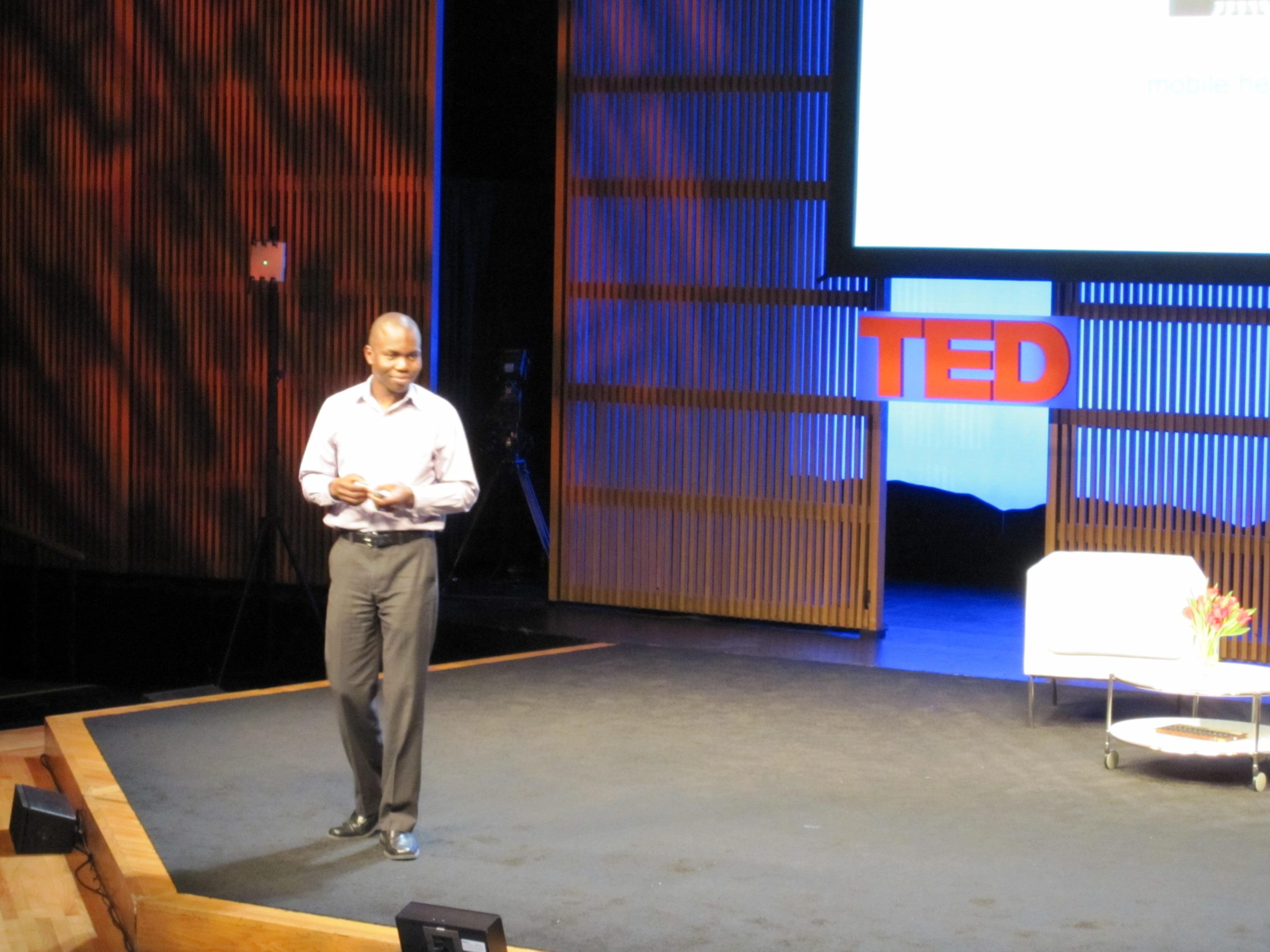
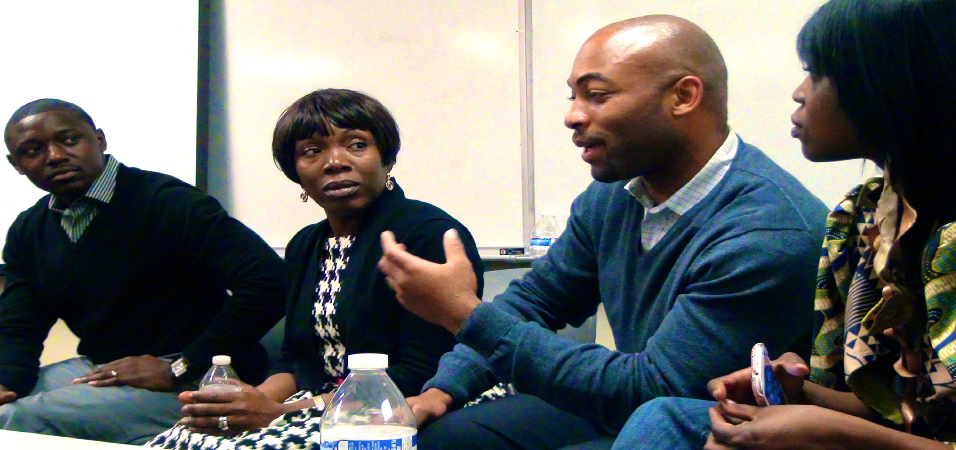
I want to make it easier for you to hire me to speak in your events or programs. I have been doing this for clients, and I want you to extend the invitation. It could be in person or remotely delivered.
The ITNews Africa, a South African publisher, has called me a “doctor of innovation“. As they were creating a new product – the “African Innovator Magazine” – they knocked at my door. The London-based Planet Earth Institute, a non-profit chaired by a former UK Chief Secretary to the Treasury, has recognized me as an “African science and technology pioneer”. From TED fellowship to the World Economic Forum’s Young Global Leader, through my doctoral degrees and master’s degrees, to my works on iPhone sensors, innovation has been my only strategy. I teach innovation, from South Africa to Vietnam, from Kenya to United States, and beyond. And on the pages of Harvard Business Review, I have been writing on innovation for years. And I live innovation in my businesses and we have won awards because we innovate.
With increased requests to speak in events, I am formalizing the process here. Yes, you can hire me to speak in your events. I focus on Innovation Discovery, and Innovation for Growth, bringing many elements to help your organization in developing and executing exponential capabilities to thrive in your sectors and markets.
I will present what is happening in your market, customized for your company, and then offer insights on how you can plot your strategies to win. This goes beyond industry statistics and typical SWOT analysis. We work to help clients see their markets in new ways, providing roadmaps on how they can unlock opportunities, in exponential ways. It is an intense talk, combining technology, finance, political economy and strategy. As technology redesigns markets, I break the implications in short, medium and long-terms
My goal is to help you think big, in very clear and measurable ways, so that you can move from invention to innovation, discovering growth opportunities before someone does it in your sector. We have served many clients in Africa and around the world including World Bank, United Bank for Africa Plc and FrieslandCampina (makers of Peak Milk).
Want to hire me? Contact tekedia@fasmicro.com for pricing.
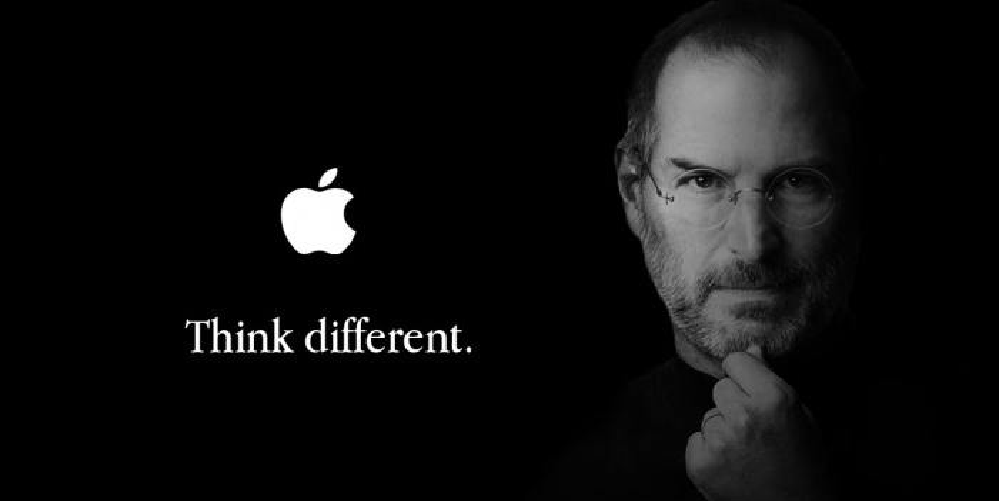
The success of Apple in the last few years has demonstrated that designs win markets just as defense wins championships in sports. Transformative products like iPad and iPhone redefined (through perception demand) the techno-centric conventional design culture and ushered a new vista in product development. With the simplicity of its products, Apple reshaped industrial sectors, invented new lifestyle habits and built loyal customers. And across the globe, Apple engineering has been heralded as the catalyst that powered a near-bankrupt company into the most valued one.
Technically, this is where Steve Jobs plays well. Steve Jobs and Apple in general are innovative and not necessarily inventive. They take ideas which are in the demand and then make them better. They may not be doing focus groups because the performance of existing products is a good data to make decisions. They knew that Walkman was selling but iPod could make Walkman better. They knew that Blackberry was selling but iPhone could take the smartphone business to the next level. They want to stimulate a new level of perception in the demand nexus. So even if there is no focus group, sales data from public traded Research in Motion (then name for Blackberry maker) and Sony were solid insights on the sectors and the products.
But here is the fact: while its engineering is world-class, companies like Apple depend on non-techies to create the wow-effects on their products. These companies are understanding that the technical purity is not just enough, the usability, ergonomics and human factor elements matter. In other words, the staff who understands what the users want is as important as the one that codes or wires transistors.
In the semiconductor industry, for example, the competition used to be about speed of processors. Companies like Intel and AMD pursued that benchmark, and the result was faster chips. But by the flank, rivals like Qualcomm, Nvidia and ARM focused on what markets need which are not usually the fastest computational power. Rather, processors that can provide low power consumption, multi-functionalities, even when sacrificing speed. Understanding that speed metric alone is not the competitive weapon, especially in the age of mobile, Intel expanded its social science division with sci-fi writers to help its engineers understand how products will be used so they can make more relevant ones. Invisible to the techies in Intel conferences are anthropologists and sociologists that visit clinics, hotels, and living rooms to understand user needs and shape products roadmaps. In making the E3100 and E4100 chip series, the non-techies were very helpful in directing the vision of the product. In short, through their inputs, the engineers re-specified the products.
In a global economy with highly informed and sophisticated customers, making one-fit-all products that account for different economic spectra, culture, infrastructure, values and climate has become very challenging. Engineers without exposure to user behaviors will fail. Competition is about building affordable things that people need. This comes by understanding the users and that requires local domain expertise. Africa, for example, now sees better product offerings from MNCs.
In the past, MNCs sent foreigners with no knowledge of the region. But today, they retain the locals and their products have improved, not because of better technology, but awareness of the needs of the markets. For instance, Google has tweaked YouTube to work with poor networks and adapted most of the products for the African infrastructure. Its competitor, Yahoo, still delivers services in the same forms as it does to a Boston resident. To make great products, expertise matters, global and local.
For a 21st century global firm, building a global design team is important in developing great products. A team that is diverse has a higher chance of creating a winning global brand than one that is not. This diversity will come in gender, race and disciplines. Why? Good technology is only part of the puzzle. Few years ago, I was involved in a U.S. team developing affordable medical device for Africa. When a prototype was sent to Niger, a nurse recommended a change on the device color. We had painted it gold, but she explained users could be attacked by criminals who may mistake the wearable device as a gold chain.
The success of Apple has brought to limelight the importance of seeing products from the perspective of the users, and not just technology. Before iPod, there was Walkman, from iconic Sony Electronics. Apple did not invent any breakthrough technology to disrupt its markets. It simply used a combination of art and science to improve product usability, ergonomics and aesthetics. This is the new trend in product development where the trained or untrained sociologists and anthropologists influence the engineering culture and methodology for products that succeed in markets.
Next week, I will run a seminar for a client on PERCEPTION DESIGN. I made up the phrase “Perception Demand” in a Harvard Business Review piece years ago to illustrate how great designs evolve.
A Linkedin user has promised to link me up with the producers of the documentary which I had written that appeared on Africa Magic Igbo program on GOTv. I woke up to read “Hello Prof, your documentary that aired on Africa magic Igbo both on Dstv and Gotv 6pm the first day and a repeat at 7:30am the next day was done…can link you with the producers of the program”. Yes, I did not even know it ran twice and also on Dstv, according to the user.
Thank you GOTv and Africa Magic (Igbo) for the documentary about my humble self today, in Nigeria. I knew nothing about it but it does not matter. You have just made me an “actor”; only Nollywood actors and actresses appear on Africa Magic! Sure, documentary is part of entertainment.
Next time, I will like to actually drop some words. Bring me on board as I want to be part of such. I am very confident we can inspire young people, and show them they could do greater things. My Aba Design Center will be reaching out to ask for the tapes. This is appreciated
Last night, a kinsman called me that he would be submitting my name to his really small party to consider me as their Vice Presidential candidate! People, this is what you get when you appear on TV instead of ranting on LinkedIn or blog with all our privileges of smartphones and data plans. On the VP one, I told the man to hold the brake. Some of these small parties are very crazy. One had in its manifesto yesterday proposing to rename Nigeria and Naira to Pisonia and Pison respectively. For that party, doing those two things would liberate Nigeria and kickstart economic opportunities.
Justice Must Prevail Party (JMPP) on Thursday said if elected into power in 2019, it would construct perimeter fence around Nigeria and change the name of the country and the currency.
Acting National Chairman of the Party, Dr Olusegun Ijagbemi, stated this at a news conference in Abuja.
He said that the need to change the name of the country and its currency was divinely revealed to the leadership of the party, adding that the changes were important if Nigeria must make progress.
According to Ijagbemi, “the 14th pillar of our party is to change the name of Nigeria to Pisonia and its currency from Naira to Pison.
“It is a miracle that the leadership of this party got a wind of how the entire African nation is being impoverished with their currency.
If we get the documentary, I will share when it would run again on DSTv and GOTv channels. It does not seem they do post on YouTube since the whole idea is to get people to pay for cable subscription.
As you work hard to make your products better and improve your processes, do not forget that business model could be as catalytic. Yes, business model innovation is one of the most overlooked areas by startups in Nigeria despite the fact that the right model could help you thrive. In one of my companies, we do not serve private companies and individuals, we focus on governments and cooperatives because they PREPAY for our services [we use their monies to serve them!].
Magically, we have zero need of stocking inventory which would have been necessary if we have to serve consumer market. While the model is not perfect, it is a balance to advance the mission, as it has helped us to manage the burden of raising raise capital just to stock the warehouse.
I did note in this Harvard Business Review article that thriving in business goes beyond engineering and technical superiority. Yes, there are many other elements like branding and marketing which must work in a symphonic way to deliver value at scale.
In the tech startup world, technology is important for success, but it does not disproportionately determine winners and losers. Two companies can invent similar technologies; one will win and the other will lose. Focusing on technology supremacy alone is a model for failure. Over the years, I have consistently seen what I call “latent factors” — business features that are generally outside the scope of the core tech team — to be real factors in a company’s success.
As I have noted, Nigeria is a place where one customer can technically prepay you. Do not overlook such customers because they tend to be the best investors. They give you money and wait for you to supply in two months. The customers abound but you must have the credibility and offer real value for them to work with you. Give them symphonic innovation at scale and they would see the differentiation.
To help our clients in the Fasmicro Group, we have come up with what we call Symphonic Innovation. Simply, Symphonic Innovation is innovation that is not domain-specific, but is anchored on a unified and harmonious approach.
Investors are not just venture capitalists or angel investors; your main customers could be your best investors. Take the prototypes to them, ask them to place orders ahead with lead times, and then deliver to them. Do not fall into the temptation that the only path to market is to stock the warehouse and then wait for people to buy.
Stop sending proposals via emails. Stop emailing those potential clients. Invest on face-to-face meetings. The people who make decisions in Nigeria do not care about your emails UNLESS they have met you in person! We lost one of the biggest benefits of internet many years ago because of Yahoo Yahoo Boys. Those boys poisoned our web making it harder for people to trust the web. Yes, from ecommerce to business transactions, the suspicions are unprecedented. Nigeria is the only place on earth where you must include account number, expiry date, three digits at the back, PIN, prior-internet use approval, online transaction activation, (password), etc just to use your debit cards on the web. And at the end, we still record failure rates in high double-digit for attempted online transactions.
While today Nigeria is considered a leading ecommerce market, up until a few years ago, this was not the case. In fact, in the first years of this decade, online payment failure rates were as high as 60-70% of attempted transactions in Nigeria. Mobile money had only recently begun to gain acceptance, and many Nigerians were wary of cyber fraud, limiting ecommerce acceptance.
Forget what they are writing on TechCrunch and New York Times on the use the digital marketing to grow businesses. Those things are mainly for America: in Nigeria, humans (yes, atoms) move markets. The bytes are supportive but do not build business development purely on it. You need digital marketing, of course, but it can only work for most sectors when you have people who can meet those clients, and close deals. It is very unlikely for many Nigerian decision makers to sign some important deals without shaking hands. That does not mean that digital marketing is not relevant. It is hugely relevant but you cannot forget what works today.
Linda Ikeji is peerless in understanding how social media and blogging work. She is better than any Nigerian including those that work for Google and Facebook. I do not read her works because the focus is not my interests. Yet, I wanted to know why she was successful. Most Nigerian companies put Linda Ikeji on their tags to get traffic. I spent time and saw an interview where she explained her minor secrets.
{…]
When she started blogging more than a decade ago, most people blogged with pseudonyms or simply ‘editors’: Linda used her real name, and went ahead to name the blog after herself. She brought authenticity and connected with people, as they knew who was writing.
In the interview, Linda made it clear that without that real identity, you lose authenticity. She explained that contents have values due to the creator and not just the contents; anyone that wants to do well in connecting with readers must be open. Her other point was self-explanatory. Of course, some do click-bait. Yet, every person must find ways to understand what the audience wants.
That is for a blogger. For people exploring partnerships and deals, the human element is the way to show that authenticity. No clever web design can do it if you want those proposals to have closures. The fact is this: there is no way to have success in the public sector in Nigeria unless you are ready to meet the decision makers and explain what you have articulated in any proposal. Once you do, you can move to your emails to follow-up. But do not waste efforts sending digital contents and proposals to people you have never met in Nigeria, for business. Those marketing strategies rarely work.