DD
MM
YYYY

PAGES

DD
MM
YYYY

spot_img

PAGES

Home Blog Page 7121

Trump Signals – North Korea’s Noisy Gains

0
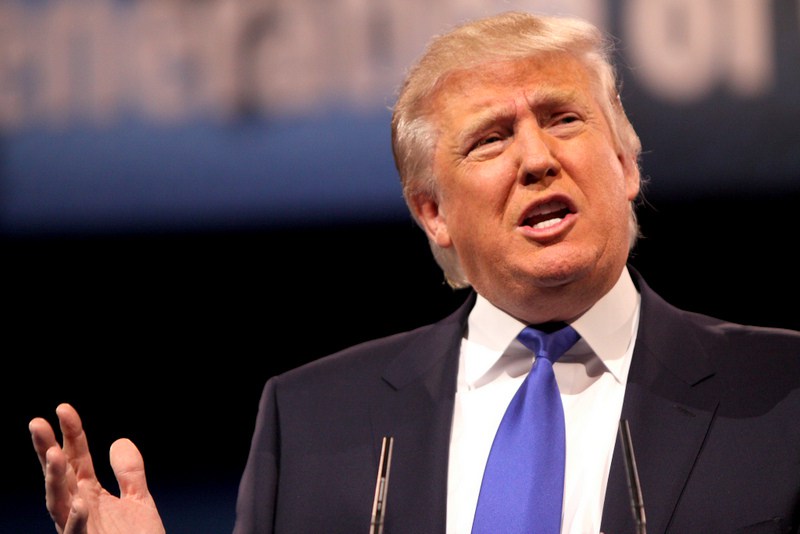
Trump

One of the most exciting areas in electrical engineering is neuromorphics engineering. In this sub-engineering area, you study human biology in order to get inspiration from nature towards creating systems that emulate the central nervous system. Here, neurons and synapses are the engines that anchor the solutions. And to make them, you have to bias the transistor (the fundamental unit of microprocessors or microchips developments) in weak inversion. In that region, the current-voltage relationship becomes exponential unlike the quadratic relationship in the strong inversion operating mode.

But there is a problem: besides the high gain you get, managing noise becomes very challenging. That affects the stability of the electrical system. Handling such elements is one of the reasons why most of the neuromorphics-engineered products are not prime-time for you to buy them in the market.

President Trump is going through a similar issue, politically: dealing with North Korea means he needs to balance stability of South Korea with the noise from North Korea. If North Korea has been located in most other places in the world, U.S. would have taken care of that nation many years ago. But hit North Korea, South Korea will experience avalanche from North Korea. Yes, North Korea will go down but South Korea will join too. Doing that would be a very lousy engineering design: noise and signal cannot be at parity for any meaningful product use.

So, the news that President Trump has cancelled the summit with North Korea is expected: there is no other solution than to allow North Korea to be normalized unless you want to wipe out South Korea to deal with North Korea [where military option is chosen]. Indeed, you cannot afford to improve the signal gain, and also ramp up at parity the noise. That is a big issue in electrical engineering and that is also a big one in dealing with a noisy country like North Korea.

President Donald Trump has called off a planned historic meeting with North Korea.

The cancellation was contained in a May 24 letter which the U.S. president wrote to Kim Jong-un, informing him that the meeting could not go on due to the recent verbal confrontation between the two parties.

[…]

“We greatly appreciate your time, patience, and effort with respect to our recent negotiations and discussions relative to a summit long sought by both parties, which was scheduled to take place on June 12 in Singapore.

“We were informed that the meeting wwas requested by North Korea, but that to us is totally irrelevant. I was very much looking forward to being there with you. Sadly, based on the tremendous anger and open hostility displayed in your most recent statement, I feel it is inappropriate, at this time, to have this long-planned meeting.

“Therefore, please let this letter serve to represent that the Singapore summit, for the good of both parties, but to the detriment of the world, will not take place. You talk about your nuclear capabilities, but ours are so massive, powerful that I pray to God they will never have to be used,” Mr Trump said.

Sure – U.S. has “massive” bombs. We pray no one ever uses them. Yet, you do not really need “massive” ones to destroy nations when they are nuclear. We must remember that and that is why South Korea would never want wars. Indeed, you cannot amplify the stability of South Korea without ramping up noise from North Korea.
Expect Major Investment Exits for Nigerian Startups from 2022

0
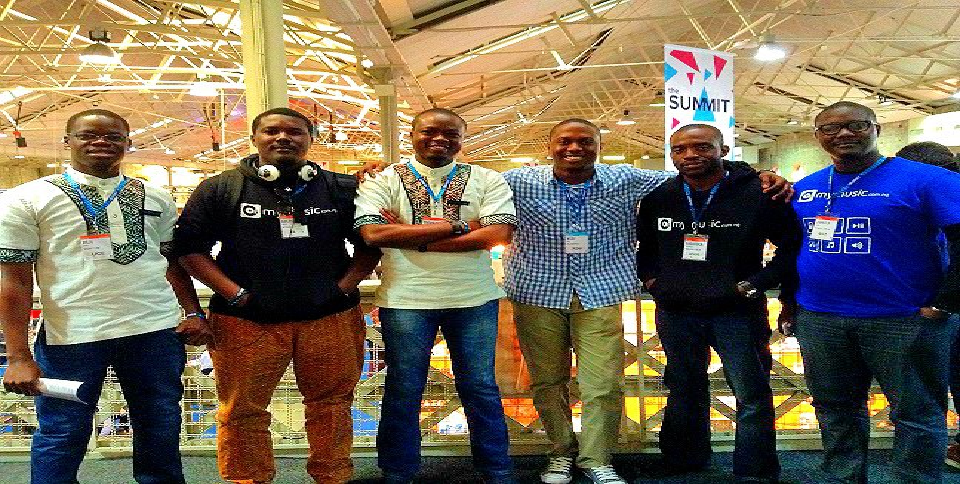
Nigerian startups founders

The season of investment exits for many Nigerian startups is just around the corner. Yes, there is an emerging trajectory which I expect to cement in 4-5 years: foreign companies acquiring indigenous African startups to have their feet on the ground in Africa. I have noticed that in the last 18 months, most South African ventures have exited through such acquisitions. If you are paying attention, most edutech (educational technology) startups in South Africa have sold to American bigger companies. South Africa seems to know how to build great edutech companies.

In a week full of surprises to the online education world, 2U announced it is acquiring GetSmarter, a South African startup that delivers short-term online certification courses to distance-learning students in partnership with many of the world’s top-tier universities. The price tag for the deal is $103 million in cash plus an earn-out provision of as much as $20 million in cash.

Today, Uber has joined the party, buying South Africa’s orderTalk via its UberEats brand.

Uber Eats, the food delivery business of ride-hailing giant Uber, has acquired South African-owned restaurant technology company orderTalk in what is being billed as a significant exit for Cape Town-based venture capital firm Knife Capital.

The deal, the terms of which have not been disclosed, will allow Uber Eats “to streamline workflows by directly integrating with leading point-of-sale systems”.

[…]

The company offers online ordering software solutions using proprietary remote-ordering software and mobile and social media applications. Proprietary software is integrated with leading point-of-sale systems.

In my model, the diffusion latency from South Africa to most parts of Sub-Saharan Africa is about 4 years. In other words, South Africa experiences most services ahead by four years, before big global firms begin to roll out such in other parts of sub-Saharan Africa. If they start buying these South African startups and they like what they have gotten, in 4-5 years, many Nigerian startups will be hitting exits through such ways.

Yes, I understand the challenges of infrastructures which affect business scalability and how we have not fixed them in Nigeria. Unequivocally, top-grade infrastructures matter in big ways. However, lack of infrastructures would not affect the promising trajectories of companies like Paystack and Cellulant if they seek to exit. Nigeria remains the crown jewel of Africa: our population and business laws make it easy for anyone to come in and make money. Foreign brands understand our positioning, and would certainly balance the challenges with the global transitional opportunities some startups in Nigeria would provide to them, to deepen their footprints in West Africa and beyond.

So, go out there and begin to take action, the opportunities are ahead. And when they start buying the bigger well-funded Nigerian companies, those founders would have money to invest in new generation of startups. That is how an ecosystem evolves. We are getting closer daily, just as I have already noted that 2022 is the magic year.

Simply, we’re entering the real ecosystem era – call it a virtuoso period where exited founders have cash to seed new generation startups.

Nigerian Universities Approved by NUC for Postgraduate Studies

2
National-Universities-Commission-NUC

The National Universities Commission (NUC), Nigerian university system regulator, has released a list of approved postgraduate awarding schools, Premium Times reports.

“The commission hereby notifies the general public that only the following universities have approval to offer postgraduate programmes at the Masters’ and Ph.D levels in Nigeria as of July 30,2012,” the bulletin said .

According to the bulletin, Nigeria has 162 universities: 41 are federal, 47 are state owned while 74 are privately owned institutions.

Under the different classes, here are the schools.

 Federal Universities

1. Abubakar Tafawa Balewa University, Bauchi

2. Ahmadu Bello University, Zaria

3. Bayero University, Kano

4. Federal University of Technology, Akure

5. Federal University of Technology, Minna

6. Federal University of Technology, Owerri

7. Micheal Okpara University of Agriculture, Umudike

8. Modibbo Adama University of Technology, Yola

9. National Open University of Nigeria, Lagos

10. Nigeria Defence Academy, Kaduna

11. Nnamdi Azikwe University, Akwa

12. Obafemi Awolowo University, Ile Ife

13. University of Abuja, Gwagwalada

14. University of Agriculture, Abeokuta

15. University of Agriculture, Makurdi

16. University of Benin, Benin City

17. University of Calabar, Calabar

18. University of Ibadan, Ibadan

19. University of Ilorin, Ilorin

20. University of Jos, Jos

21. University of Lagos, Akoka

22. University of Maiduguri, Maiduguri

23. University of Nigeria, Nsukka

24. University of Port Harcourt, Port Harcourt

25. University of Uyo, Uyo

26. Usmanu Dan Fodio University, Sokoto

State Universities

1. Abia State University, Uturu

2. Adamawa State University, Mubi

3. Adekunle Ajasin University, Akungba Akoko

4. Ambrose Alli University, Ekpoma

5. Anambra University, Uli

6. Benue State University, Makurdi

7. Cross River University of Technology, Calabar

8. Delta State University, Abraka

9. Ebonyi State University, Abakaliki

10. Ekiti State University, Ado Ekiti

11. Enugu State University of Science and Technology, Enugu

12. Imo State University, Owerri

13. Kogi State University, Anyigba

14. Ladoke Akintola University of Technology, Ogbomoso

15. Lagos State University, Ojo

16. Nasarawa State University, Keffi

17. Niger Delta University, Wilberforce Island

18. Olabisi Onabanjo University, Ago Iwoye

19. Rivers State University of Science and Technology

20. Umar Musa Yar’Adua University, Katsina

21. Gombe State University, Gombe

22. Ibrahim Babangida University, Lapai

23. Kano State University of Science and Technology

24. Kebbi State University of Science and Technology

25. Kwara State University, Malete

Private Universities

1. African University of Science and Technology, Abuja

2. American University of Nigeria, Yola

3. Babcock University, Ilishan Remo

4. Benson Idahosa University, Benin City

5. Bowen University, Iwo

6. Covenant University, Ota

7. Igbinedion University, Okada

8. Pan-Atlantic University, Lekki

9. Redeemer’s University, Mowe, Ogun State

10. Caleb University, Lagos

11. Joseph Ayo Babalola University, Ikeji-Arakeji

12. Nigerian Turkish Nile University, Abuja

13. Afe Babalola University, Ado Ekiti, Ekiti State

14. Lead City University, Ibadan (MSc. Only)

15. University of Mkar, Mkar (MSc. Only)

16. Madona University, Okija

17. Al-hikmah University, Ilorin (MSc. Only)

18. Godfrey Okoye University, Ugwuomu-Nike , Enugu state.

Also, NUC noted that “Employers of labour, educational institutions and other stakeholders are to note that only certificates issued by these universities for their approved programmes, are valid for employment, further studies and other purposes,” according to the Premium Times report.

As you decide to apply in any of these schools, NUC has also provided the official ranking of Nigerian universities.

[Apply Grant] Win $250,000 from Google Nigeria – $20 Million Committed

0
Google-Headquarters
Google-Headquarters

Google has unveiled Google Impact Challenge (GIC) Nigeria 2018. This is a Google grant program designed to impact communities. It was launched yesterday in Lagos. The goal is to award grants to NGOs which are using technology to drive social impacts in Nigeria.

The search giant is committing $20 million over the next three years across Africa; Nigeria will get $6 million from that budget. The company will spread $2 million to Nigerian entities yearly.

For this year, there would be 12 winners; top four will get $250k each while eight runners up will get $125k each.

APPLY HERE. Deadline is July 4th.

Judges will determine the winners. Some of the judges include the Chief Executive Officer of Channels Media Group (John Momoh), CEO of Zinox Technologies (Leo Stan Ekeh), Kanu Nwankwo and Parminder Vir (Tony Elumelu Foundation).


African Agriculture’s $1 Trillion Crusade and How to Participate

2
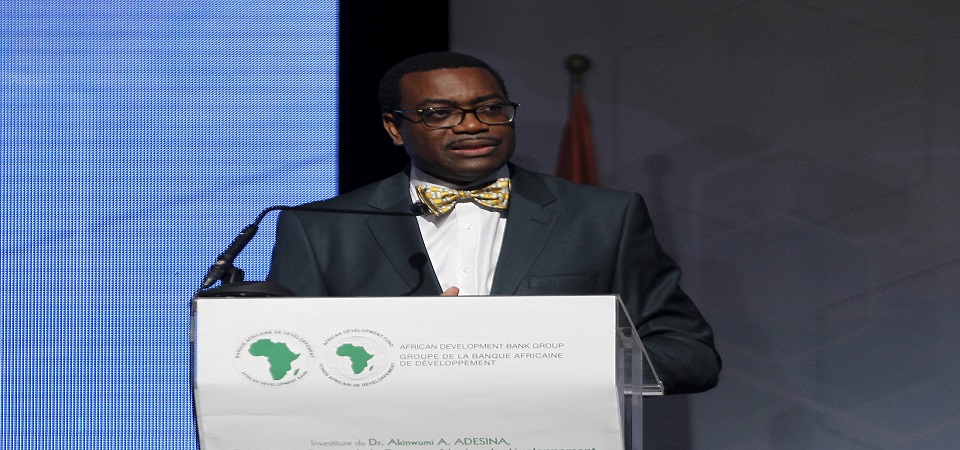
AfDB president Akinwumi Adesina
Akinwumi Adesina

Last year, AGRA noted that African agriculture could hit $1 trillion by 2030 from then $313 billion. The report was based on a World Bank research [this report has $313 billion, not $300 that AGRA used]. By comparison, the 2017 GDP of Africa was around $2.2. trillion (nominal).

Most indications are that we are ready for take-off. The prospects for African agriculture looks favorable, despite the recent slowing in economic growth across much of the continent mainly due to the sharp drop in the global prices of oil and minerals. The African food market continues to grow with World Bank estimates showing that it will be worth US$1 trillion by 2030 up from the current US$300 billion. Demand for food is also projected to at least double by 2050. These trends, combined with the continent’s food import bill, estimated at a staggering US$30–50 billion, indicate that an opportunity exists for smallholder farmers—Africa’s largest entrepreneurs by numbers—who already produce 80% of the food we eat to finally transition their enterprises into thriving businesses..

The African Development Bank returned to the same number – $1 trillion- in this year’s meeting in Korea. Indeed, Africa is entering a golden era of agricultural production where technology will drive productivity. We expect continuous improvement in crop yield over the next few years. Everyone knows that fixing agriculture will fix Africa because more than 65% of Africa’s working population is employed in agriculture. So, it has the most catalytic impacts possible in raising millions of people out of poverty.

The African Development Bank (AfDB) yseterday call on African governments to create the right environment for the private sector to lead the continent’s industrial revolution.

“We cannot say we have leadership when we still have 65 per cent of the land in Africa uncultivated. We must develop solutions to agriculture and ensure that the sector can grow to a $1-trillion business,” its President, Akinwumi Adesina, said.

Unlocking Opportunities in African Agriculture

I do believe that we would reach $1 trillion before 2025 with the pace of incremental innovation in the sector. The disruptive innovation is not anywhere around because critical infrastructures like electricity and storage facilities that would enable such are not readily available yet. Nonetheless, African agriculture is getting the attention of many people in the continent at the moment.Here are ways entrepreneurs can play in the sector:

  • Precision agriculture by making sensors: here, you make electronic sensors; may be a little hard depending on your skill level
  • Agriculture insurance technology: making insurance products geared for farming
  • Agro lending technology: delivering capital to farmers at scale supported by technology
  • Agro financing – investing in farmers and farms through digital aggregators
  • Direct Farming: owning farms and growing crops and/or raising farm animals
  • Farming ecommerce: expanding farmers’ markets by providing digital platforms for trade
  • Pricing aggregation: facilitating trading through provision of produce price data
  • Storage: African farmers struggle with storage of produce. Building solutions in this area will be catalytic
  • Logistics: there is a huge opportunity to facilitate the delivery of produce from rural areas to urban areas across Africa with our poor road networks
  • Digitization of transactions: from payment to tracing origins of produce, we have a huge need to digitize farming systems in Africa
  • Commodity trading: building exchanges for trading commodities
  • Farm digitization: most farms must be digitized for them to be tech-ready
  • Others: there are opportunities like making digital tools farmers can use. These could include farm diary, mapping solutions, etc

Note: depending on your skill level and areas of capabilities, you may need partners in executing some of the ideas.

All Together

This race to $1 trillion is clear – if you fix agriculture, you would fix most problems in Africa. According to McKinsey, a consultancy, African agriculture was worth $100 billion about eight years ago. Now, it has hit about $400 billion meaning that we are on the right track but still have a lot of work to do. Agriculture and the capacity to feed Africa would drive the expected productivity we desire in the continent.

Simple Math, eliminate poverty to increase productivity. When you eliminate the fear of what to eat, the human mind works better. Nigeria needs two major inputs – money and ideas – if we want to create wealth.