DD
MM
YYYY

PAGES

DD
MM
YYYY

spot_img

PAGES

Home Blog Page 7223

Naspers Still Searching for Tencent in Africa: Mocality, Konga, Kalahari

0
Naspers

Africa’s largest company by market capitalization which is so big that the whole of the Nigerian Stock Exchange is not up to 40% of its value is still searching for another winner. It saw alpha when it hit glory with investments in China’s Tencent. Naspers has seen many disappointments in its broad internet (ecommerce) investments in Africa. It shuttered Mocality, a digital business directory, and also killed Kalahari, one of Africa’s foremost ecommerce companies. In all these entities it closed, it complained of one thing: lack of profitability.

Naspers chief executive officer Bob Van Dijk said Africa’s largest company will consider “structural options” if the value gap with its stake in Tencent Holdings persists.

Naspers has a 33% stake in Shenzhen, China-based internet giant Tencent, valued at about $158 billion, while Naspers itself has a market value of about $112 billion. The discount is “too high,” and has been accelerating in the past 20 months, Van Dijk said on Tuesday in New York. Leaving aside Tencent, analysts place Naspers’ asset value at more than $180 billion, said chief financial officer Basil Sgourdos.

The deal with Tencent was extremely good for the South African company. It has continued to look for another moment like that. Despite exiting many ecommerce companies, it got back few years ago with investment in Konga for 50% equity.

Naspers, South African media giant has acquired a 50 percent holding in Konga.com, the leading Nigerian online general merchandise store, for an undisclosed amount.

Meloy Horn, Naspers’ group information relations officer confirmed the acquisition adding that the media giant was “anticipating favourable collaborations involving both parties in the near future.”

“Nigeria will possibly soon be the largest economy on the African continent, therefore as an investor we are keen to participate in the growth of a promising African market,” Horn said.

Naspers loves Nigeria with MultiChoice, DStv, GoTv , etc all doing just fine in the country. Yet, its ecommerce investments have not turned out well. It tried Kalahari and Mocality in Nigeria before it gave up. It has at least one major ecommerce business in Nigeria through OLX, a digital classified business. OLX early this year started running adverts in its platform to help boost revenue, and it is now within the crosshairs of Facebook Marketplace which is now the second ecommerce platform in Africa, behind Jumia..

Yes, Facebook has a marketplace; the very business companies like OLX and Jiji depend upon. With nearly everyone on Facebook, these companies would have real challenges ahead to get people to get out of Facebook. After all, the same users OLX and Jiji target are the same people selling and buying on Facebook.

Facebook would scale Marketplace across Africa in coming months. That would be bad for OLX which just introduced advertising in its ecosystems to make extra revenue. The future with Facebook, WhatsApp and Instagram evolving into SME and business ecosystems could be devastating to African startups working in the ecommerce space.

Konga was sold to Zinox Group this weekend.  That is certainly not the exit Naspers was expecting. The story of Naspers’ foray into ecommerce tells us clearly that ecommerce in Nigeria would be hard to figure out. This company has essentially burnt tens of millions of dollars as it continues to look for a working model. Sure, one day, someone would figure it out. It could be that the solution is not just the money, but the right business model. That “right business model” remains elusive.

You can always read my Harvard Business Review piece that captures some of the challenges which most ecommerce platforms cannot control, unfortunately.
Zinox Buys Konga

4

Konga has been bought by Zinox Group. I had suggested that Konga should sell itself because it had no business anymore. It lagged vision and the operational execution was extremely poor. I am happy that it listened. Sure, this is not good news because many Nigerians would certainly lose their jobs as Mr. Leo Ekeh (owner of Zinox) integrates Konga into the Yudala brand. Yet, at least, selling now would offer Konga more value to compensate those workers.

Going for pure play marketplace in Nigeria was desperation because the only outcome would have been massive value destruction in coming months. When they went that path, I knew that Konga was done. In Internet business, there are things which cannot work, as I noted many years in the Harvard Business Review.

I commend the Board & Management of Konga for doing the right thing..

Konga has been severely wounded for any further fight to make sense. I do think the best for Konga is to sell itself now that it can generate higher value. To win in this market, it needs not just revenue but manpower since it is running a logistics business, despite the pivot to subscription classified model. By constantly cutting down manpower, it means it is not taking the fight to the traditional stores like Shoprite and supermarkets. That is weakness that will further erode its capacity to generate more value to shareholders. It can save itself from these challenges by selling to Jumia.

[…]

According to details of the deal, Zinox Group, one of Africa’s biggest technology group would assume ownership of the e-commerce platform, Konga.com which remains as one of the biggest players in the sector; KOS-Express, the world class logistics arm of the business and KongaPay, the company’s integrated mobile money payment channel with over 100,000 subscribers.

I made the call. I do not do such without deep insights. That is what we sell to clients. I just did it FREE for Konga. Happy they can focus on something else.

Interestingly, Konga as a brand will emerge as a serious competitor using the Yudala hybrid ecommerce model. Yudala has struggled behind Jumia and Konga. Now both are together, we would see the best of Konga. Watch out, Konga would pivot, and return to the original core mission: helping families celebrate moments by simplifying commerce where merchants are partners, and shoppers fans. I expect Konga to blossom in coming months, relying on the physical element of Leo Stah empire. Konga would double within a year and expand into more cities.


Finished Design of Zenvus Engineered to Support Universities

2

Last year, I was in the peerless Federal University of Technology Owerri Nigeria (the very best university in Africa; forget the ranking by whoever), some deans and HODs suggested that we find a way to bring current students to our work. The dons are right; we like technical graduates from Nigeria’s federal universities.

I may be biased since I went to FUTO; we hire largely from the federal universities of technology. We like the school curricula where you can enter and get out with three degrees in one. I graduated with Electrical Electronics Engineering with Option in Electronics Computer Engineering. Depending on how you look at it, those are 3 degrees for the work of one. Unlike schools that offer Electrical Engineering, Electronics Engineering, and Computer Engineering as single degree programs, the way FUTO does it helps its graduates: you can look for work in more places, and you seem to know more things without that over specialization at the bachelor level.

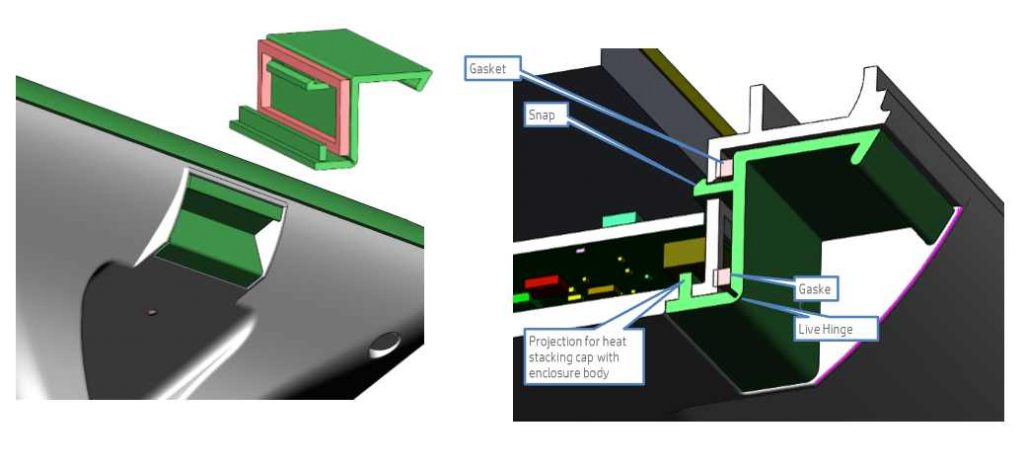
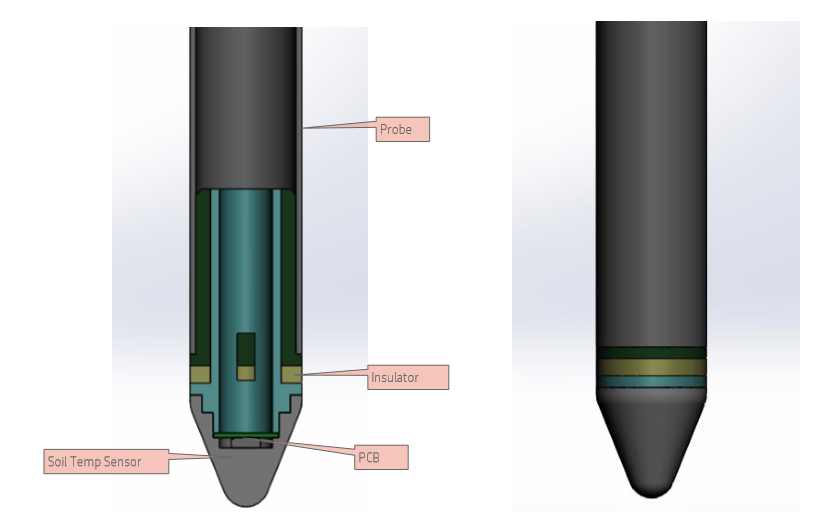
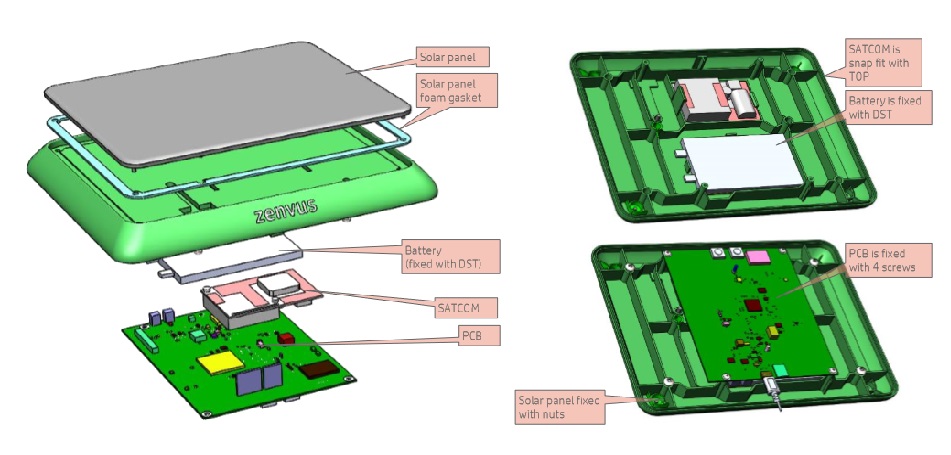
Last week, we design-completed an educational version of Zenvus with APIs structured for research institutions like universities. It is going into production and if all works well, we would then find ways to connect schools. With this education version, students can do a lot including modeling their own crop growth models, examining database and testing new algorithms. It comes with batteries designed for 7 years but guaranteed for 4 years. And it has a satellite module in case there is no GSM or WIFI connectivity in the farms.

My Lagos Computer Village Engineer Expands

0

Few months ago, I wrote about a really brilliant young man, Engr Seun. He had done wonders in the magical Computer Village Lagos.

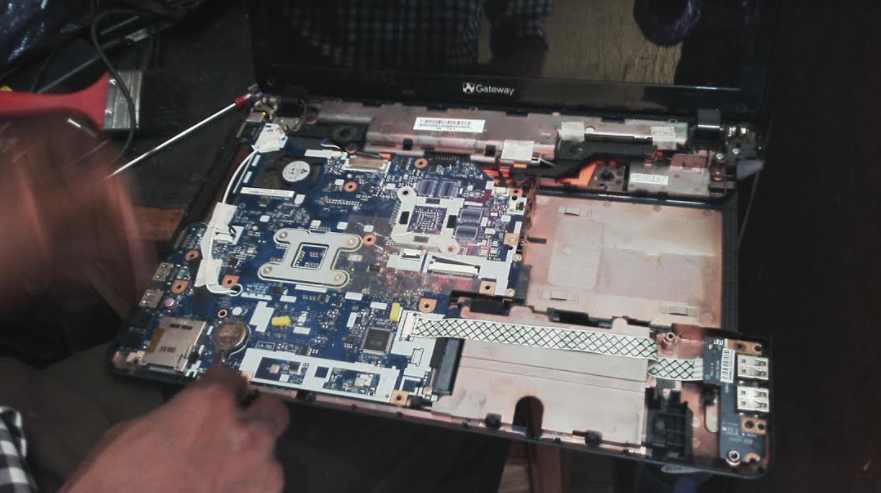
He has no degree. He has a 3-month diploma from UNILAG and a 6-month diploma from NIIT Lagos. But he is brilliant. In short, I could not believe what I saw. It took him 3-4 minutes to dissemble a laptop. He has 15 years of experience in his art.

My local team has kept up with him. We gave him support to build a real business in his art. He is peerless and exceedingly talented. In this trip, despite all the tight schedules, I had made time to visit him. He is making progress.  Now, he has five engineers. Yes, the real engineers (forget Nigerian Society of Engineers). All the five have ONDs. And he added also an OND accountant. Also, the company has been incorporated. I did not ask for any equity. I did not make a loan either. I wanted him to just do well. Hopefully, he would afford to return the money one day. That way, I can send it to another person.

Besides the support, I also offered some business lessons. For 7 of them, I did a one hour cost modeling/strategy training. I explained pricing and why they must commit customers to a minimum fee irrespective of the outcome of the repair. And every repair must be phased in categories. In other words, if you bring your laptop or phone to be fixed, you must commit to pay N2k irrespective of the outcome. Then engineers would start work and based on the outcome, you would be charged more.

Also, if an engineer is working and cannot get the job done in 2 hours, the work should be moved to a new category with new pricing structure. This model is necessary in case they need to expand where Engr Seun cannot be physically present. The pricing model is what would make this a startup, over a one-man business. While local teams (say in Abuja and PHC)  could fix things, there could be some challenging works that must be sent to Lagos. Those could be 2-week jobs which must attract different pricing.

To offer the lesson, I visited a local mechanic job in U.S. to learn how to price this type of labor.

That reminds me of Aba, Oshogbo, Kano, etc where geniuses are left poor because no one can prepare them to price what they do more effectively. In a Harvard Business Review, I had explained that Microsoft invented the PC industry through its elegant pricing which made it possible that you NEVER own its software product even though you have bought it especially for enterprise customers. Yes, if you do not pay annual license, you are essentially a criminal. Imagine if Ford, GM and Mercedes Benz had used the same pricing model on cars. Simply, governments should do better in the informal sector by helping the participants to understand cost and pricing better.