


The organization should make a written compliance plan to monitor the highest risks associated with cyber-attacks. The compliance plan must address cyber-attack processes as well as other compliance matters. This plan should include: Policies Training Specific incident response procedures Policies You must have appropriate tools, and you must also have a comprehensive network security policy […]
6.1 – Cyber-Attack Response Plan
Cyber-attack is a type of attack which is faced by all types of organizations. Considering the prevalent and pervasive nature of cyber-attacks, it is very essential for organizations to focus on practical solutions to prevent attacks through cyber-attack response plans. The response plan is the procedure of identifying and evaluating attacks and mitigating an attack’s […]
6.0 – What is Cyber-Attack?
Cyber-attack is an attempt by a hacker to damage or destroy a computer system or network. Such attacks target national, general public, and corporate groups, and are executed through fake websites, viruses, unauthorized access and other means of stealing official and personal information from targeted attacks, causing extensive damage. Cyber-attacks are also referred to as a Computer […]
Uber Minority Investors’ Dilemma

Uber has many shareholders. One of them, SoftBank, has assumed a huge element of the boardroom with its latest investment in the ride-hailing pioneer.
Yes, Uber is now part of the SoftBank Network. Also in that network is the world’s most valued private technology startup, China-based Didi. It was Didi that gave Uber heat in China, and later on picked up the assets of the U.S. ride-hailing app pioneer. Besides Uber and Didi, SoftBank has Grab in the network through Didi.
In Africa, SoftBank controls Uber. SoftBank also controls Taxify because Taxify is backed by Didi which is under the control of SoftBank. This is head, you win; tail, you win. These super-investors never lose! That said, the news that SoftBank wants Uber to exit Africa is unfair to Uber minority shareholders [Uber is not taking that; it wants to continue to do business anywhere it wants].
Rajeev Misra, a board director with SoftBank, believes the ride-hailing company has a better chance of success—and profitability—if it focuses only on core markets such including US, Europe, Latin America and Australia
[…]
Since launching in its first African market in 2013, Uber has quickly expanded to operate in eight countries including South Africa, Kenya, Nigeria, Tanzania, Uganda, Ghana, Egypt, and Morocco.
Here is why asking Uber to leave Africa is wrong: the valuation of Uber was not done without the consideration that it is in African markets. Those markets are emerging and that means they would grow over time. If Uber exits Africa to make space for Taxify and other empires under the control of SoftBank, it is only SoftBank that would win while Uber would lose value especially now that it is planning an IPO in coming months.
Yet, it would not be an easy decision. A big dilemma since Uber could also decide to fight this riding battle in Africa, and just burn cash which could have made it look better before investors, as it readies itself for public listing. But there is a way everyone could be happy: follow the China truce.
Yes, when Uber saw that it could not win in China, it sold its Chinese assets to Didi for equity. Uber can do same in Africa by selling its assets to Taxify (for equity) so that as the latter does well, Uber will get benefits and values. And by having that structure, Uber can put in its IPO prospectus that it has African exposure (albeit through Taxify).
And most importantly, its minority investors would also see wins, unlike what SoftBank wants right now where Uber exit from Africa would only benefit it [if Uber exits Africa, the remaining SoftBank companies would have better positioning, but other Uber investors are not investors in those firms]. But if Uber sells its assets for equity to Taxify, Uber will get the up-momentum as Taxify does well, without necessarily being exposed. That model would free resources to battle Lyft at home, and other areas where SoftBank empire has limited operations. I predict it would end this way: Uber would sell for equity to Taxify.
But no matter what happens: only one company is winning the ride-hailing business, and that is SoftBank.
In all these redesigns, SoftBank is now the largest ride-hailing business in the world. It is irrelevant that it is not making apps in Japan. Right now, SoftBank is creating the apps that really matter: feeding platforms with dollars to dominate a sector. It has eminently done well and we can now say that it has won this category. Yes, the global ride-hailing app sector belongs to SoftBank
Netflix’s Parable of Winning the Web
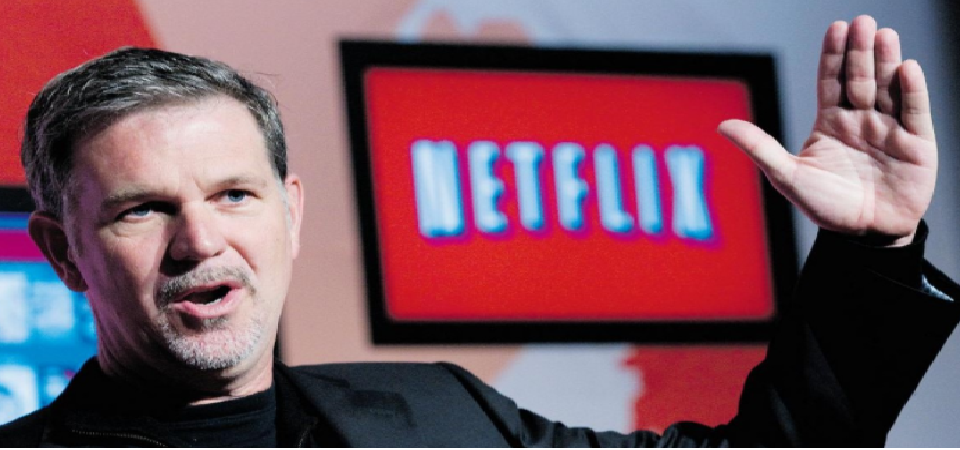
Netflix is showing us how to win the web. The results the company is showing is mind-blowing. Simply, if you can differentiate in content, the world would reward you. Today, Netflix is worth about $100 billion. This is huge as the company has built a video content business that rivals YouTube on market capitalization. Yes, I do think that YouTube, if a separate business from Google’s Alphabet, would be around $100 billion in market cap. At Alphabet’s $814 billion in market cap, investors have priced YouTube as a key component besides Google Search. Apart from these two properties, other Alphabet businesses are marginal. Or better, other businesses are supported by the oasis which is the search business, as explained in my one oasis strategy.
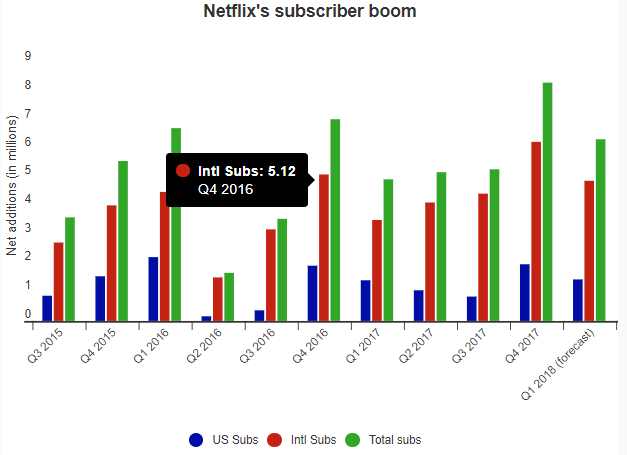
Back to Netflix, here are the latest numbers, courtesy of TechCrunch.
- Revenue: $3.29 billion, compared to $3.28 billion estimates from Wall Street
- Earnings: 41 cents per share, in line with estimates from Wall Street
- Q4 US subscriber additions: 1.98 million
- Q4 International subscriber additions: 6.36 million
- Q1 forecast US additions: 1.45 million
- Q1 forecast international additions: 4.90 million
As the referred piece noted, “Netflix’s biggest challenge has been to aggressively invest in good original content that’s going to bring in new subscribers”. “Original content” is indeed a challenge because having it would drive good quarterly report and growth. As we experience a redesign in the web business, we would increasingly see companies putting more contents behind paywalls. It is irrelevant whether the content is news, video or commentary. Washington Post which has deepened its reporting is now profitable because it is getting more paid subscribers.
Besides Aggregation Construct
I am a big fan of aggregation construct where entities build platforms to monetize raw materials created by others. From Google to Facebook, aggregation is at the heart of the new internet-driven commerce. But based on what Netflix has done, there is another dimension to growth, albeit if you have the money to create those contents. Indeed, besides aggregation, there is a clear parable for web business: originality. This parable is clearly explained by a TechCrunch commenter thus: “I signed up to support their original content, not the latest rehash from Hollywood. I also find I’m watching a lot of foreign content (South Korea, Norway, Japan, etc.) – most of which isn’t available elsewhere”. That is what it could take to win the entertainment and informational business on the web.