DD
MM
YYYY

PAGES

DD
MM
YYYY

spot_img

PAGES

Home Blog Page 7244

Let’s Go To China

0

Lily Kuo wrote on the Africa-China relationship on QZ newsletter today. Indeed, just as the world is examining the activities of China in Africa, Africa is also possibly influencing the world including China. Of course, this relationship is asymmetric because China is getting the better of it when compared with Africa. Yet, the point the author made is worth noting because in many cities in China, Africans are making progress, running factories which are producing goods most of them are shipping to African ports.

In African countries, increasingly you find Chinese people who never meant to stay as long as they have. But now, they say they can’t go home, because being in Africa has changed them. And that leads to another point. Africa has become a platform that we often use to analyze and understand China’s expanding influence in the developing world. But what about how Africa is influencing China, or the rest of the world?

China is finding opportunity in Africa even when Africans are running out of Africa: the Chinese have better positioning than most of the locals. People migrate but the African rate in unbalanced. That takes me to a book I read as an entry level banker in Lagos: Acres of Diamonds by Russell Conwell. Today, there may not be the real diamond but the lesson from that classic stands. The man that founded Temple University is not saying that you must be in your village before you can have a breakthrough in life. He was simply explaining that opportunities can come in different ways, and you must be aware to take advantages of them. The “diamonds” may be right beneath your house, or in some cases far away. There are acres of opportunities everywhere. You do not have to sojourn unaware that you are passing them daily.

That said, China has some “diamonds”: the 21st century diamonds mined by huge consumer base that is exploding. Yes, according to Fortune, “over the past decade, China has emerged as the world’s No. 1 consumer in a slew of important product categories: autos, mobile phones, semiconductors, elevators, luxury goods, beer, soy beans, pork, online games and men’s skin care.”

But that was the old China; the new China has even bigger plans. The country wants to build a massive $2.1 billion AI research park.

China is planning to build a 13.8 billion yuan ($2.1 billion) technology park dedicated to developing artificial intelligence (AI), state-backed news agency Xinhua reported Wednesday.

The campus will be constructed within five years and situated in the suburban Mentougou district in western Beijing. It will cover 54.87 hectares, Xinhua said.

The technology park will be home to around 400 businesses and is expected to create an annual output value of about 50 billion yuan.

As the country plots the future to ensure the country competes, its companies are redesigning industries. DJI has simply won the civilian drone sector as most of its competitors are struggling. Alibaba, Tencent and JD continue to redesign ecommerce. JD is making $150 million sales daily on a new offline supermarket! That is the scale of China because except China, there is no other country where a shop will generate such an amount.

Chinese e-commerce giant JD.com on Thursday officially debuted its first offline fresh food supermarket in Beijing, following its archrival Alibaba Group Holding in entering the physical retail market.

The 4,000-square-meter supermarket in southern Beijing, named 7Fresh, has been in a trial run since Dec. 29, receiving an average of more than 10,000 daily customers and a total of more than 1 million yuan [billion] ($150 million) in daily sales, according to JD.com.

The question is this: where is the road to China, and can we go to China? I think we need to learn (factory) production systems even as we restructure our African economies for services. It is only when the citizens have jobs that most of the services would grow. I think even if we cannot compete in the most advanced manufacturing phase, there are opportunities to improve productivity gains in pockets of industries in Nigeria. If we do that, living standards would improve. Governors should take note because scaling production seems to be the only path to improve wellbeing. Let’s Go to China and learn from China because their systems are working right now.

From the Nebuchadnezzar Babylon to the Caesar’s Rome, from the Industrial Revolution Britain to the America unipolar world, no nation has achieved what China accomplished within 25 years. If Africa ignores that, it means we are racist to understand who has better ideas at this time. Let’s go to China because the best developmental ideas are not necessarily European or American anymore. Yet, we need to learn and adapt.

Note: “Let’s Go China” is not a physical movement to China but thinking the Chinese ways which have produced great results.
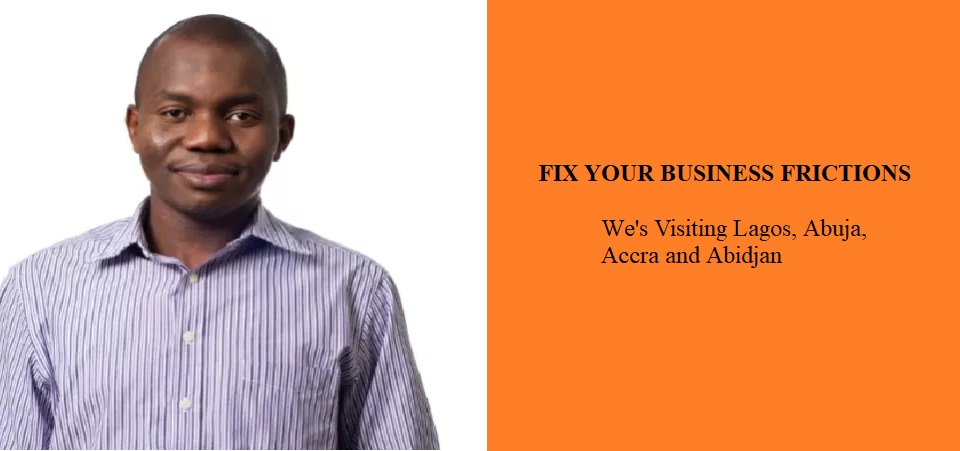

I’m Visiting Lagos, Accra, Abuja and Abidjan

0

Good people, with my team, we would be in Accra, Lagos, Abuja and Abidjan starting next week.  Even as we serve/expand engagements with current clients, we would be looking to meet new ones.  Let us work together to fix your business frictions. We focus on technology and business models through special reports, speeches/workshops and advisory services. Specifically, we have cores and enablers to help you get ahead with blockchain and cryptocurrency-based platforms, and we would build. All would comply with Nigerian laws including CBN and SEC [yes, no currency involved]. Usually, we give a one-hour discovery innovation talk tailored to your industry. Contact my team to schedule; fees apply.

Gain clarity on your strategy with an impactful one-hour talk or on-site workshop, expertly driven by me

Our Advisory Services solutions are structured as follows:

  • The State of the Industry: This is a two-hour presentation (including Q/A) where I will present what is happening in your market, customized for your company, and then offer insights on how you can plot your strategies to win.
  • Discovery Innovation Workshop: This could take up to a day, but minimum of four hours is required. Besides the two-hour State of the Industry presentation, we work with clients to discover unique ways they can look at their businesses.
  • Advisory Services: Most times, after our presentations and workshops, clients usually engage us for Advisory Services.

Expand your team’s capabilities and invent the future of your business with our unparalleled expertise

Hope we can do business together and make this a great 2018. Please contact tekedia@fasmicro.com or contact me directly on LinkedIn. For security purposes, I do not know where I would be and all goes through my local team that manages this.

Ndubuisi Ekekwe

Chairman, Fasmicro Group

NOTE: Would like to meet owners of clinics and hospitals for a new product we would also be launching.

Myself, I Do Not Want This Electricity in Nigeria

8

Nigeria has closed a $20 billion agreement with Russia’s state-owned nuclear energy company, Rosatom. Representing Nigeria, Nigeria Atomic Energy Commission signed the deal with the Russian nuclear energy firm and the latter will build four plants for total capacity of 4,800 MW, Premium Times reports.

At a meeting in Abu Dhabi in October, 2017, Russia signed an agreement with Nigeria to build and operate a nuclear power plant, the first of its kind on the continent, as well as a research centre that would house a nuclear research reactor.

The agreement was a furtherance of a memorandum of understanding signed last year between the Nigeria Atomic Energy Commission, NAEC, and Rosatom for the construction of four nuclear power plants at the cost $20 billion (more than N6 trillion). The four plants will have a total capacity of 4,800 megawatts by 2035.

Anton Moskvin, Vice President for Marketing and Business Development, Rosatom Overseas (a subsidiary of Rosatom), and Simon Mallam, Chairman of NAEC, signed the agreement on behalf of Rosatom and Nigeria respectively.

I know nothing of the use of nuclear energy in electricity. I mean, I know nothing except what they taught me in Physics in secondary school. But I am concerned because Nigeria cannot even manage a simple goat farm. Now you want to manage reactors. What if budget is delayed for critical maintenance? I mean, our experience with Ogoni disqualifies Nigeria for going into this venture: for all the photo ops for years, government after government, Nigeria continues to neglect the Ogoni people. Who wants its people to suffer the same fate with nuclear if bad things happen?

This is my opinion as a private citizen who can only shout. It does not matter; it is democracy. But if you have access, tell government that if it has $10 billion for electricity, nuclear power is a wrong strategy. Here are simple reasons:

  • Cost and Value: If it commits to solar energy with $10 billion, it would get 10,000 MW over 4,800 MW nuclear would bring (I assume 1MW for $1 million which is pessimistic but reasonable).
  • Jobs: Solar energy is distributed and would create at least 100x jobs than nuclear. In other words, if nuclear could create 3,000 jobs, going through solar will give Nigeria 300,000 jobs in the process.
  • Safety: Solar energy is safer for Nigerian citizens. I think everyone would want it over nuclear energy.
  • Transmission: Nuclear power will not fix our transmission line problem. Technically, Nigerian electricity problem is not exclusively power generation to need nuclear energy. There are many gas power plants that can double capacities in Nigeria but the discos cannot receive the power to distribute to consumers because our transmission system is broken. A nuclear power deal does not fix that problem. We can have these four nuclear power stations producing and yet consumers will not have power. Solar, to a large extent through distributed design, would make the need of transmission system minimal since there could be many pockets of solar plants spread across Nigeria.

Please do not attack President Buhari and his party on this, this plan started in 2009. So, he is simply following the Nigerian business. Nevertheless, we do hope he helps us to stop it.

But its nuclear relationship with Russia did not begin until 2009 when both countries signed an intergovernmental agreement on cooperation in the field of the peaceful usage of nuclear technologies. Shortly after, another agreement was signed on cooperation in design, construction, operation and decommissioning of the Nuclear Power Plant and the Nuclear Research Centre housing a multi-purpose nuclear research reactor.

In 2013, Nigeria signed its Country Programme Framework (CPF), a five-year medium-term planning of technical cooperation between a member state and the International Atomic Energy Agency (IAEA) that identifies priority areas where the transfer of nuclear technology and technical cooperation resources will be directed to support national development goals

[…]

In May 2016, the Nigeria Atomic Energy Commission signed an agreement with the Russian government for cooperation in the construction of a centre for nuclear science and technology in the country.

They have not mentioned the nuclear sites but I can assure you that this may turn out to be a campaign issue in 2019 election at both the gubernatorial and presidential levels. No Nigerian would want nuclear facility in his or her community. If you think we would not care, you have not visited Federal Secretariat Abuja where most of the toilets have no running water. For nuclear reactors, not having that water can wipe a community. And that is why this deal is not good. This is perhaps the only type of electricity I do not want to use in Nigeria.

The Digital Royal Family

0

Digital marketing is like a palace occupied by four different key people which make up a royal family – The Digital Royal Family.  I am using the ancient Igbo Kingdom of southeastern Nigeria in this analogy. You need to understand how the members of the royal families interact with one another, and the kingdom, in order to build the architecture of a solid digital marketing engagement. The citizens of the kingdom are the (digital) users.

Content is King: The words of kings rule over kingdoms. Those words are kings. You must invest to develop great contents to have success over the citizens (the users).

Digital advertisement is Queen: Sometimes the message of the king needs to go far. Digital advertisement makes that happen. In the ancient Igbo kingdom (Nigeria), the best “lost” secret is the one the queen has heard. (Do not be too hard on me for this one; men also  speak with reckless abandon, but in the ancient Igbo tradition, women were not allowed in the Obi especially as men decide to wage wars or make important decisions. Obi is the heart of the palace where the king receives the most important dignitaries. The most important tradition, the breaking of the kola nut, happens therein.  The hardest decisions are usually made there after libations to the gods and ancestors for direction. The chief priest, the seer of the community, in direct communication with the gods, by tradition consecrates kings there. Of course, the king does share news with the queen.)

Mobile is Prince:  Unpredictable and wild and always on the move. That is the prince, processing and utilizing the messages that come across. Picking those messages, he moves with agility to other kingdoms building partnerships for his future kingdom when the king  joins the ancestors.  The words of kings are promises of the princes because they inherit those words. He goes far, freer than the king who is tethered by tradition to his kingdom. The prince takes the contents far, amplifying the message, on behalf of the kingdom.

Social is Princess: She makes everything glow, amplifying the message, unbounded and unconstrained. Because sooner or later, she departs to another kingdom as a bride to another prince, she makes the messages stick. By her ability to move from one kingdom to another, she knows a lot. She makes great impacts in any kingdom because she is born for two kingdoms. She unites traditions and becomes a symbol to make peace because her children are named Nneka (the mother is mightier). And when her son returns to the father’s palace, on visit, and during public occasions, he would be served wine specially because he is a son to the daughter (nwa Ada).  In the breaking of kola nut, the zenith of traditions, the kids are also honored as elders beckon “anyi nwere nwa ada ebe a” [Do we have a son of a daughter here?]. This makes sense because if war should break out, the young man, who is a prince in her mother’s new kingdom could in future come to defend the land of her mother. Also, if his own kingdom falls to wars, he can run to his mother’s place and be accorded most rights. That symbiotic relationship is possible by the social princess who is the only person that can unite kingdoms by moving from her father’s kingdom to another one. She scales everything and she is vital in kingdoms. In short, without the princess, kingdoms die and tension rises. She makes it possible for most kingdoms to be linked, by marriage, making sure no one fights recklessly.

Of course, when the message is right, got to the citizens, and everyone heard it the right way, there would be celebration in the kingdom because the king spoke and the citizens liked the words, and they took action. That is how digital marketing works.

My 2018 Playbook for Nigerian Telcos

1

The year 2017 could not have gone so quickly in the Nigerian telecommunication sector. Largely, it was not a dance party for many of them. Despite the official declaration that Nigeria was out of recession, it was not yet uhuru for the telcos. As MTN continues to pay down its fines (over regulatory compliance issues on SIM card registration), Etisalat Nigeria lost its major investor and became 9Mobile. The regular noise from India was not very encouraging for Airtel which has seen its African businesses under high-voltage shock as pockets of its business in some markets continue to lose money. Glo kept its standard of largely sub-par service delivery intact.

Yet, they overcame and 2018 is here. The push to 30% broadband penetration in Nigeria continues. Here are some simple things they could do in the industry to make this 2018 better.

Cross-platform Development: This is the only way they can grow and expand the pile. From deepening and supporting services in finance, agriculture, logistics, among others, telcos have to band together to do better. The win-win model must be part of the collective strategy and the concept of co-opetition (cooperating even when competing) must be in their hearts. Imagine if the telcos come together to build a blockchain infrastructure to power Nigeria’s commerce and industry in this emerging area.

Telecom Committee: The leading telcos (possibly would become three if 9Mobile goes) must work hard to form a stronger lobby group. What they are facing at state levels with rights of way and multiple taxations cannot be solved individually. Besides Association of Telecommunications Operators of Nigeria (ATCON), I expect MTN, Glo, 9Mobile and Airtel to have another lobby group with capacity to exert real influence in the states. A good playbook to copy is the Bankers Committee. The Telecom Committee must be innovative in battles it takes with regulators so that it does not alienate customers. Yet, it needs to win some key ones it needs. The regulator, Nigerian Communication Commission (NCC), should be seen as a regulator and an ally since without them, NCC itself will fail. Playing that ally card could help them to get some critical supports they need to thrive.

Diversify into New Sectors: Agriculture will be huge as Buhari Administration is focusing on it. I know the data we have consumed in farms as we work on Zenvus in northern Nigeria. The telcos must invest in new markets because the typical big-markets may actually be loss-making. They continue to push promos to customers with multiple SIM cards. Yes, Nigerians wait for the telco with the best promo and switch to a new one afterward. Once that one ends, they switch to the next promo in line, cascading race to the bottom. But in agriculture, farmers are business-people and are focusing on bringing IT into agriculture. The Telecom Committee has a strategic role to assist because in that redesign agriculture will be a growth sector. This diversification goes beyond agriculture to other areas like education and health.

Leading telcos in Nigeria (source: latest solution)

Mobile Virtual Network Operator (MVNO): Though NCC will likely decide if telcos have the capacity to anchor MNVOs, it may be time for the telcos to explore how they could sell services in bulk to MVNOs. MNVOs will provide cashflow to invest in innovation and growth. This is one of the biggest telecom businesses in U.S. where companies like AT&T and Verizon have MVNOs that differentiate with services even when relying on infrastructure provided by telcos like AT&T. Yet, this may not be an absolute decision of the telcos to make as NCC will surely like to run the show as typical in Nigerian regulation. The Telecom Committee may consider pushing for MNVOs if they feel confident they have excess capacity to sell. MVNOs will help them reach some cities which the telcos are not interested since MVNOs are usually not nationwide brands: they are assigned areas they can do business. And usually, they win with customer service.

4G Deployment: The telcos have promised 4G but are yet to deliver in practical forms. They need to get the 4G services to in the nation. The fact is this: without broadband, Nigeria will stall in the advancement we expect in AI and other emerging technologies areas like IoT (internet of things). Now is the time to make this 4G happen at scale. Without affordable 4G, some emerging services in security, education and health would stall. So, it is very strategic to deploy 4G – Nigerians are waiting.

Innovation on Data: The business is about data right now. But data will not make telcos improve their revenues if the data is not “transformed”. I do think they need to innovate on the data they have. That innovation on data will provide the path to building platforms. There are many things they could do. I noted one in the Forum today. Besides, home automation, home security and energy management would benefit on this data innovation. The telcos can drive some of these areas through strategic partnerships.

OEM-Focused Partnership: The telcos in Nigeria have focused on gaming, quizzes and the typical things you see being promoted via SMS. Those things are leisure. And they are okay. But for the telcos to see new growth, they have to invest and partner with OEMs that make physical things which need Internet to work at scale. Think of companies like Nest (the Nigerian version), Ring (security) and more. They need to push investments in those areas because they could sell more data if those succeed.