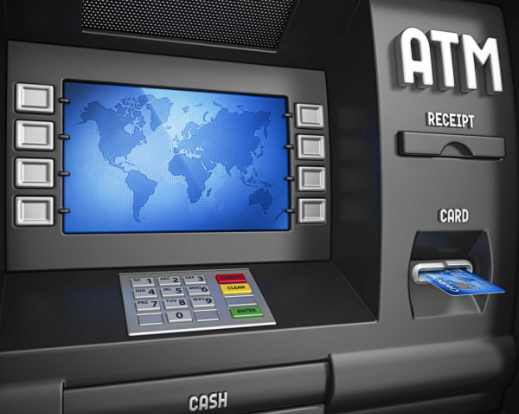
CWG Plc, a technology solution provider that enables the growth of businesses, said it is promoting the ATM as a Service initiated because of its inherent capability to help banks and other financial institutions focus on their core business of rendering financial services to their customers.
“The rationale behind ATM as a Service is the operational efficiency, whereby companies can focus on their core business and allow contractors take care of other areas of their business that are not very critical to them,” said Henry Erigha, CWG’s Senior Manager, Financial/SME.
Erigha,who stated this in a statement said having realized the many headaches around operating an ATM machine in Nigeria, CWG decided to be handling the operation of the ATM as a service and take the headaches off the banks so they can have time to operate more efficiently within their organization.
He believes that ATM as a Service model is the new wave around solution providers, stressing that with the model, banks do not need to roll out huge CAPEX to procure an ATM, which he disclosed requires a minimum of N7 million to make one machine function.
“To acquire one ATM machine based on current foreign exchange requires minimum of N7million in Nigeria today, and a bank is expected to deploy 300 ATM machines across Nigeria. This is huge for the banks. So we desire to take this headache from the banks; we have access to the fund and we are the custodian of the ATM,” Erigha asserted.
He stated that all that is required from the banks is for them to pay a subscription, which could be monthly or quarterly for them to make use of the ATM as a Service, which he assures is a more secure way of doing business because it helps operational efficiency and realigns business roadmap in such a way that the banks are now more focused on the direction and organizational goals as agreed with their board.
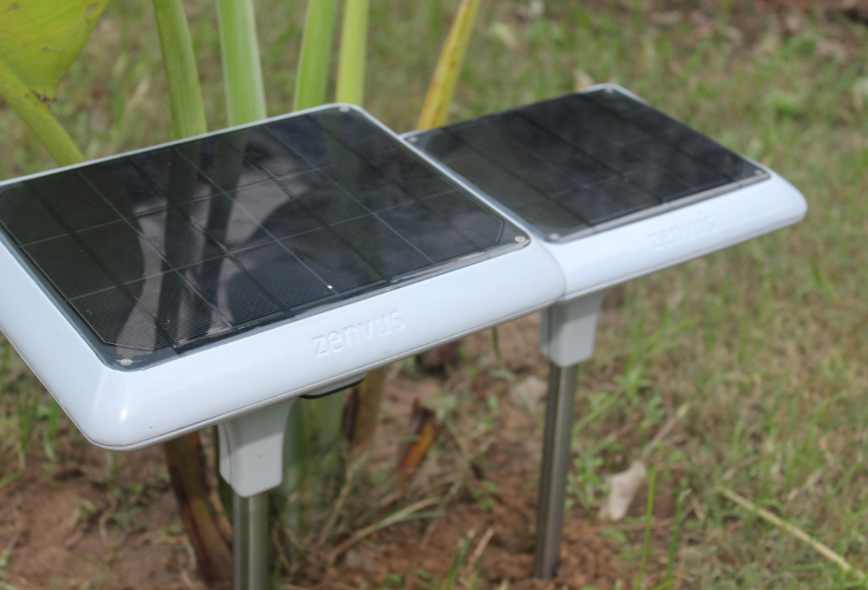
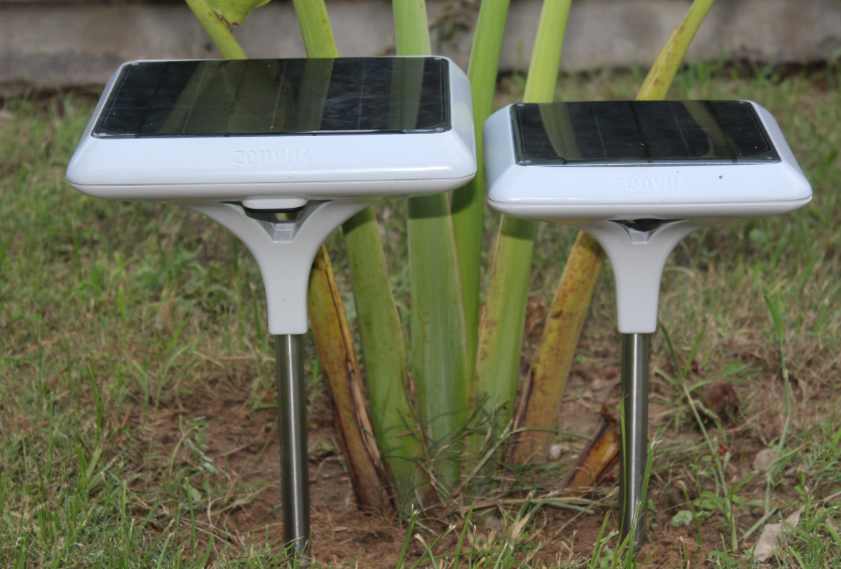
When inserted in the soil, Zenvus sensor gathers and analyzes data about changing weather and soil conditions. It then communicates to farmers helping them make decisions on what, when and how to farm. Besides the analytics of the soil, Zenvus provides a special spectral camera which helps to track crop vegetation. The camera provides farmers with deep insights on the vegetative health of their crops. By analyzing the images, stressed crops, droughts, outbreaks of pests and diseases etc can be seen and managed. Also, by aggregating data on the soil and vegetation, farmers can evaluate the effectiveness of irrigation and fertilizer application by correlating soil data with overall vegetative crop health.
Zenvus Services
Our goal is to work with government to on-board Ebonyi farmers in these portals
zManager is an electronic farm diary that helps Zenvus farmers record all phases of farming from planting through harvest to sales. It keeps all records – financial, staff, tools, etc
zPrices empowers rural Zenvus farmers with real-time produce prices across major cities. It provides farmers with data to effectively negotiate prices with merchants
zCapital helps Zenvus farmers raise capital (loan or equity) by providing independent farm data from our sensors to help banks and investors evaluate overall profitability of farms.
zCrowdfund helps Zenvus farmers crowdfund capital from local donors who they can deliver produce after harvest. Our sensors validate these farms providing partners with confidence.
zInsure helps Zenvus farmers insure their farms by providing independent farm data from our sensors to insurers. This helps them evaluate the risks based on actual farm data.
zMarkets provides a platform for Zenvus farmers to sell their produce. It is an avenue to expand their markets by removing geographic limitations. Farmers list their harvest days and buyers connect.
Zenvus Solutions
Zenvus Boundary – helps farmers map the boundaries of their farms and then print same so that they can obtain farmland titles from governments.
Zenvus Fusion – Zenvus Fusion is a service for governments and development organizations which is designed to help build Soil Fertility Geography in constituencies like states
Zenvus Insights: Provide a platform where government can monitor and track performances of all farms it has supported in the state.
We seek partnerships with governments to deploy these solutions to their farmers and help improve farming productivity
Monday was a great day to be Snap Inc. That’s when the brokerage firms that underwrote its IPO were released from their quiet period, and presto! All of them coincidentally came out with strong buy recommendations, which boosted the stock by about 10%.
The warm glow of all those “buy” ratings soon faded, however. Why? Because Facebook announced new features on Tuesday that duplicated most of the popular aspects of Snapchat, the company’s flagship product. Facebook has more than 10 times as many users, and a market cap that is 10 times as large.
Shares of Snap tumbled in response, not surprisingly, because competition from Facebook is one of the biggest shadows hanging over the stock. But there are others, as Pivotal Research notes: It rates the stock a “sell,” with a target of just $10.
Snap’s revenue is expected to climb by as much as 160% this year, to about $800 million. But even that number is smaller than expected, because of higher revenue-sharing with partners. Is that going to be a trend? Snap isn’t saying, but it could curb growth expectations.
On top of that, Snap isn’t expected to be cash-flow positive until 2020, and that’s the forecast from a relatively bullish research firm. That’s a long time to wait for proof that the company’s business model is sound.
Meanwhile, investors are paying more than 20 times Snap’s projected revenues, which is more than twice what Facebook is selling for, and Facebook is a massive cash-generating machine with a proven track record. Snap didn’t produce any revenue until 2014.
Those kinds of multiples are going to be difficult to live up to. And if Snap doesn’t manage to do so, better look out below
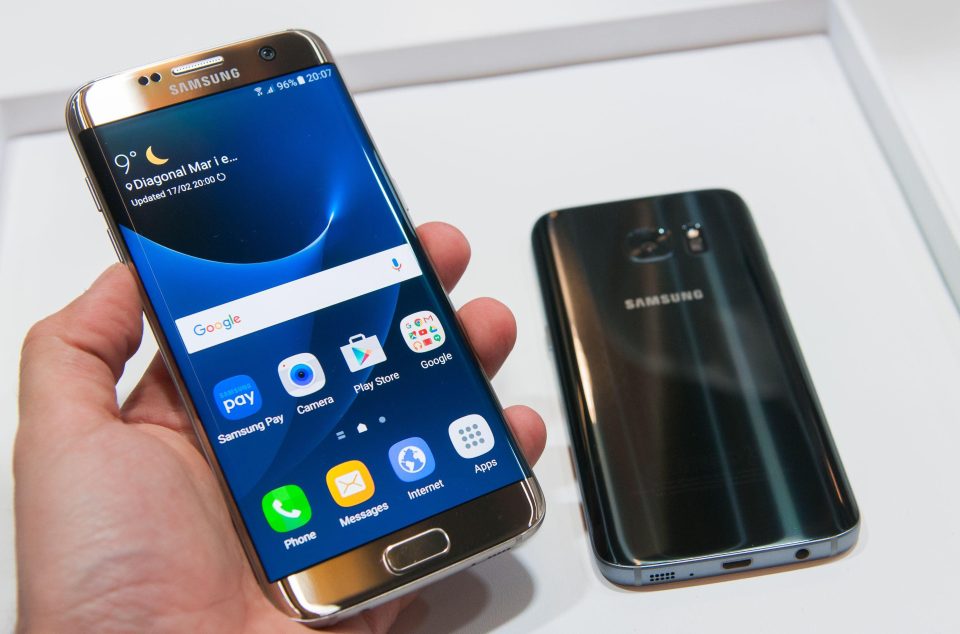
Samsung on Wednesday revealed two new flagship smartphones – the Galaxy S8 and Galaxy S8+. They will go on sale April 21.
In an effort to prevent issues like those that affected the Note 7, both of Samsung’s new phones have been built following the company’s new battery protocol, which calls for an eight-point safety check. If that new quality control process works as planned, the Galaxy S8 and S8+ could succeed in reversing the company’s misfortunes.
As expected, the gadget has a whole new design—notably, a curved screen, slimmer profile, and personal assistant software that goes by the name of Bixby. Plus, Samsung is courting corporate buyers with a new docking station that theoretically turns the Galaxy S8 into a desktop computer. Great new features like an impressive edge-to-edge screen, a new virtual assistant, and facial recognition technology..
The Screen
Pick up one of the Samsung’s new Galaxy devices and the first thing you’ll notice is how big the screen looks. The Galaxy S8 features a 5.8-inch display, while the larger model boasts a 6.2-inch display, both of which are notably larger than the Galaxy S7’s 5.1 inches and the Galaxy 7 Edge’s 5.5 inches. Samsung here ditched the home button in favor of a touch sensor, allowing the screen to be embiggened without making the device physically larger.
The Interface
A slimmer profile, meanwhile, helps the devices feel more manageable to hold than their predecessors. On the software side, a simpler interface also makes the new phones easier to use — instead of an app launcher, users tap the bottom of the screen to view their app library.
The Usuals
Samsung diehards will be happy to learn the Galaxy S8 and S8+ inherit fan-favorite features like dust and water resistance, a microSD card slot for expanding storage, and a 3.5mm headphone jack. (Samsung’s doubling the default storage this time around, offering 64GB instead of 32GB.)
Bixby
The Galaxy S8 and S8+ also herald the arrival of Bixby, Samsung’s new voice-activated assistant. The company is aiming to differentiate it from rival services like Apple’s Siri by making it better at understanding situational context, as a human aide would.
Samsung claims that Bixby can accomplish any task a user might otherwise do via taps and swipes, though it’s unclear which third-party apps will work with it. Both devices have a dedicated button on their sides for summoning Bixby. And Bixby can use the phones’ camera to scan items and retrieve information about them — one might, for example, get food pairing suggestions by scanning a bottle of wine. (Amazon’s ill-fated Fire Phone also attempted to use its camera in a similar way.)
Facial Recogniton
Both the Galaxy S8 and S8+ boast facial recognition and eye-scanning technology allowing owners to unlock their phone by looking at it, the latter of which Samsung debuted on the Note 7. Photography-wise, the new devices show little improvement from the Galaxy S7, though the front-facing camera has been upped to 8 megapixels from 5 and has face-detecting autofocus. Samsung also claims the new phones have better image processing technology, which should help them take better photos in low light and reduce blur.
Multi-purpose computers
Samsung is additionally pitching its new devices as multi-purpose computers. Both phones can control household gadgets compatible with the company’s SmartThings platform and work with its DeX dock, which simulates the experience of using a desktop. When attached to this dock, the S8’s interface looks like that of a computer rather than a smartphone. Apps optimized for the accessory run full-screen rather than in smaller windows, and the phone will work with enterprise software to run a virtual version of Windows. Microsoft announced a similar feature for its Lumia 950 phone in 2015 called Continuum. Still, it’s unclear how much consumer demand exists for such a feature outside the workplace.
Rounding Up
Samsung’s Galaxy S8 and S8+ face the formidable challenge of convincing buyers it’s worth taking another chance on the company’s smartphones after the Note 7 fiasco. To some degree, the company can bank on its brand, having long made some of the best Android handsets available. For more interesting product reviews visit top9rated.com site online.
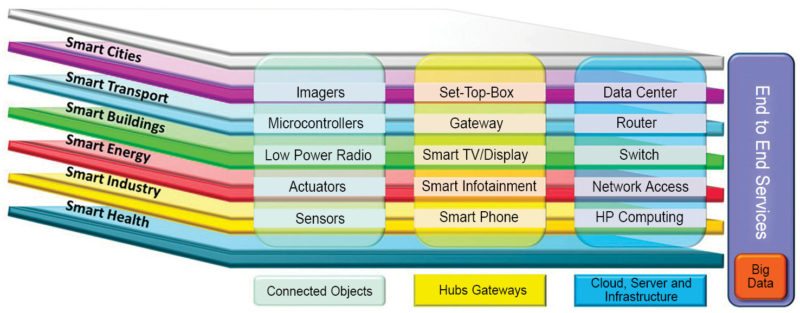
With several billion devices expected to be connected to the Internet of Things (IoT) over the next few years, character of the mobile network will be changed completely. The types of devices involved broadly fall into two categories: massive machine-type communication (MTC) and mission-critical MTC. The demands these place on the network are very different from each other, as well as from those of traditional mobile terminals or user equipment. The resulting IoT ecosystem will be complex—multi-layered and cross-disciplinary as shown schematically in the figure.
Schematic of the proposed IoT ecosystem
Massive MTC
Protocols developed for mobile phones, smartphones and tablets are unnecessarily complex for high-volume non-speech devices that will be used for massive MTC, and these devices will also need to be low-power in order to have ultra-long battery life, and must have a low unit cost.
Massive MTC use cases include connected lifestyles and healthcare applications such as wearable technology, as well as smartenergy, public infrastructure and industrial automation. These applications generally have intermittent, low data rate requirements and no particular latency constraints, so will not need the high data rates promised for 5G.
Nevertheless, the sheer volume of devices forecast to connect to the IoT means that eventually the capacity of 5G will be needed to support these all. In the meantime, new low-complexity protocols are being introduced for 4G, which will allow significant numbers of MTC devices to work on 4G LTE networks up to and beyond the launch of 5G.
3GPP LTE-M standard (also known as Cat-M or Cat-M1) will enable lower-cost, lower-power M2M devices to work within the currently available mobile networks, and will also offer modes that improve in-building coverage.
Two further IoT standards, enhanced coverage GSM (EC-GSM) and narrow-band IoT (NB-IoT), are also being introduced. EC-GSM, as its name suggests, uses legacy 2G technology, while NB-IoT can be used with either 4G LTE or for re-farming of GSM channels.
NB-IoT is a new narrow-band radio technology introduced by 3GPP to specifically address the requirements of the IoT. Standardisation began in September 2015 and is still ongoing. It is designed to improve indoor coverage as well as provide support for a massive number of low-cost, low-throughput devices with low device power consumption and optimised network architecture.
NB-IoT can either be deployed in-band, utilising resource blocks within a normal LTE carrier or its guard band, or in a standalone mode for deployments in non-LTE spectrum. It will entail a radical change to the physical layer, occupying a bandwidth of only 200kHz including guard-bands. This allows one GSM/GPRS channel to be directly replaced by one NB-IoT channel, or many more to be accommodated within an LTE channel where it can share capacity and mobile-site resources with regular LTE data traffic, thus enabling LTE networks to accommodate many more MTC devices.
Mission-critical MTC
At the opposite end of the scale, mission-critical MTC applications include driverless vehicles and robot surgery, and will have stringent requirements on both reliability and low latency. These form one of the key use cases for 5G, and new network strategies including mobile edge computing (MEC) are being developed to cater to these.
The accelerating development of 5G is partly being driven by a demand for expanding the networks to enable the secritical IoT use cases, where the need for low-latency and high-reliability devices cannot be met using existing connectivity technologies.
READ
Peripheral touch controller with superior water tolerance now available on several Microchip MCUs
Looking to the future, 4G, 5G and legacy mobile will all form part of the eventual IoT mix. Many IoT devices need to operate indoors, so issues of in-building penetration need to be addressed as well. New architectures and frequency bands may be needed to improve indoor coverage. A mixture of heterogeneous networks (HetNets) using small cells, Wi-Fi offload and more innovative indoor coverage solutions such as intelligent digital DAS (idDAS), which allows mobile operators to use flexible repeater solutions to dynamically allocate capacity within buildings or areas is expected to form part of the solution.
Software-defined networks utilising network function virtualisation and self-optimising networks will increasingly be used by operators to help make networks more flexible and responsive to changes in demand. These will form an integral part of the development of the IoT, and in managing network resources to cope with the extra traffic that it will generate.
Network test and validation
These large volumes and diversity of devices and applications will introduce a new set of challenges in testing and validation, not only for the devices themselves but also for the networks that will support these. Mobile networks that are being expanded to include the IoT will also need new kinds of testing, and the effect of loading the network with millions of these devices will need to be validated.
Although individual devices may not need much bandwidth, with millions more devices coming online, efficiencies of 4G and 5G will be required, in order to increase the overall capacity of the network to be able to handle these.
Availability of network validation tools that emulate realistic data usage scenarios has been vital to the development and rollout of LTE, and in the future it will be equally important to include the characteristics of the predicted volume of IoT devices in the traffic models, in order to ensure quality of service and quality of user experience as 5G networks develop.
The philosophy of testing by design will provide the wireless industry with the blueprint to begin developing this framework, and this will necessitate the use of a validation environment based on virtualised network functions that can apply realistic scenarios for all types of users—consumers, businesses and things.
Latest generation of TM500 network test system already has the capability to emulate certain types of M2M/MTC devices, to evaluate the effect on the network of connecting large numbers of these low-power, low-complexity devices. This helps network operators and infrastructure vendors to validate 4G mobile network performance in preparation for deploying IoT connectivity.
Phil Medd is senior technical product manager, Cobham Wireless