DD
MM
YYYY

PAGES

DD
MM
YYYY

spot_img

PAGES

Home Blog Page 7423

We can “cure” poverty in Africa in this generation with Zenvus precision agriculture

0
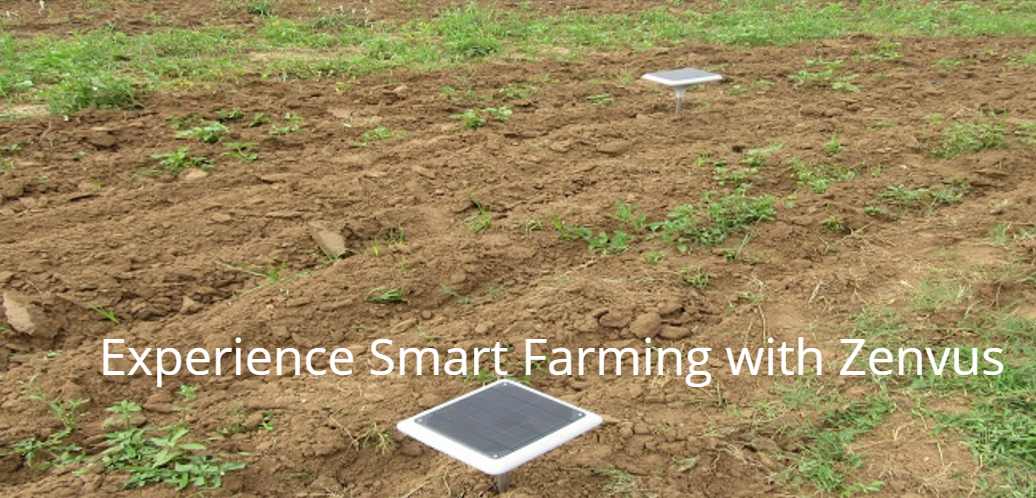
Zenvus precision sensors in farms

By 2050, it’s expected that the world’s population will reach 9.2 billion people, 34 percent higher than today. Much of this growth will happen in developing countries like Brazil, which has the largest area in the world with arable land for agriculture. To keep up with rising populations and income growth, global food production must increase by 70 percent in order to be able to feed the world.

For IBM researcher and Distinguished Engineer Ulisses Mello and a team of scientists from IBM Research – Brazil, the answer to that daunting challenge lies in real time data gathering and analysis. They are researching how “precision agriculture” techniques and technologies can maximize food production, minimize environmental impact and reduce cost.

“We have the opportunity to make a difference using science and technological innovation to address critical issues that will have profound effect on the lives of billions of people,” said Ulisses.

What is precision agriculture?

Traditionally agriculture is practiced by performing a particular task, such as planting or harvesting, against a predetermined schedule. But by collecting real-time data on weather, soil and air quality, crop maturity and even equipment and labor costs and availability, predictive analytics can be used to make smarter decisions. This is known as precision agriculture.

With precision agriculture, control centers collect and process data in real time to help farmers make the best decisions with regard to planting, fertilizing and harvesting crops. Sensors placed throughout the fields are used to measure temperature and humidity of the soil and surrounding air. In addition, pictures of fields are taken using satellite imagery and robotic drones. The images over time show crop maturity and when coupled with predictive weather modeling showing pinpoint conditions 48 hours in advance, AI is able to build models and simulations that can predict future conditions and help farmers make proactive decisions.

Optimizing planting, harvesting and distribution

In order to grow crops optimally farmers need to understand how to cultivate those crops in a particular area, taking into account a seed’s resistance to weather and local diseases, and considering the environmental impact of planting that seed. For example, when planting in a field near a river, it’s best to use a seed that requires less fertilizer to help reduce pollution.

Once the seeds have been planted, the decisions made around fertilizing and maintaining the crops are time-sensitive and heavily influenced by the weather. If farmers know they’ll have heavy rain the next day, they may decide not to put down fertilizer since it would get washed away. Knowing whether it’s going to rain or not can also influence when to irrigate fields. With 70 percent of fresh water worldwide used for agriculture, being able to better manage how it’s used will have a huge impact on the world’s fresh water supply.

Weather not only affects how crops grow, but also logistics around harvesting and transportation. When harvesting sugar cane, for example, the soil needs to be dry enough to support the weight of the harvesting equipment. If it’s humid and the soil is wet, the equipment can destroy the crop. By understanding what the weather will be over several days and what fields will be affected, better decisions can be made in advance about which fields workers should be deployed to.

Once the food has been harvested the logistics of harvesting and transporting food to the distribution centers is crucial. A lot of food waste happens during distribution, so it’s important to transport the food at the right temperature and not hold it for longer than needed. Even the weather can affect this; in Africa, many of the roads are dirt, and heavy rain can cause trucks to get stuck in mud. By knowing where it will rain and which routes may be affected, companies can make better decisions on which routes will be the fastest to transport their food.


The future of precision agriculture

Currently, precision agriculture technologies are used by larger companies as it requires a robust IT infrastructure and resources to do the monitoring. However, Ulisses envisions a day when smaller farms and co-ops could use mobile devices and crowd sourcing to optimize their own agriculture. A good startup working in Africa is Zenvus.

“A farmer could take a picture of a crop with his phone and upload it to a database where an expert could assess the maturity of the crop based on its coloring and other properties. People could provide their own reading on temperature and humidity and be a substitute for sensor data if none is available,” he said.

With growing demands on the world’s food supply chain, it’s crucial to maximize agriculture resources in a sustainable manner. With expertise in high performance supercomputing, computational sciences, and analytics and optimization, agtech  is uniquely able to understand the complexities of agriculture and develop the right weather forecasts, models and simulations that enable farmers and companies to make the right decisions.

Africa has got Zenvus and the firm is ready to serve farmers around the continent.

 

Innovation = Execution x Creativity

0

You may have heard about the sword of Damocles, hanging above its target by a single hair. It’s a metaphor often used to describe impending doom, yet this is not the actual meaning. The story goes that a servant was taken by all of a king’s wealth and wanted to partake in that luxury. The king offered the servant supper on his throne, but with a sword hanging above him held by a single strand. Afterwards he asked the servant if he enjoyed the meal, but the servant was too worried about the sword falling.

The sword of Damocles is not about impending doom. It’s about the pressures of power and responsibility. Every business leader feels this, knowing that it takes only a few wrong decisions, or a dollop too much complacency, for disaster to land. Today this pressure is more poignant than ever. Change, as always, is in the air, only now it is happening at breakneck speed. The lifespans of companies are fast become shorter and even historic precedent fails to contextualise what is happening today.

Speed matters and technology is the means to accomplish that speed. Yet technology is not a fix. Any solution purchased to catalyse change is a waste of money. The real reason why companies fail to change and to shift into new spaces, is because they lack the right innovation cultures.

Innovation is a tricky principle to nail down, but it has a simple formula: Innovation = Execution x Creativity. Companies struggle to engage this dynamic, because they suffer from corporate cholesterol. These are the unwelcome fats clogging a company’s arteries: rigid processes, risk avoidance and complacency – anchored through faith in existing frameworks – all effectively suffocate a business’ ability to push forward.

Digital transformation has brought this problem to a head. But, as said earlier, technology is not the solution. Digital transformation is not a process. It is actually an end goal, a new state of business defined by a revolution in technology. Getting there requires transformation on a different level. A transformation that enables people.

Humans are key to innovation. It is human thought that creates new ideas and tests new opportunities. A common barrier for any transformation is a reliance on the familiar. Companies seek out to improve on existing solutions and discover ‘comfortable’ problems that can be turned in a familiar context. But real innovation means going where the business has not gone before – and for that, humans are crucial. The best AI can accomplish incredible things, but what it can’t do is be creative. Technology helps to amplify and augment humans, not replace them.

SAP stumbled upon this concept a number of years ago. In the early 2000s one of its founders wrestled with the company’s wayward direction. The exciting, customer-focus culture of SAP’s startup days – and which brought it success – had been replaced by a regime of prescriptive thought patterns. Then came the concept of Design Thinking.

Design Thinking is a human-centered approach to innovation. It helps companies be empathic around customer and business needs, use collaboration to bring functions and perspectives closer together, and aims to be highly iterative so to better understand and embrace the market. When you focus on people, processes and environments, you encourage creativity. Turn that into a scalable culture and you invite disruptive innovation, not the incremental innovation that translates to little new value.

Harnessing a Risk-taking culture is key. McKinsey, the same consultancy that helped change corporate thinking in the early 20th century, has noted that digital performance and positive risks are joined at the hip. This type of culture not only understands that exponential rewards come with increased risk, but that failure (at least fast failure) is a powerful learning opportunity. Just like learning to ride a bike – if you never fall, you will not know how to find ways to be better.

It’s interesting to note that delivering iterations, far outweighs the importance of delivering the perfect product. 3D Robotics, a drone company established by technology evangelist Chris Anderson, pulled out of its ambitious drone-manufacture plans because it spent all its resources to make the ‘perfect’ drone. Meanwhile DJI, a Chinese company, used constant innovation to drive new products to market. Not all of DJI’s products succeeded, but its momentum held ground. Today DJI rules the drone space while 3D Robotics has exited this market altogether. Enable rapid innovation and you progress.

Design thinking creates a mindset to merge technological feasibility, business viability and human experience. This doesn’t just pertain to outward-facing products. Design thinking is as much about innovating internal processes and ideas. For example, creating new career paths facilitating a wider talent pool, requires a creative approach to what is important to a business.

I won’t claim that SAP has perfected Design Thinking, but it has done amazing things for the company. The goal of moving out of its stoic enterprise trappings is being achieved in unbelievable ways. We have engineered groundbreaking new products, created a workplace for a very diverse workforce, and realised digital transformation by becoming a real-time data-driven business. I’m not pitching a product here. I am stating that without Design Thinking, SAP may today be facing extinction. Nobody is immune from this.

We have since realised the value of bringing this message to our customers and offer free insights into how Design Thinking can help an organisation. The sword of pressure hangs over every business leader. Instead of worrying if it will fall, you can find confidence in a new philosophy that will change your company’s creative and innovation cultures. If you are worried about your business tomorrow, look at Design Thinking today.

 
By Brett Parker, Managing Director – SAP Africa at SAP originally published this with title “Design Thinking: The X factor in your digital transformation”

Transform your career: enroll in nanodegree in cybersecurity technology, policy and management

0

Enroll in our nanodegree in cybersecurity technology, policy and management..

First Atlantic Cybersecurity Institute (Facyber) is a cybersecurity training, consulting and research company specializing in all areas of cybersecurity including Cybersecurity Policy, Management, Technology, Intelligence and Digital Forensics. Facyber is based in United States.

The clientele base covers universities, polytechnics, colleges of education, governments, government labs and agencies, businesses, civil organizations, and individuals. Specifically, the online courses are designed for the needs of learners of any discipline or field (science, engineering, law, policy, business, etc) with the components covering policy, management, and technology.

Structure

Programs are structured as Certificate, Diploma and Nanodegree programs with deep resources to support Learners.   Please see complete Facyber catalog and detailed Table of Contents.

Learn about
– Cybersecurity Policy (Certificate, Diploma, or Nanodegree)
– Cybersecurity Management (Certificate, Diploma, or Nanodegree)
– Cybersecurity Technology (Certificate, Diploma, or Nanodegree)
– Cybersecurity Intelligence and Digital Forensics (Certificate, Diploma, or Nanodegree)

Our Cybersecurity education is structured around four key pillars of policy, management, technology and digital forensics. This implies that we cover all the core needs of any organization or state institutions. While some staff like corporate lawyers may require training on policy, some staff like IT managers may need technical skills. Others like business leaders will find the management module useful. We deliver all these programs through our web portal . The program structure is presented below: certificate programs take 12 weeks; diploma programs which require certificate programs as perquisites take 24 weeks (inclusive of the certificate programs) and the nanodegree programs require a live (virtual) one week training with the diploma programs as prerequisites

Program Descriptions

  • Certificate in Cybersecurity Policy (CCYP): Certificate in Cybersecurity Policy deals with the policy analysis and implementation aspects of cybersecurity. It presents theory and topical issues, at government and enterprise levels, with both technical and managerial components in the fields of information systems security. The program helps learners develop skills on the policy, ethical, and legal issues associated with cybersecurity and information security.
  • Diploma in Cybersecurity Policy (DCYP) Capstone: This is a practical-oriented program where learners are tasked with developing solutions for a theoretical or real case cybersecurity policy issue with the guidance of a mentor. A project report is required at the end of the program.
  •  Certificate in Cybersecurity Technology (CCYT): The Certificate in Cybersecurity Technology is designed to provide learners with skills to analyze multi-faceted complex cybersecurity issues, develop capabilities to make strategic decisions to protect organizations from threats and become competent cybersecurity professionals.
  • Diploma in Cybersecurity Technology (DCYT) Capstone: This is a practical-oriented program where learners are tasked with developing capabilities in the core technical aspect of cybersecurity. Learners will have access to some tools and equipment to work throughout this program. A project report is required at the end of the program.
  • Certificate in Cybersecurity Management (CCYM): The Certificate in Cybersecurity Management equips and prepares learners with modern skills to become effective managers across the broad nexus of cybersecurity and intrusion preventions in organizations. The central core is developing capacity to prevent anticipated cyber intrusions, using experiences to mitigate future threats, and formulating and implementing enterprise-level cybersecurity roadmaps. The program also explores the roles of regulation, policy developments, legal instruments and civil liberties.
  • Diploma in Cybersecurity Management (DCYM) Capstone: This is a practical-oriented program where learners are tasked with developing cybersecurity project management capabilities with the guidance of a mentor. Here, learners develop cybersecurity implementation frameworks. A project report is required at the end of the program.
  • Certificate in Cybersecurity Intelligence & Digital Forensics (CCDF): The Certificate in Cybersecurity Intelligence & Digital Forensics is structured to provide modern skills to those interested in digital forensics, digital intelligence and uncovering digital evidence. The program equips learners with broad analytical frameworks and prepares them to become competent cyber investigators.
  • Diploma in Cybersecurity Intelligence & Digital Forensics (DCDF) Capstone: This is a practical-oriented program where learners are tasked with developing capabilities in digital forensics, digital evidence and digital intelligence. Learners will have access to some tools and equipment to work throughout this program. A project report is required at the end of the program.


Linking human brains seamlessly with computers and AI

0

As financial services have moved online there has also been an evolution in identity theft. With phishing and other techniques, fraudsters are constantly finding novel ways to steal personal data. To combat this trend, banks have turned to multi-factor authorization and more complex passwords – which are a headache for customers.

Biometrics provide a promising tool for banks to combat fraud without agitating consumers. Biometric security was the stuff of science fiction not long ago, with James Bond using fake fingerprints and Tom Cruise’s horrifying quest for new eyes in “Minority Report.”  Today fingerprint recognition is already mainstream, with many of the banks using the tech for mobile logins.

Beyond fingerprints, customers are now gaining comfort with voice recognition with Alexa, Siri, and Google Assistant. Facial and eye recognition systems are rapidly being adopted by governments and law enforcement agencies, indicating that regulators may gain comfort with these technologies.

But if Elon Musk has his way, his new startup Neuralink will provide the ultimate solution. Neuralink aspires to link our brains seamlessly with computers and AI – removing the possibility for anyone to get between your physical and digital existence.

Meanwhile, MIT team has urged Trump to secure electric grid, financial sector from cyber threat – In a new 50-page report entitled “Keeping America Safe,” MIT cybersecurity researchers conclude that the most critical infrastructure in the U.S. are essentially defenseless.

And Wells Fargo advisors’ intuitive investor robo-adviser technology has filed ADV registration – The service, whose portfolio management will be done by SigFig algorithms, will be targeting a younger age group who don’t have an existing WF relationship with a minimum investment of $10k and a 50bps fee.

This is a new dawn – imagine your brain being downloaded in your laptop. Very scary!


Prof Umar Danbatta of Nigerian Communications Commission explains why telcos QoS is poor in Nigera

0

The Executive Vice Chairman of the Nigerian Communications Commission, Prof Umar Danbatta  has raised alarm over what he described as unwarranted cutting of fiber cables and unending community attack on telecommunications infrastructures, saying these are some of the factors responsible for poor quality of services in the country.

Danbatta, who was a guest on the popular Channels TV programmes ‘Sunrise Daily’ this morning said, though the hitherto drop call rates being experienced by telecom consumers is not acceptable, findings by the Commission shows that fiber cut and community issues are largely responsible for the poor quality of networks.

“Based on the measurement of quality of service we have conducted, the call drop rate is not acceptable; the call success rate is equally not encouraging. But our findings also show that there are technical and non technical factors responsible for the poor quality of networks. These factors include fiber cut, community issues and unsteady electricity supply,” the former University lecturer said while answering questions centered around quality of telecoms services on the TV programme.

Danbatta argued that electricity supply is closely tied to the quality of service as all the network operators depend on electricity supply on a daily basis. “Even though they do depend also on generating power on their own, they still have challenges of diesel most of the times,” he asserted.

He said in order to address some of these issues, the Commission has suggested to the network operators to look for alternative means of powering their base stations. Some of such alternative means include resorting to solar energy, which also requires additional investment, but that will ultimately be a solution to lack of electricity supply.