DD
MM
YYYY

PAGES

DD
MM
YYYY

spot_img

PAGES

Home Blog Page 7562

The Most Important Thing A VC Needs To Know About Your Startup

0

Over the past 6 months I have been spending more time meeting many first time founders in New York City and elsewhere. One question has arisen over and over again. What are the most important things a venture capitalist wants to know about my start up in order to invest? I will attempt to answer that question in this post.1

To set the context, I am assuming that the potential investor and the entrepreneur are meeting one another for the first time, and that the startup is an early stage startup raising a seed or series A round of capital. There are still numerous questions to be answered, but the entrepreneur has made some progress and is well beyond just having an idea. There’s a product that is in a really early iteration and has had some user testing, but is still far from “perfect”. The startup has already raised some capital from friends and family, and subsequently from angel investors.

Some of my comments are directed towards startups building products for enterprises, but the same logic applies to startups building products for individual consumers.

First, as the potential investor, I want to understand the market in which you think your startup will exist.2 I want to know as much about that market as possible. How many potential customers are there? How much did those customers pay in the past year for solutions to the problem you are solving? If this is a small but growing market, at what rate is that  growth occurring? How do we know that? If you are trying to convince me that you will somehow “grow the market”, how will that happen? How big is the market today? I would much rather bet on an entrepreneur building a product for a big market. The bigger the market the better. What is the current market structure? Who are the biggest incumbents in the market? How might they respond? What barriers to entry do you have to overcome? How difficult is it going to be for you to reach potential customers?

I want to understand the market because it is the most important factor in determining the success or failure of your startup. A great market is one in which customers will find you if your product works. They might complain that the product could be better and they might ask for more features, but if it works they will find you and they will buy your product. In a bad market your product is irrelevant. If you are selling to an industry with very thin profit margins, there may simply not be enough money available for additional expenditures on a new product. Also, it is very hard to displace a product that your prospective customers have learned to use and around which they have built their business processes.

Closely related to my questions about the market, I want to understand the problem that you are solving for that market. Too often I meet founders who are unable to succinctly and clearly describe the problem they are solving. In a typical week I speak with many founders about their startups. The startups I most easily remember are those that make it easy for me to understand the problem they are solving. It is important that I have a firm grasp of the problem the entrepreneur is solving. Why? My understanding of the problem will direct how I perform my independent research. It will also ensure that I study the information and data that I find on my own from a perspective that is congruent with the point of view of the entrepreneur.

Second, I want to know if the founder or founding team has an ability to learn. I am certain that the founder will encounter many unfamiliar questions in the future if the entrepreneur is building something truly unique and solving a problem that has not yet been solved by someone else. It is important that the founder is someone who can gather unfamiliar information, process it, interpret it and then make decisions about strategic and tactical choices. A founder who lacks the ability to process large amounts of unfamiliar information quickly but thoroughly is at an extreme disadvantage. Market structure changes.

Regulations change. Consumer tastes and preferences evolve in ways that might escape notice till it is too late and business has deteriorated. Technology changes constantly. The economy shifts between upswings and downturns. Rivals and competitors enter the scene without warning. All this generates volumes of information and data. I much prefer to back founders and entrepreneurs who I believe possess an inherent ability to learn. It is equally important, that they can build teams around them of people who have this same quality. It is the only way that their startup will move from the early stages of its lifecycle and into the growth phase.4

You will often hear venture capitalists say that they consider things in this order; market, product, team, and deal. Their analysis of the market and the product belong in the same category as the first factor in my preceding discussion – market. The question is this; is this a great market, and will someone pay to use this product in that market? Their analysis of the team falls under the second factor – is this a team that can learn what it needs to learn in order to succeed?

Every other question is simply an attempt to fill in the details.


  1. Any errors in appropriately citing my sources are entirely mine. Let me know what you object to, and how I might fix the problem. Any data in this post is only as reliable as the sources from which I obtained them.
  2. In this blog post from July 2007 Marc Andreessen argues that the market is the only thing that matters: http://pmarchive.com/guide_to_startups_part4.html
  3. In this blog post from December 2013 Rob Go describes why the choice of market is important: http://blogs.hbr.org/2013/12/great-entrepreneurs-pick-great-markets/
  4. In this blog post from January 2014 Brad Feld reflects on his strong preference for CEOs who are learning machines: http://www.feld.com/wp/archives/2014/01/invest-ceos-learning-machines.html ?
Get Adele concert tickets here

0

But first what is e-ticket?

You can read what is an electronic ticket for Adele concert and how to receive it with the help of our platform. The future of buying tickets is here!

Fast way to visit a concert

Electronic ticket it is a file (in pdf-format), which a client receives to his e-mail after making payment. To print such e-ticket, he may use any printer (colour or black and white). Each e-ticket has a special unique barcode, which distinguishes it from others. With the help of such barcode card is protected from unauthorised usage. Also, there should be written your name, title of the event and of course seat. To prevent unauthorised replicating of the ticket, it is not recommended to display its online photos and images. With the help of a website, the customer has a possibility to buy any electronic ticket for the desired event.

Listen to Adele

Everyone can get a seat to some special entertaining by visiting our website. It is easy to find what you want here. If for example, you decided to listen to famous singer then our platform can provide you such opportunity. For example, Adele concert tickets are now available.

 
This talented singer is known all over the world. Here are few facts about the history of the British vocalist Adele. Today she is known and adored in all continents; her voice can be heard on the radio. Her photos are on front pages of the leading tabloids. Adele was born in Tottenham, Great Britain. Being a child she has a strong voice and wide vocal range, she amazed everyone with her ability to sing beautifully and masterfully. She was admired by her friends, but still she did not believe in the success of her singing career. But Adele decided to show her vocal in the famous British School, where studied such celebrities as Amy Winehouse, Leona Lewis, and other British talents. It was successful, and best Britain teachers began to train her. The career of a singer started in 2006 when record company XL Recordings noticed her. Adele’s dreams became real. The first song, which is called «Hometown Glory» was released in October 2007. And the song was nominated for a Grammy Award. Also, song «Chasing Pavements», has reached the second line of the national charts in Britain.

 
Adele Adkins is one of the brightest musical events that appeared during the recent years. She has immensely strong, deep voice and natural charisma. Adele has done an impossible thing -she has shown that talent is an essential thing and it can overcome everything.

 
Adkins has broken all stereotypes. Success and glory of this smiling British woman seem incredible, but she deserves it.

 
So, to become a part of an amazing show of Adkins, find this artist by typing her name on the search panel. Don’t miss your unique chance to listen and enjoy this unordinary vocalist. Visit our reliable service right now. You can study more info about our company at the bottom of the page. There you will also see terms of use and our privacy policy. The funny crab will show you all available tickets and dates. Simply select ‘Buy Tickets’ green button then you will be redirected to checkout. The user must provide all necessary data, and then he will receive a seat in concert.


Implementing Machine Learning on Intel FPGAs by Authorized African Partner Fasmicro

0

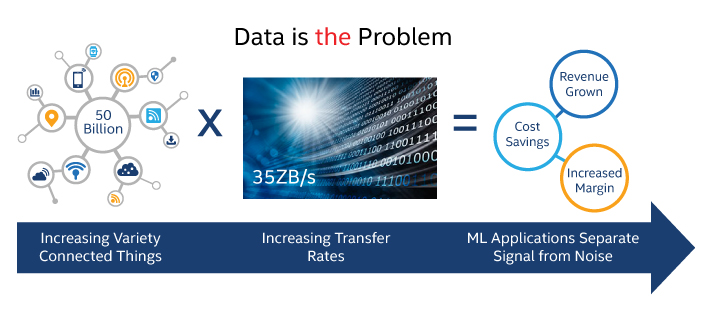
Machine learning, at the highest level, is a program that extracts specific features from data to solve predictive problems. A few example include: detecting anomalies to prevent network intrusion or fraud, classifying objects such as tumors or detecting pedestrians, scanning social media sentiment and perception for marketing purposes, self-driving cars, or evaluating traffic patterns to forecast and make decisions to control the flow in an optimal way.

Machine learning applications cross all vertical markets from military, automotive, industrial, and data center.  Imagine a person trying to rank each web search manually every time someone issues a web search; it is an impossibility for a person, but machines do it billions of times a day. This job is exactly where machines can help humans. Machines can navigate through the tsunami of data collected every second and automatically recognize complex patterns. Then, they can make intelligent decisions based on this insight. For accuracy, models must be trained, tested, and calibrated to detect patterns using previous experiences.

Today, one of the most popular machine learning methods is using neural networks for object detection and recognition. Neural networks are modelled after the brain’s interconnected neurons and use a variety of layers that extract lower levels of detail for each layer in the network. The FPGA implements these layers very efficiently because the FPGA has the ability to retrieve the data and perform classification in real time. By leveraging 8 TBps of on-die memory bandwidth and minimizing the need to interact with external memory, designers can leverage the flexible FPGA architecture to obtain very power efficient implementations.  FPGAs can also efficiently move data in and out of the network directly to classify in-line video, signal, or packet processing.

At Fasmicro, we are an authorized Intel FPGA partner and will be happy to teach you ML on Intel Altera chips.

Cybersecurity Training Now Available in Nigeria and Ghana!

0

It’s estimated that cybersecurity breaches will cost global businesses more than $2 trillion by 2019 – more than four times the costs registered in 2015. In enterprises both large and small, the cost of protecting critical data has become one of the most crucial – and unpredictable – risks faced by the business.

The First Atlantic Cybersecurity Institute’s programs is a unique opportunity for education and training on the critical cybersecurity issues, from policy to technology. The programs are structured for those at all points in their security career, from CISOs to those just entering the field (or trying to). The programs will help you….

  • Cybersecurity Policy
  • Cybersecurity Management
  • Cybersecurity Technology
  • Cybersecurity Intelligence
  • Digital Forensics

Register today with Promo Code: LEARN  to receive a special 50% discount.


Thank you.

Facyber Team

info@facyber.com

A Note on Viral Marketing – Part II: How Hotmail Grew

0

Hotmail is one example of a product that spread through the use of viral marketing techniques. This case study will cover the early days of hotmail, explore some of the underlying factors that led to its spread, and examine one model that has been used to model growth of its number of users.1

Ray Tomlinson is credited with inventing email as we know it today. Before 1972, email could only be sent between users of the same computer. The problem became more complex once different computers were connected to one another to form a network, and a user on one computer wanted to send email to users on a different computer. Important contributions to the evolution of email were made by others, and commercial email packages began to appear in 1976.2

Sabeer Bhatia and Jack Smith met at Apple Computer in the early 1990s, and later joined a startup called Firepower Systems. In 1995 they started discussing the idea of building a startup themselves. Their first idea was to build a database on Sun’s Java technology. They called it JavaSoft. Venture capitalists turned them down. During the period when they were working on JavaSoft, they encountered a number of obstacles that prevented them from communicating freely with each other. Jack Smith developed a system that allowed them to have their email displayed on a web page. This became the basis for Hotmail. They soon obtaind $300,000 in funding from DFJ and rounded up an additional $100,000 in additional capital. This was in early 1996. The funding terms ascribed Hotmail an implied valuation of $2,000,000.3

At the urging of the venture capitalist’s backing Hotmail, Bhatia and Smith did two things. First they struck a strategic relationship with Four11, another DFJ portfolio startup which ran “the most comprehensive ‘people finder’ on the Internet” at that time according to PC Magazine. Second, they automatically included the text “P.S. I love you. Get your own free Hotmail at www.hotmail.com” at the end of every email that was sent by a Hotmail user.4

Hotmail launched in July 1996, with 100 signing up in the first hour. By September it boasted 100,000 subscribers. That number rose to 1,000,000 by January 1997, and 8,000,000 by October. Though Hotmail had ran out of cash before it launched its email service to the public, it went on to raise additional capital from venture capitalists. By August 1996 it was valued at $20,000,000, up 10x from the $2,000,000 at which it had been valued just 8 months earlier.

To model the growth of Hotmail’s subscriber base we’ll turn to a model called the Bass Model, after Professor Frank M. Bass who first published it in 1963 as a section of another paper.5 The Bass Model states that the probability of adoption by those who have not yet adopted is a linear function of those who have previously adopted. The mathematical expression for the model is given below.6

\frac{f(t)}{1-F(t)}=p+\frac{q}{M}\left[ A\left( t \right) \right]

In the equation above:

  • t represents time, and the first full time interval of sales is t = 1,
  • p represents coefficient of innovation,
  • q represents the coefficient of imitation,
  • M is a constant, and represents the potential market or the number of purchasers of the product,
  • f(t) represents the fraction of the potential market that adopts a product at time t, and
  • F(t) represents the portion of the potential market that has adopted the product up to and including time t, and
  • f(t) is the first derivative of F(t) wrt t.

Alan Montgomery uses the Bass Model to fit the model’s results to actual data from Hotmail’s first year and reports a very good fit.7 He uses estimates of 0.0012 for p, 0.008 for q, and 9,670,000 for M. I will tackle models like the Bass Model in later posts.

It is reported that Bhatia sent a message to a friend in India using Hotmail, and three weeks after that Hotmail had 100,000 users there.8 Hotmail was eventually bought by Microsoft in 1998, a year and a half after it launched to the public. The value of the deal was not made public but is rumored to be as high as $400,000,000.9

What ever you call it, “Growth Hacking” or “Viral Marketing”, it works. Hotmail spent a fraction of the capital that its rivals spent on marketing and advertising, but experienced significantly more growth.

In the next post on this topic I will study the tactics Dropbox used to grow its user base.


  1. Any errors in appropriately citing my sources is entirely mine. Let me know what you object to, and how I might fix the problem. Any data in this post is only as reliable as the sources from which I obtained them. ?
  2. Ian Peter, The History of Email. Accessed at http://www.nethistory.info/History%20of%20the%20Internet/email.html on Jan 17, 2013. ?
  3. Oliver A. Hugo and Elizabeth W. Garnsey, Hotmail: Delivering E-mail to the World, http://doczine.com/bigdata/1/1370291311_60c0e3de77/4e7-hotmailcase26apr02.pdf. Accessed on Jan. 26th, 2014. ?
  4. There seem to be variants of the exact message that was appended to the end of each email, but it is consistently reported that a message was included with every email sent from Hotmail. ?
  5. http://www.bassbasement.org/BassModel/ ?
  6. Frank M. Bass, A New Product Growth for Model Consumer Durables, January 1969. Available at http://www.bassbasement.org/F/N/FMB/Pubs/Bass%201969%20New%20Prod%20Growth%20Model.pdf. Accessed on Jan. 26th, 2014 ?
  7. Alan L. Montgomery, Applying Quantitative Marketing Techniques to the Internet, available at http://www.andrew.cmu.edu/user/alm3/papers/internet%20marketing.pdf, July 2000. Accessed Jan. 26th, 2014 ?
  8. Willix Halim, My Top Five “Growth Hacking” Techniques, http://e27.co/my-top-five-growth-hacking-techniques/. Accessed on Jan. 27th, 2014. ?
  9. Jeff Peline, Microsoft Buys Hotmail, January 3rd, 1998, http://news.cnet.com/2100-1033-206717.html. Accessed on Jan. 27th, 2014. ?