DD
MM
YYYY

PAGES

DD
MM
YYYY

spot_img

PAGES

Home Blog Page 7688

How We Saw Markets In April 24, 2010 – Good Or Bad Call?

0

Before Tekedia, we ran Nkpuhe. We made market calls and this is one of them. The post is repeated in entirety below. Score us!


WEEK OF APRIL 24, 2010


Public Stocks


Boots and Coots (WEL) . I expect WEL to appreciate as oil price goes up this summer. With Obama’s lifting of drilling ban at Gulf of Mexico, I feel confident that this firm will do well. I am long. (This was acquired by Halliburton)


Citi (C). Citi is back to profitability based on its April 2010 earning. I see this firm to come out strong because of its international business. The recession has watered down competition and I expect bank stocks to appreciate. Within four quarters, this stock will reach $10.. Banks with international presence, especially in developing economies will do well in coming quarters. Banks like HSBC and Standard Chartered Bank will have great future quarters because their international businesses will lift them.


Puda Coal (Puda) :This stock will continue  upward momentum because of the drought in China which has made dirty coal a good business in China. I see this stock to double in few months because of the water crises in mainland China which has affected many hydro power plants.


Lafarge (LG): This is a major firm in the reconstruction of Iraq, dominating in the cement business with its acquisition of Orascom. As construction booms in Iraq, LG will see great coming quarters.


Nkpuhe Intelligence: Any company that gets much of its revenue from Iraq will have great quarters.  With stability in the country a norm,  the economy is expected to grow by 7.3% this year, according to IMF. What this means is that business will be there. Expect the real estate to come back to life.  Housing will lead the economy as many displaced and battered people will have confidence to become normal and settle. U.S will leave a mark in the country by helping to structure a non feudal system that is typical in Middle East. Expect private TV, radio stations, private banks  and early investors will reap gains in Iraq.  Dar Es Salaam Investment Bank (partly owned by HSBC) and other banks will have great quarters because inflation is coming down and dinar (the currency) is stabilizing.


As reconstruction begins, massive government projects will be everywhere in Iraq. The scale will be big. Projects in oil production and transportation will be huge. Watch for oil servicing firms: from Schlumberger to Cameron; Iraq business will lift them in coming quarters (if this security and normalcy remain).


My bet will be the construction companies. Any major one in Iraq will score big.  I think that construction could accelerate by 20% within the next eighteen months. U.S will make post-Saddam Iraq better, just as a restitution for invading them. And Americans will pour in millions through FDI as security improves.

Private Equities of the Week:

Zynga, the online game maker on social networking sites; maker of FarmVille.

Vizio, the low cost HD TV supply chain maestro continues to eat market share from Sony, Panasonic, etc.


Books of the Week: Take time and read any of them, you will get insights.

Guide to Investment Strategy: How to Understand Markets, Risk, Rewards And Behavior (Economist (Hardcover)) by Peter Stanyer


The Design of Design by Fred P. Brooks Jr, the pioneer of modern software and Brook’s law Adding manpower to a late project only makes it later’


Hot, Flat, and Crowded: Why We Need a Green Revolution–and How It Can Renew America (Hardcover) by Thomas L. Friedman


Tip of the Week: If you are starting a firm, try to get many of your suppliers to hold equity stakes in your firm.  It helps you cut costs and be taken seriously by them.

Disclaimer:  This information is shared ‘as it is’ and you assume all risks to using it.

The Roadmap On Nigeria – Let The Eagle Fly. Common Sense Solutions To Nigerian Challenges

0

Nigeria often referred to as the Giant of Africa by her citizens and citizens of some other nations, has not really been able to show dominance in many of the metrics used in comparing nations. Nigeria has not taken the number one position when it comes to key metrics such as the standard of living of her people, gross domestic product (GDP), gross national income (GNI) non prevalence of HIV/AIDS, level of corruption, technological advancement, economic growth, per capital income, etc .


Although Nigeria is a country with a vast land resource and endowed with abundant natural and human resources, she has continued to lag behind among the committee of nations due to the inability of her government and people to identify and summon the will to invest massively in key areas that will make the most impact on her economy. The prevalence of corruption in both the public and private sector, coupled with the lack of adequate commitment and dedication as well as unwillingness of Nigerians to make sacrifices has made things worse.


Over the years several governments in Nigeria have come up with different policies and plans aimed at achieving certain set goals which were clearly defined. These policies and plans include: The Colonial Development Plan , the Green revolution, Structural Adjustment Programme (SAP), National Economic Empowerment and Development Strategy(NEEDS), Vision 2010 , etc.  These policies and plans have not yielded the expected results due to weak implementation and lack of political will to see the development strategy through to the end.


This is evident considering the development and efficiency level of public infrastructures and systems ranging from bad roads, epileptic power supply, inadequate housing facilities, poor and inadequate water supply facilities, inadequate and inefficient security systems and health institutions, continual dependence on subsistence agriculture rather than mechanized farming, low commitment and dedication in the Public service, prevalence of corruption in all facet of our lives, etc.


These have resulted in poverty, hunger, lack of employment opportunities, fallen standards in education and living, low GDP, declining per capital income, insecurity, brain drain from the country, unstable exchange rate, high inflation rate, etc. Indeed the problem of Nigeria has many faces but it must be tackled from selected front lines where the most efficient result will be obtained.


At the end of the 2008 Nigeria Economic Summit, a vision was identified to put the nation among the top 20 economies in the world by the year 2020. This vision was termed NIGERIA VISION 20: 2020. Progressive achievement of this laudable vision is the focus of all development programmes embarked upon by the nation’s governments and people, since then. The first medium term implementation plan for the vision which covers 2010 to 2013 was approved by President Goodluck Jonathan in June 2010.


All stake holders involved in pursuing and implementing this vision must take necessary steps to prevent a repetition of history where the goals and objectives of the vision will not be realized by the end of the projected period.  Key areas identified as front-liners in achieving the vision must be vigorously pursued so that maximum results will be obtained. It has been generally agreed by many stakeholders that investing in developing the Nation’s technological education is a major key to achieving economic growth and development .


Engaging in human capacity building through establishment and funding of research and training centers on embedded systems design and development will provide the platform for indigenous solutions in the form of equipments, machines, tools, products, etc ranging from very simple to complex systems to be developed. Hence the growing needs of our agricultural, manufacturing and other industrial sectors will be met.


Embedded digital technology is present in many equipments and systems, and is used to increase functionality, as well as to improve operation at low cost. Countries that must lead other countries in economy, GDP, GNI, developed infrastructures, etc must first lead in the development and the sustenance of their technology.


Editor’s Note: This is a portion of the paper delivered in Fasmicro MASTERs.

Sending $Love Around The World In 15 Minutes Or Less, Through Western Union

3
An IMTO

For many immigrants in the United States, sending small amounts of money to say Cholpon-Ata in the Kyrghyz Republic, or Antananarivo in Madagascar, can be an experience fraught with annoying hurdles. I cannot easily transfer money from my bank account in Stamford, Connecticut to a bank in Ghana, my homeland. Even then, if I could there would be a million and one issues to sort through. Enter The Western Union Company – WU, a unit of First Data Corporation that was spun-off on September 29th, 2006.

How?

Western Union makes money by facilitating international and domestic money transfers. The company operates in two units;

  • A Consumer-to-Consumer unit, and
  • A Consumer-to-Business unit.

Sending a money transfer through WU could not be easier, one need only log onto the website, or locate an agent. After filling a few simple forms, the customer decides how much money will be sent. WU charges a fee, and the money is ready to be picked up by the recipient. The customer then calls the recipient, and relays the details that are required to enable pick-up at a WU agent in the recipient’s locality. The last time I sent money home, it was ready for pick up in roughly 5 to 10 minutes. When I have sent money to my mother in Nigeria, she picks it up at an agent at the bank where she keeps a savings account. It is that simple.

Where?

  • The company has existed for over 150 years, and boasts 270,000 agents in more than 200 countries and territories.[i]
  • The Consumer-to-Business unit operates primarily in the United States. WU is very well positioned in China, India, Mexico and Thailand – countries that the UN has identified as major sources of emigration.

Why?

Demand for reliable, safe and uncomplicated money transfer services is large and growing thanks to global immigration patterns.

  • According to the Inter-American Development Bank, remittances to Latin America from the United States will amount to approximately $45 Billion in 2006, a fifty percent increase from nearly $30 Billion in 2004.[ii]
  • The World Bank estimates that remittance flows to developing countries will amount to at least $199 Billion in 2006. These remittances have become a critical piece of overall capital flows to many developing countries, and in some cases represent as much as seventy percent of Foreign Direct Investment and outstrip Official Development Assistance by several degrees of magnitude.[iii]
  • Issues around global migration, and capital flows via remittances have become a major policy concern of governments and policy makers around the world, and will remain so for the foreseeable future.

WU is very well positioned in a market that promises to grow larger with time, especially as the demographic reality of aging populations in the developed world necessitates friendlier immigration policies. It wields unmatched brand recognition – 81 percent spontaneous brand awareness among money transfer users in Western Europe[iv], and an infinitely superior distribution network of agents. In addition, Western Union holds several operational advantages over its current and potential competitors[v];

  • It can pay money transfers in over 120 currencies.
  • It handles an average of 1,000,000 transactions daily, which amounts to 12 transactions every second. This should protect it from a rapid and unforeseen erosion of its business in the event that a credible competitor appears on the horizon.
  • Its operations accommodate multiple consumer preferences, and technology platforms.

WU’s management has identified a number of areas on which they will focus[vi];

  • Strengthen the brand, and enhance customer satisfaction.
  • Amplify convenience and choice for money transfer users.
  • Explore new service offerings, e.g. a new Direct-to-Bank service, and enhance Consumer-to-Business services[vii].
  • Expand and diversify global distribution.

The major threat to WU’s business is the lingering uncertainty that surrounds immigration reform in the US, and other developed countries.

WU competes directly with Checkfree Corporation, MoneyGram Payment Systems Inc., and the United States Postal Service. Other potential competitive threats could arise from EBay’s PayPal service, and Wal Mart Stores – which could expand its ambitions to start a retail bank into an operation that includes international money transfer services as well. However, it would take a considerable amount of time and resources before any of these would gain the scope and scale that WU has attained, or to erode the brand loyalty that WU has built within the immigrant community. More and more people buy bitcoin these days, that will obviously factor in as well, however it’s close to impossible to predict the future of this currency.

December 6, 2006


[i] Western Union Investor Presentation, September 18, 2006, downloaded from www.westernunion.com on December 6, 2006.

[ii] Inter-American Development Bank press release, October 18, 2006, accessed on December 6, 2006 from www.iadb.org.

[iii] Migration and Remittances, accessed on December 6, 2006 at www.worldbank.org.

[iv] See i above.

[v] See i above.

[vi] See i above.

[vii] Western Union Bank license makes www.westernunion.com possible in Europe.

What Adam Smith’s Classic, “Wealth Of Nations” Must Teach Nations About Technology

0

In 1776, Scottish economist and philosopher, Adam Smith wrote the masterpiece, ‘The Wealth of Nations’- actually ‘An Inquiry into the Nature and Causes of the Wealth of Nations”. By coincidence, the United States Declaration of Independence was adopted the same year, making the American colonies independent and thus no longer a part of the British Empire.

America has since evolved to dominate the old British Empire in virtually every aspect of human endeavors, except perhaps, social welfare. The Yankees figuratively were discipled by Dr. Smith who believed in free market and made his argument that ‘capitalism’ will benefit mankind than any other economic structure. He laid this foundation at the onset of industrial revolution and provided the basics for modern economics.

Smith made his case about the ‘invisible hand’ and why monopoly and undue and unfettered government regulations or interference in market and industry must be discouraged. He was of the opinion that prudent allocation of resources cannot happen when states dominate and over interfere.

In that old time, America farmers could grow cotton, but would not process it. It has to be sent to England where it would later be imported into U.S as a finished product. Understanding that this decision was not due to lack of processing ability, you will appreciate Smith’s argument that market must be free.

His theses were clear and were very influential; they provided the same level of fulcrum to Economics as Isaac Newton’s Mathematica Prinicipia to Physics. Or in modern times, Bill Gates’ Windows to the information economy.

While reading Smith’s book and understanding the time frame it was written, one cannot but appreciate the intellectual rigor in that piece. Before technology was penetrated in en mass across the regions of the world, he noted that all nations could compete at par in agricultural productivity.  The reason was absence of division of labor in any subsistence farming system in the world. A farmer does everything in the farm and is not an expert in most.

Discounting fertile land, rain and other factors that could help farmers, all the farmers, from Africa to plantations in Alabama, the level of productivity was similar.  Why? No specialization was employed in farming business at the time.

Fast track forward when the industrial revolution set forth. The British Empire became an engine of wealth creation through automation. It was a quintessential period of unrivalled human productivity which resulted to enormous wealth created in the empire. Technology not only helped speed process execution, it helped in division of labor.

Interestingly, Dr Smith had noted that except agriculture where productivity was flat because of lack of division of labor, other industries were doing just fine. And in those industries, there were organized structures which enabled division of labor. For instance in the construction industry, there were bricklayers, carpenters, painters, and so on; but a farmer was a farmer.

As you read through Wealth of Nations and observe the 21st century, it becomes evident that technology was so influential in the last few centuries. It has changed our structures and created a new business adaptation rules like outsourcing which is indeed a new breed of division of labor.

From accumulation of stock and pricing, as explained by Dr. Smith, we see today a world where technology is shaping everything in very fundamental ways for wealth creation. In this era, it has become technology as technology translates to wealth. So, nations that focus on creating, diffusing and penetrating technology will do well.

Why? It is about national technology DNA. The more passionate and innovative nations are triumphing at the global business scene. Give me Japan and I will give you electronics. Talk about United States, I will share biotechnology and pharmaceutical technologies, and indeed every major technology. Give me China, and I will give you green technologies.

So, as nations continue to compete on the technology paradigm, we see at the highest level of success measurement an embodiment captured by technology capability. When nations are understood from the lens of their Technology Readiness Index, Knowledge Economic Index, we see that countries have become technology competing nodes. In some really poor countries with no (effectual) technology, they do not have a node and are unplugged in the sphere of global wealth creation.

Simply, it will be difficult to separate the health of any modern economy from its technology. It goes beyond the wealth of that nation to its survivability. The most advanced nations are the technology juggernauts while the least developing economics barely record any technology penetration impact. For the latter, it is like still living in the pre-industrial age Dr. Smith discussed on agriculture and division of labor where processes were inefficient.

Perhaps, this explains the efficiency in developed world in both the public and private arenas. The more technologies they diffuse, the more productive they become. In other words, show me the technology and I will tell you where the nation stands in the league of countries. Interestingly, the invention of steam engine changed the world and powered the industrial revolution. The invention of transistor transformed the 20th century and is fuelling the new innovation century.

It seems that major scientific breakthroughs bring major great countries. Let me emphasize here that some old kingdoms that ruled the world such as the old Babylon, Roman Empire, and Pharaoh’s Egypt; there have been associated knowledge base that put them ahead. You cannot disassociate good crop production in River Nile to the mastery of Egyptians in inventing some sections of geometry for farming. Some of the old wars had been won by developing constructs that enabled efficient transportation of soldiers to battleground.  There was science and nations were winning by using that knowledge.

In conclusion, the world has been living on technology and it is indeed defining our competitive space. As nations compete, it is technology that shapes the world with wealth as the major byproducts, in some cases. I make this case because some of the best technologies had been invented for non-wealth reasons (yes, directly). Examples include Internet and radar technologies which have created wealth and spurred commercial innovations but have military origins.

There could not be any more powerful way of examining national competitiveness than understanding the technology of nations. Yes, wealth has since morphed to technology and all competitions and wealth creation could as well be seen from technology viewpoint.  And in this piece, I aptly replace Dr. Smith’s ‘wealth’ with ‘technology’ to have The Technology of Nations.

What Are Embedded Systems? Why Do We Need Embedded Systems?

2
Masters

Embedded systems are small, fast, and very powerful tools, gadgets and equipments which have become part of our everyday life. They are those computer systems that do not look like computer systems to the everyday user. They form a part of a larger system or product, part of anything, from mobile phones to medical devices, from agricultural farming tools to manufacturing equipments. An embedded system is a micro-processor based system that is built to control a function or range of functions and is not designed to be used by the user in the same way that a personal computer (PC) is (Heath, 2003).

It is a combination of computer hardware and software, and perhaps additional mechanical or other parts, designed to perform a dedicated function (Netrino, 2011). In some cases, embedded systems are part of a larger system or product, as in the case of an antilock braking system in a car. Although the user can make choices concerning the functionality, he cannot change the functionality of the system by adding or replacing software as is possible with the PC.

In a PC, you can change functionality from word processing to games and then to mathematical computation by simply changing the software application but this is not possible in embedded systems. An embedded system is designed to perform one or a few dedicated and/or specific functions but with choices and different options (Michael, 2007; Heath 2003).

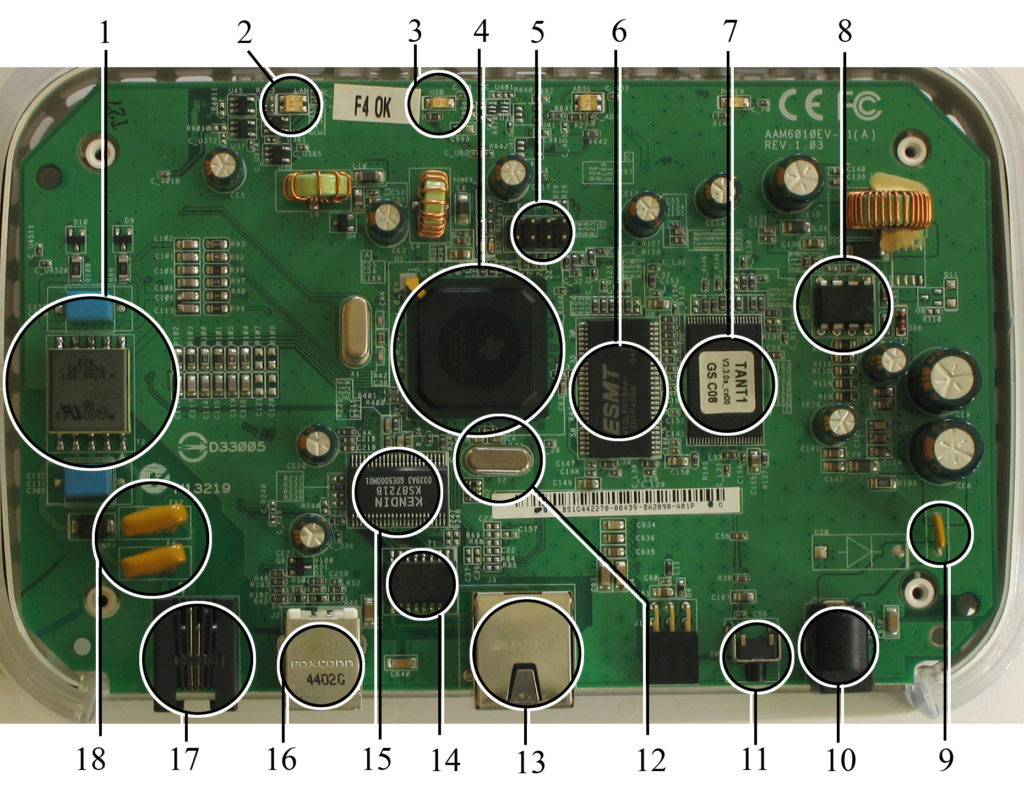
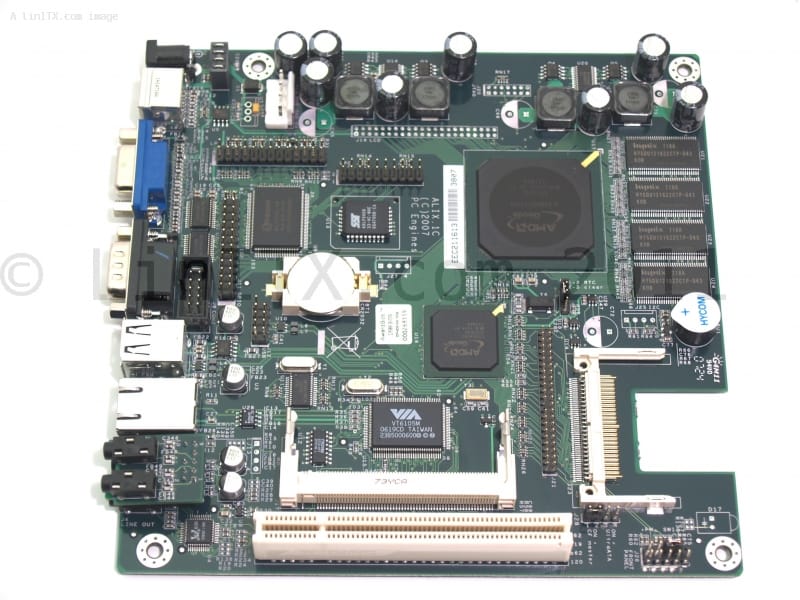
Fig1 and Fig2 are examples of embedded systems. Today, more microprocessors around the globe are used in embedded systems rather than in PCs. Those already large numbers are increasing at a phenomenal rate as the devices that surround us in our everyday lives become smarter. This is a consequence of an insatiable drive towards having control over devices and access to data anywhere, anytime. Needless to say we prefer them connected – wired or wireless.

Fig1: Picture of the internals of an ADSL modem/router. (A modern example of an embedded system. Labeled parts include a  (4), RAM (6), and flash memory (7)).

Fig2: PC Engines’ ALIX.1C Mini-ITX embedded board with an x86 AMD Geode LX 800 together with Compact Flash, miniPCI and PCI slots, 44-pin IDE interface, audio, USB and 256MB RAM


Why do we need embedded systems?

The first reason why we need embedded systems is because general-purpose computers, like PCs, would be far too costly for the majority of products that incorporate some form of embedded system technology (Christoffer, 2006). Another reason why we need embedded systems is because general-purpose solution might also fail to meet a number of functional or performance requirements such as constraints in power-consumption, size-limitations, reliability or real-time performance etc.

The digital revolution, started decades ago, has reached a stage that we cannot conduct our normal modern daily lives without this technology. Indeed, it is safe to say that we already own at least one piece of equipment, which contains a processor, whether it is a phone, a television, an automatic washing machine or an MP3 player.

The colossal growth of processing power in small packages has fuelled the digital revolution. All sectors of the economy have been influenced by the digital revolution and the industry has experienced tremendous developments in all aspects of engineering disciplines (Bruce, 2011).