Right in Silicon Valley, California, after a MeetUp, the founder of Rlabs, Marlon Parker, and Fasmicro Founder through the bits and bytes network concluded a partnership for Jamiix to arrive Nigeria. Both have met in TEDxAmsterdam last year and this discussion has taken more than six months. It was 3 minutes to midnight, on Sunday, when the deal was concluded.
JamiiX has looked set to be the next Ushahidi to emerge from Africa. While Ushahidi uses social media and mobile communications to collect information from people at events, JamiiX uses the channels to information.
The World Health Organisation deployed JamiiX in Indonesia to aid communications after natural disasters. It is a messaging management system, developed to more effectively manage multiple mobile chat and mobile social networks streams. It is engineered to allow multiple counsellors to have 300 IM conversations in one hour, massively increasing their ability to assist those who need help.
Jamiix is already nominated for a Bees Award and the recipient of funding from the Vodacom Foundation, JamiiX provides an interesting opportunity for other support organisations around the world.
Fasmicro becomes the official representative of Rlabs/Jamiix in Nigeria through this partnership. We look for a deeper relationship to use this tool and our technology to serve humanity and bring practical positive changes to the lives of Nigerian citizens. Fasmicro will be putting information on the website in this regard.If you need to use Jamiix to organize your event and program, we are ready! Call Fasmicro offices in Nigeria.
Fasmicro has evolved as one of the most innovative embedded systems, Apps and software firms in Nigeria, giving Africa its first Android App Store in addition to creating other fascinating technologies. Fasmicro Locker is deployed in copyrighted digital assets to prevent digital theft while the Fasmicro Leaser ensures that any digital asset becomes worthless after the lease date, unless renewed. We have become a company of choice for academic institutions and religious institutions that want to preserve their digital assets. It is moving aggressively into mobility and helping to reshape the mobility geography of Nigeria.
Reconstructed Living Lab (RLabs) is a global movement and registered Social Enterprise that provides innovative solutions to address various complex problems. It creates an environment where people are empowered to make a difference in the lives of others. The RLabs “main hub” is in Athlone, Cape Town but have activity in the United Kingdom, Europe, Asia and Central Africa with a goal of reaching all continents by 2012.
Google App Inventor is an application provided by Google that allows anyone to create software applications for the Android OS. It uses a graphical interface, very similar to Scratch and the StarLogo TNG user interface, that allows users to drag-and-drop visual objects to create an application that can run on the Android system, which runs on many mobile devices.
Course Outline
Overview
What is App Inventor?
What you can do with App Inventor
Setup
Preparing your System
Installing the tools
Hello, Android
Components
Basic components
Media components
Animation components
Social components
Sensor components
Screen Arrangement components
LEGO® MINDSTORMS® components
Other components
Blocks
Definition blocks
Text blocks
List blocks
Math blocks
Logic blocks
Control blocks
Color blocks
Concepts
Using the Activity Starter
Creating a Custom TinyWebDB Service
Live Development, Testing, and Debugging
Displaying a List
Using the Location Sensor
Specifying Sizes of Components
Accessing Images and Sounds
Labs 1- 5
For more, visit Fasmicro Android Division, Owerri, Nigeria
We are used to hear organizations talk about meeting the needs of their customers. Need and want are major concepts in elementary economics. It could be confusing initially, but for good students, they always master the differences. While deficiency of need could cause severe negative outcome, want is not that critical. Nonetheless, there exist subjectivities in classifying individual or personal needs and wants; a topic for another day.
So, from high school to business school, we are taught that understanding your customers’ needs is very critical in surviving as a business concern. Based on this, many inexperienced marketing directors develop models and strategies upon which their organizations align their products and services for the market. They anchor their organic growth and survivability solely on meeting those needs in the market.
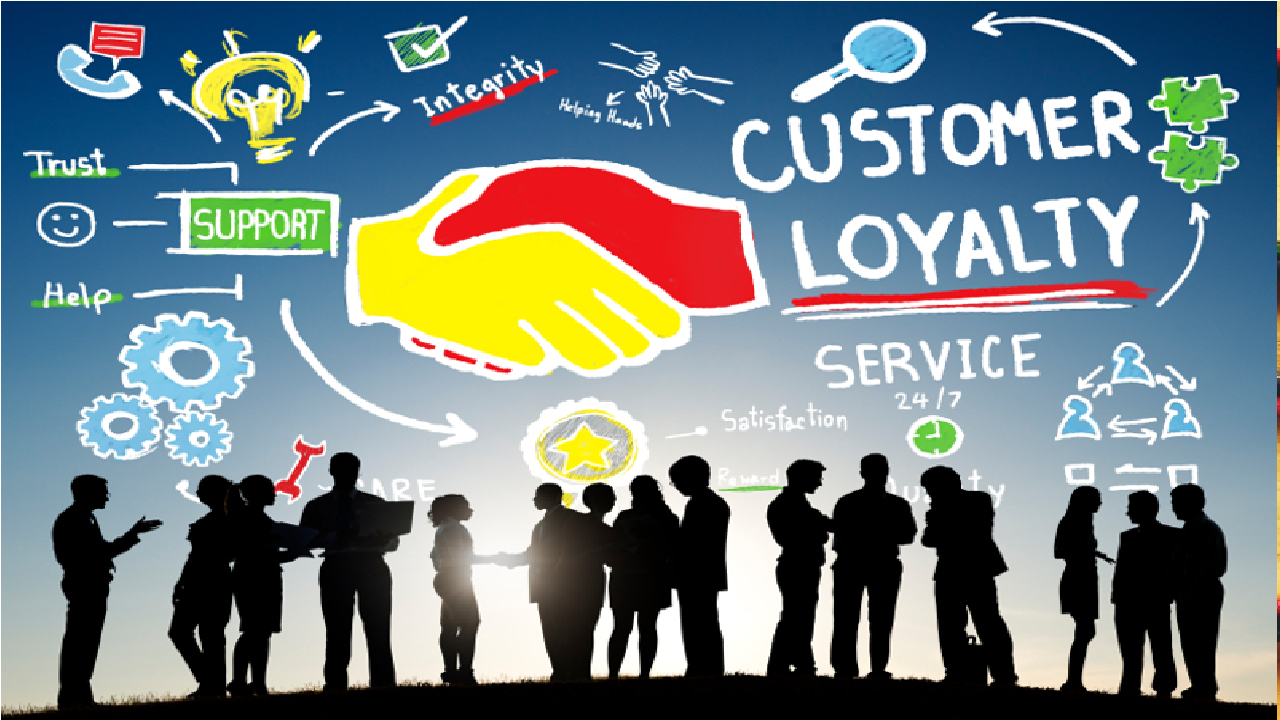
Unfortunately, meeting the customer needs is not enough. You must exceed the needs if you want to remain relevant in the market. The 21st century is not a century of market needs; it is one that requires more than meeting needs. Why? Technology disrupts the habits of the customer so fast that if you focus on needs, you will never be an industry leader. For early adopting customers, it would be very difficult to keep them loyal by just meeting their needs. They want more from you.
They want you to understand what their expectations are. Expectation here has to do with meeting their present need and understanding that they need more than what you are giving them. It could be like a customer who wants to heat his house. He lives green, but he heats his house with dirty coal. It makes him very unhappy that he preaches green lifestyle but cannot power the house with green technology. His income cannot support investment in solar panels.
He was expecting the utility firm to provide something greener than coal. His needs are met; yet, he expected more than that. Agile firms will go to serve that expectation and win the customer. It is being conscious that even though the needs are met, we know customers expect more from us. When firms work hard to meet customer expectations, they become innovative in the process.
While expectation can help you stay in the game, what firms really need to do is to meet the perception of customers. Perception is the king of all marketing. Unfortunately, few firms get to that level. Excellent innovative technology is required to play at this level. It is risky because if you get it wrong, you can harm your organization. Perception is providing to customers what they never expected or imagined they needed. But the day they see the product (or rarely service), they will embrace it en mass.
For all the modern firms, Apple is among the few that play at this level. Apple provides products that exceed expectation; yet, customers never actually asked for them. They just arrived and we all embraced them. It is beyond expectation because you never thought about their possibilities or existence. It was more than need because you knew nothing about the constructs of those products. But the day you see them on TV, you will go for them. Apple’s iPod is a good example.
Before it came, very few people, excluding Steve Jobs and company imagined that such could be accommodated in this planet. When iPhone prototype was shown to Verizon, they rejected it because (I suspect) they lacked the capacity of understanding customer perfection. There was nothing to benchmark iPhone because there was none like it. Products that fit this category do not need focus groups during development because those insights make no sense. Unless the product is ready, many customers cannot imagine it. It is an abstractive product that becomes real when you see a completed version.
The interesting thing is that all products that succeed at the level of perception are usually disruptive in their sector or industry. Google search cannot be considered to fall in the category of perception because many people already craved for better search because neither Microsoft nor Yahoo was offering a good one. So a product could be disruptive and yet not a percepting product. However, all percepting products are disruptive.
Succeeding in markets today will require understanding what the customer perceptions are. While meeting their expectations is a good business model, the risk to that is that one technology can immediately shift their expectations. If you have a fast device today, they will expect a faster one in six months; it is a cycle of marginal innovation. However, if one creates a percepting device that works, your business will be in trouble. Ask the film camera industry; they were meeting the expectations of film photography, until the day digital camera arrived and they lost more than 90% of their customers. So, make meeting your customer perception the lifeblood of your organization strategy.
In a research during my business school, I discovered that the most profitable customers are those whose perceptions are met. They become more loyal and you can have great margins while serving them. This research was done in Lagos (Nigeria). I developed a three-segment pseudo pyramid where Need is at the bottom, Expectation at center and Perception at the top. The percepting customers are the most sophisticated to service. If you can nurture and keep them, you become the king of your market. They are willing agents that enable disruption in market composition and are innovation-tasty early adopters.
Starcomms has unveiled 50 hr internet package to better serve its customers.
The 50-hour package on iZAP according to Starcomms, costs N3990 while the 1x component costs N2500. The service will last four fourteen days before a customer can recharge again. Before now, the lowest data subscription hourly planed for Starcomms Internet access was 100hours.
To make use of the 50 hour package, customers can recharge with their Starcomms phones, with recharge card and through Starcomms website. The code for iZAP 50-hour plan is 249. This means that all the customers’ needs to do is recharge their Starcomms phones up to N4, 000 and send SMS to (*249*data device number*1234#) to 37938.
Microsoft Nigeria and Paradigm Initiative Nigeria will hold an informational for non-profit organizations:
Venue: Abuja
Date: June 15 and 16, 2011.
Nigeria’s non-profit institutions play a major role as they connect citizens with diverse services that they would otherwise have had no access to. Many of these NGOs work in rural areas or with underserved groups and could benefit a lot by employing the use of ICT tools. Building on Microsoft’s work around giving much-needed support to NGOs across the world and the previous edition of the NGO Connection Day in Lagos, hosting a Microsoft NGO Academy in Abuja will help fill a huge gap that will improve organizational efficiency while also helping many non-profits save cost.
The Academy will offer an interactive capacity-building program to further enhance skills in ICT, allow NGO staffs learn more about Microsoft’s opportunities for non-profits, provide technical demonstrations of Microsoft products and give NGOs the opportunity to network with relevant institutions. Participants of an earlier edition that held in Lagos opined that the NGO Connection Day event gave them the opportunity to discuss technology use in their work, learn more about technology tools and establish faster online presence that helped make their information available to a much wider audience.
This edition’s program will end with a closing ceremony where the winner of the Tech4Dev Award will be announced. The new Tech4Dev Award will honour the participating non-profit organization that demonstrates the best use of technology in their development work. This event is primarily for non-profits whose representatives are in Abuja, or are able to join us in Abuja as only lunch and course materials will be taken care of.