DD
MM
YYYY

PAGES

DD
MM
YYYY

spot_img

PAGES

Home Blog Page 8

Pons Fees Surge, Robinhood Chain Sets New DEX Volume Record, OpenSea Backs Arc and Backpack Adds Samani

0

The rapid expansion of onchain finance is increasingly being reflected in the fees generated by emerging blockchain platforms, and the latest figures from Pons and Robinhood Chain highlight just how quickly the market is evolving.

Pons reportedly reached a record $5.95 million in daily fees, placing it fourth overall and allowing it to overtake Robinhood while generating more fees than Hyperliquid, Polymarket and Fomo combined.

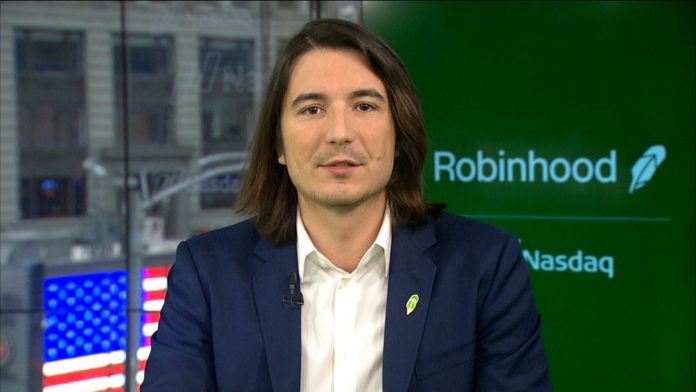
At the same time, Robinhood Chain recorded an all-time high of $2.67 billion in 24-hour decentralized exchange volume. The Pons milestone is significant because fees provide a useful indication of economic activity occurring on a network or application.

Reaching $5.95 million in a single day suggests substantial demand for the services being provided and places Pons among a relatively small group of crypto platforms capable of generating millions of dollars in daily economic activity.

Its ranking above several established names also illustrates how quickly competitive positions can change across decentralized finance.

Robinhood Chain’s record DEX volume adds another dimension to the story. A $2.67 billion daily trading volume indicates that tokenized assets and crypto markets are attracting substantial liquidity through Robinhood’s blockchain infrastructure.

The figure demonstrates that decentralized trading is becoming an increasingly important component of the broader brokerage and financial ecosystem. Perhaps the most important development, however, is Robinhood’s position in tokenized stocks.

The company has reportedly become the largest tokenized-stock issuer, with 862,800 holders. That figure represents a major distribution footprint for blockchain-based representations of traditional equities and suggests that tokenization is moving beyond an experimental financial technology into a product category capable of reaching a large user base.

Tokenized stocks attempt to bring traditional securities onto blockchain infrastructure, potentially enabling more flexible settlement, broader accessibility and around-the-clock trading.

For platforms such as Robinhood, combining a large retail customer base with blockchain infrastructure creates the possibility of connecting traditional financial markets with decentralized liquidity.

The combination of record DEX volume and a rapidly expanding holder base therefore matters beyond Robinhood itself. It points toward a broader convergence between traditional brokerage services and onchain markets.

If users can trade tokenized equities alongside crypto assets within blockchain-based environments, the distinction between conventional financial markets and decentralized finance could become increasingly blurred.

Competition will nevertheless remain intense. Pons’ fee performance demonstrates that new platforms can rapidly capture economic activity, while Robinhood’s volume and tokenized-stock distribution show the advantage of combining established brand recognition with blockchain technology.

Other decentralized exchanges and financial protocols are likely to respond by competing for liquidity, users and tokenized assets. The latest figures suggest that the next phase of blockchain adoption may be driven less by speculation alone and more by financial infrastructure.

Record fees, billions of dollars in DEX volume and hundreds of thousands of tokenized-stock holders indicate that users are increasingly interacting with financial products through onchain systems. Pons’ $5.95 million daily-fee milestone and Robinhood Chain’s $2.67 billion DEX volume therefore represent more than isolated records.

They highlight an increasingly competitive onchain economy in which decentralized trading, tokenized securities and traditional financial platforms are converging at unprecedented speed.

Crypto Infrastructure Gains Momentum as OpenSea Backs Arc and Backpack Adds Samani

The crypto industry is entering another phase of infrastructure expansion, with established platforms increasingly positioning themselves around blockchain networks and institutional governance.

Two developments highlight this shift: OpenSea’s decision to support Arc mainnet from its launch day on September 16, and Backpack’s appointment of Multicoin Capital co-founder Kyle Samani to its US board of directors.

The moves demonstrate how exchanges, marketplaces, investors, and blockchain infrastructure are becoming increasingly interconnected.

OpenSea’s backing of Arc from day one is particularly significant because the NFT marketplace remains one of the most recognizable gateways into digital assets.

By supporting the mainnet at launch, OpenSea signals confidence in Arc’s ability to attract users, applications, and liquidity. A major marketplace providing early infrastructure support can help a new blockchain overcome one of the biggest challenges facing emerging networks.

The need to establish meaningful activity immediately after launch. For Arc, having OpenSea involved could provide an important bridge between blockchain infrastructure and consumer-facing digital asset markets.

Mainnet launches are often judged not only by technical performance but also by whether developers and users have practical reasons to participate.

Early support from an established marketplace can strengthen that ecosystem by giving creators, collectors, and traders a familiar environment through which to interact with assets built on the network.

The September 16 launch therefore represents more than another blockchain release. It illustrates the growing competition among networks seeking to capture activity across decentralized applications, digital collectibles, tokenized assets, and broader Web3 use cases.

As the market matures, infrastructure providers are increasingly expected to deliver usable ecosystems rather than simply launch technically sophisticated blockchains.

Meanwhile, Backpack’s appointment of Kyle Samani to its US board introduces a different but equally important dimension: institutional expertise. Samani, co-founder of Multicoin Capital, has been closely associated with investments and strategic development across the crypto ecosystem.

His addition to Backpack’s US board gives the company access to an experienced investor with a deep understanding of blockchain markets, venture capital, and crypto-native business models.

The appointment comes as Backpack continues developing its position in the competitive digital-asset trading sector. Board-level experience from an established crypto investment firm can help the company navigate regulatory considerations, market expansion, institutional relationships, and strategic capital allocation in the United States.

The two developments show that crypto infrastructure is increasingly being built around strategic partnerships rather than isolated products. OpenSea’s early support for Arc strengthens the network’s potential distribution and liquidity, while Samani’s board appointment strengthens Backpack’s strategic leadership as it expands its US presence.

The broader implication is that the next stage of crypto competition may be determined less by individual products and more by ecosystems. Marketplaces need strong networks, networks need applications and users, and trading platforms need institutional credibility and strategic expertise.

With Arc preparing for its September 16 mainnet launch and Backpack strengthening its US leadership, both developments underscore a market that continues to professionalize.

The focus is shifting toward infrastructure, distribution, governance, and long-term ecosystem development—areas that could ultimately determine which crypto platforms and networks remain relevant as adoption expands.


Kalshi Moves Beyond Prediction Markets With WTI Perpetual Futures

0

Kalshi is pushing deeper into the world of regulated derivatives with plans to seek approval from the U.S. Commodity Futures Trading Commission (CFTC) for a perpetual futures contract tied to West Texas Intermediate (WTI) crude oil.

The proposed product would represent another major expansion for the prediction-market operator, which is increasingly positioning itself as a broader financial exchange rather than a platform focused exclusively on event contracts.

According to Reuters, Kalshi is preparing to file for approval of the WTI perpetual, potentially making it the first perpetual oil futures product offered through a regulated U.S. platform.

The proposed contracts would allow traders to maintain positions without the traditional expiration and rollover requirements associated with conventional futures. They could trade 24 hours a day, five days a week, while also providing leveraged exposure to movements in crude oil prices.

The move follows Kalshi’s successful expansion into perpetual futures earlier this year. In May, the CFTC approved KalshiEX’s BTCPERP contract, a perpetual futures product referencing Bitcoin’s spot price.

The regulator determined that the contract complied with the Commodity Exchange Act and applicable CFTC regulations. The approval also opened the door for market participants to submit additional perpetual products for regulatory review.

WTI is a particularly significant target because it is one of the world’s most closely watched crude-oil benchmarks.

Oil prices influence inflation, transportation costs, industrial production and monetary policy, making WTI exposure relevant not only to energy traders but also to investors attempting to hedge broader macroeconomic risks.

Kalshi already has experience offering WTI-related event contracts. Its existing regulatory filings describe contracts based on whether the settlement price of WTI crude oil futures reaches specified levels by particular dates.

The proposed perpetual product would represent a substantial evolution from those binary-style contracts toward a more conventional continuous trading instrument. The timing is also notable.

The CFTC has been examining the regulatory framework surrounding perpetual contracts and around-the-clock commodity trading. Earlier efforts by CME Group to introduce 24/7 crude-oil futures encountered regulatory resistance.

While the CFTC has separately opened discussions around perpetual contracts involving physical or storable energy commodities. Securing approval would strengthen its argument that prediction-market infrastructure can evolve into a broader regulated derivatives marketplace.

The company has already filed proposals involving perpetual futures linked to other asset classes, including equities, foreign exchange and interest rates. Its August filing for equity-index perpetuals demonstrated its ambition to compete more directly with traditional financial exchanges.

However, the proposal will likely face significant scrutiny. Oil is a highly liquid and systemically important commodity, and regulators must consider leverage, market manipulation, price formation, liquidity and risk-management mechanisms.

Perpetual contracts introduce different risks from traditional futures because positions can remain open indefinitely. If approved, Kalshi’s WTI perpetual could nevertheless mark an important development in the convergence between prediction markets and conventional derivatives.

It would give traders a regulated U.S. venue for continuously managing directional exposure to crude oil without the mechanics of repeatedly rolling expiring futures. More broadly, the initiative reflects Kalshi’s transformation. Its original model centered on contracts tied to real-world events.

But its recent expansion suggests a much larger ambition: building a regulated marketplace where participants can express views on prices, economic indicators, financial assets and major events.

The proposed WTI perpetual is therefore more than another product launch. It is another step in Kalshi’s attempt to redefine what a modern financial exchange can look like.

SEC Chair Atkins Expects CLARITY Act to Clear Senate by September 15

0

U.S. Securities and Exchange Commission Chair Paul Atkins has expressed confidence that the Digital Asset Market CLARITY Act could advance through the Senate this month, identifying September 15 as a critical date for the legislation and the future of cryptocurrency regulation in the United States.

His comments have renewed attention around a bill that has become central to Washington’s effort to establish a clearer regulatory framework for digital assets.

Atkins reportedly told Fox Business that he anticipates and hopes the CLARITY Act will pass the Senate and eventually reach President Donald Trump’s desk for signature.

The Senate is scheduled to take up a procedural vote on September 15, although that vote is not itself final passage. The measure must first overcome the Senate’s procedural requirements before lawmakers can move toward a final vote.

The distinction is important for crypto markets. The September 15 vote is expected to test whether lawmakers can secure the 60 votes needed to advance the legislation. Industry participants therefore view the date as a major political milestone rather than an automatic indication that the bill will immediately become law.

At the heart of the CLARITY Act is an attempt to resolve one of the cryptocurrency industry’s longest-running regulatory problems: determining which digital assets fall under the jurisdiction of the SEC and which should instead be overseen by the Commodity Futures Trading Commission.

Greater clarity could provide exchanges, token issuers, developers and investors with more predictable rules for operating in the American market.

For years, uncertainty over whether particular tokens should be treated as securities or commodities has generated disputes between regulators and the crypto industry.

A statutory framework could replace much of that uncertainty with clearer classifications and defined responsibilities. The legislation is therefore being watched not simply as another crypto bill, but as a potential foundation for America’s broader digital-asset market structure.

Atkins’ support also comes as the SEC pursues its own regulatory initiatives. The agency has proposed a broader framework known as “Regulation Crypto Assets,” which Atkins has described as an important step toward modernizing the rules governing digital assets.

The proposal includes exemptions and regulatory approaches that are intended to align with the framework contemplated by the CLARITY Act. This parallel approach could prove significant if Congress fails to complete the legislation.

Atkins has indicated that the SEC can continue developing crypto rules under its existing authority even without congressional action. Legislation would provide a stronger statutory foundation and could make the resulting framework more durable across future administrations and changes in SEC leadership.

For the cryptocurrency industry, the potential passage of CLARITY represents more than regulatory housekeeping. Clearer rules could influence where exchanges establish operations, how companies raise capital.

How tokens are listed and traded, and whether institutional investors feel comfortable expanding their exposure to digital assets. The September 15 Senate vote will therefore be closely monitored by both Wall Street and the crypto sector.

Atkins’ optimism signals growing confidence within the regulatory establishment, but significant political hurdles remain. Until the Senate actually advances and ultimately passes the legislation, the CLARITY Act remains a work in progress.

If lawmakers succeed, the bill could mark one of the most consequential developments in U.S. crypto policy, potentially replacing years of regulatory uncertainty with a more defined market structure. For an industry seeking mainstream adoption, September 15 could become a pivotal date in that transition.

Standard Chartered Enters UAE Crypto Market With Spot Bitcoin and Ether Trading

0

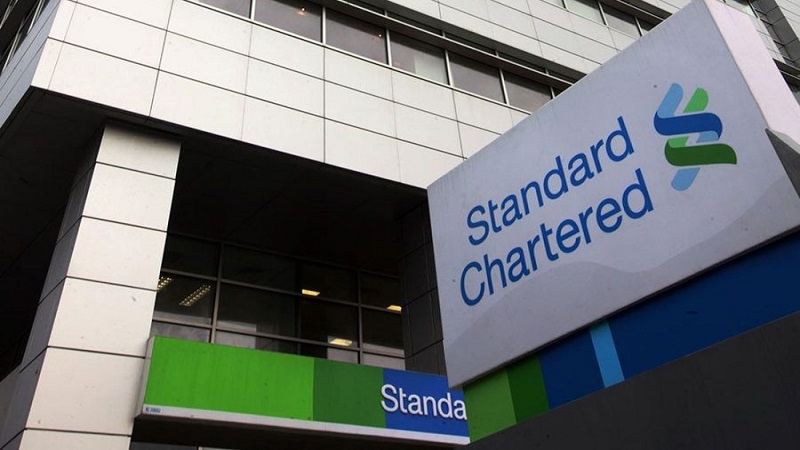
Standard Chartered has taken another significant step into institutional cryptocurrency markets, launching spot trading in Bitcoin and Ether for eligible institutional clients in the United Arab Emirates.

The move, announced on September 3, 2026, makes the bank the first Global Systemically Important Bank (G-SIB) to offer institutional spot crypto trading in the UAE, reinforcing Dubai’s growing position as a regulated hub for digital assets.

The new service is being delivered through Standard Chartered DIFC, the bank’s entity operating within the Dubai International Financial Centre and regulated by the Dubai Financial Services Authority.

Institutional clients can access deliverable Bitcoin and Ether through the bank’s existing electronic trading infrastructure, rather than having to establish separate relationships with cryptocurrency-native exchanges.

That integration is arguably the most important aspect of the announcement. Standard Chartered is placing Bitcoin and Ether directly into an environment familiar to institutional traders.

Clients can execute crypto transactions through interfaces traditionally used for foreign-exchange markets, effectively bringing digital assets closer to the workflows already used for currencies and other financial instruments.

The distinction between spot trading and derivatives also matters. The service provides deliverable Bitcoin and Ether, meaning institutions are able to buy and sell the underlying assets rather than simply taking exposure through contracts linked to their prices.

This gives asset managers, corporations and other eligible professional investors another route into direct digital-asset ownership and liquidity. The launch builds on infrastructure Standard Chartered has already established in the UAE.

The bank introduced digital-asset custody services in the country in September 2024, meaning the latest offering adds execution capabilities to an existing custody framework. Clients can settle their trades with a custodian of their choice, including Standard Chartered’s own digital-asset custody service.

Strategically, the development is part of a broader transformation in how major financial institutions approach cryptocurrency. Rather than treating Bitcoin and Ether solely as speculative products outside traditional finance.

Banks are increasingly incorporating them into regulated institutional infrastructure encompassing custody, execution, tokenization and settlement. Standard Chartered has been building toward this model for several years.

In July 2025, its UK branch launched institutional spot trading in Bitcoin and Ether, becoming the first G-SIB to provide deliverable spot crypto trading to institutional clients. The UAE expansion therefore represents an extension of an existing institutional strategy rather than an isolated experiment.

The UAE is a particularly significant market for this expansion. Dubai and the wider UAE have aggressively developed regulatory and financial infrastructure designed to attract digital-asset companies and institutional capital.

For a global bank, operating through the DIFC provides a regulated framework while positioning its crypto services close to one of the Middle East’s most active financial centers.

For the broader cryptocurrency industry, Standard Chartered’s entry could strengthen the legitimacy of Bitcoin and Ether among institutional investors.

The involvement of a systemically important bank reduces some of the operational barriers traditionally associated with crypto markets and demonstrates that digital assets can increasingly be accessed through conventional financial institutions.

Institutional adoption will depend on more than spot execution. Deep liquidity, reliable 24-hour infrastructure, risk management, custody, derivatives and regulatory clarity will remain important as professional investors expand their participation.

Standard Chartered’s UAE launch therefore represents more than another crypto trading product. It signals the continuing convergence of traditional banking and digital assets—and suggests that Bitcoin and Ether are increasingly being integrated into the institutional financial system rather than operating alongside it.

Volkswagen Plans 50,000 More Job Cuts as Automaker Launches Biggest Restructuring in Its History

0

Volkswagen plans to eliminate roughly 50,000 additional jobs worldwide as part of an aggressive restructuring designed to reduce costs, simplify its sprawling vehicle portfolio and restore profitability amid intensifying competition from Chinese automakers.

The German automaker’s supervisory board approved its “Future Plan 2030” on Thursday, a 12-part programme that Volkswagen described as the most extensive transformation effort in its history.

The company said it would need a “fundamental adjustment” of its global workforce, including management positions, beyond cost-cutting measures already under way.

Volkswagen did not specify which countries or operations would bear the new reductions, when the jobs would be eliminated or how much of the reduction would come through compulsory layoffs, voluntary buyouts or natural attrition.

The additional cuts mark a significant escalation of Volkswagen’s restructuring as the group confronts a combination of excess manufacturing capacity, weak demand in Europe, high production costs and the expensive transition to electric vehicles. The company is also under growing competitive pressure from Chinese manufacturers that have expanded rapidly in Europe with lower-cost electric vehicles and sophisticated technology.

Volkswagen to Halve Model Portfolio

The workforce reduction is only one element of the restructuring.

Volkswagen plans to halve its model portfolio by 2035 and cut the complexity of its vehicle offerings by about 75%. The company wants to concentrate production and investment on fewer models and variants, allowing higher volumes per vehicle while reducing development, manufacturing and supply-chain costs.

By 2030, Volkswagen is targeting annual vehicle sales of about 9 million units and an operating margin of 9%.

The strategy represents a substantial shift for a group whose size and brand portfolio have historically been major competitive advantages.

Volkswagen controls a collection of marques ranging from mass-market brands such as Volkswagen, Skoda, Seat and Cupra to premium and luxury names including Audi, Porsche, Bentley and Lamborghini. The group has found that scale alone does not guarantee adequate returns. Its large number of platforms, models, powertrains and variants has created substantial manufacturing and development complexity at a time when the industry is demanding faster product cycles and lower costs.

Reducing that complexity could improve factory utilization and purchasing economics while allowing Volkswagen to concentrate capital on models with stronger demand and margins.

German Factories Face Uncertain Future

The scale of Volkswagen’s manufacturing challenge is particularly visible in Germany. The company said its European factories currently have capacity to produce more than 500,000 vehicles above existing demand. That excess capacity leaves the future of four German plants in Emden, Zwickau, Hanover and Neckarsulm uncertain from 2031 through 2034.

Volkswagen said it is examining alternative uses for the facilities.

The announcement adds another layer of uncertainty for Germany’s automotive manufacturing base, where high labor and energy costs have become more difficult to reconcile with weaker European demand and intensifying international competition.

Volkswagen has already agreed with German labor representatives to reduce more than 35,000 positions at its German sites by 2030 under a programme announced in 2024. The company has not yet clarified how the new global target of roughly 50,000 additional job reductions will overlap with those previously announced German cuts.

That will help to assess the true scale of the restructuring. If the new figure is incremental, Volkswagen’s global workforce reduction could be substantially larger than the reductions already announced. If some of the positions overlap, the headline figure would overstate the number of additional jobs ultimately lost.

Chinese Competition Changes the Economics

Volkswagen’s restructuring comes as Chinese automakers increasingly challenge established European manufacturers in their most important markets. Chinese companies have built cost advantages in electric vehicles through large domestic production bases and highly integrated battery and supply chains. They have also moved quickly on software, connected-car features and battery technology.

Volkswagen competing against those manufacturers requires substantial investment at the same time that the company is trying to lower its cost base. The EV transition has therefore created a difficult capital-allocation problem. Automakers must finance new electric platforms, batteries, software and manufacturing technologies while maintaining conventional vehicle programmes during the transition.

Higher energy costs and U.S. tariffs add further pressure to a business model already facing weaker margins.

Volkswagen’s response is to reduce the number of products it develops and manufacture larger volumes of the models it retains. The approach is expected to help the company achieve economies of scale, but it also carries risks. A smaller portfolio gives Volkswagen fewer products with which to capture different segments of the market, while concentrating sales on fewer models increases the consequences if consumer preferences shift or a key product underperforms.

A Broader Auto Industry Reset

Volkswagen’s moves form part of a broader restructuring across the global automotive industry.

Manufacturers are reducing model ranges, consolidating platforms, closing or repurposing plants and cutting corporate overheads as they seek to cope with slowing growth, excess capacity and rising technology costs. The pressure is especially acute in Europe, where manufacturers face relatively high production costs while competing with imported vehicles from lower-cost producers.

For Volkswagen, the immediate challenge is to convert its enormous industrial footprint into a smaller and more profitable operation.

The 9% operating-margin target by 2030 will require more than job cuts. It will depend on whether the company can raise factory utilization, simplify engineering and procurement, improve the profitability of its electric vehicles, and allocate investment toward models capable of competing on both price and technology.

The restructuring also signals that Volkswagen no longer views its extensive product and manufacturing footprint as an asset in its current form. The company’s strategy for the next decade appears to be centered on doing less, but doing it at greater scale and lower cost.

Volkswagen shares jumped 5.8% on Friday. It’s down 21% since the beginning of the year.