DD
MM
YYYY

PAGES

DD
MM
YYYY

spot_img

PAGES

Home Blog Page 835

A U.S.-EU Tariff Dispute Could Push The EU To Strengthen Trade Ties With Other Partners

0

German Chancellor Friedrich Merz has cautioned the United States against underestimating the European Union’s readiness to retaliate if the U.S. imposes 30% tariffs on EU goods, which could severely impact Germany’s export-driven economy. Speaking on July 13, 2025, Merz emphasized the need for EU unity and open communication with U.S. President Donald Trump to find a swift solution.

He noted that while the EU is refraining from immediate countermeasures, it is prepared to respond if necessary, aligning with France’s stance on potential retaliatory measures. Merz highlighted that Trump’s previous tariff threats to other countries often served as negotiation tactics, suggesting a deal could still be reached before the August 1, 2025, deadline.

Germany, as the EU’s largest economy, relies heavily on exports, particularly to the U.S., with €157 billion in goods exported in 2024. A 30% U.S. tariff could disrupt key sectors like automotive (e.g., Volkswagen, BMW), machinery, and chemicals, leading to reduced trade volumes, job losses, and economic slowdown. Other EU nations with significant U.S. trade, like France and Italy, would also face economic strain.

The EU exported €472 billion in goods to the U.S. in 2024, and tariffs could disrupt supply chains, increase costs, and dampen growth across the bloc. Merz’s warning signals the EU’s readiness to impose counter-tariffs, potentially targeting U.S. goods like agricultural products, tech, or energy exports (e.g., liquefied natural gas). In 2018, the EU responded to U.S. steel tariffs with duties on $3 billion worth of U.S. goods, such as bourbon and motorcycles.

A similar or larger response could escalate tensions into a full-blown trade war. A trade war would harm both economies, with the U.S. facing higher consumer prices and the EU grappling with export declines, potentially worsening global economic instability amid existing inflationary pressures.

Merz’s comments suggest the EU is using the threat of retaliation as leverage to negotiate a deal before the August 1, 2025, deadline. By highlighting Trump’s past use of tariff threats as a bargaining tactic, Merz indicates openness to dialogue, which could lead to exemptions or reduced tariffs if the EU offers concessions, such as increased U.S. imports or trade policy adjustments.

A U.S.-EU tariff dispute could push the EU to strengthen trade ties with other partners, like China or ASEAN, to offset losses. However, this risks further straining transatlantic relations and weakening the Western economic alliance at a time of geopolitical challenges, including competition with China and Russia’s ongoing influence. The dispute could also disrupt global supply chains, particularly in industries like automotive and tech, where U.S. and EU firms are deeply integrated.

Trump administration appears focused on protectionist policies to boost domestic manufacturing and reduce trade deficits. Trump’s proposed 30% tariffs on EU goods align with his broader agenda, which includes 60% tariffs on Chinese imports. This approach prioritizes U.S. interests but risks alienating allies. The EU, led by figures like Merz and French President Emmanuel Macron, views tariffs as a threat to its economic model and global trade principles.

The EU’s unified stance, as Merz emphasized, aims to counter U.S. pressure but reflects internal concerns about maintaining competitiveness and cohesion. While Merz calls for EU unity, member states have varying priorities. Export-heavy nations like Germany and the Netherlands are more vulnerable to U.S. tariffs, pushing for a strong response, while smaller or less trade-dependent states may prefer de-escalation to avoid economic fallout.

The tariff threat amplifies political divisions within the EU. Populist and protectionist parties in countries like Italy or Hungary may sympathize with Trump’s approach, complicating the EU’s ability to present a united front. The dispute exacerbates a broader divide between protectionist and free-trade advocates. The U.S. shift toward protectionism contrasts with the EU’s commitment to multilateral trade agreements, potentially weakening institutions like the World Trade Organization.

Emerging economies may exploit this divide, with countries like China or India positioning themselves as alternative trade partners, further reshaping global economic alliances. Merz’s warning underscores the high stakes of a potential U.S.-EU tariff dispute, with significant economic and geopolitical implications. The divide reflects differing U.S. and EU economic priorities, internal EU challenges, and a broader global shift toward protectionism.

While negotiation could avert escalation, failure to reach a deal by August 1, 2025, risks a damaging trade war, with ripple effects across global markets. The EU’s ability to maintain unity and leverage its collective economic weight will be critical in shaping the outcome.

Implications of Google’s Decision to Cancel the Mittenwalde Data Center

0

Google has canceled its plan to build a data center in Mittenwalde, approximately 30 kilometers south of Berlin, in the Berlin-Brandenburg region. The decision was announced by a Google spokesperson on July 15, 2025. The company had initially planned to construct the facility on a 30-hectare plot in the Schenkendorf district, with preliminary contracts signed in 2022.

However, after a thorough review considering feasibility, market developments, and business priorities, Google decided not to proceed with the Mittenwalde site. Instead, the company will focus on its existing data center operations in the region, where it currently rents space from third-party providers, and continue investments in its Hanau facility near Frankfurt, which opened in 2023. Posts on X suggest local concerns about stable and affordable power supply may have influenced the decision, though Google did not explicitly confirm this as the primary reason.

The data center was expected to create jobs, both during construction and for ongoing operations, in a region seeking economic diversification. The cancellation could disappoint local businesses and workers anticipating economic boosts. Google’s focus on its existing Hanau facility and third-party data centers suggests a reallocation of resources, potentially concentrating economic benefits in other regions like Frankfurt rather than spreading them to Brandenburg.

The 30-hectare plot in Mittenwalde, now freed up, could be repurposed for other developments, but finding an alternative project of similar scale may be challenging in the short term. Google’s decision reflects a broader trend of tech giants reevaluating data center plans amid rising energy costs, supply chain constraints, and regulatory pressures. Posts on X hint at concerns over Germany’s power grid reliability and high electricity costs, which may have factored into the decision.

Data centers are energy-intensive, and local resistance to their environmental impact (e.g., water usage, carbon emissions) may have played a role. Google’s pivot to existing facilities could signal a preference for optimizing current infrastructure over new builds in regions with stricter environmental regulations. Competitors like Amazon, Microsoft, and local providers may fill the gap in the Berlin-Brandenburg region, potentially altering the competitive landscape for cloud services in Europe.

The cancellation may exacerbate disparities between urban hubs like Frankfurt, where Google continues to invest, and rural areas like Mittenwalde, which miss out on promised development. Rural communities often hope for tech-driven economic revitalization, but such projects can bypass them due to logistical or political challenges. Rural areas like Mittenwalde may lack the robust energy or digital infrastructure needed to support large-scale data centers, reinforcing a divide where urban centers dominate tech investments.

Data centers’ high energy and water consumption often spark local opposition, as seen in various European projects. This creates a divide between tech companies pushing for digital infrastructure and communities prioritizing sustainability or local resource preservation. Tech giants like Google face skepticism about their intentions, with locals questioning whether economic promises outweigh environmental or social costs.

Google’s decision to prioritize existing facilities aligns with global efficiency goals but may neglect local economic aspirations in Brandenburg. This reflects a broader tension where multinational corporations’ strategies don’t always align with regional priorities. Germany’s high energy costs and push for renewables create a challenging environment for energy-intensive projects. This pits global tech demands against local energy policy, with some X users noting Germany’s struggle to balance industrial growth with green goals.

Google’s cancellation of the Mittenwalde data center underscores the complex interplay between economic ambitions, environmental concerns, and regional disparities. While the decision may streamline Google’s operations, it risks widening divides between urban and rural areas, tech giants and local communities, and global corporate strategies versus local needs. Policymakers and tech companies will need to address these tensions—through better energy infrastructure, transparent community engagement.

Shiba Inu News: SHIB Burns a Record 1 Billion Tokens in Single Transaction, While Little Pepe (LILPEPE) Rises With 17200% Prediction

0

Shiba Inu has ignited headlines once again, this time with a burn of 1 billion SHIB tokens in a single transaction, signaling renewed intensity in tokenomics that’s catching investor attention worldwide. But while SHIB turns up the heat, another coin is setting its own pace, Little Pepe (LILPEPE). This rising token recently sold out its fourth stage far ahead of schedule and entered stage 5 at a price of $0.0014, already up 40% from its initial price.

Those buying now are guaranteed a 2.14x return as the project is set to list at $0.003. With over $5 million raised and more than 4.1 billion tokens sold faster than anticipated, forecasts now show a potential 17,200% surge. This could turning $1,000 into over $173,000 if momentum holds.

Shiba Inu Price Prediction

SHIB is trading around $0.00001283, showing a modest 5% climb in the past 24 hours, driven in part by a breakout trend against Bitcoin toward the $0.00001250 resistance zone. Technical indicators, including a prospective golden?cross formation on the MACD and a stabilizing RSI under 70, suggest a possible continuation toward $0.0000177, representing a potential 40% upside. SHIB’s current momentum and technical setup support a short-term rally to $0.000016–$0.000018. Beyond that, models envision multi-year gains that could double or triple holdings by 2026–2028. At the end of the day, Little Pepe (LILPEPE) is also making headlines.

$5M Raised as Stage 4 Sells Out Quickly

Interest in Little Pepe (LILPEPE) is heating up. Stage 4 of the presale has completely sold out, pulling in $5 Million and moving over 4.1 billion tokens. With that stage now closed, the price has increased to $0.0014 in Stage 5. The strong demand signals growing confidence in what LILPEPE is building and the direction it’s heading.

Third-Party Audit Confirms Strong Performance

LILPEPE’s smart contracts and systems have been audited by Freshcoins.io, earning a score of 81.55. That kind of independent review provides a solid layer of trust for anyone new to the project or considering getting involved.

Layer 2 Tech Built for Speed and Simplicity

Little Pepe (LILPEPE) is rolling out its own Layer 2 blockchain, designed from the ground up to support token projects efficiently. Expect faster transactions, near-zero fees, and a smoother experience for both users and developers. It’s a modern network that fixes a lot of the issues seen with older blockchains.

Practical Features Designed for Real Users

One of the features setting Little Pepe (LILPEPE) apart is its built-in anti-sniper bot protection. This levels the playing field and helps ensure everyone has a fair chance at trading during critical early moments, without interference from bots gaming the system. Also coming soon is the Little Pepe (LILPEPE) Launchpad, a dedicated platform that lets creators launch their own tokens directly on the Little Pepe network. It’s designed to be fast, affordable, and secure, giving developers a simple way to bring new ideas to life.

$777,000 Giveaway Kicks Off

Little Pepe (LILPEPE) has also launched a major giveaway totaling $777,000. Ten winners will each walk away with $77,000 worth of tokens. To enter, participants just need to invest at least $100 in the presale and complete some simple social tasks. The more you do, the better your chances.

While SHIB burns 1 billion tokens, Little Pepe (LILPEPE) is making a bigger impact. With $5M raised, Stage 4 sold out, and Stage 5 now live at $0.0014, buyers get a 2.14x return at launch. A potential 17,200% surge could turn $1,000 into over $173,000. Backed by Layer 2 tech, anti-bot tools, and a trusted audit, LILPEPE is built for real gains. Buy now before the next price jump.


For more information about Little Pepe (LILPEPE) visit the links below:

Website: https://littlepepe.com

Whitepaper: https://littlepepe.com/whitepaper.pdf

Telegram: https://t.me/littlepepetoken

Twitter/X: https://x.com/littlepepetoken

Bitget Launches Services in Nigeria to Empower Fintech Innovation And Crypto Adoption

0

Bitget, a leading crypto exchange and Web3 company, has officially launched services in Nigeria.

The crypto exchange’s strategic entry into the country aims to accelerate blockchain adoption and empower Nigerian fintech with cutting-edge tools, liquidity support, and customizable trading capabilities.

Bitget’s CEO, Gracy Chen, emphasized the company’s commitment to advancing Nigeria’s digital finance landscape.

She said,

“Our goal is to empower Nigerian businesses to innovate and leverage blockchain for wealth creation opportunities, hence, the institutional services empower fintech leaders with tailored solutions, as the offerings designed to cater for the unique operational needs of institutional clients, enabling businesses to embed trading functionalities like spot and futures markets, wallet management, and more, directly into their platforms.

“The key services include White-label Broker Services, which enable Fintech companies to deploy customized crypto exchanges using Bitget’s infrastructure while managing branding and users independently. There is also API Solutions that can enable the Developers to integrate trading functionality via APIs for spot, margin, and derivatives markets, ensuring fast execution and seamless experiences for end users.”

Bitget’s launch in Nigeria comes as the country continues to see rapid growth in mobile payments and blockchain adoption. In 2024, Nigeria solidified its position as Africa’s leading digital payment economy, processing 7.9 billion real-time transactions.

The country’s high crypto adoption is driven by its young population and economic challenges like inflation and currency devaluation. Reports reveal that over 2.7 million Nigerians hold $198 million in crypto.

By offering institutional tools and liquidity infrastructure, Bitget positions itself as a strategic partner for Nigerian fintechs seeking to build scalable, crypto-enabled products. Established in 2018, Bitget has grown into one of the world’s leading cryptocurrency exchanges and Web3 companies, serving over 100 million users across more than 150 countries. The platform is widely recognized for its commitment to helping users trade smarter, offering a range of advanced tools, including its pioneering copy trading feature and real-time access to Bitcoin, Ethereum, and other cryptocurrency prices.

Consistently ranked among the top five global derivatives exchanges by trading volume on both CoinMarketCap and CoinGecko, Bitget has firmly established its position in the industry. The exchange ensures safety and fund security with a dedicated $300 million Protection Fund, reinforcing trust and stability for its global user base.

Also, Bitget supports a comprehensive trading experience, featuring over 900 spot trading pairs and a daily spot trading volume of $500 million, contributing significantly to the liquidity and dynamism of the global crypto market. The company is powered by a team of 1,500 professionals who are passionate about transforming the landscape of digital finance and cryptocurrency trading.

As the world’s fifth-largest derivatives exchange and the largest cryptocurrency derivatives copy trading platform, Bitget continues to lead the industry through innovation, strategic expansion, and a steadfast focus on empowering traders around the world.

In addition to its technical offerings, Bitget provides partners with comprehensive marketing and operational support. These include:

  • Collaborative campaigns and media exposure
  • Custom trading competitions to drive user engagement
  • Access to Bitget’s global marketing engine to boost visibility and accelerate user acquisition

With its recent entry into Nigeria, Bitget aims to foster innovation, financial empowerment, and long-term growth within Nigeria’s fintech ecosystem, laying the foundation for a thriving, crypto-integrated digital economy.

Years of Blood, Rascality, Corruption, and Economic Retrogression: How Nigerians Remember Buhari

0

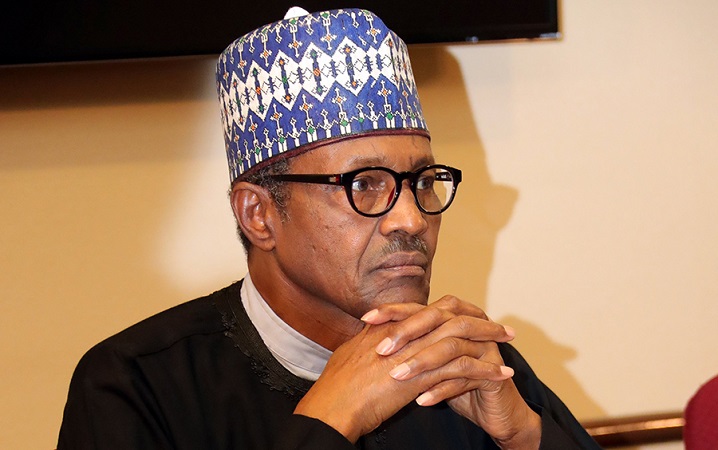
On Sunday, July 13, around 4 pm. Social media conversations in Nigeria, particularly on X, took a dramatic shift. It followed the news of the demise of Nigerian former President, Muhammadu Buhari, who according to his media aide, Garba Shehu, had died in a London hospital, where he had been receiving medical treatment.

“The family has announced the passing of the former President, Muhammadu Buhari, this afternoon, in a clinic in London,” Shehu announced.

The Nigerian social media space thus erupted into a frenzy of mixed reactions underlined by people’s memories of Buhari. To some, it stems from their knowledge of him in the eight years of his presidency – starting from 2015: To others, it dates back to about 42 years ago, when he was the Nigerian military ruler. Fueled by what many believe to be agony emanating from recent memory, the former had the loudest voices – not that the latter in any way were sharing sweet memories of the late president.

“Buhari banned X (Twitter) because of his fragile ego. He refused to transmit power to his Vice as constitutionally required despite not being in good health or in the country for months. I don’t even want to talk about the Lekki Toll Gate massacre,” human rights lawyer, Inibehe Effiong, wrote.

“He made nonsense of the economy and allowed criminals to operate freely in his cabinet. After destroying the country, he supervised a fraudulent election that brought a terrible successor who has continued from where he stopped in their Nigeria destruction agenda,” he added.

Buhari’s second coming to power in 2015 was preceded by several failed attempts, which were characterized by violence and bloodshed but were overshadowed by the ‘Messianic emotionalism’ that enveloped Nigeria – and was sustained largely along ethnic and religious lines. In 2011, about 11 persons, largely members of the National Youth Service Corp. (NYSC), were killed in Kano by Buhari supporters, after he lost a presidential election.

Buhari was believed to be the answer to Nigeria’s long yearning for a corruption-free country – a belief buoyed by his perceived stance against corruption in 1983.

Though his dictatorial and economic antecedents from 1983 were available in black and white for all to see, many voted for him as he was rebranded as a ‘reformed democrat.’ It was said that Nigerians, spurred by emotion and sentiment, jumped on his “change”, (a campaign slogan his political party – the All Progressive Congress (APC) created) bandwagon not minding.

However, a few months after he was sworn in on May 29, 2015, the emotion began to be diluted by his actions and inactions across all areas of Nigeria’s wellbeing – and it accelerated quickly, creating impacts that Nigerians will not forget anytime soon.

Buhari promised Nigerians to address insecurity and put an end to Boko Haram terrorism. But months after he was sworn in, Nigeria’s security situation advanced from bad to worse, with the birth of killer Fulani herdsmen – who were described as one of the most deadly terror groups in the world. It was a bloodbath almost every day. Many believed that the government’s response was as infuriating as the terror itself. Buhari, addressing the herdsmen killings, only urged Nigerians to accommodate “your countrymen,” then claimed they were “foreigners from Libya.” This created the belief that his administration favored and protected his Fulani kinsmen, throwing Nigeria’s fragile unity into deeper chaos.

Then, in what his administration said was a solution to the problem, which was dubbed the herder-farmer crisis, Buhari proposed RUGA – a livestock policy proposal designed to mandate settlement for herdsmen in the 36 states across the federation. The policy was suspended following heavy backlash.

Besides the tens dying every day from the guns and swords of terrorists were others who Nigerian security forces, under the watch of Buhari, were massacring. In 2015, over 300 Shia Muslims were killed by the military, in what was later known as the Zaria massacre. There was also the Agatu Massacres of 2016, which set the tone for the large-scale killings with impunity that have dogged Nigeria’s Middle Belt till today. In 2016, Amnesty International reported the death of over 150 members of the Indigenous People of Biafra (IPOB), who were on a self-determination campaign in Southeast Nigeria.

The blood spillage was capped by the Lekki Toll Gate Massacre in 2020, where security forces killed scores of peaceful #EndSARS protesters against police brutality.

“My bank account was blocked. I lived in a safe house for 7 months. My car was shot at. I saw bodies. Got a bullet wound. I can go on and on, sued the Buhari government,” Sera Ibrahim recounts her ordeal after the Lekki Massacre.

As Nigeria was drenched in blood, Buhari’s economic policies were unraveling, reversing the gains made under former President Goodluck Jonathan. In August 2019, Buhari announced the closure of Nigerian land borders, a protectionist policy he said would boost local production, and curb arms smuggling. The decision, among other economic policies, saw Nigeria’s inflation jump from single to double digits, with food inflation spiking over 300%. Eventually, the country suffered a double recession – marking the end of Nigeria’s enviable economic growth – projected to be the third fastest growing economy in the world for the year 2015– and the beginning of economic turmoil that will linger years after Buhari’s leadership and eventually, death.

Today, Nigeria’s sky-high inflation has been largely attributed to the illegal printing of N30 trillion in Ways and Means that Buhari ordered the Central Bank of Nigeria (CBN), under the leadership of former Governor Godwin Emefiele, to print. Economists noted that the most disappointing part isn’t the illegality but that there is nothing to show for the money. The printing of N30 trillion did not even cut borrowing.

Unemployment rose from 10.4% in 2015 to 33.4% in 2020 – five years into his eight-year rule. According to the Budget Office, between 2016 and 2022, the Buhari government raised total revenues of N26.67 trillion and expended N60.64 trillion, leaving a deficit of N33.97 trillion. Ultimately, he moved Nigeria’s public debt profile from N42 trillion to N77 trillion by May 2023.

“I had never heard of the concept of being a care worker in the UK until Buhari became president, wrecked the economy and tens of thousands of Nigerians started looking for where to flee to,” Osarogie Ogbonmwan wrote.

While Nigerians cried out over his actions and inactions, Buhari activated his 1983 Decree Number 4, which he used as a military dictator to silence dissent. The decree criminalized any reporting deemed critical of the government. Thus, media houses were targeted, journalists and some critics of his government fled the country. But his crackdown went beyond the civic space to everyone he deemed an enemy.

The Twitter ban of 2021, after the platform deleted one of Buhari’s posts threatening the Igbos of the Southeast region, lasted seven months. It was of no surprise to many who knew him from way back, even though it was seen as a clear depiction of authoritarian impulse, one at odds with the democratic principles he was elected to uphold.

Politically, his administration displayed a troubling erosion of judicial independence, exemplified by the prolonged illegal detention of figures like El-Zakzaky and Sambo Dasuki, despite court orders for their release. The suspension of Chief Justice Walter Onnoghen, which was widely described as a blatant bastardization of the rule of law, further undermined faith in the government’s ability to follow due process. The abduction of Nnamdi Kanu, the leader of IPOB, from Kenya, and his illegal detention in defiance of court orders, have also been cited as an example of Buhari’s government rascality.

While all this was unfolding, Buhari was seen failing spectacularly in one area that people thought he would excel in – fighting corruption. With allegations of nepotism and lopsided appointments – favoring mainly – people from the north, officials in his government were largely accused of corruption.

“He had an abysmal scorecard on internal security & emboldened widespread corruption not seen since the mid-1990s. He has almost no legacy worth applauding,” wrote Abubakar.

Among the many traits that people said they noted as Buhari unraveled, was hypocrisy. For a man who had championed a campaign for local consumption, with slogans such as “Buy Naija to Promote The Naira,” Buhari spent months in a London hospital. This is despite billions of naira allocated to the State House Clinic. For instance, 3.94 billion was allocated for the clinic in 2015, N3.87 billion in 2016, and N3.2 billion in 2017, the allocations were increased in subsequent years. This disparity underscored a leader who failed to fix the very system meant to serve him, let alone ordinary Nigerians.

“A man who closed the borders to encourage consumption of local produce yet ends up dying in a UK hospital where he was a regular consumer of British healthcare. Sums up the contradiction of a man that was loved by many common people yet didn’t care to use his image of integrity to further the lot of the common man,” wrote another Nigerian named Neto.

In his eight years of leadership, Buhari was accused of insouciance toward the plights of Nigerians – not showing up, or speaking up when the country needed him most. His lack of empathy was pointed out in many instances of killings across the country, in which the president failed to sympathize with the people, visit them, or even acknowledge their ordeal.

Against the backdrop of bitter memories that characterized Buhari’s time in power, some Nigerians – at the news of his death at 82, believe the former president lived so long for a man who caused his country so much pain.

“There’s no joy in Buhari dying. Definitely no pain, but there’s no celebrating the passing of someone who ruined the country, and still died at a ripe old age. If there’s any justice in the world, there should be dire consequences for damaging the futures of generations to come,” Chidi Okereke wrote.