

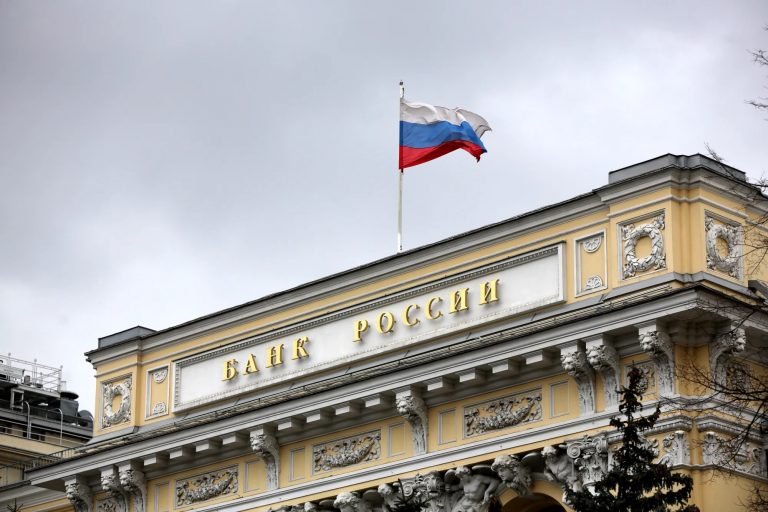
Russia’s Finance Minister Anton Siluanov announced that the Ministry of Finance and the Central Bank of Russia (CBR) have reached an agreement to legalize and regulate the use of cryptocurrencies specifically for foreign trade settlements.
This formalizes an experimental legal regime (ELR) piloted since September 2025, allowing Russian businesses to use digital assets for cross-border payments while maintaining strict domestic restrictions.
Limited to international transactions only. Cryptocurrencies cannot be used for domestic payments, preserving the ruble’s role in the local economy. Driven by Western sanctions post-2022 Ukraine invasion, which disconnected major Russian banks from SWIFT, causing payment delays and an 8% drop in imports in Q2 2024.
Crypto provides a borderless alternative for trade with partners like China, India, and sanctioned-friendly nations, particularly in energy and commodities.
Register for Tekedia Mini-MBA edition 20 (June 8 – Sept 5, 2026).
Register for Tekedia AI in Business Masterclass.
Join Tekedia Capital Syndicate and co-invest in great global startups.
Register for Tekedia AI Lab.
Transactions will be overseen by Rosfinmonitoring Russia’s financial intelligence unit to ensure compliance and prevent illicit use. A state-managed crypto exchange for qualified investors is planned, emphasizing oversight to “restore order” in the sector.
Builds on 2024 laws effective September for cross-border use; first payments expected before end-2024, with full implementation now accelerated. Russia’s crypto stance has evolved rapidly:Pre-2022: Crypto banned as tender; mining and domestic use restricted.
Consensus formed between Ministry and CBR for limited cross-border pilots amid sanctions. Laws passed allowing international crypto settlements and mining effective September/November, but with bans on local payments.

Formal legalization announced, reflecting over 20 million Russian crypto holders and 2.5 trillion rubles ($30 billion) in assets. This shift positions crypto as a sanctions-evasion tool, similar to approaches by Iran and Venezuela, but under heavy state control to avoid financial instability.
Boosts trade liquidity, reduces reliance on USD/EUR, and could integrate Russia into global crypto networks. Bitcoin and Ethereum may see increased demand for settlements. Risks further Western sanctions on Russia’s crypto ecosystem; domestic ban limits broader adoption.
Early reports note positive sentiment in crypto circles, with discussions on X highlighting it as a “historic” move for global trade. This policy, building on experimental pilots from September 2024, allows Russian businesses to use BTC and other digital assets for cross-border payments, primarily to evade Western sanctions imposed since the 2022 Ukraine invasion.

While the immediate market reaction was muted—BTC traded sideways around $108,000–$108,500 on October 22—the longer-term implications could drive sustained upward pressure on BTC’s price through increased adoption, demand, and geopolitical validation.
These effects stem from Russia’s position as a top BTC mining nation producing ~10-15% of global hashrate and its $2 trillion+ economy, which could channel significant institutional flows into BTC.
The announcement coincided with broader market volatility, including U.S. tariff discussions and $800M in crypto liquidations, diluting its isolated effect. BTC saw minimal volatility: BTC closed at ~$108,262 on October 22, up 0.2% from the prior day, with intraday highs of $108,800 brief spike post-announcement and lows of $107,900.
Trading volume rose 12% to $45B, but this was partly attribution to global ETF inflows rather than Russia-specific news. However, no sharp rally occurred due to concurrent bearish factors like Elon Musk’s mixed signals on BTC as a “gold replacement.”
Increased Russian OTC trades via platforms like the upcoming state-managed exchange could add $500M–$1B in weekly BTC volume, stabilizing prices but capping downside. Analysts note potential 2-5% upside if first trades (e.g., with China/India) settle publicly by late October.
Overall, short-term impact: Neutral to mildly positive (+1-3% potential), as the news reinforces existing pilots without new capital inflows yet. As implementation ramps up, expect BTC demand to grow from Russia’s $30B crypto holdings 2.5 trillion rubles and mining output 20,000 BTC annually.
This could mirror El Salvador’s 2021 adoption, which boosted BTC liquidity by 5-10% regionally. Russia aims to settle 10-20% of its $500B annual exports (e.g., oil to India) in BTC, creating recurring buy pressure. Early deals already used ~$12B in crypto in H1 2025; scaling could add $50B+ annually, per Finance Minister Siluanov.
Locally mined BTC exempt from domestic bans will directly enter trade flows, reducing sell pressure from miners and tightening supply. Moscow Exchange’s push for retail BTC trading 37M users, $14T market cap and eased bank restrictions could unlock $5-10B in inflows, similar to Hong Kong’s 2023 spot ETF launch.
Western sanctions on Russian crypto entities could trigger 5-10% dips if escalated, as seen in 2022’s 20% BTC drop post-invasion. Bullish (+10-20%), driven by functional demand over speculation. This positions BTC as a “neutral reserve asset” in BRICS+ trade (Russia, China, India, etc., representing 40% of global population), accelerating dedollarization and challenging USD dominance in commodities.
Like Iran’s BTC use, Russia’s model could inspire Venezuela/Brazil, adding $100B+ in emerging-market BTC demand. Putin has called BTC “legal property for reserves,” hinting at a national strategic reserve.
By 2027, BTC could hit $150,000–$200,000 if BRICS adoption scales, per models from Bitcoin Magazine. Historical parallels: China’s 2019 mining ban caused a 30% BTC surge via redistribution; Russia’s embrace could double that via demand.
Energy bans in 10 Russian regions Jan 2025–2031 might cut mining by 20%, increasing volatility. Broader crypto winters or U.S. policy shifts (e.g., stricter IRS rules) could offset gains. Strongly bullish (+50-100%), cementing BTC’s role in multipolar finance.
In essence, while short-term noise tempers the rally, this policy substantiates BTC’s utility as a sanctions-proof asset, fostering organic demand that could propel prices higher.