

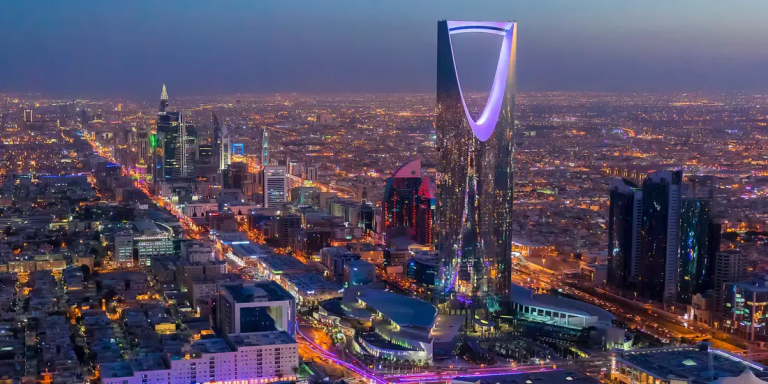
Saudi Arabian equities ended Sunday’s session higher, clawing back losses from the previous day and reasserting a cautiously constructive tone in the market, even as investors remained wary of soft oil prices and broader global uncertainties.
The Tadawul All Share Index rose 0.9%, recovering from a pullback that had brought an end to a six-session winning streak. Buying interest was concentrated in select large-cap names, with ACWA Power Company jumping 3.9% and Saudi Arabian Mining Company gaining 1.5%, underscoring continued appetite for stocks linked to energy transition, infrastructure, and industrial development themes that sit at the heart of the kingdom’s economic agenda.
The immediate catalyst for the rebound was a government announcement that Saudi Arabia will further liberalize access to its capital markets for foreign investors starting next month. Market participants say the move is designed to make the exchange more attractive to global asset managers, sovereign funds, and pension investors, particularly those with longer investment horizons, and to reinforce Saudi Arabia’s push to position Tadawul as a regional financial hub.
Register for Tekedia Mini-MBA edition 20 (June 8 – Sept 5, 2026).
Register for Tekedia AI in Business Masterclass.
Join Tekedia Capital Syndicate and co-invest in great global startups.
Register for Tekedia AI Lab.
This policy shift comes at a delicate moment for the market. Oil prices, while off recent lows, remain subdued relative to levels that typically provide strong fiscal tailwinds for Gulf economies. That has kept investors selective and has limited broad-based risk-taking, even as domestic economic indicators remain supportive.
Beyond oil, Saudi Arabia’s macroeconomic backdrop continues to offer a cushion. The non-oil economy is expanding at a pace of more than 4%, driven by heavy public investment in mega-projects, tourism, logistics, renewable energy, and advanced manufacturing under the Vision 2030 programme. These projects are not only supporting growth but are also reshaping sectoral leadership within the equity market, gradually reducing its historical dependence on hydrocarbons and banks alone.
Foreign participation has become an increasingly important pillar of market stability. Over the past year, foreign inflows running into tens of billions of riyals have helped deepen liquidity, narrow bid-ask spreads, and soften market swings during periods of global volatility. Analysts note that this growing international investor base is also contributing to more disciplined pricing, as global funds tend to rotate rather than exit abruptly.

Rania Gule, senior market analyst at XS.com – MENA, said these dynamics are likely to keep the Saudi market range-bound in the near term, albeit with a mild upward bias. She said a clearer directional move would likely depend on a combination of stabilizing oil prices and strong quarterly earnings, particularly from banks, energy companies, and telecommunications firms, which remain core drivers of index performance.
In Qatar, equities also edged higher, with the benchmark index adding 0.5%. Gains were led by Industries Qatar, which rose 0.8%, reflecting steady interest in petrochemicals and industrial exporters amid expectations of resilient regional demand and relatively stable feedstock costs.
Outside the Gulf, Egypt continued to stand out as one of the strongest performers in emerging and frontier markets. The EGX30 index advanced 1.4% to a new record high, with almost all constituents closing in positive territory. Egypt Aluminum surged 6.6%, benefiting from a combination of stronger investor confidence, export prospects, and expectations of improved operating conditions.

Gule said the rally in Egyptian equities points to a broader improvement in risk appetite, supported by economic reforms, tighter fiscal discipline, and increased flexibility in the exchange-rate regime. Investors are also positioning ahead of anticipated government initial public offerings and new corporate listings, which are expected to expand market depth and attract fresh foreign capital.
Across the region, the picture that emerges is one of cautious optimism. Structural reforms, capital market liberalization, and diversification efforts are providing a supportive foundation for equities, even as external pressures, from oil price uncertainty to global monetary conditions, continue to shape short-term trading behavior.