

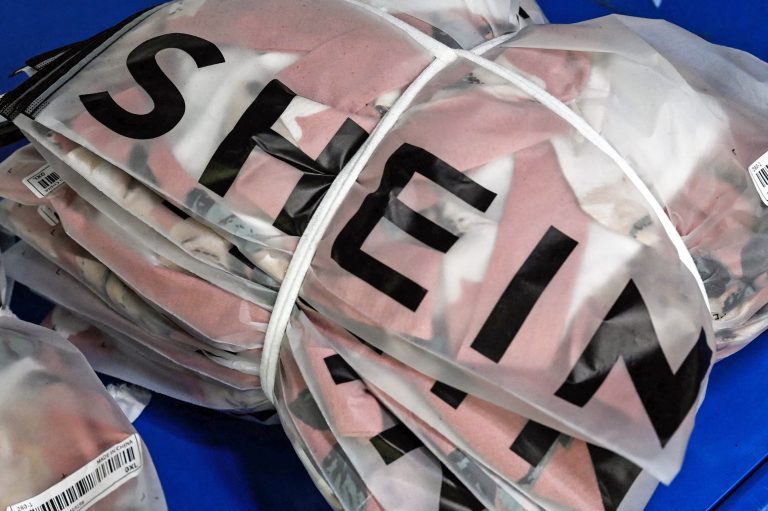
Fast-fashion retailer Shein is offering additional incentives to some of its late-stage investors as it prepares for a Hong Kong initial public offering (IPO) at a sharply lower valuation, as challenges mount on one of the world’s most valuable consumer technology companies amid a weaker fundraising environment and mounting regulatory scrutiny.
Regulatory filings submitted to the Hong Kong Stock Exchange show the company plans to compensate certain investors through a combination of guaranteed cash payments and additional shares if the IPO is priced below previous private funding rounds.
The disclosure confirms a Reuters report that Shein was developing measures to soften the impact of a lower listing valuation on investors who participated in its final private fundraising rounds.
Register for the next Tekedia Mini-MBA.
Register for Tekedia AI in Business Masterclass.
Join Tekedia Capital Syndicate and co-invest in great global startups.
Shein is seeking a valuation of between $40 billion and $50 billion in its planned IPO, according to a Reuters source familiar with the matter, a substantial reduction from the company’s previous private market valuations.
The retailer was valued at $98.2 billion during a 2022 fundraising round before its valuation fell to $64 billion in 2023 as higher interest rates, slowing consumer demand and tighter capital markets prompted investors to reassess technology and high-growth consumer businesses. A successful listing at the upper end of the targeted range would still rank among the largest global IPOs in recent years, but it would represent a valuation decline of nearly 50% from Shein’s peak private-market valuation.
The reduction underpins public markets placing greater emphasis on sustainable profitability and cash generation rather than rapid revenue growth alone.

To maintain investor support, Shein has agreed to provide holders of its Pre-D, D and D+ funding rounds with a guaranteed annual return of 8% on their original investments. According to the exchange filings, the company expects to distribute approximately $1.1 billion in total cash payments.
The guaranteed return is calculated from the date investors purchased their shares through March 4, 2026, with payments scheduled in three equal installments by the end of March, June and September 2026. Such arrangements are relatively uncommon for companies approaching public markets and underscore Shein’s efforts to preserve relationships with key investors as it seeks to complete a listing under less favorable valuation conditions.
Beyond the cash payments, Shein is also providing downside protection through adjustments to investors’ preferred shares. Upon listing, preferred shares will automatically convert into Class B ordinary shares. If the IPO is priced below the valuation at which those investors originally invested, the conversion price will be adjusted downward, allowing investors to receive additional shares.

The mechanism effectively compensates investors for part of the decline in valuation by increasing their ownership stake following the IPO. These anti-dilution provisions are designed to reduce investment losses for late-stage shareholders while improving the likelihood of securing support for the public offering.
Investors Weighing Slowing Growth and Rising Risks
The investor protections come as prospective shareholders closely examine whether Shein can justify a valuation between $40 billion and $50 billion. Recent regulatory filings revealed signs that the retailer’s explosive growth has begun to moderate, while profitability has declined from earlier highs. At the same time, the company faces increasing legal and regulatory challenges across several jurisdictions, adding uncertainty to its long-term outlook.
Among the issues attracting investor attention are evolving trade policies, greater scrutiny of cross-border e-commerce imports, supply chain oversight, sustainability concerns and intellectual property disputes. Those factors have complicated Shein’s path to the public markets and contributed to repeated delays in its listing plans.
However, a successful Hong Kong flotation would provide Shein with fresh capital to support international expansion, technology investments and supply chain development while giving existing investors an opportunity to realize gains after years of private ownership.
For global equity markets, the offering is also expected to serve as an important gauge of investor appetite for large consumer technology listings at a time when IPO activity is gradually recovering, but valuation discipline remains considerably stricter than during the low-interest-rate era. The outcome could influence pricing expectations for other high-profile private companies considering public listings over the next 12 months.
Founded in China and now headquartered in Singapore, Shein has become one of the world’s largest online fast-fashion retailers by using a technology-driven supply chain capable of designing, producing and shipping new clothing styles within days. Its data-driven manufacturing model has enabled rapid global expansion, particularly among younger consumers shopping through mobile platforms.
But the company’s IPO journey has become increasingly complex amid heightened geopolitical tensions, evolving trade regulations and greater regulatory scrutiny of Chinese-linked businesses seeking overseas listings.