

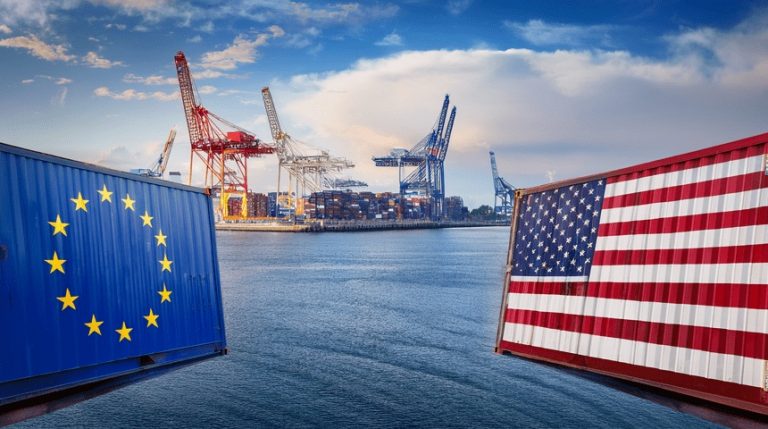
The EU and U.S. are aiming for a trade deal by July 9, 2025, following a 90-day pause on escalated U.S. tariffs announced by President Trump. The pause, effective from April 10, 2025, maintains a 10% tariff on most EU goods, with 25% tariffs on steel, aluminum, and cars, but delays a potential increase to 20% on other goods. EU Commission President Ursula von der Leyen described a recent call with Trump as “positive,” signaling the EU’s readiness to negotiate swiftly for a comprehensive agreement.
The EU has proposed a “zero-for-zero” tariff deal on non-sensitive goods, including labor rights and environmental standards, but faces challenges as Trump’s administration prioritizes reducing the U.S. trade deficit. The EU is also preparing countermeasures, with a proposed list targeting up to €95 billion ($107.2 billion) of U.S. imports, such as wine, bourbon, aircraft, and car parts, if talks fail. EU Trade Commissioner Maroš Šef?ovi? emphasized that the bloc will not accept an unfair deal, citing the $1.7 trillion EU-U.S. trade relationship and the EU’s leverage as other countries seek closer trade ties.
- Some analysts warned that the U.S.-UK deal, which retained 10% tariffs, sets a precedent the EU finds insufficient. Negotiations remain complex, with no formal meeting yet between von der Leyen and Trump, and the EU insists on a deal that eliminates reciprocal tariffs entirely. The targeted EU-U.S. trade deal by July 9, 2025, carries significant implications for both economies and highlights a divide in priorities and approaches.
A successful deal could stabilize the $1.7 trillion trade relationship, avoiding escalated U.S. tariffs (potentially rising to 20% on non-sensitive goods). This would protect EU exporters, particularly in industries like automotive (facing 25% tariffs), agriculture, and luxury goods. A “zero-for-zero” tariff agreement on non-sensitive goods could boost EU exports by reducing costs, but failure to secure a deal risks €95 billion in retaliatory tariffs, impacting U.S. imports like wine, bourbon, and aircraft.
Register for Tekedia Mini-MBA edition 20 (June 8 – Sept 5, 2026).
Register for Tekedia AI in Business Masterclass.
Join Tekedia Capital Syndicate and co-invest in great global startups.
Register for Tekedia AI Lab.
The deal aligns with President Trump’s focus on reducing the U.S. trade deficit ($174 billion with the EU in 2023). Lowering EU tariffs could benefit U.S. exporters (e.g., energy, agriculture), but maintaining higher tariffs on EU steel, aluminum, and cars strengthens domestic industries. A deal could also set a precedent for negotiations with other partners like China. A deal could reinforce the EU-U.S. alliance against competitors like China, aligning standards on labor, environment, and technology. However, failure risks fragmenting Western trade unity, potentially pushing the EU toward deeper trade ties with Asia or other regions, as Šef?ovi? suggested.
The EU’s proposed countermeasures signal a broader trend of retaliatory trade policies, which could escalate global trade tensions if negotiations stall. Leaders like von der Leyen face pressure to balance economic gains with protecting EU standards (e.g., environmental regulations, labor rights). Concessions to U.S. demands could spark backlash from member states like France or Germany, where industries face high tariff exposure. Trump’s tariff strategy appeals to his domestic base, particularly in manufacturing states, but prolonged uncertainty could disrupt supply chains and raise consumer prices, risking political backlash.
A deal could stabilize prices for goods like cars, electronics, and agricultural products by avoiding tariff hikes. Conversely, failure could increase costs, with EU consumers facing higher prices for U.S. imports (e.g., bourbon, tech) and U.S. consumers paying more for EU goods (e.g., wine, vehicles). Pushes for a “zero-for-zero” tariff deal on non-sensitive goods, emphasizing free trade and mutual tariff elimination. The EU views tariffs as economically disruptive and seeks a rules-based agreement with labor and environmental standards.

Trump’s administration prioritizes protectionism, using tariffs (10% on most goods, 25% on steel, aluminum, cars) as leverage to reduce the trade deficit. The U.S.-UK deal, retaining 10% tariffs, suggests the U.S. may resist full tariff elimination. Aims to preserve its export-driven economy and global trade leadership. The bloc is wary of U.S. demands that could undermine its regulatory framework (e.g., food safety, green standards). U.S. focuses on reviving domestic manufacturing and securing favorable terms. Trump’s approach treats trade as a zero-sum game, with tariffs as a tool to pressure partners.
EU adopts a unified but cautious stance, preparing countermeasures (€95 billion targeting U.S. goods) while signaling flexibility. The EU’s leverage includes its $1.7 trillion trade volume and interest from other global partners. U.S. employs aggressive brinkmanship, with the 90-day tariff pause (ending July 9) as a deadline to force concessions. Trump’s unpredictability, seen in his call with von der Leyen, keeps the EU on edge.
The July 9 deadline intensifies pressure, with no formal Trump-von der Leyen meeting yet scheduled. The EU’s countermeasure list signals readiness for escalation, but both sides recognize the mutual cost of failure. Analysts highlights optimism for a deal, citing von der Leyen’s “positive” call, but some note the U.S.-UK deal’s 10% tariffs as a sticking point. The divide—free trade versus protectionism, multilateralism versus unilateralism—will shape whether a deal bridges or widens the transatlantic gap.
