

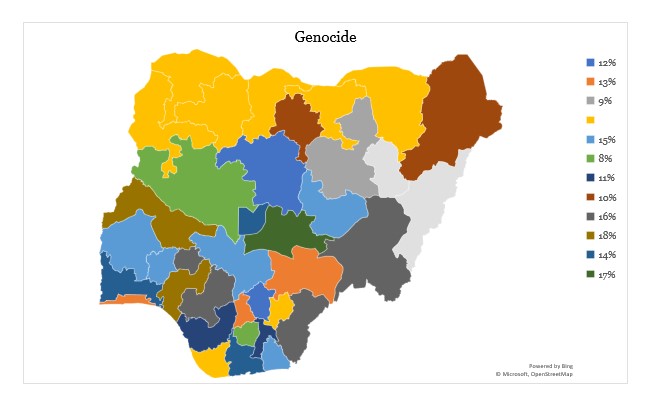
When former U.S. President Donald Trump declared that he would invade Nigeria because of what he called a genocide against Christians, the statement sent shockwaves across the country. It was not only a diplomatic controversy but also a moment that revealed how deeply global politics and local realities can intertwine. Within hours, Nigerians turned to Google, searching for “Trump,” “genocide,” “terrorists,” and “invasion.” Our analyst notes searches between November 2 and November 4, 2025 indicate a powerful story about curiosity, fear, faith, and division in the country.
Across most Nigerian states, search interest in Trump’s name soared. This was more than mere fascination with a foreign leader. It showed how global figures can command attention when their words strike at the heart of local concerns. Trump’s name carried emotional weight—admiration for some, anger and disbelief for others. In a country already marked by political and religious divides, his statement became a spark that reignited old conversations about identity, insecurity, and international perception. Nigerians were not just watching global news; they were reacting to it through the lens of their lived experiences.
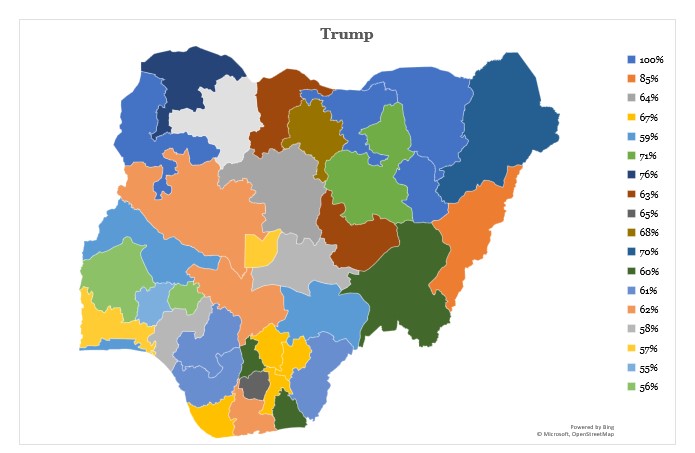
The data reveal that interest in Trump was high even in states far from the country’s traditional power centers. This suggests that Nigerians are keenly aware of global political developments, especially when those developments seem to validate or challenge their beliefs. The internet has made the world smaller, but it has also made emotions bigger. Trump’s comments transformed from foreign rhetoric into local debate, pulling global politics into Nigerian living rooms, churches, and WhatsApp groups.
Register for Tekedia Mini-MBA edition 20 (June 8 – Sept 5, 2026).
Register for Tekedia AI in Business Masterclass.
Join Tekedia Capital Syndicate and co-invest in great global startups.
Register for Tekedia AI Lab.
But the more revealing story lies in “genocide,” “terrorists,” and “invasion.” These terms appeared in clusters, especially in states that have lived through violence and insecurity. Kaduna, Benue, and Plateau, for example, recorded heightened search interest. These are states that have faced recurring communal and religious conflicts. For people living there, Trump’s words were not abstract political talk; they touched raw nerves. Searching for those terms may have been an attempt to make sense of personal or community trauma. It was a digital way of asking: “Is the world finally paying attention to what we are going through?”
These searches reveal something important about how Nigerians use technology in moments of uncertainty. The internet becomes both a window and a mirror, a space to see how others perceive them and a tool to reflect on their own realities. When citizens in conflict-prone areas searched for “genocide,” they were not simply echoing Trump’s language. They were seeking recognition, understanding, and perhaps validation for their pain.
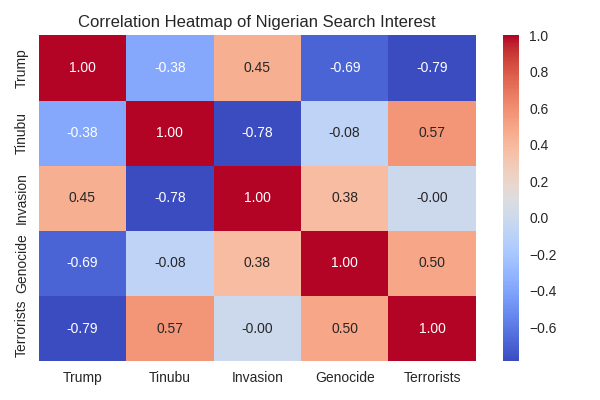
Interestingly, the term “invasion” did not attract much attention. While Trump’s threat was dramatic, Nigerians seemed more concerned with the moral and emotional implications than the political theater. This focus shows that public interest was driven by issues of justice and belonging, not by fear of an actual military intervention. People were less interested in whether Trump could invade and more interested in why he made such a claim and what it said about Nigeria’s reputation.

The event also highlights how emotions shape online engagement. Trump is a polarising figure globally, and in Nigeria, his comments deepened existing divides. Some viewed him as a truth-teller who finally acknowledged Christian suffering. Others saw his words as reckless and offensive, a reminder of how outsiders often oversimplify Nigeria’s complex security challenges. In this way, the digital reaction reflected a nation emotionally split, united in attention, but divided in interpretation.
This moment offers lessons about how Nigerians interact with both local and global politics. It shows that the country’s citizens are not passive consumers of international news. They actively seek information, context, and meaning. It also reminds leaders that statements made abroad can have powerful emotional consequences at home.