

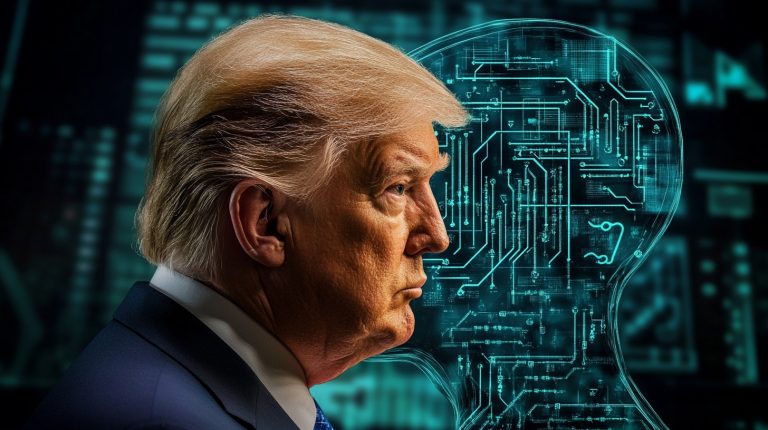
U.S. President Donald Trump abruptly halted plans to sign a long-awaited executive order on artificial intelligence after concerns emerged inside the White House and among influential allies that the proposal could slow America’s AI race with China and create the foundation for future federal control over advanced models.
A draft of the order obtained by POLITICO showed the administration was preparing to introduce a voluntary oversight framework for frontier AI systems developed by companies such as Anthropic, OpenAI, Google, and xAI. Under the proposal, developers of powerful AI models would be encouraged to provide the U.S. government with access to systems as much as 90 days before public release.
The draft order represented one of the clearest signs yet that the Trump administration is struggling to balance two competing priorities: maintaining America’s technological lead in AI while responding to growing warnings that increasingly capable systems could supercharge cyberattacks, infrastructure sabotage, and digital espionage.
Register for the next Tekedia Mini-MBA.
Register for Tekedia AI in Business Masterclass.
Join Tekedia Capital Syndicate and co-invest in great global startups.
Trump acknowledged Thursday that he personally intervened to stop the order from moving forward.
“I didn’t like certain aspects of it,” Trump told reporters, admitting he feared parts of the proposal could hamper U.S. competitiveness against China.
The reversal came after weeks of mounting debate inside Trump’s political coalition, exposing widening divisions between national security hawks demanding tighter AI safeguards and Silicon Valley allies who oppose any framework that could evolve into mandatory regulation.

The draft order repeatedly emphasized that participation would remain voluntary, appearing designed to calm concerns from the tech sector.
“Nothing in this section shall be construed to authorize the creation of a mandatory governmental licensing, preclearance, or permitting requirement for the development, publication, release, or distribution of new AI models,” the document stated.
Even so, the proposal triggered resistance from prominent technology figures aligned with Trump, including venture capitalist David Sacks, who reportedly warned White House officials that voluntary reviews could eventually become de facto government approval systems.

The dispute is seen as another example of how rapidly the political conversation around AI has shifted in Washington following the emergence of powerful cybersecurity-focused models such as Anthropic’s Mythos and OpenAI’s GPT-5.5-Cyber. Both systems have intensified fears among lawmakers and intelligence officials that AI tools could dramatically lower the barrier for sophisticated cyber warfare, malware generation, and infrastructure attacks.
The executive order draft sought to address those concerns partly through existing criminal statutes rather than new regulations. It directed the attorney general to enforce the Computer Fraud and Abuse Act against anyone using AI to illegally access or damage computer systems.
The White House had reportedly planned a formal signing ceremony on Thursday afternoon with leading AI executives in attendance before the event was suddenly postponed.
The debate surrounding the order also underscores a broader transformation within the Republican Party. Traditionally skeptical of federal regulation, sections of Trump’s populist base are increasingly calling for stronger oversight of advanced AI systems, arguing that major technology companies cannot be trusted to police themselves.
Former Trump adviser Steve Bannon and conservative activist Amy Kremer have been among the most vocal proponents of stricter AI guardrails. Their camp has urged the administration to require government security reviews before the release of highly capable models.
The pressure intensified after Anthropic launched Mythos under its tightly controlled “Project Glasswing” initiative. The model is being used by organizations including Amazon, Microsoft, Nvidia, and Apple for defensive cybersecurity applications.
Anthropic has warned that Mythos possesses unusually advanced coding and vulnerability-discovery capabilities that could potentially be weaponized if widely distributed without safeguards. The Pentagon has also been using the model to identify software vulnerabilities across government systems, further elevating concerns inside Washington.
National security officials appear increasingly worried about what some lawmakers describe as “sudden frontier AI capability jumps,” where models rapidly acquire unexpected capabilities that outpace existing oversight structures.
At the same time, the technology industry argues that overregulation could undermine the United States in its intensifying technological rivalry with China. AI executives and investors have consistently warned that slowing domestic model deployment could allow Chinese competitors to close the gap in generative AI and advanced computing infrastructure.
That concern has become more acute as Chinese technology companies accelerate development of domestic AI chips and models in response to U.S. export restrictions. Firms such as Alibaba Group and Huawei are aggressively expanding their AI ecosystems while Beijing pours billions into semiconductor self-sufficiency.
The political balancing act facing Trump is complicated further by the administration’s broader AI strategy, which has largely favored industry-led innovation over direct federal intervention. Since returning to the office, Trump has positioned AI leadership as central to U.S. economic and geopolitical dominance, while simultaneously facing pressure from security officials warning that unchecked frontier AI systems could create systemic risks.
The now-delayed executive order appeared to reflect an attempt at compromise: avoiding formal regulation while encouraging companies to cooperate with federal agencies on high-risk models.
Whether that middle-ground approach survives remains uncertain. Administration officials have not said when the order might return or what changes Trump wants made before reconsidering it.